Polymethyl Methacrylate Sheet
CN → US| HS Code | Tariff Rate | Origin | Destination | Doc |
|---|---|---|---|---|
| 3921190090 | 41.5% | CN | US | Official Doc |
| 3920515090 | 41.5% | CN | US | Official Doc |
| 3906902000 | 41.3% | CN | US | Official Doc |
| 3906100000 | 41.3% | CN | US | Official Doc |
Product Images
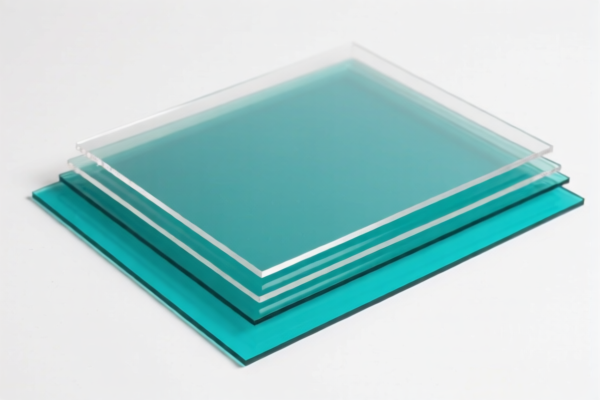
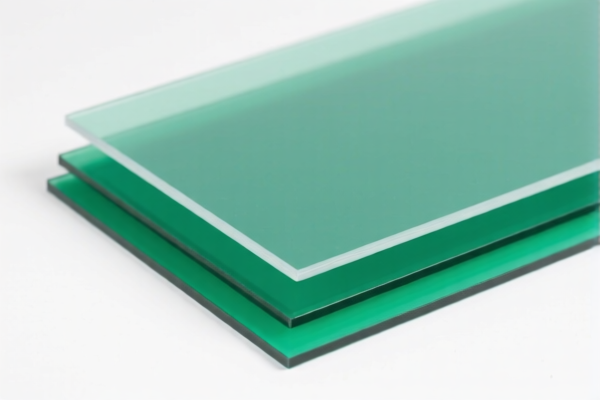
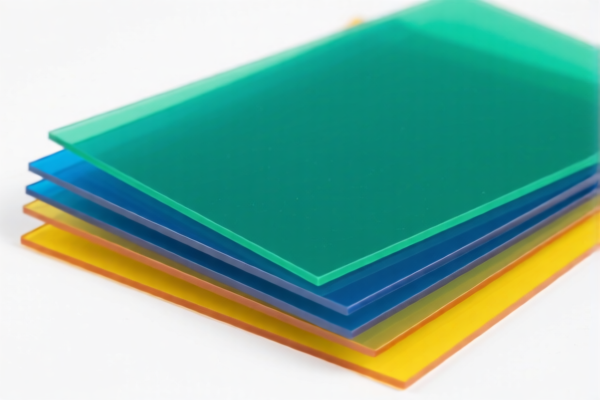

AI Analysis
🪟 Polymethyl Methacrylate (PMMA) Sheets (Acrylic)
🌐 HS Code Reference & Customs Clearance Guide | 2026 Latest Tariff Analysis | Professional Clearance Strategy
📌 I. Product Definition: What Exactly is "PMMA Sheet"?
Polymethyl Methacrylate (PMMA), commonly known as Acrylic or Plexiglas, is a transparent thermoplastic often used as a lightweight or shatter-resistant alternative to glass. In international trade, its classification depends heavily on its physical form (raw material vs. processed product) and state (primary form vs. semi-manufactured).
⚠️ Critical Distinction Point:
- Primary Forms (Chips, Granules, Powders) → Raw Chemicals (Chapter 3906)
- Semi-Finished/Finished Sheets/Plates (Cut to size, polished, drilled) → Plastic Plates/Sheets (Chapter 3920/3921)
Misclassification here can lead to significant duty discrepancies due to the high US tariffs on Chinese-origin plastics.
📦 II. HS Code Classification Details (2026 Latest Tariff Authority Cross-Reference)
Based on the provided data, here are the four specific HS Codes applicable to PMMA Sheets and their corresponding tax breakdowns. All entries listed below are subject to significant US trade restrictions (Section 301 & Section 122).
| HS Code | Product Description (Summary) | Physical State | Key Characteristics |
|---|---|---|---|
3906.90.20.00 |
PMMA Sheets, Acrylic Polymer Primary Form | Raw/Intermediate | Granules, chips, or initial extruded blocks before final sheet forming. |
3906.10.00.00 |
PMMA Sheets, Primary Form Sheets/Plates | Raw/Intermediate | Large blocks or primary forms ready for cutting into sheets. |
3920.51.50.90 |
PMMA Sheets, Plates, Sheets Category | Processed | Finished sheets, cut to size, polished edges, used for fabrication. |
3921.19.00.90 |
PMMA Sheets, Plastic Plates/Sheets Category | Processed | Specialized plates, laminates, or non-cellular plastic sheets. |
🔍 Key Insight:
- Codes3906.xxxxrefer to the raw material state (polymer in primary form).
- Codes3920/3921refer to the manufactured product state (finished sheets/plates).
- Crucial Note: Regardless of whether it is raw polymer or finished sheet, ALL these codes attract a Total Tax Rate of ~41.3% - 41.5% for goods originating from China entering the US.
💰 III. 2026 Latest Tariff Rate Breakdown (Including Additional Duties & Policy Surcharges)
✅ Applicable Country: United States (US)
✅ Country of Origin: China (CN)
✅ Effective Date: Current (Subject to Section 301 & Section 122)
🎯 1. Raw Material State: 3906.90.20.00 & 3906.10.00.00
| Item | Details |
|---|---|
| Base Tariff Rate | 6.3% (Ad Valorem) |
| Section 301 Additional Duty | +25.0% (Retaliation Tariff) |
| Section 122 Tariff | +10.0% (Specific surcharge for certain plastic products) |
| Total Tax Rate | 41.3% |
| Tax Calculation | CIF Value × 41.3% |
| De Minimis Exemption | ❌ Not Applicable (Deny De Minimis) |
| Legal Basis Path | Section 301: 9903.88.01 → Section 122 → USITC: 3906.xx |
📌 Explanation:
- Even if the PMMA is in its "primary form" (granules/blocks), it is still subject to the full suite of punitive tariffs because it is a polymer derived from China.
- The base rate is slightly lower (6.3%) compared to finished sheets, but the total remains punitive.
🎯 2. Processed Sheet State: 3920.51.50.90 & 3921.19.00.90
| Item | Details |
|---|---|
| Base Tariff Rate | 6.5% (Ad Valorem) |
| Section 301 Additional Duty | +25.0% (Retaliation Tariff) |
| Section 122 Tariff | +10.0% (Specific surcharge for certain plastic products) |
| Total Tax Rate | 41.5% |
| Tax Calculation | CIF Value × 41.5% |
| De Minimis Exemption | ❌ Not Applicable (Deny De Minimis) |
| Legal Basis Path | Section 301: 9903.88.01 → Section 122 → USITC: 3920/3921 |
📌 Explanation:
- Finished PMMA sheets (like those used for sign-making, aquariums, or window glazing) fall under this higher base rate (6.5%).
- Total Cost Impact: For every $10,000 worth of PMMA sheets imported, you will pay ~$4,150 in duties alone.
🛠️ IV. Customs Clearance Practical Advice (Real-World Pitfall Guide)
✅ 1. Documentation Checklist (缺一不可)
| Document | Required | Purpose |
|---|---|---|
| ✅ Commercial Invoice | ✔️ | Must clearly state "Polymethyl Methacrylate (PMMA)" and specify HS Code. |
| ✅ Certificate of Origin (CO) | ✔️ | To prove origin as China (CN). If non-China origin (e.g., Vietnam, Germany), different rules may apply. |
| ✅ Product Specification Sheet | ✔️ | Details: Thickness, Width, Length, Color, Transparency, Fire Rating (UL94). |
| ✅ Material Safety Data Sheet (MSDS) | ✔️ | Required for chemical transport and safety classification. |
| ✅ Packing List | ✔️ | Must match invoice exactly; specify net/gross weight. |
✅ 2. Declaration Strategy (Key Mnemonics)
🔥 “State Matters: Primary vs. Processed; Origin is Key; No De Minimis!”
| Scenario | Correct Declaration | Risk of Wrong Declaration |
|---|---|---|
| Finished Clear Sheet (e.g., 4x8 ft panel) | 3920.51.50.90 or 3921.19.00.90 |
If misdeclared as "Glass" → 0% duty but severe penalty for fraud. |
| PMMA Granules (Raw Resin) | 3906.90.20.00 |
If misdeclared as "Finished Sheet" → Higher base duty (6.5% vs 6.3%), minor savings lost. |
| Mixed Container (Sheets + Granules) | Separate Line Items | Combining them may trigger inspection delay or forced classification to the higher rate. |
✅ 3. Special Situation Handling
| Situation | Handling Advice |
|---|---|
| OEM Custom Sheets | Provide design drawings. If sheets are cut to non-standard sizes, ensure they are not classified as "custom machinery parts" (which might have different HS codes). |
| Labeled Brand Name | If the sheet is printed with a logo or graphic, it remains a 3920/3921 product. Do not try to classify it as "printing material" (Chapter 49) to avoid duties → High Risk of Seizure. |
| Origin Shift | If PMMA is made in Vietnam or Thailand using Chinese resin, you must provide proof of substantial transformation (e.g., processing tariff shift rules). Otherwise, US Customs may still attribute it to China → 41.5% Tax. |
🌍 V. Global Market Comparison (2026 Latest)
| Country/Region | Recommended HS Code | Estimated Duty (CN Origin) | Certification Requirements | Remarks |
|---|---|---|---|---|
| 🇺🇸 USA | 3920.51.50.90 / 3921.19.00.90 |
41.5% (High!) | None specific for plastic, but must comply with CPSIA if for consumer goods. | Highest Cost Market. Section 122 & 301 apply. |
| 🇨🇳 China | 3920.51.50.90 |
0% (Export) | N/A | Export duty may apply depending on local policy. |
| 🇪🇺 EU | 3920.51.00.80 |
5.3% + VAT | CE Marking (if applicable), REACH Compliance. | No Section 301/122 equivalent. Much lower cost. |
| 🇬🇧 UK | 3920.51.00.90 |
5.0% + VAT | UKCA Marking (post-Brexit). | Similar to EU. |
| 🇯🇵 Japan | 3920.51.00.90 |
4.5% | JIS Standards (optional but recommended). | Stable trade relations. |
📌 Conclusion:
- USA is the most expensive market for PMMA imports from China due to Section 301 (25%) + Section 122 (10%).
- EU, UK, and Japan offer significantly lower duty rates (~5%).
- Strategic Tip: If targeting the US market, consider sourcing PMMA from non-China origins (e.g., SABIC, LyondellBasell, or Chinese manufacturers with factories in Southeast Asia) to potentially avoid the 35% additional tariff burden.
📌 VI. Common Mistakes & Pitfall Guide (Lessons Learned)
❌ Mistake 1: Declaring PMMA Sheets as "Glass" to avoid duties.
👉 Consequence: Fraud. US Customs uses spectroscopy to verify material. Fines can be 3x the value + criminal charges.
❌ Mistake 2: Ignoring Section 122 Tariffs.
👉 Consequence: Underpayment. Section 122 applies to specific plastic products imported from China. If missed, you owe 10% back-taxes + interest.
❌ Mistake 3: Using "Acrylic" generically without HS Code precision.
👉 Consequence: Customs may classify it under the highest possible duty bracket or hold the cargo for inspection while determining if it's "Primary Form" (3906) or "Processed" (3920).
❌ Mistake 4: Assuming "De Minimis" (Under $800) applies.
👉 Consequence: No De Minimis for China. Even small parcels of PMMA from China are subject to full duties. Do not try to ship small batches via de minimis to save cost → Shipment will be seized or taxed heavily.
✅ Correct Practice:
"Polymethyl Methacrylate (PMMA) Acrylic Sheet, Clear, 4x8ft, 5mm Thick, HS 3920.51.50.90, Origin: China, Section 301 & 122 Applicable"
🎯 VII. Conclusion: Professional Declaration Saves Money!
🎯 Remember the Mantra:
🔹 "PMMA is Plastic, Not Glass!"
🔹 "China Origin = 41.5% Duty (301+122)!"
🔹 "De Minimis Does NOT Apply to China!"
🔹 "Primary Form vs. Processed Sheet Matters for Base Rate!"
📌 Pro Tip:
If your business volume is high, consider applying for an Exclusion under Section 301 if your specific PMMA product is not available in the US, though exclusions are hard to get for basic plastic sheets. Alternatively, restructuring your supply chain to source from Vietnam, India, or Europe can reduce duties by ~36%, significantly boosting your profit margin.
📣 Immediate Action:
📞 Verify your supplier's Country of Origin (not just factory location).
📦 Confirm if your product is Primary Form or Finished Sheet for accurate HS Code.
🚀 Calculate landed cost including 41.5% tariff before quoting customers.
✨ Precise Classification, Lower Risks, Higher Profits!
💼 Your supply chain is only as strong as your customs compliance!
Customer Reviews
About HS Code Classification
The Harmonized System (HS) is an internationally standardized nomenclature developed by the World Customs Organization (WCO) to classify traded products. Over 200 countries use the HS system as the basis for customs tariffs, trade statistics, and import/export regulations.
Each HS code follows a hierarchical structure:
- Chapter (2 digits) — Broad category of goods (e.g., Chapter 84: Machinery and Mechanical Appliances)
- Heading (4 digits) — More specific grouping within the chapter
- Subheading (6 digits) — Internationally standardized breakdown, used by all WCO member countries
- National subdivisions (8-10 digits) — Country-specific extensions for further classification, such as US HTSUS 10-digit codes
Correct HS code classification is essential for smooth customs clearance, accurate duty payment, and compliance with trade regulations. Misclassification can lead to customs delays, overpayment of duties, or penalties.
When importing from CN to US, the applicable tariff rates may include:
- Most-Favored-Nation (MFN) rate — The standard duty rate applied to WTO members
- General rate — Applied to countries without trade agreements
- Trade remedy duties — Additional tariffs such as Section 301 (anti-dumping), Section 232 (national security), or countervailing duties
The information provided on this page is for reference purposes only. For official classification, please consult with your local customs authority or a licensed customs broker.