Polyoxin Water Dispersible Granules
CN → USProduct Images
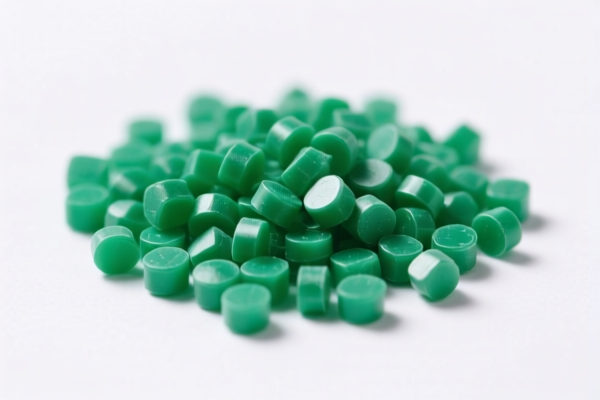
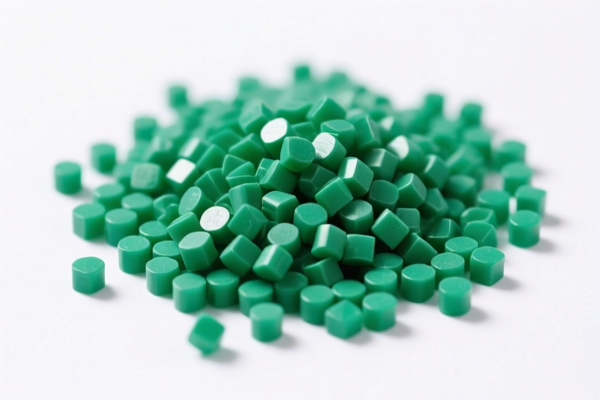


AI Analysis
🌾 Polyoxin Water Dispersible Granules (WDG)
🌐 HS Code Reference & Customs Clearance Guide | 2026 Latest Tariff Analysis | Professional Entry Strategy
📌 I. Product Definition & Classification: What Exactly Are Polyoxin WDG?
Polyoxin Water Dispersible Granules (WDG) are a solid formulation of the active ingredient Polyoxins, a class of antibiotics produced by Streptomyces tendae. They are primarily used as systemic fungicides in agriculture to control rice blast (Magnaporthe oryzae) and other fungal diseases.
In international trade, it is critical to distinguish between:
- The Active Pharmaceutical Ingredient (API) / Technical Material: Pure Polyoxin D or similar mixtures.
- The Formulated Product: Polyoxin mixed with adjuvants, fillers (like clay, silica), and dispersants to form "Water Dispersible Granules."
⚠️ Key Distinction:
- Technical Material (API): Lacks adjuvants; high purity; intended for further processing or large-scale formulation.
- Formulated WDG: Ready-to-use granules containing inert ingredients; sold directly to farmers/distributors.
Customs authorities typically classify these differently. Below focuses on the Formulated WDG unless specified otherwise.
📦 II. HS Code Classification Details (2026 Tariff Authority Comparison)
| HS Code | Product Description | Applicable Scenario | Contains Adjuvants? |
|---|---|---|---|
3808.93.00 |
Insecticides, rodenticides, fungicides, herbicides, anti-sprouting products, plant-growth regulators, disinfectants and similar products... Fungicides | Formulated Polyoxin WDG (Ready-to-use) | ✅ Yes |
2941.90.95 |
Penicillins and their derivatives... Antibiotics | Polyoxin Technical Material (API) (Pure substance) | ❌ No |
3808.94.00 |
Other insecticides... | Not applicable | N/A |
3808.99.00 |
Other products... | If not explicitly listed as fungicide/antibiotic | ✅ Yes |
🔍 Critical Reminder:
- Formulated WDG (mixed with carriers) MUST be classified under3808.93.00(Fungicides).
- Technical Grade Polyoxin (≥90% purity, no additives) may be classified under2941.90.95(Antibiotics), but this is rare for agricultural sales.
- Do not misdeclare formulated granules as "technical material" to lower taxes; customs will inspect composition and penalize misclassification.
💰 III. 2026 Latest Tariff Rate Details (US Market Focus)
✅ Destination Country: United States (US)
✅ Origin Country: China (CN)
✅ Effective Date: Post-2025 (Include potential Section 301 & IEEPA impacts)
🎯 1. 3808.93.00 — Formulated Fungicides (Polyoxin WDG)
| Item | Content |
|---|---|
| General Duty Rate | 0% (Most Fungicides have 0% MFN rate) |
| Section 301 Rate | +7.5% (Current baseline; subject to USTR review) |
| IEEPA Rate | +10% (If deemed a "dual-use" or sensitive agri-chemical; Check latest USTR list) |
| Total Tariff Rate | 0% ~ 17.5% |
| Tax Calculation | CIF Value × Total Rate |
| De Minimis Exemption | ❌ Not Eligible ($800 threshold applies only to personal use, not commercial agri-chemicals in many contexts) |
| Legal Pathway | USITC:3808.93.00 → Section301:Footnote9903.88.01 (if applicable) |
📌 Explanation:
- The base rate for fungicides is 0%, which is favorable.
- However, Section 301 tariffs may apply depending on the specific chemical classification. Polyoxins are not always explicitly listed in high-tariff buckets, but agrochemical formulations can attract scrutiny.
- Verify if Polyoxin WDG is subject to 10% IEEPA tariffs under recent executive orders targeting "agricultural supply chain vulnerabilities."
🎯 2. 2941.90.95 — Antibiotics (Technical Grade Only)
| Item | Content |
|---|---|
| General Duty Rate | 0% |
| Section 301 Rate | +7.5% |
| IEEPA Rate | +10% (Possible if classified as strategic antibiotic) |
| Total Tariff Rate | 0% ~ 17.5% |
| Note | Rarely used for WDG formulations; only for pure API |
🛠️ IV. Customs Clearance Practical Advice (Field Guide)
✅ 1. Required Documentation Checklist
| Document | Mandatory? | Notes |
|---|---|---|
| ✅ Safety Data Sheet (SDS) | ✔️ | Must comply with OSHA GHS standards |
| ✅ Product Label & Packaging | ✔️ | Must show EPA Registration Number (if US) or local agri-chem ID |
| ✅ Statement of Composition | ✔️ | List all active ingredients + % concentration + inert ingredients |
| ✅ EPA Registration Number | ✔️ | CRITICAL: For fungicides in the US, EPA Reg. No. is required for entry |
| ✅ Certificate of Analysis (COA) | ✔️ | Proof of Polyoxin content (e.g., ≥90% for technical, or specific % for WDG) |
| ✅ Commercial Invoice | ✔️ | Clearly state "Polyoxin Water Dispersible Granules, Fungicide" |
| ✅ Packing List | ✔️ | Net/gross weight, package count |
✅ 2. Declaration Tips (Key Mnemonics)
🔥 "Formulated Fungicide, EPA Number is Key, Do Not Call It Antibiotic Unless Pure!"
| Scenario | Correct Declaration | Wrong Practice |
|---|---|---|
| WDG Formulation | 3808.93.00 + "Fungicide" |
Calling it "Antibiotic" → Risk of misclassification penalty |
| Technical Powder | 2941.90.95 + "Antibiotic, Polyoxin D" |
Calling it "Fungicide" if no adjuvants → May trigger extra review |
| Bulk vs. Retail | Declare Net Weight of active ingredient | Declaring gross weight of granules without breakdown |
✅ 3. Special Circumstances Handling
| Situation | Handling Advice |
|---|---|
| EPA Registration Missing | STOP. Do not ship. US Customs will detain and refuse entry without EPA Reg. No. |
| Mixed Shipments (Agri-Chem + Other Goods) | Declare separately. Agri-chem requires EPA documentation. |
| Sample Shipment (<$800) | May still require EPA notification for biologicals; check USDA/APHIS rules. |
| Origin: Non-China (e.g., India, Japan) | May avoid Section 301 tariffs; ensure Free Trade Agreement (FTA) certificates are provided. |
🌍 V. Global Market Comparison (2026)
| Country/Region | Recommended HS Code | Tariff | Certification Requirement | Notes |
|---|---|---|---|---|
| 🇺🇸 USA | 3808.93.00 |
0% ~ 17.5% | EPA Registration + OSHA SDS | Strict on biologicals |
| 🇨🇳 China | 3808.93.00 |
0% ~ 5% | Ministry of Agri Registration | Import license may be needed |
| 🇪🇺 EU | 3808.93.00 |
0% | EFSA Approval + CLP Label | Polyoxins approved as plant protection products |
| 🇯🇵 Japan | 3808.93.00 |
0% ~ 3% | Min. Agri. Approval | Residue limits (MRLs) apply |
| 🇧🇷 Brazil | 3808.93.00 |
12% ~ 14% | MAPA Registration | High import duty; local registration essential |
📌 Conclusion:
- USA and EU are major markets but have strict biological registration requirements.
- EPA (US) and EFSA (EU) approval is non-negotiable for legal import.
- Section 301 tariffs make Chinese origin more expensive; consider Third-Country Origin if available.
📌 VI. Common Mistakes & Pitfalls (Lessons Learned)
❌ Mistake 1: Declaring WDG as "Antibiotic for Human Use"
👉 Consequence: Rejected by FDA, detained by Customs, fines.
👉 Fix: Clearly state "Agricultural Use Only" and "Not for Human Consumption."
❌ Mistake 2: Missing EPA Registration Number on Invoice
👉 Consequence: Entry refused, returned to origin at importer’s cost.
👉 Fix: Include EPA Reg. No. on all commercial documents.
❌ Mistake 3: Misclassifying Formulated WDG as 2941 (API)
👉 Consequence: Underpayment of duties, audit penalty, back taxes.
👉 Fix: Use 3808.93.00 for any product with adjuvants/fillers.
❌ Mistake 4: Ignoring Residue Limits (MRLs) in Destination Country
👉 Consequence: Product rejected at border for exceeding MRLs.
👉 Fix: Ensure destination country has approved Polyoxin MRLs for rice/crops.
✅ Correct Practice:
"Polyoxin Water Dispersible Granules, Fungicide, EPA Reg. No. XXXXX-XXXX, Net Active: 50%, For Agricultural Use Only, HS Code 3808.93.00"
🎯 VII. Conclusion: Precision in Agri-Chem Imports
🎯 Remember the Golden Rule:
🔹 "Formulated = Fungicide (3808), Pure = Antibiotic (2941)"
🔹 "EPA/EFSA Number is your Ticket to Enter"
🔹 "Never Ship Without Registration — It’s Illegal!"
📌 Pro Tip:
If your Polyoxin WDG is sourced from India or Japan, you may avoid Section 301 tariffs (USA). Always verify Origin Rules and apply for Pre-Clearance Rulings from CBP if unsure.
📣 Immediate Action:
📞 Verify EPA Registration for your specific product formulation.
📄 Prepare SDS + COA + EPA Letter.
🚀 Ensure HS Code 3808.93.00 is declared with full chemical composition.
✨ Professional Customs Clearance Starts with Accurate Classification!
💼 Agri-Chemical Trade Requires Compliance, Not Just Cost Savings!
Customer Reviews
About HS Code Classification
The Harmonized System (HS) is an internationally standardized nomenclature developed by the World Customs Organization (WCO) to classify traded products. Over 200 countries use the HS system as the basis for customs tariffs, trade statistics, and import/export regulations.
Each HS code follows a hierarchical structure:
- Chapter (2 digits) — Broad category of goods (e.g., Chapter 84: Machinery and Mechanical Appliances)
- Heading (4 digits) — More specific grouping within the chapter
- Subheading (6 digits) — Internationally standardized breakdown, used by all WCO member countries
- National subdivisions (8-10 digits) — Country-specific extensions for further classification, such as US HTSUS 10-digit codes
Correct HS code classification is essential for smooth customs clearance, accurate duty payment, and compliance with trade regulations. Misclassification can lead to customs delays, overpayment of duties, or penalties.
When importing from CN to US, the applicable tariff rates may include:
- Most-Favored-Nation (MFN) rate — The standard duty rate applied to WTO members
- General rate — Applied to countries without trade agreements
- Trade remedy duties — Additional tariffs such as Section 301 (anti-dumping), Section 232 (national security), or countervailing duties
The information provided on this page is for reference purposes only. For official classification, please consult with your local customs authority or a licensed customs broker.