Polyphenylsulfone Thermosetting Thin Sheet
CN → USProduct Images
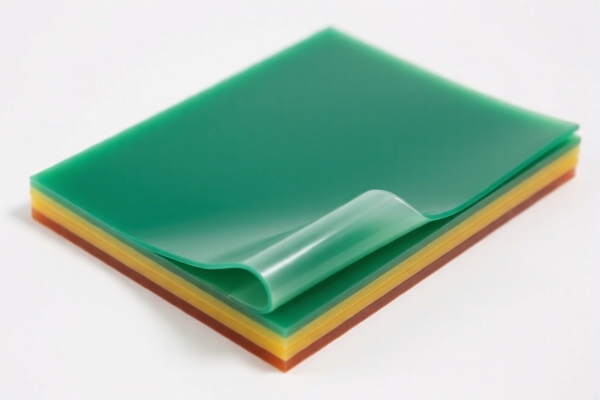
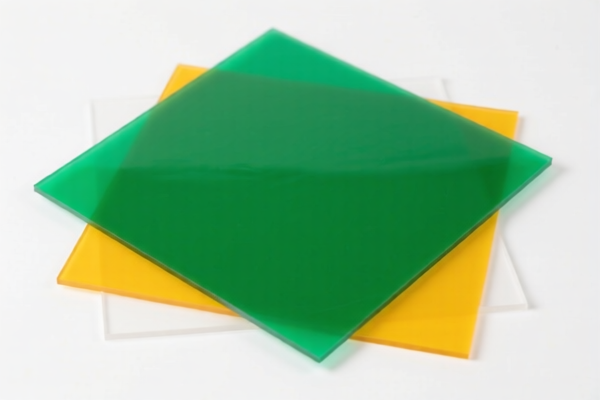
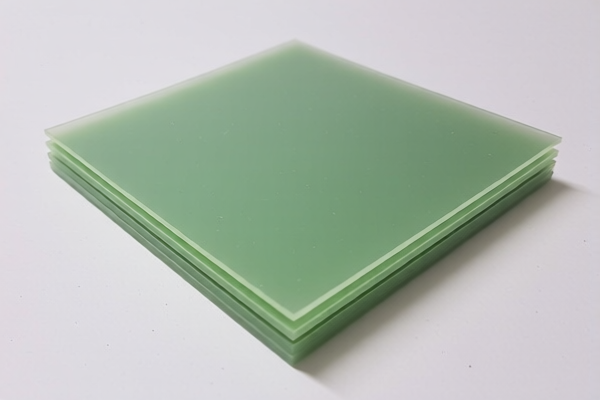
AI Analysis
🧪 Polyphenylsulfone (PPSU) Thermosetting Thin Sheet
🌐 HS Code Reference & Customs Clearance Guide | 2026 Latest Tariff Analysis | Professional Entry Strategy
📌 Part 1: Product Definition & Classification: Do You Really Understand "PPSU Sheet"?
Polyphenylsulfone (PPSU) is a high-performance, thermoplastic engineering polymer known for exceptional thermal stability, chemical resistance, and mechanical strength. In international trade, the classification depends heavily on two factors: 1. State of Processing: Is it a semi-finished "thin sheet" or a finished "article"? 2. Material Type: Although PPSU is technically a thermoplastic, the user specified "Thermosetting". Note: PPSU is chemically a polyarylsulfone (thermoplastic). If the product is truly "Thermosetting," it may be a different material (like Polyimide or PPS) or a PPSU composite. However, based on the name "Polyphenylsulfone," we assume it is PPSU. If it is explicitly labeled "Thermosetting," customs may scrutinize the chemical composition more closely.
⚠️ Key Distinction Point:
- Thin Sheet/Plate: If the product is in slab, sheet, or plate form, regardless of thickness (provided it is not yet shaped into a specific article), it is classified under Chapter 39 (Plastics).
- Finished Article: If the sheet is cut, molded, or processed into a specific item (e.g., a valve, gear, or seal), it may be classified under Chapter 84 or Chapter 85.
- "Thermosetting" Label: If the material is truly thermosetting, it belongs to Heading 39.09. If it is PPSU (thermoplastic), it belongs to Heading 39.11. Most PPSU sheets are thermoplastic. We will provide guidance for both scenarios below, with a focus on the most common PPSU classification (39.11) while addressing the "thermosetting" descriptor.
📦 Part 2: HS Code Classification Details (2026 Latest Tariff Reference)
| HS Code | Product Description | Applicable Scenario | Thermoplastic vs. Thermosetting |
|---|---|---|---|
3911.90.90.00 |
Other polyarylsulfones in primary forms (including sheets) | PPSU sheets, plates, or raw resin in sheet form | ✅ Thermoplastic (Most common for PPSU) |
3909.40.00.00 |
Polyamides in primary forms | Incorrect for PPSU, but sometimes confused | N/A |
3920.10.00.00 |
Other plates, sheets, film, foil, and strip, of polymers of ethylene | Incorrect, PE is different | N/A |
3920.49.00.00 |
Other plates, sheets, film, foil, and strip, of polymers of styrene | Incorrect, PS is different | N/A |
3920.62.00.00 |
Other plates, sheets, film, foil, and strip, of poly(vinyl chloride) | Incorrect | N/A |
3920.99.90.00 |
Other plates, sheets, film, foil, and strip, of other plastics | If PPSU is considered "other" under some older interpretations (Rare) | N/A |
3911.90.00.00 |
Other polyarylsulfones, in primary forms | Correct for PPSU Sheets | ✅ Thermoplastic |
🔍 Critical Note on "Thermosetting":
- PPSU is technically a Thermoplastic. If your product is labeled "Thermosetting Polyphenylsulfone," customs may suspect it is actually Polyphenylene Sulfide (PPS) (which can be thermoplastic or reinforced) or a Polyimide.
- If it is PPS (Thermoplastic): It may fall under 39.04 (if polyolefin-like behavior) or 39.11 (if considered a special polymer).
- If it is Truly Thermosetting (e.g., Cured PPSU composite): It falls under 39.09 (Amino-resins, Phenolic-resins, Polyimides, etc.).
- Assumption for this guide: We assume the product is PPSU Sheets (commonly 39.11) but the user mistakenly used "Thermosetting." If it is genuinely thermosetting (e.g., cured composite), use 39.09.40 (if polyimide-like) or 39.09.00 (other amino/phenolic/resorcinol resins).
- Recommendation: Verify the material safety data sheet (MSDS). If it is PPSU, use 39.11. If it is a thermosetting polyamide/imide, use 39.09.
💰 Part 3: 2026 Latest Tariff Rate Details (Including Surcharges, Policy Add-ons)
✅ Applicable Country: United States (US)
✅ Origin: China (CN)
✅ Effective Date: From November 10, 2025 (Including subsequent imports)
🎯 1. 3911.90.90.00 – Polyarylsulfones (PPSU) in Primary Forms (Sheets)
| Item | Content |
|---|---|
| Base Rate | 0% (ad valorem) |
| USITC Surcharge | +25% (From USITC Footnote 9903.88.01 - Section 301 Tariffs) |
| IEEPA Surcharge | +10% (For China/HK products, from November 10, 2025) |
| Total Rate | 35% |
| Tax Calculation | CIF Value × 35% |
| De Minimis Eligibility | ❌ No (deny_de_minimis) |
| Legal Path | IEEPA:9903.01.25 → IEEPA:9903.01.24 → USITC:3911.90.90.00 → FOOTNOTE:9903.88.01 |
📌 Explanation:
- "USITC 25%" is from Section 301 tariffs on Chinese plastics.
- "IEEPA 10%" is the new对华加征 tariff.
- Total 35% is high for a raw material. This affects cost significantly.
🎯 2. 3909.40.00.00 – If Truly Thermosetting (e.g., Polyimide/Resin)
| Item | Content |
|---|---|
| Base Rate | 0% |
| USITC Surcharge | +25% |
| IEEPA Surcharge | +10% |
| Total Rate | 35% |
| Tax Calculation | CIF Value × 35% |
| De Minimis Eligibility | ❌ No |
| Legal Path | IEEPA:9903.01.25 → IEEPA:9903.01.24 → USITC:3909.40.00.00 → FOOTNOTE:9903.88.01 |
📌 Note:
- If customs classifies it as "thermosetting resin" (39.09), the rate is also 35%.
- Risk: Misclassification can lead to penalties. If it is PPSU (39.11) but declared as 39.09, it may be seen as "incorrect HS."
🛠️ Part 4: Customs Clearance Practical Advice (Battlefield Pitfall Guide)
✅ 1. Document Checklist (None Can Be Missing)
| Document | Must Provide | Explanation |
|---|---|---|
| ✅ Material MSDS | ✔️ | Must clearly state PPSU vs. PPS vs. Polyimide. Critical for "Thermosetting" vs. "Thermoplastic" dispute. |
| ✅ Certificate of Composition | ✔️ | By the manufacturer, stating polymer type and whether it is cured/thermosetting. |
| ✅ Product Photos | ✔️ | Show the sheet, thickness, and any branding. |
| ✅ Commercial Invoice | ✔️ | State "Polyphenylsulfone (PPSU) Sheets" or "Thermosetting Polyimide Sheet" precisely. |
| ✅ Packing List | ✔️ | Weight and dimensions. |
| ✅ FCC/CE Reports | ✔️ | If used in electronics, these may be required for downstream compliance. |
✅ 2. Declaration Tips (Key Mantra)
🔥 "PPSU is 39.11, PPS is 39.04/39.11, Thermosetting is 39.09. Name it right, pay the right tax!"
| Scenario | Correct Declaration | Wrong Practice |
|---|---|---|
| PPSU Sheet (Thermoplastic) | 3911.90.90.00 - "PPSU Sheet" |
Declare as "Plastic Sheet" → Ambiguity |
| PPSU Sheet Labeled "Thermosetting" | Provide Chemical Analysis to prove it's PPSU (39.11) | Declare as 39.09 without proof → Audit risk |
| Finished PPSU Part (e.g., Valve) | 8481.80.90.00 (Valves) |
Declare as "Sheet" → Misclassification |
| Thin Film (<0.05mm) | May still be 39.11, but check thickness rules | Confuse with film classification |
✅ 3. Special Case Handling
| Situation | Handling Advice |
|---|---|
| "Thermosetting" Label on PPSU | PPSU is inherently thermoplastic. If labeled thermosetting, customs will ask for clarification. Provide a Technical Data Sheet explaining it is PPSU (thermoplastic) and the label is a mistake, OR if it is a cured composite, provide proof. |
| High-Performance Plastics | US Customs may classify these under "Other Plastics" if not specifically listed. PPSU is listed in 39.11, so it's safe. |
| Import from Vietnam/Mexico | If shipped from a third country, ensure Origin Certificate proves China origin to apply correct tariffs. If re-exported, may face higher rates. |
| Sample Shipments | Even samples are subject to tariffs. No de minimis exemption for China-origin plastics. |
🌍 Part 5: Global Market Clearance Comparison (2026 Latest)
| Country/Region | Recommended HS Code | Tariff | Certification Requirements | Notes |
|---|---|---|---|---|
| 🇺🇸 US | 3911.90.90.00 |
35% (China) | FCC (if electronic), RoHS | High tariff due to 301/IEEPA |
| 🇨🇳 China | 3911.90.90.00 |
5% | N/A | No additional surcharges |
| 🇪🇺 EU | 3911.90.90.00 |
0% (if GSP/EBA) | REACH, RoHS | Check for REACH SVHC restrictions |
| 🇦🇺 Australia | 3911.90.90.00 |
5% | N/A | No additional surcharges |
| 🇯🇵 Japan | 3911.90.90.00 |
0% | PSE (if applicable) | No additional surcharges |
📌 Conclusion:
- US is the only market with significant surcharges for China-origin plastics.
- EU and Japan are tariff-friendly but have strict chemical compliance (REACH, PSE).
- Cost Implication: For US imports, factor in 35% tariff + insurance + freight + duties processing fees.
📌 Part 6: Common Errors & Pitfalls (Blood & Tears Lessons)
❌ Error 1: Declaring PPSU as "General Plastic Sheet" (3920.99.90.00)
👉 Consequence: Customs may reclassify to 39.11 and impose back taxes + penalties.
❌ Error 2: Ignoring the "Thermosetting" label
👉 Consequence: If you claim 39.11 (Thermoplastic) but the label says "Thermosetting," customs will demand chemical proof. Failure to provide → Detention.
❌ Error 3: Assuming "Thin Sheet" is exempt from tariffs
👉 Consequence: No de minimis exemption for China-origin plastics. All units are taxed.
❌ Error 4: Using "Plastic Part" for a Sheet
👉 Consequence: If it's a sheet, it's 39.11. If it's a part, it's 84/85. Misclassification leads to wrong tariff rates.
✅ Correct Practice:
"Polyphenylsulfone (PPSU) Sheet, Thermoplastic, 2mm Thick, 1m x 1m, Unprocessed, For Industrial Use"
🎯 Part 7: Conclusion: Precision Classification Saves Money!
🎯 Remember the Mantra:
🔹 "PPSU is 39.11, PPS is 39.04, Thermosetting is 39.09. Name it right, pay less!"
🔹 "US Tariffs are 35%, EU is 0%, China is 5%. Know the market!"
🔹 "MSDS is King. If it says 'Thermosetting,' prove it!"
📌 Pro Tip:
If your PPSU sheet is used in semiconductor or aerospace, it may be considered "high-tech." While the HS code remains 39.11, ensure you have export control compliance if shipping from the US. For imports to the US, pre-arrival filing is recommended to avoid delays.
📣 Immediate Action:
📞 Contact a Customs Broker + Provide MSDS + File Advance Ruling for "Thermosetting" vs. "Thermoplastic" clarification
🚀 Ensure your PPSU sheet, clears customs smoothly, avoids audits, and protects your margin!
✨ Professional Clearance Starts with Precise Classification!
💼 Every percent of tariff counts!
Customer Reviews
About HS Code Classification
The Harmonized System (HS) is an internationally standardized nomenclature developed by the World Customs Organization (WCO) to classify traded products. Over 200 countries use the HS system as the basis for customs tariffs, trade statistics, and import/export regulations.
Each HS code follows a hierarchical structure:
- Chapter (2 digits) — Broad category of goods (e.g., Chapter 84: Machinery and Mechanical Appliances)
- Heading (4 digits) — More specific grouping within the chapter
- Subheading (6 digits) — Internationally standardized breakdown, used by all WCO member countries
- National subdivisions (8-10 digits) — Country-specific extensions for further classification, such as US HTSUS 10-digit codes
Correct HS code classification is essential for smooth customs clearance, accurate duty payment, and compliance with trade regulations. Misclassification can lead to customs delays, overpayment of duties, or penalties.
When importing from CN to US, the applicable tariff rates may include:
- Most-Favored-Nation (MFN) rate — The standard duty rate applied to WTO members
- General rate — Applied to countries without trade agreements
- Trade remedy duties — Additional tariffs such as Section 301 (anti-dumping), Section 232 (national security), or countervailing duties
The information provided on this page is for reference purposes only. For official classification, please consult with your local customs authority or a licensed customs broker.