Polypropylene Anti static Material Raw Material
CN → US| HS Code | Tariff Rate | Origin | Destination | Doc |
|---|---|---|---|---|
| 3902100000 | 41.5% | CN | US | Official Doc |
| 3913905000 | 41.5% | CN | US | Official Doc |
| 3926909989 | 22.8% | CN | US | Official Doc |
| 3913902090 | 40.8% | CN | US | Official Doc |
| 3926904590 | 38.5% | CN | US | Official Doc |
Product Images
AI Analysis
🧪 Polypropylene Anti-Static Material (Raw Material)
🌐 HS Code Reference & Customs Clearance Guide | 2026 Latest Tariff Analysis | Professional Clearance Strategy
📌 I. Product Definition & Classification: What Exactly Is "Polypropylene Anti-Static Material"?
Polypropylene (PP) is one of the most widely used thermoplastic polymers in the world. When modified with anti-static agents, it becomes critical for packaging electronics, precision components, and industrial containers to prevent electrostatic discharge (ESD) damage.
In international trade, this product can be classified into three distinct categories depending on its physical form and processing stage:
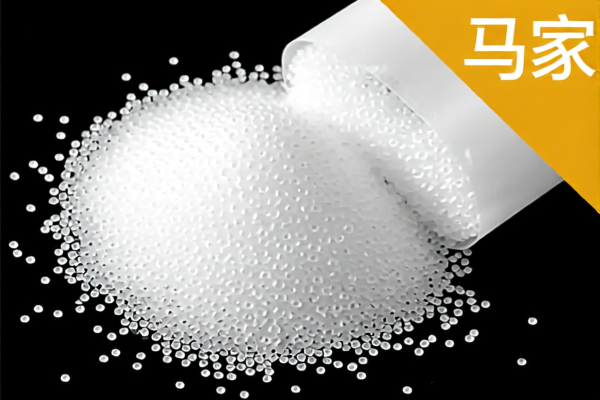
- Raw Material / Primary Form (Resins/Granules): The unprocessed polymer or compound, ready for molding. → Chapter 39, Heading 3913 or 3902.
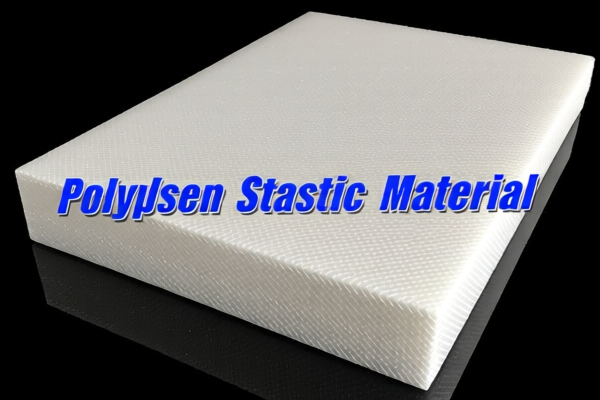
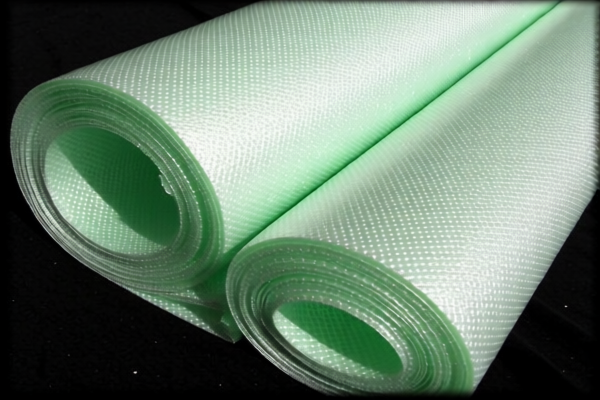
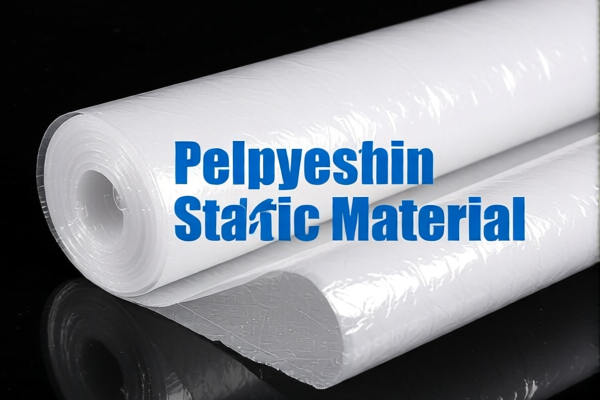
- Semi-Finished Material (Sheet/Rod/Profile): Processed into basic shapes but not yet a final product. → Chapter 39, Heading 3902.
- Finished Plastic Articles: Specific molded items or general-purpose plastic parts. → Chapter 39, Heading 3926.
⚠️ Key Distinction Point:
- If it is granules, powder, or flakes intended for further manufacturing → 3913.90.xxxx (Polymers).
- If it is sheets, rods, or plates (semi-finished) → 3902.10.00.00 (Polypropylene sheets).
- If it is a final plastic product (even if simple) → 3926.90.xxxx (Other plastic articles).
📦 II. HS Code Classification Details (2026 Latest Tariff Authority Mapping)
| HS Code | Product Description | Application Scenario | Taxation Logic |
|---|---|---|---|
3902.10.00.00 |
Polypropylene (PP) materials, semi-finished form (e.g., sheets, profiles) | Semi-finished PP sheets used for fabrication | ✅ High Risk/High Tax: Treated as processed PP goods |
3913.90.50.00 |
Polypropylene anti-static material, raw material form (resins/compounds) | Raw polymer granules for injection molding | ✅ High Risk/High Tax: Treated as synthetic polymer imports |
3926.90.99.89 |
Polypropylene anti-static material, final plastic articles | Generic plastic parts, containers, or miscellaneous items | ✅ Lower Tax: General "catch-all" for plastic products |
3913.90.20.90 |
Polypropylene anti-static material, material form (general polymer) | Broad category for PP-based materials not elsewhere specified | ✅ High Risk/High Tax: Similar to 3913.90.50 |
3926.90.45.90 |
Polyppropylene anti-static material, other plastic articles | Specific plastic articles under miscellaneous subheadings | ✅ Lower Tax: Classified as specific plastic goods |
🔍 Key Reminder:
- Raw Granules/Resins generally fall under 3913 (Polymers).
- Semi-finished Sheets/Plates fall under 3902 (Polypropylene specific).
- Final Parts/Articles fall under 3926 (Other plastic articles).
- Misclassification Risk: Declaring a final product as "raw material" or vice versa can lead to significant duty discrepancies and customs penalties.
💰 III. 2026 Latest Tariff Rate Breakdown (Including Surcharges & Policy Add-ons)
✅ Applicable Country: United States (US)
✅ Country of Origin: China (CN)
✅ Effective Date: From November 10, 2025 (including subsequent imports)
🎯 1. 3902.10.00.00 —— Polypropylene Semi-Finished Materials (Sheets/Profiles)
| Item | Detail |
|---|---|
| Base Duty Rate | 6.5% (ad valorem) |
| Section 301 Surtax | +25.0% (From USITC Footnote 9903.88.01) |
| Section 122 Duty | +10.0% (Specific 122 Clause Tariff for China) |
| Total Duty Rate | 41.5% |
| Tax Calculation | CIF Value × 41.5% |
| De Minimis Eligibility | ❌ No (deny_de_minimis) |
| Legal Basis Path | Section 301: 9903.88.01 → Section 122: 9903.10 → USITC: 3902.10.00.00 |
📌 Explanation:
- The 25% surcharge is from the Section 301 Trade Act (China-specific).
- The 10% is an additional "122 Clause" tariff imposed on certain Chinese goods.
- Total 41.5% is a very high effective duty. Ensure the form is accurately described as "semi-finished" to avoid being misclassified as a finished good with potentially different rates.
🎯 2. 3913.90.50.00 & 3913.90.20.90 —— Polypropylene Raw Materials / Polymers
| Item | Detail |
|---|---|
| Base Duty Rate | 6.5% (for .50) / 5.8% (for .20) |
| Section 301 Surtax | +25.0% |
| Section 122 Duty | +10.0% |
| Total Duty Rate | 41.5% (.50) / 40.8% (.20) |
| Tax Calculation | CIF Value × Total Rate |
| De Minimis Eligibility | ❌ No |
| Legal Basis Path | Section 301 → Section 122 → USITC: 3913.90.xxxx |
📌 Note:
- These codes apply to resins, granules, or powders.
- Despite being "raw," they are not exempt from Section 301 or 122 duties.
- Total rates range from 40.8% to 41.5%. This is among the highest tax brackets for plastic imports from China.
🎯 3. 3926.90.99.89 & 3926.90.45.90 —— Finished Plastic Articles
| Item | Detail |
|---|---|
| Base Duty Rate | 5.3% (for .89) / 3.5% (for .45) |
| Section 301 Surtax | +7.5% (Lower surtax rate for general plastic articles) |
| Section 122 Duty | +10.0% |
| Total Duty Rate | 22.8% (.89) / 38.5% (.45) |
| Tax Calculation | CIF Value × Total Rate |
| De Minimis Eligibility | ❌ No |
| Legal Basis Path | Section 301 → Section 122 → USITC: 3926.90.xxxx |
📌 Strategic Insight:
- Code3926.90.99.89offers the lowest effective rate at 22.8% if the product can be legitimately classified as a "general plastic article."
- Code3926.90.45.90has a higher base but lower Section 301, totaling 38.5%.
- Warning: You cannot arbitrarily choose 3926 for raw granules. The physical form must match the HS Code definition. If you ship granules but declare them as "plastic articles," Customs will reject the declaration and levy penalties.
🛠️ IV. Customs Clearance Practical Advice (Real-World Pitfall Guide)
✅ 1. Required Documentation Checklist (Non-Negotiable)
| Document | Required? | Explanation |
|---|---|---|
| ✅ Product Specifications | ✔️ | Must specify: Polymer type (PP), Anti-static agent %, Form (Granule/Sheet/Final Part), Color, Density. |
| ✅ Technical Data Sheet (TDS) | ✔️ | Proves the "anti-static" property and polymer composition. |
| ✅ Commercial Invoice | ✔️ | Clearly state: "Polypropylene Anti-Static [Granules/Sheets/Articles]" – Never just "Plastic Material." |
| ✅ Packing List | ✔️ | Show net/gross weight and packaging type (e.g., 25kg bags, palletized sheets). |
| ✅ Certificate of Origin (CO) | ✔️ | Required for Section 301/122 duty calculations. |
| ✅ Test Reports | ✔️ | ESD resistance test results (e.g., Surface Resistance < 10^9 ohms) to justify "Anti-Static" claim. |
✅ 2. Declaration Tips (Key Mantra)
🔥 “Form Dictates Code, Granules Are Raw, Sheets Are Semi, Parts Are Finished!”
| Scenario | Correct HS Code | Incorrect Action | Consequence |
|---|---|---|---|
| PP Granules/Resins | 3913.90.50.00 or 3913.90.20.90 |
Declare as "Plastic Parts" | 🚫 Rejected: Form mismatch. High risk of audit. |
| PP Sheets/Rods | 3902.10.00.00 |
Declare as "Granules" | 🚫 Rejected: Processed form differs from raw. |
| Final Plastic Boxes/Trays | 3926.90.99.89 (Optimal) |
Declare as "Granules" | 🚫 Penalty: Misclassification. |
| Final Plastic Boxes/Trays | 3926.90.45.90 |
Declare as "Granules" | 🚫 Penalty: Same as above. |
💡 Pro Tip:
- If your product is granules, accept the ~41% duty rate. There is no legal workaround.
- If your product is semi-finished sheets, use3902.10.00.00(41.5%).
- If your product is finished goods, evaluate if3926.90.99.89(22.8%) is applicable. This is the most cost-effective classification if the item is a distinct finished article.
✅ 3. Special Cases Handling
| Case | Handling Advice |
|---|---|
| Custom Color/Formula | Provide a detailed formula sheet. Do not claim "proprietary" if it's standard PP + Carbon/Static Agent. |
| Blended Materials | If PP is blended with >20% other polymers, HS Code may change to Chapter 39 Heading 3901 or 3907. Verify composition. |
| Regrind/Recycled PP | If containing recycled content, specify "Reground PP." Duty rate may remain the same, but labeling requirements differ. |
| Anti-Static Certification | Ensure the "anti-static" claim is backed by lab reports. False claims can lead to product seizure for misbranding. |
🌍 V. Global Market Comparison (2026 Update)
| Market | Recommended HS Code | Duty Rate (China Origin) | Key Requirement |
|---|---|---|---|
| 🇺🇸 USA | 3913.90.50.00 (Raw) / 3926.90.99.89 (Parts) |
41.5% (Raw) / 22.8% (Parts) | Section 301 + Section 122 apply. No de minimis. |
| 🇨🇳 China | 3913.90 |
~2.5% - 5% | Standard Import Tariff. |
| 🇪🇺 EU | 3913.90 |
~5% - 6% | No Section 301 equivalent, but anti-dumping may apply for certain PP grades. |
| 🇨🇦 Canada | 3913.90 |
~0% - 5% | Check for CUSMA eligibility if manufactured in US/Mexico. |
| 🇬🇧 UK | 3913.90 |
~5% | Post-Brexit tariff schedule applies. |
📌 Conclusion:
- The USA imposes the highest barrier due to the combination of Base Duty + Section 301 (301) + Section 122.
- Duty Savings Strategy: If possible, structure the supply chain to export finished plastic articles (3926) rather than raw materials, as the Section 301 rate for general plastic articles is lower (7.5% vs 25%).
- However, this is only valid if the product is indeed a finished article. Do not misdeclare.
📌 VI. Common Errors & Pitfalls (Lessons Learned)
❌ Error 1: Declaring Granules as "Plastic Accessories"
👉 Consequence: Customs flags form mismatch. Delay + Potential 25% penalty.
❌ Error 2: Ignoring Section 122
👉 Consequence: Underpaying by 10%. Customs will demand back payment + interest.
❌ Error 3: Using Generic Description "Plastic Material"
👉 Consequence: Customs will select the highest applicable duty rate or request a reclassification.
❌ Error 4: Assuming "Anti-Static" Exempts Duties
👉 Consequence: No such exemption exists. Anti-static is a property, not a tariff category.
✅ Correct Practice:
"Polypropylene (PP) Anti-Static Granules, White, 25kg Bags, Mfr: [Name], HS: 3913.90.50.00, Country of Origin: China"
🎯 VII. Conclusion: Precision Classification for Cost Efficiency
🎯 Remember the Mantra:
🔹 "Granules = Raw (41.5%), Sheets = Semi (41.5%), Finished Parts = General (22.8%)."
🔹 "Section 301 is 25% for Polymers, 7.5% for General Plastic."
🔹 "Section 122 adds 10% universally."
📌 Small Tip:
If your product is exported to the US and you are unsure of the classification, request a Binding Tariff Information (BTI) or Advance Ruling from CBP (Customs and Border Protection) before shipment. This provides legal certainty on the HS Code and duty rate.
📣 Immediate Action:
📞 Contact your freight forwarder with the exact product form (Granule/Sheet/Final Part).
📄 Prepare TDS and Invoice with precise HS Code.
💸 Budget for ~22.8% - 41.5% in total duties.
✨ Professional clearance starts with accurate classification!
💼 Every percentage point saved is pure profit!
Customer Reviews
About HS Code Classification
The Harmonized System (HS) is an internationally standardized nomenclature developed by the World Customs Organization (WCO) to classify traded products. Over 200 countries use the HS system as the basis for customs tariffs, trade statistics, and import/export regulations.
Each HS code follows a hierarchical structure:
- Chapter (2 digits) — Broad category of goods (e.g., Chapter 84: Machinery and Mechanical Appliances)
- Heading (4 digits) — More specific grouping within the chapter
- Subheading (6 digits) — Internationally standardized breakdown, used by all WCO member countries
- National subdivisions (8-10 digits) — Country-specific extensions for further classification, such as US HTSUS 10-digit codes
Correct HS code classification is essential for smooth customs clearance, accurate duty payment, and compliance with trade regulations. Misclassification can lead to customs delays, overpayment of duties, or penalties.
When importing from CN to US, the applicable tariff rates may include:
- Most-Favored-Nation (MFN) rate — The standard duty rate applied to WTO members
- General rate — Applied to countries without trade agreements
- Trade remedy duties — Additional tariffs such as Section 301 (anti-dumping), Section 232 (national security), or countervailing duties
The information provided on this page is for reference purposes only. For official classification, please consult with your local customs authority or a licensed customs broker.