Polypropylene Antioxidant
CN → US| HS Code | Tariff Rate | Origin | Destination | Doc |
|---|---|---|---|---|
| 3812310000 | 41.5% | CN | US | Official Doc |
| 3812396000 | 41.5% | CN | US | Official Doc |
| 2907292500 | 40.5% | CN | US | Official Doc |
| 2907198000 | 40.5% | CN | US | Official Doc |
| 3824999397 | 40.0% | CN | US | Official Doc |
Product Images
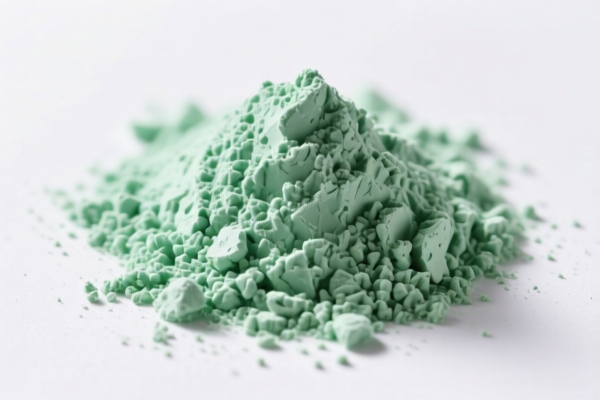
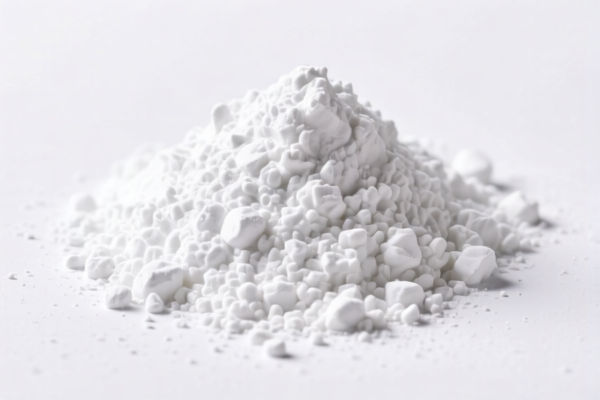
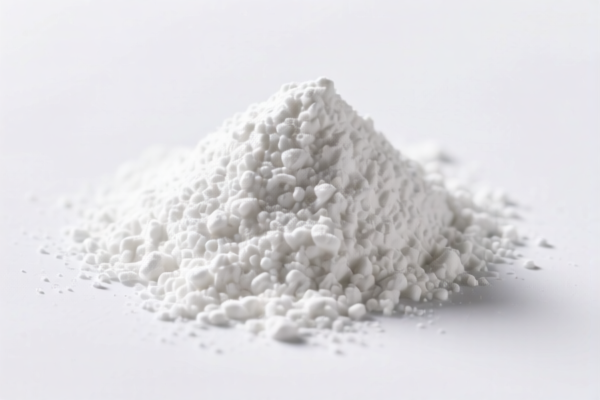
AI Analysis
🧪 Polypropylene Antioxidant (Polymer Antioxidant)
🌐 HS Code Reference & Customs Clearance Guide | 2026 Latest Tariff Analysis | Professional Entry Strategy
📌 I. Product Definition & Classification: Do You Truly Understand "Polymer Antioxidants"?
Polypropylene Antioxidants (PP Antioxidants) are critical chemical additives used in the rubber and plastic industries to prevent oxidation and extend the lifespan of polymer materials. In international trade, these are not a single monolithic category but are classified based on their chemical composition and physical form. Misclassification is common because they sit at the intersection of chemical specialties and industrial preparations.
⚠️ Key Distinction:
- If the antioxidant is a specific organic chemical compound (e.g., specific phenols, phosphites), it often falls under Chapter 29 (Organic Chemicals).
- If the antioxidant is a mixture, preparation, or specialized chemical product not specified elsewhere, it often falls under Chapter 38 (Miscellaneous Chemical Products).
📦 II. HS Code Classification Details (2026 Latest Tariff Authority Comparison)
| HS Code | Product Description | Application Scenario | Tax Rate Profile |
|---|---|---|---|
3812.31.00.00 |
Polymer Antioxidants: Preparations based on polymers or matched with rubber/plastic materials | Specialized antioxidant formulations for rubber or plastic processing | 41.5% Total |
3812.39.60.00 |
Polymer Antioxidants: Other preparations for use as antioxidants in plastics/rubber | General-purpose antioxidant preparations not specifically named in 31 | 41.5% Total |
2907.29.25.00 |
Organic Chemicals: Polyphenols/Polyphenols derivatives (Multifunctional phenols) | Pure chemical antioxidants like hindered phenols (e.g., Irganox 1010 type) | 40.5% Total |
2907.19.80.00 |
Organic Chemicals: Mono-phenols and their derivatives (Single phenol compounds) | Pure chemical antioxidants like bisphenol-based single phenols | 40.5% Total |
3824.99.93.97 |
Chemical Products: Other prepared chemicals, not elsewhere specified | Complex mixtures or proprietary blends classified as "Other" | 40.0% Total |
🔍 Key Reminder:
- Pure Chemicals (single compounds with defined structure) → Generally Chapter 29 (2907.xx).
- Preparations/Mixtures (formulated for specific industrial use, often containing carriers) → Generally Chapter 38 (3812.xxor3824.xx).
- Tax Impact: The difference between 40.0% and 41.5% may seem small, but on high-volume shipments, it significantly affects landed cost.
💰 III. 2026 Latest Tariff Rate Breakdown (Including Additional Taxes & Policy Add-ons)
✅ Applicable Country: USA (US)
✅ Country of Origin: China (CN)
✅ Effective Date: From November 10, 2025 (and subsequent imports)
🎯 1. 3812.31.00.00 & 3812.39.60.00 —— Polymer Antioxidant Preparations (Chapter 38)
| Item | Details |
|---|---|
| Base Tariff | 6.5% (Ad valorem) |
| Section 301 Additional Duty | +25.0% (USITC Footnote related to Chinese imports) |
| Section 122 Duty | +10.0% (Specific surcharge on certain chemical products) |
| Total Effective Tax Rate | 41.5% |
| Tax Calculation | CIF Value × 41.5% |
| De Minimis Exemption | ❌ Not Available (High value threshold exceeded; strictly enforced) |
| Legal Basis Path | HTSUS:3812.31 → USITC:301 → Section 122 |
📌 Explanation:
- The 6.5% base rate applies to general chemical preparations.
- The 25% additional duty is the standard Section 301 tariff on Chinese-origin goods in this category.
- The 10% Section 122 duty is a specific surcharge applicable to certain chemical imports.
- Total 41.5% is a very high tariff, requiring precise cost planning.
🎯 2. 2907.29.25.00 & 2907.19.80.00 —— Organic Phenolic Antioxidants (Chapter 29)
| Item | Details |
|---|---|
| Base Tariff | 5.5% (Ad valorem) |
| Section 301 Additional Duty | +25.0% (USITC Footnote related to Chinese imports) |
| Section 122 Duty | +10.0% (Specific surcharge on certain chemical products) |
| Total Effective Tax Rate | 40.5% |
| Tax Calculation | CIF Value × 40.5% |
| De Minimis Exemption | ❌ Not Available |
| Legal Basis Path | HTSUS:2907 → USITC:301 → Section 122 |
📌 Note:
- These codes apply to pure organic chemicals (phenols/polyphenols).
- The base tariff is 1.0% lower than Chapter 38 products (5.5% vs 6.5%).
- However, if your product is a mixture, you cannot use this code; customs will reclassify it to Chapter 38, leading to penalties.
🎯 3. 3824.99.93.97 —— Other Prepared Chemicals (Chapter 38)
| Item | Details |
|---|---|
| Base Tariff | 5.0% (Ad valorem) |
| Section 301 Additional Duty | +25.0% (USITC Footnote related to Chinese imports) |
| Section 122 Duty | +10.0% (Specific surcharge on certain chemical products) |
| Total Effective Tax Rate | 40.0% |
| Tax Calculation | CIF Value × 40.0% |
| De Minimis Exemption | ❌ Not Available |
| Legal Basis Path | HTSUS:3824.99 → USITC:301 → Section 122 |
📌 Advantage:
- This is the lowest total tax rate (40.0%) among the options.
- Crucial: This code is for "Other" chemicals not specified elsewhere. It should only be used if the product does not fit neatly into3812(antioxidants specifically) or2907(pure phenols). Using this incorrectly for a standard antioxidant can lead to classification disputes.
🛠️ IV. Customs Clearance Practical Advice (Real-World Pitfall Avoidance)
✅ 1. Preparation Checklist (Non-negotiable)
| Document | Mandatory? | Description |
|---|---|---|
| ✅ Product Specification Sheet | ✔️ | Must detail chemical composition, purity, CAS number, and physical state. |
| ✅ Structure Diagram / Formula | ✔️ | Critical to prove if it's a pure compound (Ch 29) or a mixture (Ch 38). |
| ✅ Product Photos (Label & Bulk) | ✔️ | Show CAS number, lot number, and manufacturer details. |
| ✅ Third-Party Test Report | ✔️ | GC/MS reports to confirm purity and identify components. |
| ✅ Commercial Invoice | ✔️ | Must clearly state "Polymer Antioxidant" and provide HS Code. |
| ✅ Certificate of Origin (CO) | ✔️ | Required for duty calculation; must match origin country. |
| ✅ Packing List | ✔️ | Detail net/gross weight, packaging material. |
✅ 2. Declaration Strategy (Key Mantras)
🔥 "Pure Compound = Ch 29; Mixture = Ch 38; Name Precise = No Delays!"
| Scenario | Correct Declaration | Error to Avoid |
|---|---|---|
| Pure Hindered Phenol (e.g., Irganox 1010) | 2907.29.25.00 (40.5%) |
Misdeclaring as 3812.31.00.00 → Overpay 1.0% |
| Antioxidant Pre-mix (with carrier/starch) | 3812.31.00.00 (41.5%) |
Misdeclaring as 2907.xx → Underpay, leading to penalty |
| Proprietary Complex Blend | 3824.99.93.97 (40.0%) |
Forcing into 3812 → Higher rate; use only if unclassifiable under 3812 |
| Bulk Powder vs. Granules | Same HS Code | Don't let physical form distract from chemical nature |
✅ 3. Special Circumstances Handling
| Situation | Handling Advice |
|---|---|
| CAS Number Missing | Provide detailed chemical structure; customs may reject without it. |
| Multiple Active Ingredients | If it's a mix of antioxidants, it's likely a "Preparation" → 3812 or 3824. |
| OEM Private Label | Ensure the supplier provides the exact chemical data sheet, not just the brand name. |
| Sample Shipments | Even samples for R&D are subject to duty if declared as commercial goods; consider "No Value" samples if eligible, but still declare correctly. |
🌍 V. Global Market Comparison (2026 Latest)
| Country/Region | Recommended HS Code | Tariff (China Origin) | Certification Requirements | Notes |
|---|---|---|---|---|
| 🇺🇸 USA | 3812.31.00.00 / 2907.xx |
40.0% - 41.5% | None specific (FDA for food contact if applicable) | High additional taxes apply. |
| 🇨🇳 China | 3812.31.00 / 2907.xx |
Varies (5-10%) | GB Standards | No Section 301/122 taxes. |
| 🇪🇺 EU | 3812.31 / 2907.xx |
~0-6.5% | REACH Registration Mandatory | REACH compliance is critical before import. |
| 🇯🇵 Japan | 3812.31 / 2907.xx |
~0-5.5% | JIS Standards | Low base tariffs, but high scrutiny on purity. |
| 🇬🇧 UK | 3812.31 / 2907.xx |
~0-6.5% | UK REACH | Post-Brexit regulations mirror EU REACH. |
📌 Conclusion:
- USA: Highest total tax burden (40-41.5%). Cost optimization is key.
- EU/UK: REACH registration is the biggest hurdle, not just tariffs.
- China: Lowest tariff, but subject to domestic environmental regulations.
📌 VI. Common Errors & Pitfalls (Lessons Learned)
❌ Error 1: Declaring a mixture as a pure chemical (2907) to save 1.0%
👉 Consequence: Customs audit → 100% penalty + back taxes.
❌ Error 2: Missing the CAS Number on the invoice
👉 Consequence: Clearance delay → Demurrage charges.
❌ Error 3: Ignoring Section 122 in the tax calculation
👉 Consequence: Underpayment → Seizure or demand for payment.
❌ Error 4: Using 3824 for a standard antioxidant without justification
👉 Consequence: Customs may reclassify to 3812 → Higher tax.
✅ Correct Approach:
"Hindered Phenolic Antioxidant, CAS 6683-19-8, Purity >98%, for Polypropylene Stabilization, Powder Form."
🎯 VII. Conclusion: Precise Classification, Smarter Customs, Higher Margins!
🎯 Remember the Mantra:
🔹 "Pure is Ch 29 (40.5%); Mix is Ch 38 (41.5%); Unknown is Ch 3824 (40.0%)."
🔹 "Data Sheet is King; CAS Number is Proof; Tax is High, Be Smart!"
📌 Pro Tip:
- If your product is a complex proprietary blend, consult a customs broker to see if 3824.99.93.97 (40.0%) is defensible vs. 3812.31.00.00 (41.5%).
- Always have the Technical Data Sheet (TDS) and Safety Data Sheet (SDS) ready for customs inspection.
- Consider Advance Ruling from US Customs if the classification is ambiguous.
📣 Immediate Action:
📞 Engage a licensed customs broker + Provide TDS/SDS + Apply for Pre-Ruling if necessary
🚀 Ensure compliance, accuracy, and cost-efficiency in your polymer antioxidant exports!
✨ Professional Classification Saves Money!
💼 Every percentage point counts in chemical trade!
Customer Reviews
About HS Code Classification
The Harmonized System (HS) is an internationally standardized nomenclature developed by the World Customs Organization (WCO) to classify traded products. Over 200 countries use the HS system as the basis for customs tariffs, trade statistics, and import/export regulations.
Each HS code follows a hierarchical structure:
- Chapter (2 digits) — Broad category of goods (e.g., Chapter 84: Machinery and Mechanical Appliances)
- Heading (4 digits) — More specific grouping within the chapter
- Subheading (6 digits) — Internationally standardized breakdown, used by all WCO member countries
- National subdivisions (8-10 digits) — Country-specific extensions for further classification, such as US HTSUS 10-digit codes
Correct HS code classification is essential for smooth customs clearance, accurate duty payment, and compliance with trade regulations. Misclassification can lead to customs delays, overpayment of duties, or penalties.
When importing from CN to US, the applicable tariff rates may include:
- Most-Favored-Nation (MFN) rate — The standard duty rate applied to WTO members
- General rate — Applied to countries without trade agreements
- Trade remedy duties — Additional tariffs such as Section 301 (anti-dumping), Section 232 (national security), or countervailing duties
The information provided on this page is for reference purposes only. For official classification, please consult with your local customs authority or a licensed customs broker.