Polypropylene Composite Detergent Packaging Bag
CN → US| HS Code | Tariff Rate | Origin | Destination | Doc |
|---|---|---|---|---|
| 3921901950 | 40.3% | CN | US | Official Doc |
| 3923290000 | 38.0% | CN | US | Official Doc |
| 3923210095 | 38.0% | CN | US | Official Doc |
| 3921902900 | 39.4% | CN | US | Official Doc |
Product Images
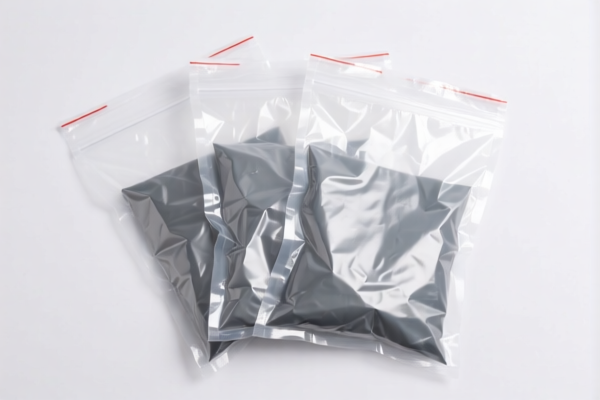
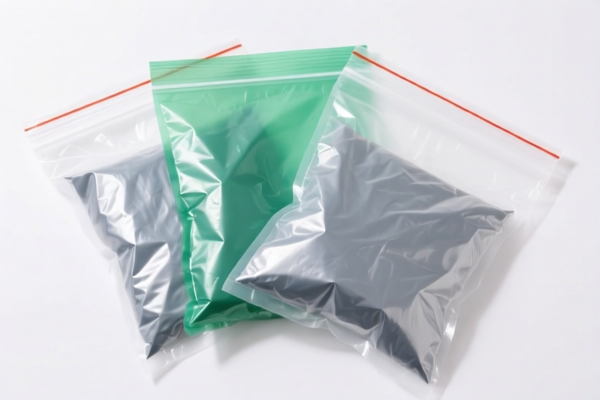
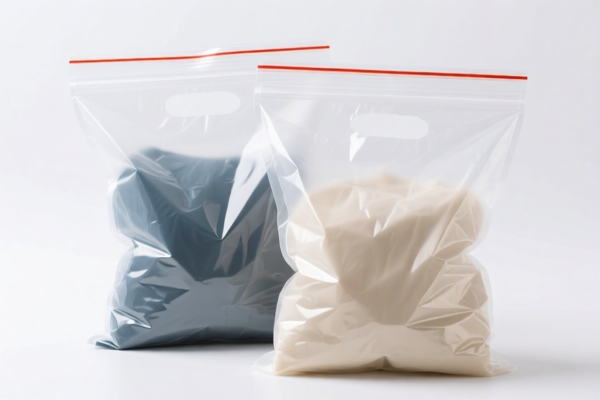
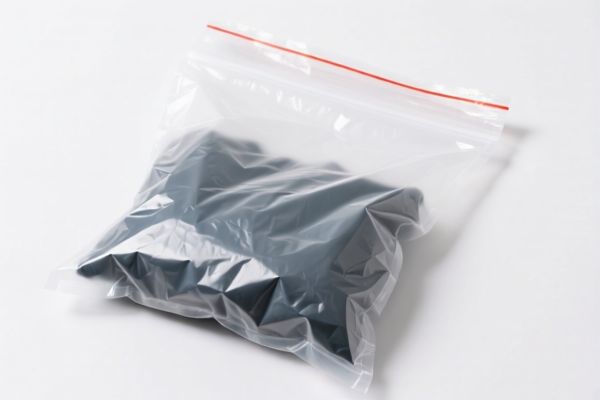
AI Analysis
📦 Polypropylene Composite Detergent Packaging Bags
🌐 HS Code Reference & Clearance Guide | 2026 Latest Tariff Analysis | Professional Customs Strategy
📌 I. Product Definition and Classification: Do You Really Understand "PP Composite Bags"?
Polypropylene (PP) composite detergent packaging bags are flexible packaging solutions widely used in the chemical and household industries. In international trade, these bags are not a single homogeneous product but fall into different categories based on their structure, material composition, and intended use.
The core challenge in classifying these bags lies in distinguishing between: * Composites with textile materials (e.g., woven PP sacks laminated with plastic film). * Pure plastic packaging articles (e.g., flexible pouches made from multiple plastic layers). * Sacks and bags specifically designed for packaging (vs. general plastic films).
⚠️ Key Distinction Point:
- If the bag contains a woven textile layer (even if it's just PP woven fabric) combined with plastic → It often falls under Chapter 39 as "Plastics and Articles Thereof" but specifically categorized as composite with textiles or other plastics.
- If it is a pure plastic laminate (no textile weave) used specifically as a bag → It falls under 3923 (Articles for the conveyance or packing of goods).
- Detergent Specificity: The content (detergent) does not change the HS Code; only the packaging material and structure matter.
📋 II. HS Code Classification Details (Based on Provided Data)
Based on the provided data for Polypropylene Composite Detergent Packaging Bags, here are the four possible HS Code classifications, their summaries, and the rationale.
| HS Code | Summary & Rationale | Total Tax Rate |
|---|---|---|
3921.90.19.50 |
Rationale: Classified as a plastic composite bag. The description notes it fits the category of "combined with textile materials or other plastic products." This code is often used for laminated composites where the primary characteristic is the plastic layer bonded to another material (including woven PP). | 40.3% |
3923.29.00.00 |
Rationale: Classified as "Plastic sacks and bags." This is the most common code for flexible plastic packaging (like pouches, vacuum bags, or multi-layer laminates) that do not fall under specific subheadings for bottles or drums. It emphasizes the form (bag) and use (packaging). | 38.0% |
3923.21.00.95 |
Rationale: Classified as "Sacks and bags" under "Of polymers of ethylene." Note: Although the material is Polypropylene (PP), customs authorities may sometimes group PP flexible packaging under this "catch-all" or infer it under similar polymer categories if specific PP bag codes are unavailable or if the bag is treated as a generic "sack." The summary mentions "reasonable inference under other categories." | 38.0% |
3921.90.29.00 |
Rationale: Classified as a "Residual/Other" plastic article. This code is used when the bag is seen as a plastic film/sheet product extended into a bag form, not meeting the specific definition of a "sack" under 3923. It serves as a fallback code for plastic articles not elsewhere specified. | 39.4% |
🔍 Critical Note on Material:
All four codes are under Chapter 39 (Plastics). Even though "woven PP sacks" (non-woven or woven) might sometimes fall under Chapter 54/55 (if primarily textile), the provided data explicitly classifies these as Plastic Composite Bags, placing them firmly in Chapter 39.
💰 III. 2026 Latest Tariff Rate Breakdown (Detailed Tax Clauses)
✅ Applicable Country: United States (US)
✅ Country of Origin: China (CN)
✅ Effective Date: 2025/2026 Import Cycle
All four HS Codes share the same tax structure due to the "122 Clause" and Section 301 tariffs. Here is the detailed breakdown:
🎯 1. Tax Structure for All Listed HS Codes
| Tax Component | Rate | Source / Legal Basis |
|---|---|---|
| Basic Tariff (MFN) | 3.0% – 5.3% | Varies by subheading. 3921 items typically have higher basic rates (e.g., 5.3%) than 3923 items (e.g., 3.0%). |
| Section 301 Tariff (Add-on) | +25.0% | USITC Footnote 9903.88.01: Applies to all plastic articles from China. |
| "122 Clause" Tariff (Add-on) | +10.0% | IEEPA/USITC Specific Clause: A targeted surcharge on specific Chinese imports. |
| TOTAL EFFECTIVE RATE | 38.0% – 40.3% | Basic + 25% + 10% |
📌 Detailed Explanation:
-3921.90.19.50: Basic 5.3% + 25% + 10% = 40.3%
-3923.29.00.00: Basic 3.0% + 25% + 10% = 38.0%
-3923.21.00.95: Basic 3.0% + 25% + 10% = 38.0%
-3921.90.29.00: Basic 4.4% + 25% + 10% = 39.4%⚠️ De Minimis Exemption:
❌ NO – These goods do not qualify for the $800 de minimis exemption. The Section 301 and IEEPA tariffs apply regardless of value.
🛠️ IV. Customs Clearance Practical Advice (Pitfall Avoidance Guide)
✅ 1. Documentation Checklist (Mandatory)
| Document | Required? | Explanation |
|---|---|---|
| Commercial Invoice | ✅ Yes | Must clearly state: "Polypropylene Composite Detergent Packaging Bag, Plastic Material, Form: Bag/Pouch" |
| Material Composition Statement | ✅ Yes | Specify: "100% Polypropylene (PP) Laminated with [Other Plastic/Textile]" – Crucial for distinguishing between 3921 (Composite) and 3923 (Packaging). |
| Product Photographs | ✅ Yes | Show the bag structure, seams, and any woven texture (if applicable) to determine if it’s a "composite with textile" (3921) or "plastic bag" (3923). |
| Certificate of Origin (CO) | ✅ Yes | Proves Chinese origin, triggering the 25% + 10% tariffs. |
| Material Safety Data Sheet (MSDS) | ❌ No* | Not needed for the empty bag, only if shipping filled with detergent. For empty packaging, only plastic composition matters. |
✅ 2. Declaration Strategy (Key Tips)
🔥 Golden Rule:
"Define Structure First, Then Function. Don't Mix 'Bag' and 'Film' Ambiguously."
| Scenario | Recommended HS Code | Reason |
|---|---|---|
| Bag has a visible woven PP layer + plastic film | 3921.90.19.50 |
It is a composite of plastic and textile-like material. |
| Bag is a multi-layer plastic laminate (no weave) | 3923.29.00.00 |
It is a plastic sack/bag for packaging. |
| Bag is a simple plastic pouch, generic use | 3923.21.00.95 |
Inferred under "Ethylene polymers" if PP code is disputed, or used as a fallback. |
| Unclear composite nature / Thin film bag | 3921.90.29.00 |
Used as a residual code if it doesn't fit "sack" definitions. |
✅ 3. Special Clearance Considerations
| Situation | Advice |
|---|---|
| Woven vs. Non-Woven | If the PP is woven (like a sandbag), ensure you declare it as a "composite with textile" to justify 3921. If non-woven, it’s a plastic article. |
| Detergent Residue | If the bags are not empty, they may be classified as packing for detergents (Chapter 38) rather than just packaging (Chapter 39). Always declare as EMPTY packaging. |
| Recycled Content | If made from recycled PP, some countries may have different environmental declarations, but US tariffs remain the same. |
| Labeling | Ensure the bag has no prohibited trademarks or misleading "detergent" branding if declared as empty packaging. |
🌍 V. Global Market Comparison (2026 Overview)
| Country/Region | Likely HS Code | Estimated Duty (China Origin) | Key Certification |
|---|---|---|---|
| 🇺🇸 USA | 3923.29.00.00 / 3921.90.19.50 |
38% – 40.3% | None for empty bags. |
| 🇨🇳 China | 3923.20.00.00 |
5% (Import Duty) | GB Standards for plastic food-grade (if applicable). |
| 🇪🇺 EU | 3923.29.90 |
4.5% + VAT (19-27%) | REACH, RoHS (if additives used). |
| 🇯🇵 Japan | 3923.29.000 |
6% | JIS Standards for plastic packaging. |
| 🇰🇷 Korea | 3923.29.90 |
6% | K-Cert for plastic safety. |
📌 Conclusion:
- The US market is significantly more expensive due to the 35% additional tariffs (25% + 10%).
- For other markets, the duty is standard MFN rates (4-6%).
- Strategy: If exporting to the US, consider duty mitigation strategies such as:
1. Third-country Assembly: If possible, assemble bags in a non-China country (e.g., Vietnam, Mexico) – Note: Must meet substantial transformation rules.
2. Pre-Ruling: Apply for an Advance Ruling from US CBP to confirm the correct HS Code (3921 vs. 3923) to avoid misclassification penalties.
📌 VI. Common Mistakes & Pitfalls (Lessons Learned)
❌ Mistake 1: Declaring as "Plastic Bags" without specifying "Composite"
👉 Consequence: CBP may reclassify to a different 8-digit code, causing delays and potential audits.
❌ Mistake 2: Confusing "Woven PP Bags" (Chapter 54/56) with "Plastic Composites" (Chapter 39)
👉 Consequence: If the bag is woven PP with plastic lamination, it MUST go to 3921 (as per provided data). Misclassification can lead to incorrect duty payment.
❌ Mistake 3: Including "Detergent" in the description without clarifying the bag is empty
👉 Consequence: Customs may suspect undeclared chemical goods, leading to X-ray inspection and delays.
❌ Mistake 4: Ignoring the "122 Clause"
👉 Consequence: Underestimating total landed cost by 10%. Always factor in the 35% total add-on.
✅ Correct Declaration Example:
"Empty Packaging Bags, Polypropylene Composite, Plastic Material, Used for Detergent Products, Not Filled, HS Code 3923.29.00.00"
🎯 VII. Conclusion: Precision is Profit!
🎯 Remember the Tariff Formula:
🔹 US Tariff = Basic (3-5%) + Section 301 (25%) + 122 Clause (10%) = 38-40.3%
🔹 Choose 3923 for Pure Plastic Bags, 3921 for Composite/Textile-Like Bags.
📌 Pro Tip:
For US imports, always request a Pre-Submission Ruling from CBP. The difference between
3923.29.00.00(38%) and3921.90.19.50(40.3%) is small, but misclassification can lead to severe penalties. Ensure your supplier provides clear material structure diagrams to support the correct code.
✨ Professional Clearance Starts with Accurate Classification!
💼 Your Cost Efficiency Depends on This 10-Digit Code!
Customer Reviews
About HS Code Classification
The Harmonized System (HS) is an internationally standardized nomenclature developed by the World Customs Organization (WCO) to classify traded products. Over 200 countries use the HS system as the basis for customs tariffs, trade statistics, and import/export regulations.
Each HS code follows a hierarchical structure:
- Chapter (2 digits) — Broad category of goods (e.g., Chapter 84: Machinery and Mechanical Appliances)
- Heading (4 digits) — More specific grouping within the chapter
- Subheading (6 digits) — Internationally standardized breakdown, used by all WCO member countries
- National subdivisions (8-10 digits) — Country-specific extensions for further classification, such as US HTSUS 10-digit codes
Correct HS code classification is essential for smooth customs clearance, accurate duty payment, and compliance with trade regulations. Misclassification can lead to customs delays, overpayment of duties, or penalties.
When importing from CN to US, the applicable tariff rates may include:
- Most-Favored-Nation (MFN) rate — The standard duty rate applied to WTO members
- General rate — Applied to countries without trade agreements
- Trade remedy duties — Additional tariffs such as Section 301 (anti-dumping), Section 232 (national security), or countervailing duties
The information provided on this page is for reference purposes only. For official classification, please consult with your local customs authority or a licensed customs broker.