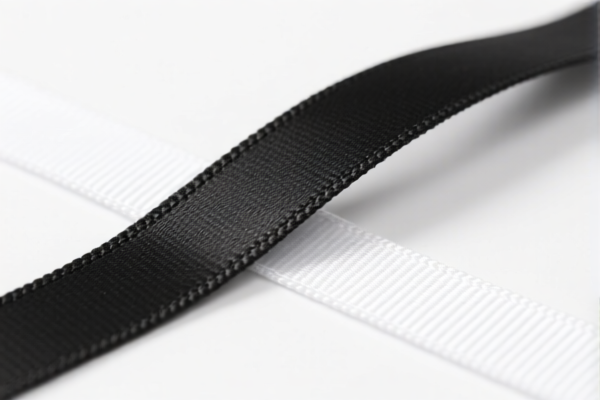
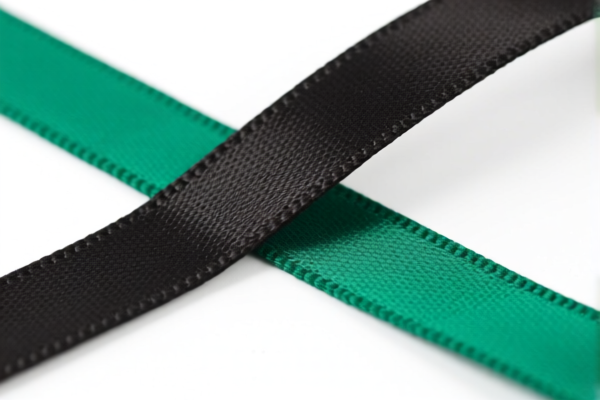
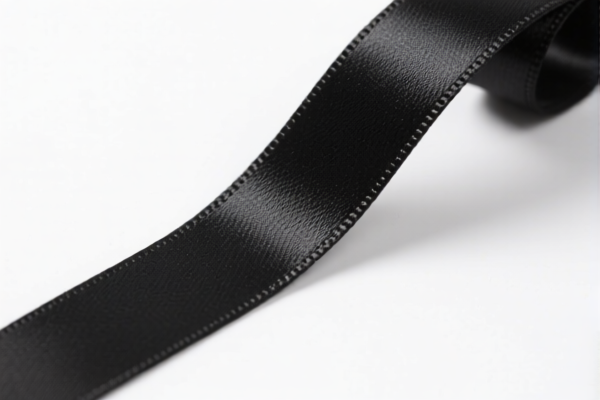
Polypropylene Fine Edge Colored Ribbon
CN → US| HS Code | Tariff Rate | Origin | Destination | Doc |
|---|---|---|---|---|
| 3926904000 | 12.8% | CN | US | Official Doc |
| 3926903500 | 24.0% | CN | US | Official Doc |
| 3926903300 | 16.5% | CN | US | Official Doc |
| 5604909000 | 40.0% | CN | US | Official Doc |
| 3926903500 | 24.0% | CN | US | Official Doc |
Product Images

AI Analysis
🎀 Polypropylene Fine Edge Colored Ribbon (Food-Grade)
🌐 HS Code Reference & Customs Clearance Guide | 2026 Latest Tariff Analysis | Professional Clearance Strategy
📌 I. Product Definition & Classification: Do You Know "Fine Edge Ribbon"?
Polypropylene Fine Edge Colored Ribbon is a decorative packaging material widely used in gift wrapping, bakery decoration, and daily necessities. In international trade, its classification depends heavily on its morphology (finished vs. unfinished) and specific end-use.
Although the material is uniformly Polypropylene (PP), the US Customs and Border Protection (CBP) distinguishes between: 1. Finished Goods (Sewed/Strung): Ribbons that are already sewn into loops or strung together → Categorized under "Sewed or Strung" items. 2. Unfinished Goods (Loose/Uncolored/Strips): Ribbons in loose bundles, reels, or narrow strips without specific final shaping → Categorized under "Other Plastic Articles."
⚠️ Key Distinction Point:
- If the ribbon is sold as individual cut pieces or uncolored strips before final sewing → It may fall under 3926.90.40.00 (Lowest Tax).
- If it is a finished decorative item or narrow strip specifically identified as "ribbon" but not sewn → It may fall under 3926.90.35.00 or 3926.90.33.00.
- If it is a specialty decorative item like a balloon ribbon → It falls under 3926.90.99.89.
📦 II. HS Code Classification Details (2026 Latest Tariff Authority Comparison)
| HS Code | Product Description | Applicable Scenario | Tax Rate (Total) |
|---|---|---|---|
3926.90.40.00 |
Food-grade colored polypropylene ribbon, classified as "Other Plastic Articles" | Loose, unfinished, or simple cut ribbons; broad category for general PP plastic goods | 12.8% |
3926.90.35.00 |
Food-grade colored polypropylene ribbon or narrow color strip, un-strung | Narrow strips, specific ribbon form, but not yet sewn into loops | 24.0% |
3926.90.33.00 |
Polypropylene narrow color strip, other plastic articles (Fallback Category) | Narrow PP strips that don't fit other specific subheadings; based on material consistency | 16.5% |
3926.90.99.89 |
Polypropylene balloon decorative ribbon | Specialized decorative use, e.g., tied to balloons; "Other" category | 22.8% |
🔍 Key Reminder:
-3926.90.40.00is the most favorable for general-purpose PP ribbons if they can be classified as generic "other plastic articles" rather than specific "ribbons."
-3926.90.35.00has the highest tax burden (24.0%) due to higher base tariffs and Section 301/IEEPA add-ons.
-3926.90.33.00serves as a middle-ground fallback for narrow strips, offering a moderate tax rate of 16.5%.
💰 III. 2026 Latest Tariff Rate Details (Including Additional Taxes & Policy Add-ons)
✅ Applicable Country: United States (US)
✅ Origin: China (CN)
✅ Effective Time: From November 10, 2025 onwards (including subsequent imports)
🎯 1. 3926.90.40.00 —— Food-Grade Colored Polypropylene Ribbon (Other Plastic Articles)
| Item | Content |
|---|---|
| Base Tariff Rate | 2.8% (ad valorem) |
| Section 301 Additional Tariff | 0.0% (Note: Specific to this subheading classification) |
| 122 Clause Tariff (IEEPA) | +10% (Targeting Chinese products) |
| Total Tariff Rate | 12.8% |
| Tax Calculation | CIF Value × 12.8% |
| De Minimis Eligibility | ❌ No (Deny de minimis for China-origin goods under these clauses) |
| Legal Basis Path | 122 Clause: 10% → USITC: 3926.90.40.00 → Base: 2.8% |
📌 Explanation:
- This classification offers the lowest total tax rate (12.8%).
- The Section 301 tariff is 0% for this specific subheading, which is rare for Chinese plastic goods.
- The 122 Clause (10%) still applies, adding a fixed surcharge.
- Strategic Advantage: Ideal for bulk, generic PP ribbons where the "ribbon" function is secondary to the "plastic article" nature.
🎯 2. 3926.90.35.00 —— Food-Grade Colored Polypropylene Ribbon/Narrow Strip (Un-strung)
| Item | Content |
|---|---|
| Base Tariff Rate | 6.5% (ad valorem) |
| Section 301 Additional Tariff | +7.5% |
| 122 Clause Tariff (IEEPA) | +10% |
| Total Tariff Rate | 24.0% |
| Tax Calculation | CIF Value × 24.0% |
| De Minimis Eligibility | ❌ No |
| Legal Basis Path | 122 Clause: 10% → Section 301: 7.5% → Base: 6.5% → USITC: 3926.90.35.00 |
📌 Note:
- This is the most expensive classification.
- The Section 301 tariff of 7.5% significantly increases costs.
- Risk Alert: If your product is clearly a "ribbon" and not just a "plastic strip," CBP may insist on this code. Avoid this if3926.90.40.00is applicable.
🎯 3. 3926.90.33.00 —— Polypropylene Narrow Color Strip (Other Plastic Articles)
| Item | Content |
|---|---|
| Base Tariff Rate | 6.5% (ad valorem) |
| Section 301 Additional Tariff | 0.0% |
| 122 Clause Tariff (IEEPA) | +10% |
| Total Tariff Rate | 16.5% |
| Tax Calculation | CIF Value × 16.5% |
| De Minimis Eligibility | ❌ No |
| Legal Basis Path | 122 Clause: 10% → USITC: 3926.90.33.00 → Base: 6.5% |
📌 Key Point:
- A balanced option if the product is too specific for3926.90.40.00but doesn't qualify as a "ribbon" under3926.90.35.00.
- The Section 301 tariff is 0%, making it cheaper than3926.90.35.00.
- Use this for narrow PP strips that are not yet sewn or packaged as finished ribbons.
🎯 4. 3926.90.99.89 —— Polypropylene Balloon Decorative Ribbon
| Item | Content |
|---|---|
| Base Tariff Rate | 5.3% (ad valorem) |
| Section 301 Additional Tariff | +7.5% |
| 122 Clause Tariff (IEEPA) | +10% |
| Total Tariff Rate | 22.8% |
| Tax Calculation | CIF Value × 22.8% |
| De Minimis Eligibility | ❌ No |
| Legal Basis Path | 122 Clause: 10% → Section 301: 7.5% → Base: 5.3% → USITC: 3926.90.99.89 |
📌 Special Case:
- This code is for balloon-specific ribbons.
- Even though the base rate is low (5.3%), the Section 301 tariff (7.5%) pushes the total to 22.8%.
- Do not use for general gift-wrapping ribbons unless they are explicitly marketed for balloons.
🛠️ IV. Customs Clearance Practical Advice (Real-World Pitfall Avoidance Guide)
✅ 1. Preparation Checklist (Non-negotiable)
| Document | Required | Explanation |
|---|---|---|
| ✅ Product Specifications | ✔️ | Must detail: Material (PP), Width, Length, Color, Packaging (Reel/Loose) |
| ✅ Product Photos | ✔️ | Show the ribbon in its shipping state (loose vs. strung). Critical for classification. |
| ✅ Commercial Invoice | ✔️ | Describe as "Polypropylene Plastic Ribbon Strips" or "PP Plastic Decorative Article" to avoid "Ribbon" stigma if aiming for 3926.90.40.00. |
| ✅ Packing List | ✔️ | Clearly state weight and dimensions. |
| ✅ Certificate of Origin | ✔️ | Required for tariff calculation. |
| ✅ FDA Compliance Document | ✔️ | Since it's "Food-Grade," provide FDA contact information or compliance statement. |
✅ 2. Declaration Strategy (Key Mantras)
🔥 “Don’t Say ‘Ribbon’, Say ‘Plastic Article’! Finish State Matters!”
| Scenario | Correct Declaration | Wrong Practice |
|---|---|---|
| Loose PP Strips/Ribbons | 3926.90.40.00 (Other Plastic Articles) |
Calling it "Finished Ribbon" → 3926.90.35.00 (24%) |
| Narrow PP Strips | 3926.90.33.00 (Narrow Color Strip) |
Misclassifying as 3926.90.40.00 without proof |
| Balloon Ribbons | 3926.90.99.89 (Balloon Decorative) |
Using general plastic code → Potential misdeclaration |
| Sewed Loops | Not in dataset (Likely higher tax) | Assuming it falls under 3926.90.40.00 |
📌 Tip:
- To aim for3926.90.40.00(12.8%), describe the product as "Polypropylene Plastic Decorative Strips" rather than "Ribbon" in the initial invoice, and ensure they are not sewn or strung upon arrival.
- If the ribbons are already cut and packaged for immediate use, CBP may view them as "finished goods" and classify them under3926.90.35.00(24%).
✅ 3. Special Situations
| Situation | Handling Advice |
|---|---|
| Food-Grade Certification | Provide FDA compliance statement. Without it, customs may delay for additional testing. |
| Mixed Colors | Declare as "Multi-colored PP Ribbons." Ensure the invoice reflects the bulk nature, not retail-ready. |
| OEM Custom Printing | If printed with logos, it is still 3926.90.40.00 if it remains a "plastic article." Don’t declare as "Printed Merchandise." |
| Balloon vs. Gift Wrap | If the ribbons are used for both, declare as general 3926.90.40.00. Do not specify "Balloon Ribbon" unless it’s exclusively for balloons. |
🌍 V. Global Market Comparison (2026 Latest)
| Country/Region | Recommended HS Code | Tariff (China Origin) | Key Requirement | Notes |
|---|---|---|---|---|
| 🇺🇸 USA | 3926.90.40.00 |
12.8% | FDA + No Section 301 on this code | Best for cost-saving. Avoid 3926.90.35.00 (24%). |
| 🇨🇳 China | 3926.90.40.00 |
~6-8% | GB Standards | No additional anti-dumping tariffs on PP ribbons. |
| 🇪🇺 EU | 3926.90.97 |
~4.5% | REACH + LFGB | No Section 301 or IEEPA. Lower base tariff. |
| 🇦🇺 Australia | 3926.90.90 |
~5% | ACCC | Standard MFN rate. |
📌 Conclusion:
- The US is the most challenging market due to 122 Clause (10%) and potential Section 301 add-ons.
-3926.90.40.00is the only viable low-tax option for Chinese PP ribbons in the US.
- Avoid3926.90.35.00unless your product is explicitly a "narrow strip" and not a finished ribbon.
📌 VI. Common Errors & Pitfalls (Blood-Stained Lessons)
❌ Error 1: Declaring "Polypropylene Ribbon" without specifying "Un-strung/Loose"
👉 Consequence: CBP may classify it as 3926.90.35.00 → Tax jumps from 12.8% to 24%!
❌ Error 2: Using "Balloon Ribbon" for general gift wrap
👉 Consequence: Misclassification → 3926.90.99.89 (22.8%) instead of 3926.90.40.00 (12.8%).
❌ Error 3: Failing to provide FDA Compliance for "Food-Grade" claims
👉 Consequence: Goods held at customs for additional FDA documentation → Storage fees + Delay.
❌ Error 4: Ignoring the "122 Clause" (IEEPA)
👉 Consequence: Even if Section 301 is 0%, the 10% IEEPA tariff still applies. Total tax is never just the base rate.
✅ Correct Approach:
"Polypropylene Plastic Decorative Strips, Unstrung, Food-Grade, for Packaging Use"
HS Code: 3926.90.40.00
Total Tax: 12.8%
🎯 VII. Conclusion: Professional Declaration, Save Time, Reduce Costs!
🎯 Remember the Mantra:
🔹 "Unstrung = Plastic Article (12.8%)!"
🔹 "Finished Ribbon = High Tax (24%)!"
🔹 "Balloon = Specialty (22.8%)!"
🔹 "122 Clause Always Applies (10%)"
📌 Tips:
- If your PP ribbons are imported from Vietnam or Malaysia, you may avoid the IEEPA 122 Clause, reducing the tax burden significantly.
- Apply for Advance Ruling (Pre-classification) with CBP if your product falls into a gray area (e.g., semi-finished ribbons).
- Clearly separate "Loose PP Strips" from "Finished Sewn Ribbons" in your production and shipping documents.
📣 Immediate Action:
📞 Contact a professional customs broker + Provide product photos + Apply for HS Code Pre-ruling
🚀 Let your Polypropylene Ribbons Clear Smoothly, Efficiently, and Profitably!
✨ Professional Customs Clearance Starts with Precise Classification!
💼 Every Cent Saved is Profit Gained!
Customer Reviews
About HS Code Classification
The Harmonized System (HS) is an internationally standardized nomenclature developed by the World Customs Organization (WCO) to classify traded products. Over 200 countries use the HS system as the basis for customs tariffs, trade statistics, and import/export regulations.
Each HS code follows a hierarchical structure:
- Chapter (2 digits) — Broad category of goods (e.g., Chapter 84: Machinery and Mechanical Appliances)
- Heading (4 digits) — More specific grouping within the chapter
- Subheading (6 digits) — Internationally standardized breakdown, used by all WCO member countries
- National subdivisions (8-10 digits) — Country-specific extensions for further classification, such as US HTSUS 10-digit codes
Correct HS code classification is essential for smooth customs clearance, accurate duty payment, and compliance with trade regulations. Misclassification can lead to customs delays, overpayment of duties, or penalties.
When importing from CN to US, the applicable tariff rates may include:
- Most-Favored-Nation (MFN) rate — The standard duty rate applied to WTO members
- General rate — Applied to countries without trade agreements
- Trade remedy duties — Additional tariffs such as Section 301 (anti-dumping), Section 232 (national security), or countervailing duties
The information provided on this page is for reference purposes only. For official classification, please consult with your local customs authority or a licensed customs broker.