Polypropylene Floral Pattern Ribbon
CN → US| HS Code | Tariff Rate | Origin | Destination | Doc |
|---|---|---|---|---|
| 5604909000 | 40.0% | CN | US | Official Doc |
| 5606000090 | 43.0% | CN | US | Official Doc |
| 3926909905 | 22.8% | CN | US | Official Doc |
| 3926909989 | 22.8% | CN | US | Official Doc |
| 3926906010 | 39.2% | CN | US | Official Doc |
Product Images



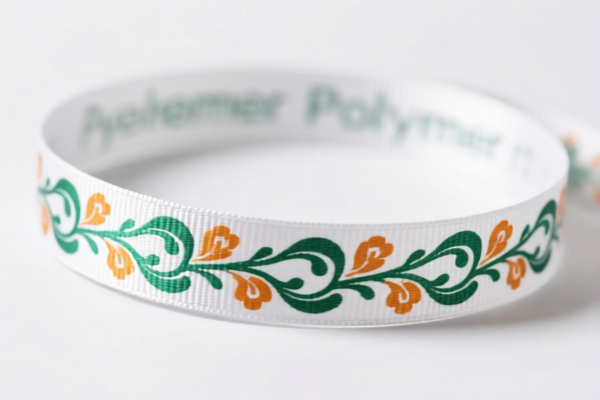
AI Analysis
🎀 Polypropylene Floral Pattern Ribbon
🌐 HS Code Reference & Customs Clearance Guide | 2026 Latest Tariff Analysis | Professional Clearance Strategy
📌 1. Product Definition & Classification: What Exactly is "Polypropylene Ribbon"?
Polypropylene (PP) Ribbons are synthetic textile products widely used in packaging, gift wrapping, garment accessories, and crafting. In international trade, the classification depends heavily on the manufacturing process (torn, woven, or non-woven) and the final physical form (strip, cord, or elastic band).
⚠️ Key Distinction Point:
- If the ribbon is a plastic strip (often torn from a web) without the structure of woven fabric, it may fall under Chapter 39 (Plastics) or Chapter 56 (Wadding/Felt/Non-wovens).
- If the ribbon is woven or twisted yarn, it generally falls under Chapter 56 (Yarns/Strips).
- If it functions as an elastic band (even if low elasticity), it may be classified under Plastics or Textiles depending on specific legal notes.
📦 2. HS Code Classification Details (2026 Latest Tariff Authority Comparison)
Based on the provided data, here are the four potential HS Codes for Polypropylene Floral Pattern Ribbon, along with their summaries and tax implications.
| HS Code | Product Description & Summary | Total Tax Rate | Tax Detail Breakdown |
|---|---|---|---|
| 5604.90.90.00 | Plastic-Coated/Synthetic Fiber Strip: PP is a plastic material; the ribbon form fits the description of textile/synthetic fibers covered or impregnated with plastic. Classified as other plastic products. | 40.0% | Base: 5.0%, Additional: 25.0%, Section 122: 10% |
| 5606.00.00.90 | Twisted Yarn/Strip: Ribbon form belongs to twisted yarns, strips, and similar articles. PP material fits synthetic fiber characteristics. No conflict with elastic long fibers. | 43.0% | Base: 8.0%, Additional: 25.0%, Section 122: 10% |
| 3926.90.60.10 | Transmission/Synchronous Belt: PP material fits Chapter 39 (Plastics); strip form fits transmission/synchronous belt categories. No material conflict. | 39.2% | Base: 4.2%, Additional: 7.5%, Section 122: 10% |
| 3926.90.99.05 | Elastic Strip/Band: PP belongs to plastic category; ribbon form fits elastic band/strip characteristics. Classified as plastic products. | 22.8% | Base: 5.3%, Additional: 7.5%, Section 122: 10% |
| 3926.90.99.89 | Other Plastic Product: PP fits Chapter 39-3914 plastics; ribbon form fits plastic product category. Classified as other plastic products. | 22.8% | Base: 5.3%, Additional: 7.5%, Section 122: 10% |
🔍 Key Insight:
- The highest tax rate (43%) applies if classified as a woven/twisted textile-like item (5606.00.00.90).
- The lowest tax rate (22.8%) applies if classified as a general plastic product (3926.90.99.05 or 3926.90.99.89).
- Misclassification Risk: Declaring a standard PP ribbon as a "transmission belt" (3926.90.60.10) or "elastic band" (3926.90.99.05) without meeting specific functional criteria can lead to customs penalties.
💰 3. 2026 Latest Tariff Rate Breakdown (Including Surcharges & Policy Add-ons)
✅ Applicable Country: United States (US)
✅ Origin: China (CN)
✅ Effective Time: 2025-11-10 onwards (including subsequent imports)
🎯 1. 5604.90.90.00 —— Plastic-Coated Synthetic Fiber Strip
| Item | Content |
|---|---|
| Base Tax Rate | 5.0% |
| USITC Additional Tax | +25.0% (Under USITC Footnote regarding Section 301) |
| IEEPA Additional Tax | +10.0% (Targeting China/HK products, effective from 2025-11-10) |
| Total Tax Rate | 40.0% |
| Tax Calculation | CIF Value × 40% |
| De Minimis Exemption | ❌ Not Available (deny_de_minimis) |
| Legal Pathway | IEEPA:9903.01.25 → USITC:5604.90.90.00 → SECTION122:10% |
📌 Explanation:
- The 25% additional tax stems from Section 301 tariffs on specific Chinese goods.
- The 10% IEEPA tax is the new layer added in 2025.
- Total 40% is considered high. Proper documentation proving the "plastic-coated" nature is essential.
🎯 2. 5606.00.00.90 —— Twisted Yarn/Strip (Textile-like)
| Item | Content |
|---|---|
| Base Tax Rate | 8.0% |
| USITC Additional Tax | +25.0% |
| IEEPA Additional Tax | +10.0% |
| Total Tax Rate | 43.0% |
| Tax Calculation | CIF Value × 43% |
| De Minimis Exemption | ❌ Not Available |
| Legal Pathway | IEEPA:9901.25 → USITC:5606.00.00.90 → SECTION122:10% |
📌 Warning:
- This is the highest tax bracket among the options.
- Only applicable if the ribbon is clearly defined as twisted or braided similar to yarns, not just a flat plastic strip.
- If your product is a simple flat PP ribbon, arguing for this classification may be challenged by customs.
🎯 3. 3926.90.60.10 —— Transmission/Synchronous Belt (Specialized Use)
| Item | Content |
|---|---|
| Base Tax Rate | 4.2% |
| USITC Additional Tax | +7.5% |
| IEEPA Additional Tax | +10.0% |
| Total Tax Rate | 39.2% |
| Tax Calculation | CIF Value × 39.2% |
| De Minimis Exemption | ❌ Not Available |
| Legal Pathway | IEEPA:9903.01.24 → USITC:3926.90.60.10 → SECTION122:10% |
📌 Critical Note:
- This classification is only valid if the ribbon is explicitly used as a mechanical transmission or synchronous belt.
- Do not use for general decorative or packaging ribbons. Customs will reject this if the product lacks mechanical teeth or specific engineering properties.
🎯 4. 3926.90.99.05 & 3926.90.99.89 —— General Plastic Products (Most Common for PP Ribbon)
| Item | Content |
|---|---|
| Base Tax Rate | 5.3% |
| USITC Additional Tax | +7.5% |
| IEEPA Additional Tax | +10.0% |
| Total Tax Rate | 22.8% |
| Tax Calculation | CIF Value × 22.8% |
| De Minimis Exemption | ❌ Not Available |
| Legal Pathway | IEEPA:9903.01.24 → USITC:3926.90.99.05/89 → SECTION122:10% |
📌 Strategy:
- These two codes offer the lowest tax rate (22.8%).
-3926.90.99.05is specifically for elastic bands/straps. If your PP ribbon has any elastic property, this is a strong candidate.
-3926.90.99.89is for other plastic articles. This is a safe fallback for general PP ribbons that don't fit other specific plastic categories.
- Recommendation: Aim for these codes if the product is a standard, non-mechanical, non-woven PP ribbon.
🛠️ 4. Customs Clearance Practical Advice (Battle-Tested Guide)
✅ 1. Required Documentation Checklist (Must-Haves)
| Document | Required? | Description |
|---|---|---|
| ✅ Product Specification Sheet | ✔️ | Must detail: Material (100% PP), Width, Thickness, Manufacturing Process (Torn/Woven/Non-woven). |
| ✅ Product Photos (Clear) | ✔️ | Show the cross-section. Is it a flat strip? Twisted? Elastic? |
| ✅ Commercial Invoice | ✔️ | Clearly state "Polypropylene Ribbon" or "PP Plastic Strip". Avoid vague terms like "Craft Material". |
| ✅ Bill of Lading | ✔️ | Ensure HS Code matches the invoice. |
| ✅ Declaration of Non-Elasticity | (If applicable) | If declaring under 3926.90.99.89 but customs suspects elasticity, provide a test report showing it is NOT elastic. |
| ✅ Origin Certificate | ✔️ | For China origin, confirms applicability of surcharges. |
✅ 2. Declaration Tips (Key Mantras)
🔥 "Define Process, Define Form, Avoid 'Textile' Ambiguity!"
| Scenario | Correct Declaration | Incorrect Approach |
|---|---|---|
| Standard Flat PP Ribbon | 3926.90.99.89 (Other Plastic Articles) |
Misdeclare as 5606 (Yarn/Strip) → 43% Tax |
| Elastic PP Ribbon | 3926.90.99.05 (Elastic Bands) |
Misdeclare as generic plastic → Potential penalty |
| Woven PP Tape | 5606.00.00.90 (Twisted/Weft) |
Claim as "Plastic Strip" → Customs challenge |
| Mechanical Belt Ribbon | 3926.90.60.10 (Transmission Belt) |
Use for decorative ribbon → High Risk of Rejection |
✅ 3. Special Situation Handling
| Situation | Handling Advice |
|---|---|
| Mixed Materials | If ribbon contains cotton/polyester blend, it may shift to Textile chapters (Chapter 54/55). Check composition! |
| Floral Pattern Printing | Printing does not change the HS Code. It is still a PP ribbon. |
| Customs Inquiry | If customs asks for "Textile vs. Plastic", provide a microscopy report or manufacturer's process description (e.g., "Thermally torn from PP web"). |
| Low Value Shipments | ❌ No De Minimis Exemption. Even small packages are subject to full tax. |
🌍 5. Global Market Clearance Comparison (2026 Latest)
| Country/Region | Recommended HS Code | Tax Rate (China Origin) | Key Requirements | Notes |
|---|---|---|---|---|
| 🇺🇸 USA | 3926.90.99.89 |
22.8% | FCC (if electronic), RoHS | Highest risk of surcharges. |
| 🇺🇸 USA | 5606.00.00.90 |
43.0% | Same as above | Avoid unless it's truly woven/twisted. |
| 🇨🇳 China | 3926.90.99.89 |
5.3% | N/A | No additional surcharges. |
| 🇪🇺 EU | 3926.90.97.90 |
4.5% | CE (if applicable) | No Section 122 or IEEPA equivalents. |
| 🇬🇧 UK | 3926.90.99.90 |
4.0% | UKCA (if applicable) | Post-Brexit rules apply. |
📌 Conclusion:
- USA is the most complex market due to Section 122 and IEEPA taxes.
- Choosing the right HS Code in the US can save 20%+ in taxes (22.8% vs 43%).
- PP Ribbon is generally viewed as a Plastic Article (Chapter 39) unless it is explicitly woven or twisted like yarn.
📌 6. Common Mistakes & Pitfalls (Lessons Learned)
❌ Mistake 1: Declaring PP Ribbon as "Textile Ribbon" (5606) when it is a simple plastic strip.
👉 Consequence: Tax jumps from 22.8% to 43%. Unjustified cost increase.
❌ Mistake 2: Using 3926.90.60.10 (Transmission Belt) for a decorative ribbon.
👉 Consequence: Customs flags for misuse of special category. Potential delay, fine, or forced reclassification.
❌ Mistake 3: Ignoring the "Floral Pattern" aspect.
👉 Consequence: Patterns do not change the HS Code, but if the pattern involves embroidery, it might shift to textile chapters. Ensure it is just printed.
❌ Mistake 4: Assuming De Minimis applies.
👉 Consequence: All shipments are taxed. No $800 exemption for China-origin goods under current rules.
✅ Correct Approach:
"Polypropylene Plastic Ribbon, 10mm width, Printed Floral Pattern, Non-Elastic, Thermally Torn from Web. HS Code: 3926.90.99.89"
🎯 7. Conclusion: Precise Classification Saves Money!
🎯 Remember the Mantra:
🔹 "Plastic Strip, 22.8%; Woven Yarn, 43%; Wrong Code, Pain for Years!"
🔹 "PP Ribbon is Plastic, Unless Worn or Twisted like Yarn."
📌 Pro Tip:
If your product is non-elastic and not woven, argue for 3926.90.99.89. Provide a manufacturer’s process diagram showing the "tearing" or "molding" process to prove it is a plastic article, not a textile.
📣 Immediate Action:
📞 Consult a licensed customs broker + Provide Product Photos + Apply for Advance Ruling if importing large volumes.
🚀 Ensure your Invoice Description matches the HS Code logic to avoid delays.
✨ Professional Clearance, Start with Accurate Classification!
💼 Every Percent of Tax Matters!
Customer Reviews
About HS Code Classification
The Harmonized System (HS) is an internationally standardized nomenclature developed by the World Customs Organization (WCO) to classify traded products. Over 200 countries use the HS system as the basis for customs tariffs, trade statistics, and import/export regulations.
Each HS code follows a hierarchical structure:
- Chapter (2 digits) — Broad category of goods (e.g., Chapter 84: Machinery and Mechanical Appliances)
- Heading (4 digits) — More specific grouping within the chapter
- Subheading (6 digits) — Internationally standardized breakdown, used by all WCO member countries
- National subdivisions (8-10 digits) — Country-specific extensions for further classification, such as US HTSUS 10-digit codes
Correct HS code classification is essential for smooth customs clearance, accurate duty payment, and compliance with trade regulations. Misclassification can lead to customs delays, overpayment of duties, or penalties.
When importing from CN to US, the applicable tariff rates may include:
- Most-Favored-Nation (MFN) rate — The standard duty rate applied to WTO members
- General rate — Applied to countries without trade agreements
- Trade remedy duties — Additional tariffs such as Section 301 (anti-dumping), Section 232 (national security), or countervailing duties
The information provided on this page is for reference purposes only. For official classification, please consult with your local customs authority or a licensed customs broker.