Polypropylene Grid Pattern Tape
CN → US| HS Code | Tariff Rate | Origin | Destination | Doc |
|---|---|---|---|---|
| 3926906010 | 39.2% | CN | US | Official Doc |
| 3926906090 | 39.2% | CN | US | Official Doc |
| 5604909000 | 40.0% | CN | US | Official Doc |
| 3921190090 | 41.5% | CN | US | Official Doc |
| 3921190010 | 41.5% | CN | US | Official Doc |
Product Images
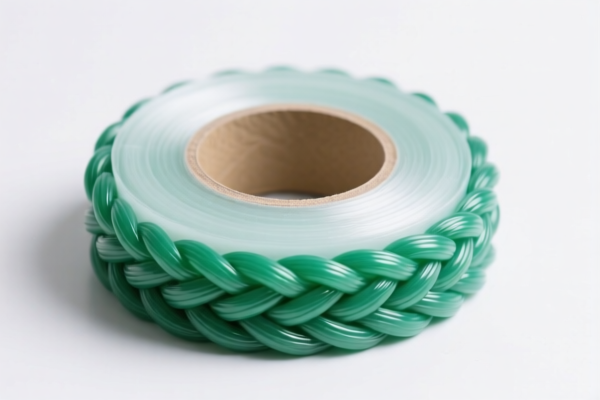
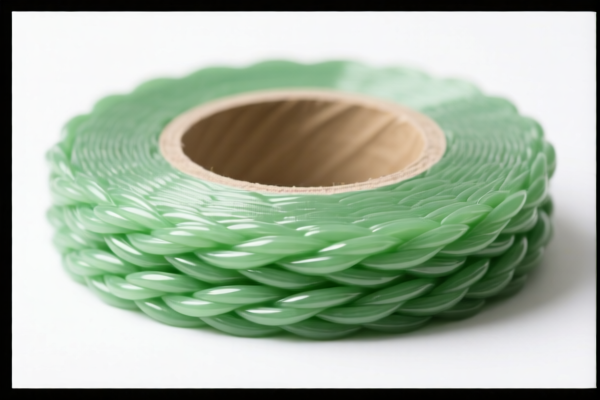

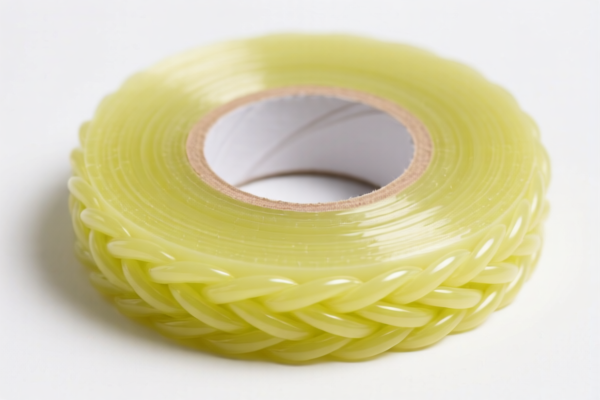
AI Analysis
🧵 Polypropylene Grid Pattern Tape (PP Grid Tape)
🌐 HS Code Reference & Customs Clearance Guide | 2026 Latest Tariff Analysis | Professional Clearance Strategy
📌 I. Product Definition & Classification: What Exactly is "PP Grid Pattern Tape"?
Polypropylene (PP) Grid Pattern Tape is a specialized plastic product characterized by a mesh or grid structure. It is primarily used in construction reinforcement, packaging, industrial filtration, or non-woven fabric manufacturing.
In international trade, its classification hinges on two critical factors: 1. Physical Form: Is it a "belt" for transmission/synchronization, or a generic "strip/tape"? 2. Material Treatment: Is it just PP, or is it impregnated/coated with plastic?
⚠️ Key Distinction Points:
- If the tape functions as a drive belt or synchronous belt (transmitting power/motion) → It falls under Chapter 39.26 (Other articles of plastics; belts).
- If it is a generic strip/tape not used for transmission, but made of plastic-impregnated material → It may fall under Chapter 56.04 (Thread coated with rubber/plastic) or Chapter 39.21 (Plates/sheets/film/foil/bands of plastics).
- Critical Note: The "Grid" pattern often triggers scrutiny to determine if it is a "Belt" (3926) or a "Banded/Impregnated Product" (5604/3921).
📦 II. HS Code Classification Details (2026 Latest Tariff Authoritative Comparison)
| HS Code | Product Description | Applicable Scenario | Transmission Function? |
|---|---|---|---|
3926.90.60.10 |
Polypropylene Grid Pattern Tape, Material: PP, Form: Belt. Classified under Transmission/Synchronous Belts. | Industrial drive belts, conveyor sync belts | ✅ Yes |
3926.90.60.90 |
Polypropylene Grid Pattern Tape, Material: PP, Form: Strip/Tape. Classified as Other Belts (Non-synchronous). | General-purpose plastic belts, non-sync applications | ✅ Yes (But Non-Sync) |
5604.90.90.00 |
Polypropylene Grid Pattern Tape, Material: Plastic-impregnated/coated/bonded PP, Form: Strips/Tapes. | Threads, yarns, or tapes coated/impregnated with plastic | ❌ No (Treated as Thread/Strip) |
3921.19.00.90 |
Polypropylene Film/Sheet, Material: PP, Form: Film/Sheet. Fits classification of Plastic Plates, Sheets, Film, Foil, and Bands. | Flat PP films, mesh sheets used as reinforcement | ❌ No (Treated as Sheet/Film) |
3921.19.00.10 |
Polypropylene Film/Sheet, Material: PP, Form: Film/Membrane. Fully complies with code definition. | Thin PP films, membrane-type grid tapes | ❌ No (Treated as Film) |
🔍 Important Reminder:
- If the tape is flexible, toothed, or used to drive machinery, it MUST be classified under 3926.90.60.10 or 3926.90.60.90.
- If it is a flat mesh used for reinforcement or filtration, it may be classified under 5604 (if impregnated) or 3921 (if flat sheet/film).
- Misclassification Risk: Declaring a drive belt as a "film" (3921) can lead to customs reclassification and higher tariffs.
💰 III. 2026 Latest Tariff Rate Breakdown (Including Surtaxes & Policy Surcharges)
✅ Applicable Country: United States (US)
✅ Origin: China (CN)
✅ Effective Date: November 10, 2025 onwards (including subsequent imports)
🎯 1. 3926.90.60.10 & 3926.90.60.90 —— Polypropylene Belts (Transmission & Other)
| Item | Content |
|---|---|
| Base Tariff | 4.2% (ad valorem) |
| Section 301 Surtax | +25.0% (Additional duty under Section 301) |
| Section 122 Surtax | +10.0% (Specific duty under Section 122) |
| Total Rate | 39.2% |
| Tax Calculation | CIF Value × 39.2% |
| De Minimis Exemption | ❌ Not Available (Deny De Minimis) |
| Legal Basis Path | Section 301: 3926.90.60 → Section 122: 3926.90.60 |
📌 Explanation:
- Base 4.2%: Standard MFN rate for "Other articles of plastics".
- Section 301 (+25%): Applied to most Chinese plastic products.
- Section 122 (+10%): Additional surcharge often applied to specific plastic imports from China.
- Total 39.2%: This is a high-cost entry. Proper classification is vital to avoid double taxation or penalties.
🎯 2. 5604.90.90.00 —— Plastic-Impregnated PP Tape/Strips
| Item | Content |
|---|---|
| Base Tariff | 5.0% (ad valorem) |
| Section 301 Surtax | +25.0% |
| Section 122 Surtax | +10.0% |
| Total Rate | 40.0% |
| Tax Calculation | CIF Value × 40.0% |
| De Minimis Exemption | ❌ Not Available |
| Legal Basis Path | Section 301: 5604.90.90 → Section 122: 5604.90.90 |
📌 Note:
- If the grid tape is considered a "thread or strip coated with plastic," it falls here.
- 1.2% Higher than the belt classification due to a higher base rate (5.0% vs 4.2%).
- Ensure the product is truly "impregnated/coated" and not just a molded PP grid.
🎯 3. 3921.19.00.10 & 3921.19.00.90 —— Polypropylene Film/Sheet
| Item | Content |
|---|---|
| Base Tariff | 6.5% (ad valorem) |
| Section 301 Surtax | +25.0% |
| Section 122 Surtax | +10.0% |
| Total Rate | 41.5% |
| Tax Calculation | CIF Value × 41.5% |
| De Minimis Exemption | ❌ Not Available |
| Legal Basis Path | Section 301: 3921.19.00 → Section 122: 3921.19.00 |
📌 Warning:
- This is the Highest Tax Rate (41.5%).
- Only classify here if the product is strictly a flat film, sheet, or membrane, and not a belt or impregnated strip.
- Do NOT use this code for drive belts or reinforced strips, as customs will reclassify and penalize.
🛠️ IV. Customs Clearance Practical Advice (Real-World Pitfall Guide)
✅ 1. Documentation Checklist (All Required)
| Document | Mandatory? | Explanation |
|---|---|---|
| ✅ Product Specification Sheet | ✔️ | Must detail: Material (100% PP?), Structure (Grid/Mesh?), Width, Thickness, Tensile Strength. |
| ✅ Technical Diagrams | ✔️ | Show cross-section to prove if it is a "Belt" (3926) or "Film" (3921). |
| ✅ Product Photos (Clear) | ✔️ | Show the grid pattern, ends, and any branding/model numbers. |
| ✅ Commercial Invoice | ✔️ | Clearly state: "Polypropylene Grid Pattern Tape, PP Material". Do not use vague terms like "Plastic Band". |
| ✅ Bill of Lading (B/L) | ✔️ | Ensure container weight and volume match invoice. |
| ✅ Origin Certificate (CO) | ✔️ | Required for Section 301 and 122 assessment. |
✅ 2. Declaration Tips (Key Mnemonics)
🔥 "Belt vs. Film, Structure is Key! Declare Accurately, Avoid Penalty!"
| Scenario | Correct Declaration | Wrong Practice |
|---|---|---|
| Drive/Sync Belt | 3926.90.60.10 |
Misdeclare as "Film" → 41.5% tax + Penalty |
| General PP Grid Tape | 3926.90.60.90 |
Misdeclare as "Belt" → If not sync, still 39.2% but risk of audit |
| Impregnated Mesh | 5604.90.90.00 |
Misdeclare as "Plastic Belt" → 40.0% vs 39.2% (Minor diff, but accuracy matters) |
| Flat PP Mesh Sheet | 3921.19.00.10 |
Misdeclare as "Belt" → 41.5% tax + Rejection |
✅ 3. Special Case Handling
| Scenario | Handling Advice |
|---|---|
| OEM Custom Tapes | Provide customer PO + Tech Specs. Proves specific function (e.g., "for use in synchronous motors"). |
| Mixed Packaging | If belts and films are packed together, declare separately. Do not mix HS Codes in one line item. |
| Sample vs. Bulk | Samples may still incur tax if declared as "Commercial Samples". Mark as "No Commercial Value" only if truly eligible, but 3926/3921 often deny de minimis. |
| Recycled PP | If material is recycled, ensure material composition is declared. May affect base rate but not surtaxes. |
🌍 V. Global Market Clearance Comparison (2026 Latest)
| Country/Region | Recommended HS Code | Tariff Rate | Certification Required | Notes |
|---|---|---|---|---|
| 🇺🇸 USA | 3926.90.60.10/90 |
39.2% (China) | N/A | Highest cost due to Sec 301 & 122. |
| 🇨🇳 China | 3926.90.60.10 |
4.2% (Export) | CCC (if applicable) | Low export tax, high US import tax. |
| 🇪🇺 EU | 3926.90.60 |
6.5% (Standard) | REACH Compliance | No Section 301/122 equivalent. |
| 🇦🇺 Australia | 3926.90.60 |
5.0% | N/A | Favorable tariff compared to US. |
| 🇯🇵 Japan | 3926.90.60 |
5.0% | PSE (if electrical) | Low tariff, strict safety checks. |
📌 Conclusion:
- The US is the most expensive market for PP Grid Pattern Tapes due to layered surtaxes.
- EU/Australia/Japan are significantly more cost-effective (5-6.5%).
- Strategic Advice: Consider supply chain diversification or final assembly in third countries if targeting the US market to mitigate tariff risks.
📌 VI. Common Errors & Pitfall Guide (Lessons Learned)
❌ Error 1: Declaring "PP Belt" as "Plastic Film" (3921)
👉 Consequence: If customs determines it is a belt, they will reclassify to 3926 and apply 39.2%. If you declared 3921 (41.5%), you might have underpaid or overpaid, leading to audits.
❌ Error 2: Vague Description "Plastic Band"
👉 Consequence: Customs will request additional info, causing delay in clearance and potential demurrage charges.
❌ Error 3: Ignoring "Section 122"
👉 Consequence: Assuming only Section 301 (25%) applies. Section 122 (+10%) is also applicable, making the total 35%+ on top of base. Failure to declare correctly leads to underpayment penalties.
❌ Error 4: Mixing Sync and Non-Sync Belts
👉 Consequence: 3926.90.60.10 (Sync) and .90 (Non-Sync) have the same rate but different technical definitions. Mixing them can lead to classification disputes.
✅ Correct Practice:
"Polypropylene Synchronous Grid Belt, 100% PP, Toothed Profile, Width 50mm, for Industrial Conveyor Systems. HS: 3926.90.60.10"
🎯 VII. Conclusion: Professional Declaration, Save Time & Money!
🎯 Remember the Mnemonic:
🔹 "Belt vs. Film, Structure is Key!"
🔹 "Sec 301 + Sec 122 = 35% Extra! (Plus Base)"
🔹 "Total US Tax: 39.2% to 41.5%. Declare Accurately!"
📌 Pro Tip:
If your product is exclusively a film/sheet and not a belt, consider if it can be classified under 3921 (41.5%) vs 3926 (39.2%). However, 3926 is usually lower. Wait, check:
- 3926 (Belt): 39.2%
- 3921 (Film): 41.5%
- 5604 (Impregnated): 40.0%
Strategy: If it can be legitimately classified as a Belt (
3926), it is cheapest (39.2%) compared to Film (41.5%) or Impregnated Strip (40.0%).
Action: Ensure your product design and technical specs support a "Belt" classification (e.g., high tensile strength, specific width/length for drive systems).
📣 Immediate Action:
📞 Contact a professional customs broker + Provide Tech Specs + Request Advance Ruling for US import.
🚀 Let your PP Grid Tape clear smoothly, legally, and profitably!
✨ Professional Clearance Starts with Accurate Classification!
💼 Every Percent of Tariff Counts!
Customer Reviews
About HS Code Classification
The Harmonized System (HS) is an internationally standardized nomenclature developed by the World Customs Organization (WCO) to classify traded products. Over 200 countries use the HS system as the basis for customs tariffs, trade statistics, and import/export regulations.
Each HS code follows a hierarchical structure:
- Chapter (2 digits) — Broad category of goods (e.g., Chapter 84: Machinery and Mechanical Appliances)
- Heading (4 digits) — More specific grouping within the chapter
- Subheading (6 digits) — Internationally standardized breakdown, used by all WCO member countries
- National subdivisions (8-10 digits) — Country-specific extensions for further classification, such as US HTSUS 10-digit codes
Correct HS code classification is essential for smooth customs clearance, accurate duty payment, and compliance with trade regulations. Misclassification can lead to customs delays, overpayment of duties, or penalties.
When importing from CN to US, the applicable tariff rates may include:
- Most-Favored-Nation (MFN) rate — The standard duty rate applied to WTO members
- General rate — Applied to countries without trade agreements
- Trade remedy duties — Additional tariffs such as Section 301 (anti-dumping), Section 232 (national security), or countervailing duties
The information provided on this page is for reference purposes only. For official classification, please consult with your local customs authority or a licensed customs broker.