Polypropylene High Temperature Resistant Raw Material
CN → US| HS Code | Tariff Rate | Origin | Destination | Doc |
|---|---|---|---|---|
| 3902300000 | 41.5% | CN | US | Official Doc |
| 3902100000 | 41.5% | CN | US | Official Doc |
| 3907915000 | 41.5% | CN | US | Official Doc |
| 3907995050 | 41.5% | CN | US | Official Doc |
| 3824999397 | 40.0% | CN | US | Official Doc |
Product Images
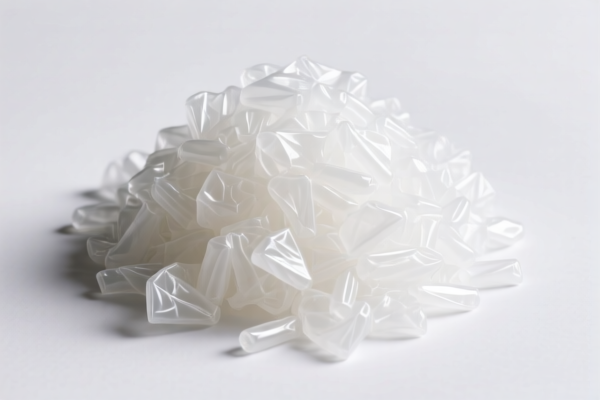

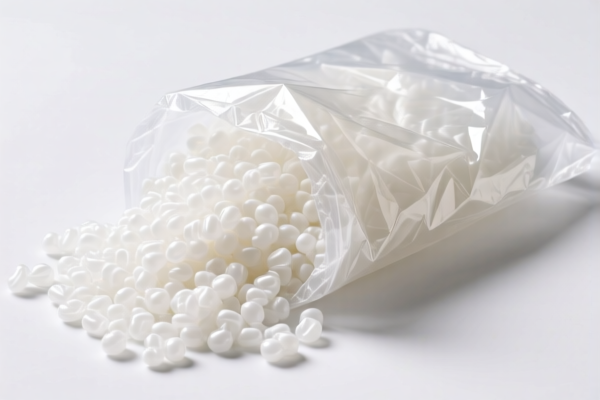

AI Analysis
🧪 Polypropylene High Temperature Resistant Raw Material
🌐 HS Code Reference & Customs Clearance Guide | 2026 Latest Tariff Full Analysis | Professional Clearance Strategy
📌 I. Product Definition & Classification: Do You Really Understand "Polypropylene High Temperature Resistant Raw Material"?
Polypropylene (PP) High Temperature Resistant Raw Material refers to specialized polypropylene compounds designed for high-temperature applications. In international trade, it is generally categorized based on its chemical nature (Polymer) or its state of processing (Primary Forms).
1. Polypropylene Resin (Primary Forms):
- Unmodified or lightly modified PP pellets/granules.
- Classified under Chapter 39 (Plastics and Articles Thereof).
2. Polypropylene Compounds/Blends:
- If blended with other polymers (e.g., high-temperature resistant modifiers) and no longer purely polypropylene, it may fall under Other Plastics.
⚠️ Key Distinction Point:
- If the material is pure polypropylene in basic forms (pellets, powders, etc.) →归入 3902.10 or 3902.30
- If it is a polyester-based high-temperature material mistakenly labeled as PP →归入 3907.91 or 3907.99
- If it is a chemical preparation/mixture not meeting plastic definitions →归入 3824.99
📦 II. HS Code Classification Details (2026 Latest Tariff Authority Comparison)
| HS Code | Product Description | Applicable Scenario | Key Characteristics |
|---|---|---|---|
3902.30.00.00 |
Polypropylene Wear-Resistant Raw Material, Corresponding to Propylene Polymers in Primary Form | Pure PP wear-resistant compounds, basic pellets | ✅ PP Polymer, Primary Form |
3902.10.00.00 |
Polypropylene Wear-Resistant Raw Material, Corresponding to Polypropylene in Primary Forms Definition | General PP pellets, unmodified or lightly modified | ✅ PP Polymer, Primary Form |
3907.91.50.00 |
Polyester Resin High-Temperature Resistant Raw Material, Meeting Polyester Attributes | Misclassified or mixed polyester-based high-temp materials | ✅ Polyester, Primary Form |
3907.99.50.50 |
Polyester Resin High-Temperature Resistant Raw Material, Other Polyester Catch-All | Other polyester types not specified above | ✅ Polyester, Other |
3824.99.93.97 |
Polyester Resin High-Temperature Resistant Raw Material, Chemical Industry Preparations | Complex chemical blends, non-plastic preparations | ✅ Chemical Preparation |
🔍 Important Reminder:
- Polypropylene (PP) materials must be classified under 3902.
- If the material is actually Polyester (PET, PBT, etc.), it must be classified under 3907.
- If it is a chemical mixture not fitting plastic definitions, it falls under 3824.
- Misclassification can lead to significant tariff differences and customs penalties.
💰 III. 2026 Latest Tariff Rate Details (Including Surcharges, Policy Add-ons)
✅ Applicable Country: United States (US)
✅ Origin: China (CN)
✅ Effective Date: From November 10, 2025 (including subsequent imports)
🎯 1. 3902.30.00.00 —— Polypropylene Wear-Resistant Raw Material (Propylene Polymer)
| Item | Content |
|---|---|
| Base Duty Rate | 6.5% (ad valorem) |
| Section 301 Surcharge | +25% (USITC Footnote) |
| Section 122 Tariff | +10% (Special Measure) |
| Total Duty Rate | 41.5% |
| Tax Calculation | CIF Value × 41.5% |
| De Minimis Eligibility | ❌ No (deny_de_minimis) |
| Legal Basis Path | USITC:3902.30.00.00 → SECTION_301:3902.30.00.00 → SECTION_122 |
📌 Explanation:
- "Base Duty 6.5%" is the standard MFN rate for polypropylene.
- "Section 301 Surcharge 25%" is the US-China trade war tariff.
- "Section 122 Tariff 10%" is an additional surcharge for national security reasons.
- Total 41.5% is a high tariff that must be factored into cost calculations.
🎯 2. 3902.10.00.00 —— Polypropylene Wear-Resistant Raw Material (Primary Forms)
| Item | Content |
|---|---|
| Base Duty Rate | 6.5% |
| Section 301 Surcharge | +25% |
| Section 122 Tariff | +10% |
| Total Duty Rate | 41.5% |
| Tax Calculation | CIF × 41.5% |
| De Minimis Eligibility | ❌ No |
| Legal Basis Path | USITC:3902.10.00.00 → SECTION_301:3902.10.00.00 → SECTION_122 |
📌 Note:
- Same tariff structure as above.
- Applies to all pure polypropylene primary forms.
🎯 3. 3907.91.50.00 —— Polyester Resin High-Temperature Resistant Raw Material
| Item | Content |
|---|---|
| Base Duty Rate | 6.5% |
| Section 301 Surcharge | +25% |
| Section 122 Tariff | +10% |
| Total Duty Rate | 41.5% |
| Tax Calculation | CIF × 41.5% |
| De Minimis Eligibility | ❌ No |
| Legal Basis Path | USITC:3907.91.50.00 → SECTION_301:3907.91.50.00 → SECTION_122 |
📌 Note:
- If the product is mistakenly declared as polypropylene but is actually polyester, it may still be subject to the same high tariffs if classified under 3907.
- Ensure accurate chemical composition declaration.
🎯 4. 3907.99.50.50 —— Polyester Resin High-Temperature Resistant Raw Material (Other)
| Item | Content |
|---|---|
| Base Duty Rate | 6.5% |
| Section 301 Surcharge | +25% |
| Section 122 Tariff | +10% |
| Total Duty Rate | 41.5% |
| Tax Calculation | CIF × 41.5% |
| De Minimis Eligibility | ❌ No |
| Legal Basis Path | USITC:3907.99.50.50 → SECTION_301:3907.99.50.50 → SECTION_122 |
📌 Note:
- Catch-all category for other polyesters.
- Same tariff burden as specific polyester categories.
🎯 5. 3824.99.93.97 —— Chemical Industry Preparations (Polyester/PP Blend)
| Item | Content |
|---|---|
| Base Duty Rate | 5.0% |
| Section 301 Surcharge | +25% |
| Section 122 Tariff | +10% |
| Total Duty Rate | 40.0% |
| Tax Calculation | CIF × 40.0% |
| De Minimis Eligibility | ❌ No |
| Legal Basis Path | USITC:3824.99.93.97 → SECTION_301:3824.99.93.97 → SECTION_122 |
📌 Note:
- Slightly lower total rate (40.0%) compared to plastic categories (41.5%).
- Only applicable if the product is classified as a chemical preparation rather than a plastic.
- Requires strong justification and technical data to support this classification.
🛠️ IV. Customs Clearance Practical Advice (Practical Pitfall Avoidance Guide)
✅ 1. Required Documentation Checklist (All are Mandatory)
| Document | Required | Explanation |
|---|---|---|
| ✅ Product Specification Sheet | ✔️ | Must include chemical composition, melting point, heat resistance rating, molecular weight. |
| ✅ MSDS/SDS (Material Safety Data Sheet) | ✔️ | Proves chemical nature and safety data. |
| ✅ Technical Data Sheet (TDS) | ✔️ | Shows physical properties and intended use. |
| ✅ Commercial Invoice | ✔️ | Clearly state "Polypropylene Resin" or "Polyester Resin" with HS Code. |
| ✅ Packing List | ✔️ | Detail packaging, net/gross weight. |
| ✅ Certificate of Origin (CO) | ✔️ | If not from China, may qualify for preferential rates. |
| ✅ Test Report | ✔️ | Third-party lab report confirming polymer type (FTIR analysis recommended). |
✅ 2. Declaration Tips (Key Mantra)
🔥 “PP is 3902, Polyester is 3907, Mixtures may be 3824, Accuracy Saves Money!”
| Scenario | Correct Declaration | Wrong Practice |
|---|---|---|
| Pure PP Pellets | 3902.10.00.00 or 3902.30.00.00 |
Mislabel as "Chemical Blend" → Potential penalty |
| Pure Polyester Pellets | 3907.91.50.00 or 3907.99.50.50 |
Mislabel as PP → 41.5% vs potential 40% |
| Complex Chemical Blend | 3824.99.93.97 |
Mislabel as Plastic → 40% vs 41.5% (minor difference) |
| Any Origin (China) | All subject to 301 & 122 | Assuming duty-free → 41.5% shock! |
✅ 3. Special Situation Handling
| Situation | Handling Advice |
|---|---|
| OEM Custom PP/PE Blend | Provide exact weight percentages and FTIR reports. If >50% PP, classify under 3902. |
| High-Temperature Modified PP | If modifiers change chemical nature, consider 3824.99.93.97 (40.0%). Requires technical justification. |
| Sample Shipments | Not eligible for de minimis exemption. Full duties apply. |
| Mixed Containers | Ensure each item is correctly classified. Mixed declarations can lead to whole-container audits. |
🌍 V. Global Major Market Customs Comparison (2026 Latest)
| Country/Region | Recommended HS Code | Duty Rate | Certification Requirements | Notes |
|---|---|---|---|---|
| 🇺🇸 USA | 3902.30.00.00 |
41.5% | No specific cert. | High tariff due to 301 & 122. |
| 🇨🇳 China | 3902.30.00.00 |
5-6.5% | No special cert. | Lower base rate. |
| 🇪🇺 EU | 3902.10.00.00 |
0-6.5% | REACH Registration | May qualify for EPA if applicable. |
| 🇦🇺 Australia | 3902.10.00.00 |
5% | No special cert. | No 301/122 surcharges. |
| 🇯🇵 Japan | 3902.10.00.00 |
0-5% | FSCA Approval | Low duty, no surcharges. |
📌 Conclusion:
- USA is the only major market imposing 301 & 122 surcharges on these materials.
- China-origin PP/Polyester imports to the US face 40-41.5% tariffs.
- Consider supply chain diversification (e.g., Vietnam, Mexico) to avoid surcharges if possible.
📌 VI. Common Mistakes & Pitfall Avoidance Guide (Blood and Tears Lessons)
❌ Mistake 1: Declaring "Polypropylene" when the material is actually Polyester
👉 Consequence: Customs may reclassify and impose penalties. Ensure accurate chemical identification.
❌ Mistake 2: Ignoring Section 122 Tariff (10%)
👉 Consequence: Underpayment of duties → Back taxes + Interest + Penalties.
❌ Mistake 3: Assuming "High Temperature Resistant" qualifies for a special exemption
👉 Consequence: No such exemption exists for PP/Polyester. All standard tariffs apply.
❌ Mistake 4: Using vague descriptions like "Plastic Raw Material"
👉 Consequence: Customs may delay shipment for additional documentation → Port storage fees.
✅ Correct Practice:
“Polypropylene Resin, Pellet Form, Heat Resistant Grade, FTIR Verified, Model XYZ, CIF Value $10,000”
🎯 VII. Conclusion: Precise Classification, Time-Saving, Cost-Efficiency!
🎯 Remember the Mantra:
🔹 “PP is 3902, Polyester is 3907, Mixtures may be 3824, Accuracy Saves Money!”
🔹 “HS Code Determines Fate, 41.5% is the Cost, One Mistake Means Back Taxes!”
📌 Pro Tip:
If your material is shipped from Vietnam, Mexico, Thailand, or Malaysia, you may be eligible for IEEPA Exemption or lower Section 301 rates (if applicable).
Recommendation: Apply for an Advance Ruling (Pre-Classification) from US Customs and Border Protection (CBP) to confirm HS Code and avoid surprises.
📣 Immediate Action:
📞 Contact a Professional Customs Broker + Provide Product Specs + Request HS Code Pre-Ruling
🚀 Ensure your raw materials clear customs smoothly, boost efficiency, and maximize profits!
✨ Professional Clearance Starts with Accurate Classification!
💼 Every Dollar of Cost Deserves Precise Calculation!
Customer Reviews
About HS Code Classification
The Harmonized System (HS) is an internationally standardized nomenclature developed by the World Customs Organization (WCO) to classify traded products. Over 200 countries use the HS system as the basis for customs tariffs, trade statistics, and import/export regulations.
Each HS code follows a hierarchical structure:
- Chapter (2 digits) — Broad category of goods (e.g., Chapter 84: Machinery and Mechanical Appliances)
- Heading (4 digits) — More specific grouping within the chapter
- Subheading (6 digits) — Internationally standardized breakdown, used by all WCO member countries
- National subdivisions (8-10 digits) — Country-specific extensions for further classification, such as US HTSUS 10-digit codes
Correct HS code classification is essential for smooth customs clearance, accurate duty payment, and compliance with trade regulations. Misclassification can lead to customs delays, overpayment of duties, or penalties.
When importing from CN to US, the applicable tariff rates may include:
- Most-Favored-Nation (MFN) rate — The standard duty rate applied to WTO members
- General rate — Applied to countries without trade agreements
- Trade remedy duties — Additional tariffs such as Section 301 (anti-dumping), Section 232 (national security), or countervailing duties
The information provided on this page is for reference purposes only. For official classification, please consult with your local customs authority or a licensed customs broker.