Polypropylene Home Appliance Parts Raw Material
CN → US| HS Code | Tariff Rate | Origin | Destination | Doc |
|---|---|---|---|---|
| 3902100000 | 41.5% | CN | US | Official Doc |
| 3902300000 | 41.5% | CN | US | Official Doc |
| 3926305000 | 22.8% | CN | US | Official Doc |
| 3926909989 | 22.8% | CN | US | Official Doc |
| 3923900080 | 38.0% | CN | US | Official Doc |
| 3923109000 | 38.0% | CN | US | Official Doc |
Product Images

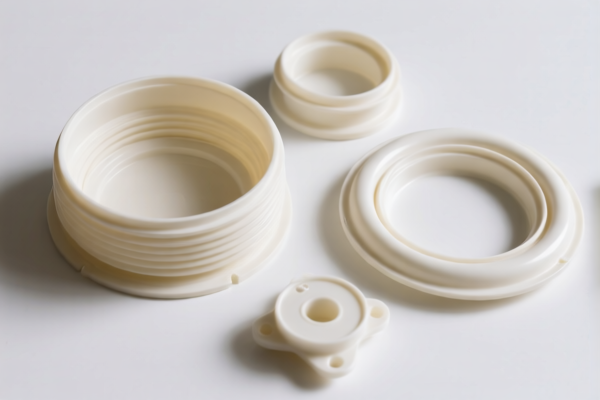
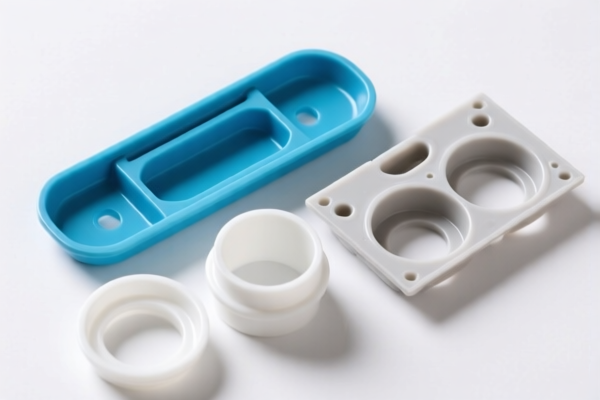

AI Analysis
🏠 Polypropylene Home Appliance Parts Raw Material
🌐 HS Code Reference & Customs Clearance Guide | 2026 Latest Tariff Analysis | Professional Clearance Strategy
"Polypropylene Home Appliance Parts Raw Material" is a broad term that can lead to significant customs risks if not classified correctly. In international trade, the classification depends entirely on the state of the material (raw resin vs. finished part) and the chemical structure (homopolymer vs. copolymer).
Below is the precise breakdown based on the provided data, followed by critical clearance advice to avoid penalties, delays, or excessive duties.
⚠️ Key Warning:
- "Raw Material" implies primary forms (pellets, powders, liquids).
- "Parts" implies finished or semi-finished articles.
- Misclassification Risk: Declaring a finished plastic housing as "raw material" is a serious compliance error. Declaring a copolymer as a homopolymer can change the duty rate from 6.5% to 0%.
📦 HS Code Classification Matrix (2026 Latest Tariff Data)
The following HS Codes are derived strictly from the provided dataset. The correct code depends on the specific product form.
| HS Code | Product Description | Applicable Scenario | Duty Rate |
|---|---|---|---|
| 3902.10.00.00 | Polypropylene (Homopolymer) | Raw Material: PP pellets, granules, or primary forms used for injection molding appliances. | 31.5% |
| 3902.30.00.00 | Propylene Copolymers | Raw Material: Modified PP (e.g., impact-modified PP) sold as pellets/granules. | 0.0% |
| 3926.30.50.00 | Fittings for Furniture, Coachwork, etc. | Semi-Finished/Finished: Plastic knobs, handles, or specific fittings for appliances/furniture. | 0.0% |
| 3926.90.99.89 | Other Articles of Plastics | Finished Parts: Generic plastic housing, casings, or internal components that don't fit specific headings. | 12.8% |
| 3923.90.00.80 | Articles for Conveyance/Packing | Packing Materials: Plastic boxes, crates, or lids included with the appliance or sold as accessory packaging. | 28.0% |
| 3923.10.90.00 | Boxes, Cases, Crates (Plastic) | Packaging: Specific plastic containers for transport or storage. | 0.0% |
💰 Detailed Tariff Breakdown & Tax Logic
✅ Applicable Context: Based on provided tax details (Likely US Market with Section 301/Trade War Surcharges).
✅ Base Country of Origin: China (Implied by "Additional Tariffs").
🎯 1. Raw Materials: The Critical Distinction
A. Homopolymer Polypropylene (3902.10.00.00)
- Description: Pure polypropylene resin.
- Tax Structure:
- Base Tariff: 6.5%
- Additional Surcharge: 25.0% (Section 301 / Trade War Tariff)
- Total Effective Rate: 31.5%
- 💡 Insight: This is the highest burden for raw materials. If you are importing standard PP pellets, expect this full rate.
B. Propylene Copolymers (3902.30.00.00)
- Description: PP mixed with other olefins (e.g., Ethylene) to improve impact resistance or flexibility. Common in appliance parts.
- Tax Structure:
- Base Tariff: 0.0%
- Additional Surcharge: 0.0%
- Total Effective Rate: 0.0%
- 💡 Insight: Zero Duty! If your "raw material" is technically a copolymer (common for appliance durability), declaring it correctly under 3902.30.00.00 can save 31.5% compared to homopolymers. Check your material safety data sheet (MSDS) for composition.
🎯 2. Finished/Semi-Finished Parts
A. Generic Plastic Parts (3926.90.99.89)
- Description: General plastic components (e.g., internal gears, brackets) not specified elsewhere.
- Tax Structure:
- Base Tariff: 5.3%
- Additional Surcharge: 7.5%
- Total Effective Rate: 12.8%
- 💡 Insight: Lower than raw homopolymers. Suitable for molded parts that don't have a specific function like "lids" or "fittings."
B. Fittings (3926.30.50.00)
- Description: Knobs, dials, handles, or decorative fittings for furniture/appliances.
- Tax Structure:
- Base Tariff: 0.0%
- Additional Surcharge: 0.0%
- Total Effective Rate: 0.0%
- 💡 Insight: Zero Duty! If your "appliance part" is a knob or a handle, ensure it fits this description. Misclassifying a knob as a "generic part" (12.8%) is an unnecessary cost.
C. Packaging (3923.90.00.80 vs 3923.10.90.00)
- Description: If the "parts" include plastic boxes or lids for transport.
- Tax Structure:
- General Plastic Articles (3923.90.00.80): 28.0% (High!)
- Boxes/Crates (3923.10.90.00): 0.0%
- 💡 Insight: Clearly separate packing materials from the actual product. If shipping plastic crates, use 3923.10.90.00 for 0% duty. If it's just "other plastic articles" (like a random plastic bag or wrap), it hits 28.0%.
🛠️ Customs Clearance Practical Advice (Avoid Pitfalls)
✅ 1. Declaration Strategy: "Raw Material" vs. "Part"
| Scenario | Recommended HS Code | Duty | Risk Level |
|---|---|---|---|
| Importing PP Pellets for your own factory to make parts | 3902.10.00.00 or 3902.30.00.00 |
31.5% or 0% | Low (if MSDS confirms type) |
| Importing Finished Plastic Housings (e.g., blender body) | 3926.90.99.89 |
12.8% | Medium (Ensure no other specific heading fits) |
| Importing Plastic Knobs/Handles | 3926.30.50.00 |
0.0% | Low (If clearly identifiable as fittings) |
| Importing Plastic Lids/Caps | 3923.90.00.80 |
28.0% | High (Consider if it fits "closures" more precisely or if 3923.10 applies) |
⚠️ Critical Tip:
If you are importing Copolymer PP (common for appliances), do NOT use3902.10.00.00. Use3902.30.00.00to achieve 0% duty. Your supplier’s technical data sheet must confirm the copolymer nature.
✅ 2. Required Documentation for Clearance
| Document | Purpose | Detail |
|---|---|---|
| Material Safety Data Sheet (MSDS) | Proves Composition | Must specify if it is Homopolymer (3902.10) or Copolymer (3902.30). |
| Product Photographs | Visual Confirmation | Show if it's pellets (raw) or molded parts (finished). |
| Commercial Invoice | Value & Description | Clearly state "Polypropylene Homopolymer Pellets" or "Plastic Appliance Fittings." |
| Packing List | Quantities | Distinguish between product weight and packaging weight. |
✅ 3. Common Errors & Penalties
❌ Error 1: Declaring Copolymer PP as Homopolymer PP.
👉 Result: Pay 31.5% instead of 0%.
💡 Fix: Check chemical composition. Copolymers are often cheaper to import.
❌ Error 2: Declaring Plastic Knobs as Generic Plastic Parts.
👉 Result: Pay 12.8% instead of 0%.
💡 Fix: Use heading 3926.30 for "Fittings" if they are knobs, handles, or dials.
❌ Error 3: Including Plastic Boxes in the "Appliance Part" declaration.
👉 Result: May be taxed at 28.0% if classified as "Other Plastic Articles."
💡 Fix: Separate packing materials. Use 3923.10.90.00 (0%) for proper boxes/crates.
📌 Conclusion: Optimizing Your Landed Cost
-
For Raw Materials:
- If it is Homopolymer: Budget for 31.5% duty.
- If it is Copolymer: Achieve 0% duty by using
3902.30.00.00. This is the biggest saving opportunity.
-
For Finished Parts:
- Identify if parts are "Fittings" (Knobs/Handles) → 0% Duty (
3926.30.50.00). - Otherwise, expect 12.8% for general plastic parts (
3926.90.99.89).
- Identify if parts are "Fittings" (Knobs/Handles) → 0% Duty (
-
For Packaging:
- Use
3923.10.90.00for Boxes/Crates → 0% Duty. - Avoid
3923.90.00.80(28%) unless necessary.
- Use
🚀 Pro Tip:
Work with your supplier to ensure the MSDS and Invoice Description accurately reflect the Copolymer nature if applicable, or clearly define Fittings if they are knobs/handles. Precise classification can save you 31.5% or 12.8% per shipment.
✨ Professional Customs Clearance Starts with Accurate Classification!
💼 Don't let ambiguous descriptions cost you 30%+ in unnecessary tariffs.
Customer Reviews
About HS Code Classification
The Harmonized System (HS) is an internationally standardized nomenclature developed by the World Customs Organization (WCO) to classify traded products. Over 200 countries use the HS system as the basis for customs tariffs, trade statistics, and import/export regulations.
Each HS code follows a hierarchical structure:
- Chapter (2 digits) — Broad category of goods (e.g., Chapter 84: Machinery and Mechanical Appliances)
- Heading (4 digits) — More specific grouping within the chapter
- Subheading (6 digits) — Internationally standardized breakdown, used by all WCO member countries
- National subdivisions (8-10 digits) — Country-specific extensions for further classification, such as US HTSUS 10-digit codes
Correct HS code classification is essential for smooth customs clearance, accurate duty payment, and compliance with trade regulations. Misclassification can lead to customs delays, overpayment of duties, or penalties.
When importing from CN to US, the applicable tariff rates may include:
- Most-Favored-Nation (MFN) rate — The standard duty rate applied to WTO members
- General rate — Applied to countries without trade agreements
- Trade remedy duties — Additional tariffs such as Section 301 (anti-dumping), Section 232 (national security), or countervailing duties
The information provided on this page is for reference purposes only. For official classification, please consult with your local customs authority or a licensed customs broker.