Polypropylene Homopolymer
CN → US| HS Code | Tariff Rate | Origin | Destination | Doc |
|---|---|---|---|---|
| 3902300000 | 41.5% | CN | US | Official Doc |
| 3902100000 | 41.5% | CN | US | Official Doc |
| 3926909989 | 22.8% | CN | US | Official Doc |
| 3926909905 | 22.8% | CN | US | Official Doc |
| 3901905501 | 41.5% | CN | US | Official Doc |
Product Images
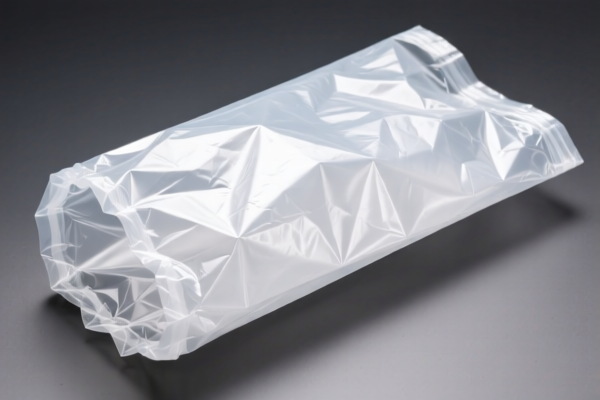


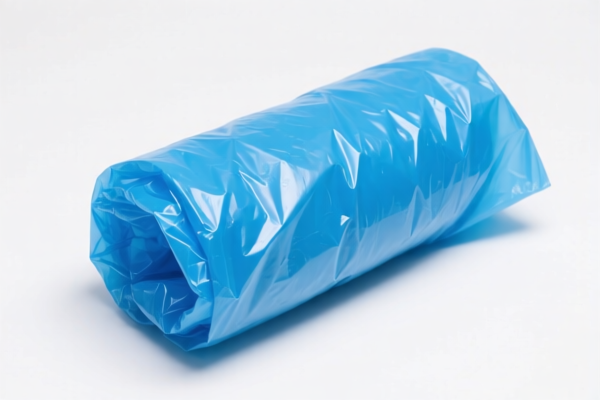
AI Analysis
🧪 Polypropylene Homopolymer (PP Homopolymer)
🌐 HS Code Reference & Customs Clearance Guide | 2026 Latest Tariff Analysis | Professional-Level Entry Strategy
📌 I. Product Definition & Classification: Do You Really Understand "PP Homopolymer"?
Polypropylene Homopolymer is a thermoplastic polymer made exclusively from propylene monomers. It is known for its high rigidity, excellent chemical resistance, and good fatigue strength. In international trade, it is primarily classified under Chapter 39 (Plastics and Articles Thereof).
The classification depends on the form (raw material vs. finished article) and the composition (homopolymer vs. copolymer).
⚠️ Key Distinction:
- Raw Materials (Resins/Granules/Powders): Classified under Heading 3902 (Polymers of Propylene and Other Olefins).
- Finished Articles (Containers, Pipes, Household Items): Classified under Heading 3926 (Other Articles of Plastics).
📦 II. HS Code Classification Details (2026 Latest Tariff Authority Comparison)
Based on the provided data, here are the precise classifications for Polypropylene Homopolymer and related polypropylene products:
| HS Code | Product Description | Application Scenario | Classification Logic |
|---|---|---|---|
3902.10.00.00 |
Polypropylene Homopolymer in primary forms (resins, powders, granules) | Raw material for injection molding, extrusion | ✅ Primary Form Matches "Polypropylene" under Heading 3902.10 |
3902.30.00.00 |
Polypropylene Copolymers | Random or block copolymers with other olefins | ✅ Copolymer Form If the product contains other monomers, it falls here. Note: The prompt specifically asks for "Homopolymer," but this HS is included in the reference data for comparison. |
3926.90.99.89 |
Polypropylene Articles (General/兜底 Category) | Finished plastic products (e.g., boxes, fittings) not specified elsewhere | ✅ Finished Product Applied if the item is a manufactured plastic article, not raw resin. |
3926.90.99.05 |
Polypropylene Copolymer Articles | Finished articles made specifically from PP copolymers | ✅ Finished Product Similar to above, but specified for copolymer materials. |
3901.90.55.01 |
Polyethylene Copolymers | Note: This HS refers to Polyethylene (PE), not Polypropylene (PP). Included in reference data but irrelevant for pure PP homopolymer classification. | ❌ Irrelevant Do not use for PP products. |
🔍 Key Reminder:
- For Polypropylene Homopolymer in raw form, the correct HS Code is3902.10.00.00.
- If the product is a finished article (e.g., a PP bucket or pipe), use3926.90.99.89.
-3901...codes are for Polyethylene (PE) and should not be used for Polypropylene.
💰 III. 2026 Latest Tariff Rate Details (Including Additional Taxes, Policy Surcharges)
✅ Applicable Country: United States (US)
✅ Origin: China (CN)
✅ Effective Date: 2025 November 10 onwards (including subsequent imports)
🎯 1. 3902.10.00.00 —— Polypropylene Homopolymer (Primary Forms)
| Item | Content |
|---|---|
| Base Tariff Rate | 6.5% (Ad Valorem) |
| USITC Additional Tariff | +25.0% (Section 301 Tariffs) |
| 122 Clause Tariff | +10.0% (Specific to certain Chinese-origin plastics/chemicals) |
| Total Effective Rate | 41.5% |
| Tax Calculation | CIF Value × 41.5% |
| De Minimis Eligibility | ❌ Not Applicable (High risk of audit) |
| Legal Basis Path | Base: 6.5% → 301: +25% → 122 Clause: +10% |
📌 Explanation:
- The 6.5% is the standard Most Favored Nation (MFN) duty for PP resins.
- The 25% is the standard Section 301 tariff for most Chinese-origin plastics.
- The 10% is an additional "122 Clause" tariff, often applied to specific chemical or polymer products under recent trade measures.
- Total 41.5% is a very high duty rate. Importers must factor this into cost calculations.
🎯 2. 3926.90.99.89 —— Polypropylene Articles (Finished Products)
| Item | Content |
|---|---|
| Base Tariff Rate | 5.3% |
| USITC Additional Tariff | +7.5% |
| 122 Clause Tariff | +10.0% |
| Total Effective Rate | 22.8% |
| Tax Calculation | CIF Value × 22.8% |
| De Minimis Eligibility | ❌ Not Applicable |
| Legal Basis Path | Base: 5.3% → 301: +7.5% → 122 Clause: +10% |
📌 Explanation:
- Finished plastic articles often have slightly lower additional tariffs compared to raw resins in some categories, but still carry significant duties.
- The 122 Clause still applies at 10%.
- Total 22.8% is lower than raw material (41.5%) but still substantial.
🛠️ IV. Customs Clearance Practical Advice (Real-World Pitfall Avoidance Guide)
✅ 1. Required Documentation Checklist (None Can Be Missing)
| Document | Must Provide | Explanation |
|---|---|---|
| ✅ Product Specification Sheet | ✔️ | Must state "Polypropylene Homopolymer," molecular weight, Melt Flow Index (MFI), and density. |
| ✅ Chemical Composition Analysis | ✔️ | Proof that it is 100% propylene (Homopolymer) and not a copolymer. Critical for distinguishing between 3902.10 and 3902.30. |
| ✅ Product Photos | ✔️ | Show the material form (granules/powder) vs. any packaging. |
| ✅ Commercial Invoice | ✔️ | Clearly describe as "Polypropylene Homopolymer Resin" or "PP Plastic Article." |
| ✅ Certificate of Origin (CO) | ✔️ | Essential to determine eligibility for any potential exemptions (though unlikely for US-China PP trade). |
| ✅ Packing List | ✔️ | Net weight and gross weight must match. |
✅ 2. Declaration Tips (Key Mantras)
🔥 "Form Determines Code, Composition Determines Rate!"
| Scenario | Correct Declaration | Incorrect Practice |
|---|---|---|
| Raw PP Resin (Homopolymer) | HS: 3902.10.00.00 |
Misdeclare as "Plastic Granules" without specifying PP → Audit risk |
| PP Copolymer Resin | HS: 3902.30.00.00 |
Misdeclare as Homopolymer → 41.5% vs 41.5% (Same rate, but wrong description) |
| Finished PP Container | HS: 3926.90.99.89 |
Misdeclare as raw resin → 41.5% vs 22.8% → Overpayment or Penalty |
| PE (Polyethylene) Product | HS: 3901.90.55.01 |
Misdeclare as PP → Complete HS Error |
📌 Note: Even though
3902.10and3902.30have the same total tax (41.5%) in this data set, accurate chemical declaration is mandatory to avoid legal penalties for misclassification.
✅ 3. Special Situation Handling
| Situation | Handling Advice |
|---|---|
| Blended Materials | If the product is PP mixed with fillers (e.g., talc, glass fiber), it may still be classified under 3902 if PP is the principal material. Provide lab test reports. |
| Recycled PP | If the PP is recycled, it may still fall under 3902, but ensure it meets "primary form" definitions. Some recycled plastics are classified differently. |
| OEM Custom Grades | Provide the manufacturer's grade name and technical data sheet (TDS) to prove it is a standard PP homopolymer. |
| Packaging | If imported in drums vs. bulk bags, the HS Code remains the same, but ensure the invoice reflects the actual net weight of the PP resin. |
🌍 V. Global Market Customs Clearance Comparison (2026 Latest)
| Country/Region | Recommended HS Code | Tariff Rate (China Origin) | Certification Requirements | Notes |
|---|---|---|---|---|
| 🇺🇸 USA | 3902.10.00.00 |
41.5% (6.5% + 25% + 10%) | No specific FDA approval for resins (unless for food contact) | High duty. 122 Clause applies. |
| 🇨🇳 China | 3902.10.00.00 |
6.5% (Import Duty) | No additional surcharges | Standard MFN rate. |
| 🇪🇺 EU | 3902.10.00.00 |
0% | REACH Registration Required | No additional surcharges for PP. REACH is critical. |
| 🇦🇺 Australia | 3902.10.00.00 |
5.0% | No specific certification | General tariff. |
| 🇯🇵 Japan | 3902.10.00.00 |
0% | JIS Standards (for specific uses) | Free trade agreement (EPA) may apply if criteria met. |
📌 Conclusion:
- USA imposes the highest tariff burden (41.5%) due to multiple surcharges.
- EU and Japan offer more favorable rates (0-5%), but EU requires REACH compliance, which is a significant regulatory hurdle.
- China Origin products face the highest barriers in the US market.
📌 VI. Common Errors & Pitfall Guide (Lessons Learned)
❌ Error 1: Confusing Polypropylene (PP) with Polyethylene (PE)
👉 Consequence: Using 3901.90.55.01 for PP → Wrong HS Code, potential fines, and delayed clearance.
❌ Error 2: Misdeclaring Copolymers as Homopolymers
👉 Consequence: Even if the tax rate is similar (41.5%), inaccurate description leads to legal liability for false declaration.
❌ Error 3: Ignoring the 122 Clause Tariff
👉 Consequence: Calculating only 6.5% + 25% = 31.5% → Underpayment by 10% → Penalty and back taxes.
❌ Error 4: Declaring Finished Articles as Raw Resin
👉 Consequence: Declaring a PP bucket as 3902.10.00.00 (41.5%) instead of 3926.90.99.89 (22.8%) → Overpayment or rejection for mismatch.
✅ Correct Practice:
"Polypropylene Homopolymer Resin, Virgin, Grade XYZ, Melt Flow Index 20g/10min, for Injection Molding, Net Weight 25kg/bag"
🎯 VII. Conclusion: Precision Classification, Cost Optimization!
🎯 Remember the Mantra:
🔹 "PP Homopolymer: 3902.10.00.00 (Raw), 41.5% Total Tax."
🔹 "PP Articles: 3926.90.99.89, 22.8% Total Tax."
🔹 "Don't mix PP with PE! Don't ignore the 122 Clause!"
📌 Pro Tip:
If your Polypropylene is imported from Vietnam, Malaysia, or Thailand, you may be eligible for lower or zero tariffs due to trade agreements or country-specific exemptions.
Recommendation: Request a Pre-Ruling (Advance Ruling) from US Customs and Border Protection (CBP) before shipment to confirm the exact HS Code and tariff application.
📣 Immediate Action:
📞 Contact your freight forwarder + Provide Technical Data Sheet (TDS) + Apply for HS Code Pre-Ruling.
🚀 Ensure your PP Homopolymer clears customs smoothly, avoiding costly penalties and optimizing your landed cost!
✨ Professional Customs Clearance Starts with Accurate Classification!
💼 Every cent of cost deserves precise calculation!
Customer Reviews
About HS Code Classification
The Harmonized System (HS) is an internationally standardized nomenclature developed by the World Customs Organization (WCO) to classify traded products. Over 200 countries use the HS system as the basis for customs tariffs, trade statistics, and import/export regulations.
Each HS code follows a hierarchical structure:
- Chapter (2 digits) — Broad category of goods (e.g., Chapter 84: Machinery and Mechanical Appliances)
- Heading (4 digits) — More specific grouping within the chapter
- Subheading (6 digits) — Internationally standardized breakdown, used by all WCO member countries
- National subdivisions (8-10 digits) — Country-specific extensions for further classification, such as US HTSUS 10-digit codes
Correct HS code classification is essential for smooth customs clearance, accurate duty payment, and compliance with trade regulations. Misclassification can lead to customs delays, overpayment of duties, or penalties.
When importing from CN to US, the applicable tariff rates may include:
- Most-Favored-Nation (MFN) rate — The standard duty rate applied to WTO members
- General rate — Applied to countries without trade agreements
- Trade remedy duties — Additional tariffs such as Section 301 (anti-dumping), Section 232 (national security), or countervailing duties
The information provided on this page is for reference purposes only. For official classification, please consult with your local customs authority or a licensed customs broker.