Polypropylene Pipe Fittings
CN → US| HS Code | Tariff Rate | Origin | Destination | Doc |
|---|---|---|---|---|
| 3917400080 | 40.3% | CN | US | Official Doc |
| 3926305000 | 22.8% | CN | US | Official Doc |
| 3926909989 | 22.8% | CN | US | Official Doc |
| 3917400095 | 40.3% | CN | US | Official Doc |
Product Images
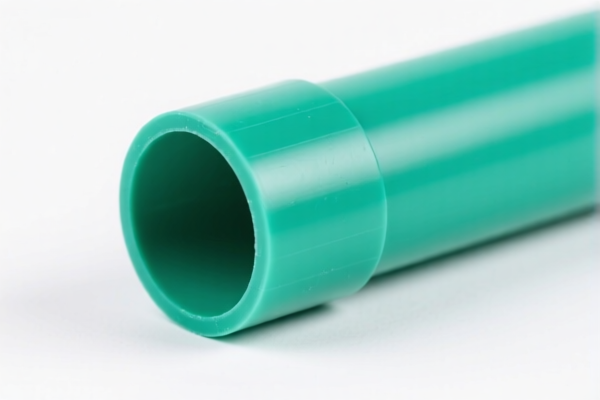
AI Analysis
🚰 Polypropylene Pipe Fittings: The Ultimate HS Code & Clearance Guide (2026)
🌐 HS Code Reference & Clearance Strategy | 2026 Tariff Deep Dive | Professional Entry Tactics
📌 I. Product Definition: What Exactly is a "Polypropylene Pipe Fitting"?
Polypropylene (PP) Pipe Fittings are critical components used to connect, branch, or terminate polypropylene pipes in plumbing, chemical processing, industrial ventilation, and water treatment systems. They are valued for their chemical resistance, thermal stability, and lightweight nature.
In international trade, these fittings are often misclassified, leading to massive tariff discrepancies. They generally fall under Chapter 39 (Plastics), but the specific subheading depends heavily on their structure and intended function:
- Pipe Accessories (
3917): Fittings designed specifically for piping systems (elbows, tees, reducers, connectors) that form part of the pipe network. - Other Plastic Articles (
3926): General plastic parts, connectors, or fittings that do not strictly fit the "pipe accessory" definition or are "other" miscellaneous plastic components.
⚠️ CRITICAL DISTINCTION:
- If the item is specifically designed to join plastic pipes (like a standard elbow or tee for PP pipes) → Group 3917.
- If the item is a general plastic connector, or falls under "other plastic articles" without specific pipe-system classification → Group 3926.
📦 II. HS Code Classification Matrix (2026 Tax Regime)
| HS Code | Product Description | Specific Attributes | Total Tax Rate |
|---|---|---|---|
3917.40.00.80 |
Polypropylene Pipe Fittings (Plastic Material, Form: Pipe Accessories) |
Standard PP elbows, tees, reducers used in fluid transport. | 40.3% |
3926.30.50.00 |
Polypropylene Pipe Fittings (Plastic Material, Form: Connectors) |
General connectors or fittings not strictly defined as "pipe accessories." | 22.8% |
3926.90.99.89 |
Polypropylene Pipe Fittings (Plastic Material, Form: Other Plastic Articles) |
Miscellaneous PP plastic parts, non-standard fittings, or "other" items. | 22.8% |
3917.40.00.95 |
Polypropylene Pipe Fittings (Plastic Material, Form: Plastic Pipe Accessories) |
Specific plastic pipe fittings classified under "Other" pipe accessories. | 40.3% |
🔍 Key Insight:
The 40.3% rate applies to items clearly defined as "Pipe Accessories" (HS 3917), while 22.8% applies to "Connectors" or "Other Plastic Articles" (HS 3926). The difference is purely in the legal definition of the item's function within the 39 Chapter notes.
💰 III. 2026 Tariff Rate Breakdown (Detailed Policy Analysis)
✅ Applicable Country: United States (US)
✅ Origin: China (CN)
✅ Effective Date: Current Trade War Measures (Section 301 + Section 122)
🎯 1. The "Pipe Accessory" Trap: 3917.40.00.80 & 3917.40.00.95
These classifications carry the highest penalty due to the "Pipe Accessory" designation.
| Tax Component | Rate | Legal Basis & Explanation |
|---|---|---|
| Base Duty (MFN) | 5.3% | The standard Most-Favored-Nation duty for Chapter 39 pipe accessories. |
| Section 301 "Add-on" | +25.0% | Aggressive Retaliatory Tariff: Applied to Chinese goods under USTR Section 301 investigations targeting specific industrial components. |
| Section 122 Tariff | +10.0% | New "122 Clause" Levy: A specific punitive tariff often applied to items deemed critical infrastructure or strategic materials. |
| TOTAL DUTY | 40.3% | 5.3% + 25.0% + 10.0% |
📌 Interpretation:
- The 25% is the heavy lift (Section 301).
- The 10% (Section 122) is an additional layer often applied to specific manufacturing inputs.
- Result: If you misclassify a3917fitting as3926, you save 17.5%, but you risk seizure for misdeclaration.
🎯 2. The "Connector/Other" Safety Net: 3926.30.50.00 & 3926.90.99.89
These classifications attract a lower penalty profile.
| Tax Component | Rate | Legal Basis & Explanation |
|---|---|---|
| Base Duty (MFN) | 5.3% | Standard rate for miscellaneous plastic articles/connectors. |
| Section 301 "Add-on" | +7.5% | Moderate Section 301: Applies to broader "Other Plastic" categories, significantly lower than the "Pipe Accessory" 25%. |
| Section 122 Tariff | +10.0% | Fixed 122 Clause: This specific tariff seems to apply broadly to Chapter 39 plastics in this dataset. |
| TOTAL DUTY | 22.8% | 5.3% + 7.5% + 10.0% |
📌 Interpretation:
- The 7.5% is the key differentiator here. By proving the item is a "Connector" or "Other Article" rather than a dedicated "Pipe Accessory," you avoid the steep 25% hit.
- Total Savings: 17.5% compared to the3917rate.
🛠️ IV. Clearance Operational Advice (The "Do's and Don'ts")
✅ 1. The "Function vs. Form" Test
To decide between 3917 (40.3%) and 3926 (22.8%), ask:
* Is this fitting designed EXCLUSIVELY to connect two pieces of Polypropylene pipe?
* Yes → Likely 3917. Risk: 40.3% tax.
* Is this a general connector, a valve, or a part used in a broader assembly (not just pipe-to-pipe)?
* Yes → Likely 3926. Opportunity: 22.8% tax.
⚠️ Warning: Do not force a fit into
3926if the item is clearly a standard pipe elbow/tee. Customs will reclassify, levy the 40.3%, and charge penalties.
✅ 2. Documentation Checklist (Avoid Delays)
| Document | Requirement | Why It Matters |
|---|---|---|
| Detailed Technical Drawing | Must show the exact joint interface (e.g., solvent weld, threaded, socket). | Proves if it's a "Pipe Accessory" (3917) or a "Connector" (3926). |
| Material Certificate | Must explicitly state Polypropylene (PP). | Confirms Chapter 39 applicability; prevents misclassification into metal (lower rate) or other plastics. |
| Usage Statement | Describe the specific application (e.g., "Used for chemical waste piping" vs. "General assembly"). | Helps justify the 3917 vs 3926 distinction. |
| Bill of Materials (BOM) | If the fitting is part of a larger assembly, show how it integrates. | Can sometimes argue for "part of machinery" classification (though risky for plastics). |
✅ 3. Strategic Pricing & Negotiation
Since the tax difference is 17.5%: * Scenario A: If your fittings are standard elbows/tees, expect 40.3%. Negotiate prices with suppliers assuming this cost. * Scenario B: If you can design or source specialized connectors (e.g., flange adapters, non-pipe specific fittings), you might legally qualify for 22.8%. * Action: Consult a Customs Broker before shipment. Ask for a Binding Ruling if the product design is ambiguous.
🌍 V. Global Market Comparison (2026 Snapshot)
| Market | Recommended HS Code | Total Tax (China Origin) | Risk Level |
|---|---|---|---|
| 🇺🇸 United States | 3917 or 3926 |
40.3% OR 22.8% | 🔴 HIGH (Aggressive enforcement) |
| 🇪🇺 European Union | 3917 or 3926 |
~3.7% (Low) | 🟢 LOW (No Section 301/122) |
| 🇨🇳 China | 3917 or 3926 |
~2.5% (Import Duty) | 🟢 LOW |
| 🇦🇺 Australia | 3917 or 3926 |
~5.0% | 🟢 LOW |
📌 Conclusion: The US market is the only one with the Section 122 (10%) and aggressive Section 301 (25%) penalties. For other markets, the distinction between
3917and3926still matters for base duty, but the penalty structure is far less severe.
🎯 VI. Final Verdict & Pro Tips
🔥 The Golden Rule:
"Don't guess the 'Accessory' status! If it's a standard pipe elbow, it's 40.3%. If it's a specialized connector, fight for 22.8% with drawings."
⚠️ Common Pitfalls:
- Generalizing "Plastic Fittings": Do not just write "Plastic Fittings" on the invoice. Be specific: "PP Pipe Elbow" vs. "PP Connector Block".
- Ignoring Section 122: Many traders focus only on the 25% Section 301 and miss the extra 10%. Always calculate the sum.
- Split Shipments: Do not try to split a shipment of elbows (40.3%) with connectors (22.8%) to "average" the rate. Customs will audit and deny the lower rate for the elbows.
💡 Pro Tip:
If you are importing large volumes, consider pre-authorization from US Customs (CBP) for a Binding Ruling on your specific product design. This locks in the lower 22.8% rate if your product qualifies as "Other Plastic Articles" rather than "Pipe Accessories," saving you thousands annually.
✨ Clearance Success Starts with Precision!
💼 Your Profit Margin depends on whether you pay 40.3% or 22.8%.
🚀 Verify your HS Code today before the container sails!
Customer Reviews
About HS Code Classification
The Harmonized System (HS) is an internationally standardized nomenclature developed by the World Customs Organization (WCO) to classify traded products. Over 200 countries use the HS system as the basis for customs tariffs, trade statistics, and import/export regulations.
Each HS code follows a hierarchical structure:
- Chapter (2 digits) — Broad category of goods (e.g., Chapter 84: Machinery and Mechanical Appliances)
- Heading (4 digits) — More specific grouping within the chapter
- Subheading (6 digits) — Internationally standardized breakdown, used by all WCO member countries
- National subdivisions (8-10 digits) — Country-specific extensions for further classification, such as US HTSUS 10-digit codes
Correct HS code classification is essential for smooth customs clearance, accurate duty payment, and compliance with trade regulations. Misclassification can lead to customs delays, overpayment of duties, or penalties.
When importing from CN to US, the applicable tariff rates may include:
- Most-Favored-Nation (MFN) rate — The standard duty rate applied to WTO members
- General rate — Applied to countries without trade agreements
- Trade remedy duties — Additional tariffs such as Section 301 (anti-dumping), Section 232 (national security), or countervailing duties
The information provided on this page is for reference purposes only. For official classification, please consult with your local customs authority or a licensed customs broker.