Polypropylene Plastic Gift Wrapping Paper
CN → US| HS Code | Tariff Rate | Origin | Destination | Doc |
|---|---|---|---|---|
| 3923290000 | 38.0% | CN | US | Official Doc |
| 3920200020 | 39.2% | CN | US | Official Doc |
| 3921190010 | 41.5% | CN | US | Official Doc |
| 3921905050 | 39.8% | CN | US | Official Doc |
| 3923900080 | 38.0% | CN | US | Official Doc |
| 3920200015 | 39.2% | CN | US | Official Doc |
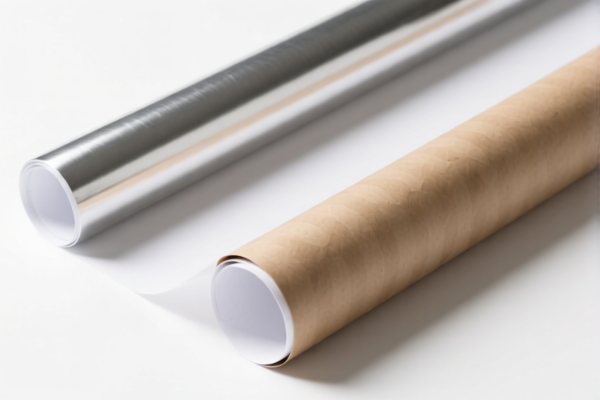
Product Images



AI Analysis
🎁 Polypropylene Plastic Gift Wrapping Film
🌐 HS Code Reference & Customs Clearance Guide | 2026 Latest Tariff Analysis | Professional Strategy
📌 I. Product Definition & Classification: What is "PP Gift Wrapping Film"?
Polypropylene (PP) plastic gift wrapping film is a flexible packaging material made from polypropylene polymer. It is characterized by high transparency, glossiness, moisture resistance, and good tear strength. Unlike paper-based wrapping, it is a plastic film.
In international trade, the classification depends heavily on its chemical structure (homopolymer vs. copolymer), physical form (plain film vs. reinforced/covered), and end-use (general packaging vs. specific containers).
⚠️ Key Distinction Points:
- Is it a simple single-layer or multi-layer film without reinforcement? → Likely Chapter 39.20 or 39.21.
- Is it specifically designed as a container/accessory for packaging (e.g., bags, sacks)? → Likely Chapter 39.23.
- Does it have special coatings, reinforcements, or additives changing its core character? → May shift to 39.21.
📦 II. HS Code Classification Details (2026 Latest Tariff Authoritative Mapping)
Based on the provided data, here are the valid HS Codes for "Polypropylene Plastic Gift Wrapping Paper/Film":
| HS Code | Product Description | Key Characteristics | Applicable Scenario |
|---|---|---|---|
3923.29.00.00 |
Plastic packaging film, other | Material: Plastic; Form: Film; Use: Packaging | General PP gift wrapping film, flexible packaging |
3920.20.00.20 |
Polypropylene film | Material: PP; Form: Film; Use: Gift Packaging | Standard PP film, non-reinforced, for wrapping |
3921.19.00.10 |
Polypropylene film | Core characteristics meet classification explanation | PP film with specific physical/chemical properties (e.g., modified surface) |
3921.90.50.50 |
Plastic film, PP category | Material: Plastic; Form: Film; Fits classification features | PP film with other plastics or special treatments, not elsewhere specified |
3923.90.00.80 |
Plastic packaging accessories/films | Material: Plastic; Form: Packaging Film | PP film used specifically as a packaging accessory or auxiliary film |
3920.20.00.15 |
Acrylic polymer film | Material: Polypropylene; Form: Film; Use: Gift Packaging | Similar to 3920.20.00.20, potentially slight chemical variation or regional specific subheading |
🔍 Key Reminder:
- 3920 covers plain, unworked films. If the film is just PP with no significant modification → 3920.xx.xx.
- 3921 covers films that are worked, coated, or have added values (e.g., anti-static, special adhesion) that change their basic character beyond simple extrusion.
- 3923 covers articles for packaging (like bags, sacks, and sometimes specific packaging films if they are considered "articles" rather than raw material films). Note: Customs interpretation of "film" vs. "packaging article" varies; often, simple rolls of film go to 3920/3921, while pre-made bags go to 3923.
💰 III. 2026 Latest Tariff Rate Breakdown (Including Additional Taxes & Policy Add-ons)
✅ Applicable Country: United States (US)
✅ Origin: China (CN)
✅ Effective Date: From November 10, 2025 (including subsequent imports)
The tariff structure for all listed HS Codes follows a consistent pattern due to US trade policy against Chinese plastic goods.
🎯 1. General Rate Structure for All Listed HS Codes
| Item | Content |
|---|---|
| Base Tariff Rate | Varies: 3.0% – 6.5% (Ad Valorem) |
| Section 301 Additional Tariff | +25.0% (USITC Footnote, China-origin goods) |
| IEEPA Section 122 Tariff | +10.0% (针对中国/香港产品, effective Nov 2025) |
| Total Tariff Rate | 38.0% – 41.5% |
| Tax Calculation | CIF Value × Total Rate |
| De Minimis Exemption Eligibility | ❌ No (deny_de_minimis) |
| Legal Basis Path | IEEPA:9903.01.25 → USITC:3920/3921/3923 [Code] → FOOTNOTE:301/122 |
🎯 2. Detailed Breakdown by HS Code
🅰️ 3923.29.00.00 & 3923.90.00.80 – Plastic Packaging Films/Articles
| Item | Content |
|---|---|
| Base Rate | 3.0% |
| Section 301 Tariff | +25.0% |
| IEEPA 122 Tariff | +10.0% |
| Total Rate | 38.0% |
| Legal Path | IEEPA:9903.01.25 → USITC:3923.29.00.00 → FOOTNOTE:301.88.01 |
📌 Explanation:
- These codes often apply to films considered "packaging articles" or specific packaging supplies.
- 38% total is high but slightly lower than some 3920/3921 variants due to a lower base rate (3% vs. 4.2-6.5%).
🅱️ 3920.20.00.20 & 3920.20.00.15 – Polypropylene Films (Plain)
| Item | Content |
|---|---|
| Base Rate | 4.2% |
| Section 301 Tariff | +25.0% |
| IEEPA 122 Tariff | +10.0% |
| Total Rate | 39.2% |
| Legal Path | IEEPA:9903.01.24 → USITC:3920.20.00.xx → FOOTNOTE:301.88.01 |
📌 Note:
- This is the most common classification for standard, uncoated PP gift wrap films.
- If the film is simple extruded PP, this is the likely code.
- 39.2% total tax applies.
🆎 3921.19.00.10 – Modified/Worked PP Films
| Item | Content |
|---|---|
| Base Rate | 6.5% |
| Section 301 Tariff | +25.0% |
| IEEPA 122 Tariff | +10.0% |
| Total Rate | 41.5% |
| Legal Path | IEEPA:9903.01.25 → USITC:3921.19.00.10 → FOOTNOTE:301.88.01 |
📌 Warning:
- This code applies if the film has additional processing (e.g., laminated, coated with non-PP materials, or significantly modified surface properties).
- 41.5% is the highest tariff among the options.
- Only use this if the product strictly meets the "worked/plated/covered" definition of Chapter 3921.
🅲 3921.90.50.50 – Other Plastic Films (PP Category)
| Item | Content |
|---|---|
| Base Rate | 4.8% |
| Section 301 Tariff | +25.0% |
| IEEPA 122 Tariff | +10.0% |
| Total Rate | 39.8% |
| Legal Path | IEEPA:9903.01.24 → USITC:3921.90.50.50 → FOOTNOTE:301.88.01 |
📌 Note:
- A catch-all for PP films that don't fit 3920 or specific 3921.19 categories.
- Useful if the film has minor additives but doesn't rise to the level of 3921.19.
🛠️ IV. Customs Clearance Practical Advice (Battle-Tested Pitfall Guide)
✅ 1. Documentation Checklist (Mandatory)
| Document | Required | Description |
|---|---|---|
| ✅ Product Spec Sheet | ✔️ | Must detail: Material (100% PP or blend?), Thickness (microns), Width, Color, Treatment (Matte/Gloss/Coated). |
| ✅ Formula/Composition | ✔️ | Prove it is Polypropylene. If it contains PVC or PE blends, classification changes drastically. |
| ✅ Photos (Roll & Sample) | ✔️ | Show clarity, texture, and any logos/printing. |
| ✅ Commercial Invoice | ✔️ | Describe as "Polypropylene Plastic Film for Gift Packaging" – avoid "Paper" in the description to prevent confusion with Chapter 48. |
| ✅ Certificate of Origin | ✔️ | Essential for confirming China origin and applying/avoiding specific footnotes. |
| ✅ Bill of Lading | ✔️ | Ensure weight and dimensions match the invoice. |
✅ 2. Declaration Strategy (Key Mnemonic)
🔥 "Material First, Process Second, Use Third. Don't call it Paper!"
| Scenario | Correct Declaration | Incorrect Declaration | Risk |
|---|---|---|---|
| Standard PP Roll | 3920.20.00.20 - "Polypropylene Film" |
"Plastic Paper" | Confusion with paper goods; potential audit |
| Coated/Laminated PP | 3921.19.00.10 or 3921.90.50.50 |
"Polypropylene Film" | Under-declaration if treated as plain film |
| Pre-made Bags | 3923.29.00.00 |
"Polypropylene Film" | Misclassification; goods may be held |
| Mixed Material (PP/PE) | Consult Specialist | "Polypropylene Film" | Wrong HS Code; penalties |
📌 Critical Tip:
- Do NOT use the word "Paper" in the English description. Use "Film" or "Sheet".
- If the product is printed, specify "Printed PP Film" but clarify if the ink is part of the film structure (likely still 3920/3921) or a separate process.
✅ 3. Special Cases & Solutions
| Scenario | Handling Advice |
|---|---|
| Metallized PP Film | Likely 3921.19.00.10 (metalized = coated/worked). Rate: 41.5%. |
| Stretch Film vs. Gift Wrap | Stretch film often falls under different subheadings. Gift wrap is usually flat, non-stretch. Ensure description matches end-use. |
| Bio-degradable PP? | If truly biodegradable, it may still be PP but could face different environmental regulations. Check US FDA/FTC rules. |
| OEM Custom Print | Provide design files. Ensure the ink layer is not thick enough to be considered a "plastic sheet" with separate printing (which might change classification). |
🌍 V. Global Market Clearance Comparison (2026)
| Country/Region | Recommended HS Code | Tariff (China Origin) | Certification | Notes |
|---|---|---|---|---|
| 🇺🇸 USA | 3920.20.00.20 / 3923.29.00.00 |
38.0% - 41.5% | None specific, but FDA compliance for food-contact if applicable | Highest tariffs due to 301 + IEEPA 122 |
| 🇨🇳 China | 3920.20.00.20 |
4.2% - 6.5% | CCC (if applicable) | No additional punitive tariffs |
| 🇪🇺 EU | 3920.20.00.00 |
6.5% | REACH, RoHS | No Section 301 equivalent, but strict chemical regs |
| 🇬🇧 UK | 3920.20.00.00 |
6.5% | UKCA, REACH | Post-Brexit rules apply |
| 🇯🇵 Japan | 3920.20.00.00 |
6.0% | PSE (if electrical accessories) | Generally stable, no major punitive tariffs |
📌 Conclusion:
- The USA market is significantly more expensive for PP wrapping film due to the 25% Section 301 + 10% IEEPA 122 surcharge.
- EU, UK, and Japan impose standard MFN rates (~6-7%), making them much more cost-effective if sourcing from China or third parties.
- Strategy: If targeting the US, consider duty mitigation strategies (see below).
📌 VI. Common Errors & Pitfalls (Lessons Learned)
❌ Error 1: Calling the product "Plastic Paper"
👉 Consequence: Customs may classify under Chapter 48 (Paper) or reject the description for inconsistency.
👉 Fix: Always use "Plastic Film" or "Polypropylene Film".
❌ Error 2: Misclassifying Coated/Metallized Film as Plain Film
👉 Consequence: Under-declaration of duty (39.2% vs 41.5%). Audit risk + Back taxes.
👉 Fix: If metallized or laminated, declare as 3921.
❌ Error 3: Ignoring IEEPA 122 Tariff
👉 Consequence: Surprise 10% charge at customs if not prepared.
👉 Fix: Factor in total 38-41.5% in your pricing model.
❌ Error 4: Using Wrong HS for Pre-made Bags
👉 Consequence: If you ship pre-made gift bags, but declare as "film", it will be held for re-classification.
👉 Fix: Bags go to 3923; Rolls of film go to 3920/3921.
✅ Correct Declaration Example:
"Polypropylene (PP) Plastic Film, Glossy Finish, for Gift Packaging, Width: 60cm, Thickness: 15 Microns, Not Reinforced, China Origin"
🎯 VII. Conclusion: Professional Declaration, Cost Savings!
🎯 Remember the Key Takeaway:
🔹 "PP Film for US: Expect 38-41.5% Total Duty."
🔹 "Don't use the word 'Paper'."
🔹 "Plain Film = 3920; Worked/Metallized = 3921; Bags = 3923."
🔹 "Plan for IEEPA 122 + Section 301 in your US pricing."
📌 Pro Tip:
If you are shipping large volumes to the US, consider applying for a Section 301 Exclusion (if applicable) or working with a customs broker to file for a Pre-Ruling (CBP Ruling) to lock in the HS Code and avoid surprises.
📣 Immediate Action:
📞 Contact your customs broker with product samples + spec sheets.
🚀 Calculate landed cost using 38-41.5% duty for US imports.
📉 Explore alternative markets (EU/Asia) if US tariffs impact margins too much.
✨ Precise Classification Starts with Accurate Data!
💼 Your Profit Margin Depends on Correct HS Codes!
Customer Reviews
About HS Code Classification
The Harmonized System (HS) is an internationally standardized nomenclature developed by the World Customs Organization (WCO) to classify traded products. Over 200 countries use the HS system as the basis for customs tariffs, trade statistics, and import/export regulations.
Each HS code follows a hierarchical structure:
- Chapter (2 digits) — Broad category of goods (e.g., Chapter 84: Machinery and Mechanical Appliances)
- Heading (4 digits) — More specific grouping within the chapter
- Subheading (6 digits) — Internationally standardized breakdown, used by all WCO member countries
- National subdivisions (8-10 digits) — Country-specific extensions for further classification, such as US HTSUS 10-digit codes
Correct HS code classification is essential for smooth customs clearance, accurate duty payment, and compliance with trade regulations. Misclassification can lead to customs delays, overpayment of duties, or penalties.
When importing from CN to US, the applicable tariff rates may include:
- Most-Favored-Nation (MFN) rate — The standard duty rate applied to WTO members
- General rate — Applied to countries without trade agreements
- Trade remedy duties — Additional tariffs such as Section 301 (anti-dumping), Section 232 (national security), or countervailing duties
The information provided on this page is for reference purposes only. For official classification, please consult with your local customs authority or a licensed customs broker.