Polypropylene Raw Material
CN → US| HS Code | Tariff Rate | Origin | Destination | Doc |
|---|---|---|---|---|
| 3902100000 | 41.5% | CN | US | Official Doc |
| 3902900050 | 41.5% | CN | US | Official Doc |
| 3915900090 | 35.0% | CN | US | Official Doc |
| 3902300000 | 41.5% | CN | US | Official Doc |
| 3926909989 | 22.8% | CN | US | Official Doc |
Product Images
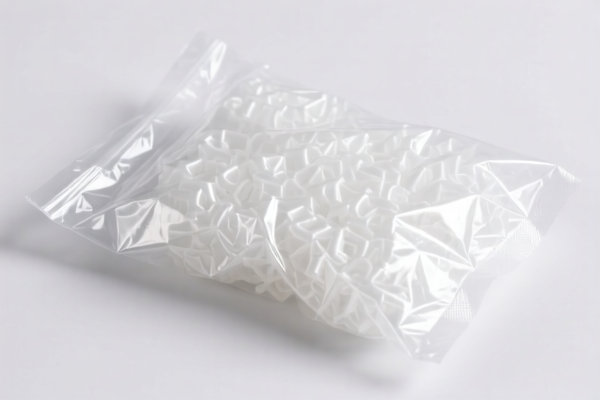
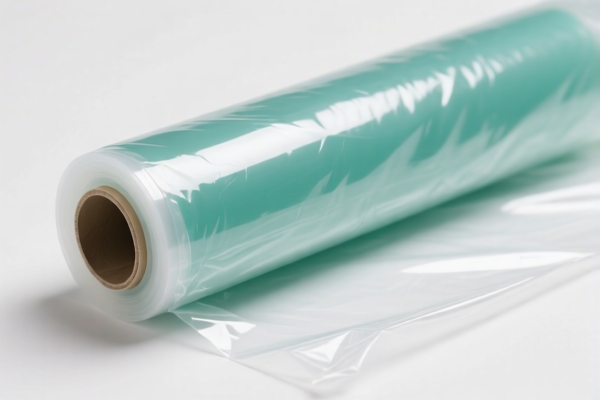
AI Analysis
🧪 Polypropylene (PP) Raw Materials: HS Code Classification & US Tariff Deep Dive
🌐 HS Code Reference & Customs Clearance Guide | 2026 Updated Tax Analysis | Professional Strategy for Plastic Feedstocks
📌 Part 1: What Exactly is "Polypropylene Raw Material"?
Polypropylene (PP) is one of the most versatile plastics in global trade. In international customs terminology, "raw material" is not a single classification. It depends entirely on the physical form and chemical structure.
Key Distinctions in Trade: * Primary Forms (Raw Polymer): Unprocessed pellets, granules, or powders. These are the base ingredients. * Intermediate Forms (Semi-finished): Sheets, films, or woven fabrics that have been processed but not yet made into final consumer goods.
⚠️ Critical Classification Logic:
- If it is pellets/granules → It is a "Primary Form" (Chapters 3901-3902).
- If it is scrap/waste → It falls under Chapter 3915.
- If it is woven fabric/bags → It falls under Chapter 3926 (Finished/Semi-finished plastic articles).
- If it is a specialized wear-resistant compound → Check specific sub-headings like 3902.30.
📦 Part 2: HS Code Classification Matrix (Based on Provided Data)
Below is the precise mapping of Polypropylene raw materials to their HS Codes and tax profiles, strictly adhering to the provided dataset.
| HS Code | Product Description & Form | Tax Profile Summary | Key Characteristics |
|---|---|---|---|
| 3902.10.00.00 | PP Sheets/Fabrics Raw Material Material: Polypropylene Form: Primary Form |
41.5% Total | Base: 6.5% Add-on: 25.0% (Sec 301) 122 Clause: 10% |
| 3902.90.00.50 | PP Sheet Raw Material Material: Propylene Polymer Form: Primary Form |
41.5% Total | Base: 6.5% Add-on: 25.0% (Sec 301) 122 Clause: 10% |
| 3915.90.00.90 | PP Sheet Raw Material (Scrap/Other) Material: Other Plastic Types Form: Sheet Raw Material |
35.0% Total | Base: 0.0% Add-on: 25.0% (Sec 301) 122 Clause: 10% |
| 3926.90.99.89 | PP Woven Fabric Raw Material Material: Polypropylene Form: Raw Material (Plastic Articles) |
22.8% Total | Base: 5.3% Add-on: 7.5% (Sec 301) 122 Clause: 10% |
| 3902.30.00.00 | PP Wear-Resistant Material Material: Propylene Polymer Form: Original Shape |
41.5% Total | Base: 6.5% Add-on: 25.0% (Sec 301) 122 Clause: 10% |
💰 Part 3: 2026 Tariff Rate Breakdown (Detailed Legal Analysis)
✅ Jurisdiction: United States (US)
✅ Origin: China (CN)
✅ Context: Includes Base MFN Tariff, Section 301 Additional Duties, and "122 Clause" Retaliatory/Specific Duties.
🎯 1. The "Primary Form" Cluster (3902.10, 3902.90, 3902.30)
Applies to: PP Pellets, Granules, Sheets (Primary), Wear-Resistant Polymers
| Component | Rate | Legal Basis & Explanation |
|---|---|---|
| Base MFN Tariff | 6.5% | Standard Most-Favored-Nation duty for polypropylene in primary forms. |
| Section 301 Duty | +25.0% | Additional duty imposed under U.S. Trade Act Section 301 on Chinese goods to address unfair trade practices. |
| "122 Clause" Duty | +10.0% | Specific additional duty cited in the data (likely referring to specific retaliatory measures or clause 122 of relevant trade lists). |
| TOTAL EFFECTIVE RATE | 41.5% | 6.5% + 25.0% + 10.0% = 41.5% |
📌 Explanation:
- These high rates apply to virgin polymers and primary shapes.
- The 25% Section 301 is the dominant cost driver.
- The 10% "122 Clause" adds a significant layer on top, meaning nearly half the value of the goods goes to tariffs.
🎯 2. The "Scrap/Other" Category (3915.90.00.90)
Applies to: Recyclable scraps, other plastic sheet raw materials
| Component | Rate | Legal Basis & Explanation |
|---|---|---|
| Base MFN Tariff | 0.0% | Many scrap/plastic waste items have zero base duty to encourage recycling. |
| Section 301 Duty | +25.0% | Still subject to Section 301 tariffs due to Chinese origin. |
| "122 Clause" Duty | +10.0% | Applies regardless of base rate. |
| TOTAL EFFECTIVE RATE | 35.0% | 0.0% + 25.0% + 10.0% = 35.0% |
📌 Note: While cheaper than primary forms (35% vs 41.5%), it is still a heavy tariff burden. Ensure the product is genuinely "scrap/other" and not just mislabeled primary PP.
🎯 3. The "Woven Fabric" Category (3926.90.99.89)
Applies to: PP Woven Bags, Fabrics, Laminates
| Component | Rate | Legal Basis & Explanation |
|---|---|---|
| Base MFN Tariff | 5.3% | Lower base duty for finished plastic articles (woven fabrics) compared to raw polymers. |
| Section 301 Duty | +7.5% | Crucial Difference: The Section 301 rate is significantly lower (7.5%) for this specific subheading compared to primary forms (25%). |
| "122 Clause" Duty | +10.0% | Still applies. |
| TOTAL EFFECTIVE RATE | 22.8% | 5.3% + 7.5% + 10.0% = 22.8% |
📌 Strategic Insight:
- If you are importing PP materials that can be classified as woven fabrics rather than raw polymer pellets, the total tariff drops from 41.5% to 22.8%.
- However, this is only valid if the product is physically a woven fabric/bag at the time of import.
🛠️ Part 4: Customs Clearance Practical Advice (Pitfall Avoidance)
✅ 1. Documentation Checklist (Mandatory)
| Document | Requirement | Why It Matters |
|---|---|---|
| ✅ Material Safety Data Sheet (MSDS) | ✔️ Must specify "Polypropylene" or "Propylene Polymer" | Confirms chemical composition; distinguishes from other plastics. |
| ✅ Physical Form Description | ✔️ Specify: "Pellets," "Granules," "Woven Fabric," or "Scrap" | Critical: Determines if you use 3902.x (Primary) vs 3926.x (Fabric). |
| ✅ Commercial Invoice | ✔️ Must clearly state "Polypropylene Raw Material" | Avoids ambiguity. Do not use vague terms like "Plastic Stuff." |
| ✅ Certificate of Origin (CO) | ✔️ Required for China-origin goods | Essential for applying/confirming Section 301 and 122 Clause duties. |
| ✅ Test Reports | ✔️ If claiming "Wear-Resistant" (3902.30) | Must prove the material meets specific wear-resistance standards to justify the specific subheading. |
✅ 2. Classification Strategy (The "Golden Rule")
🔥 “Form Defines Code, Code Defines Cost!”
| Scenario | Correct HS Code | Total Tax | Risk of Misclassification |
|---|---|---|---|
| PP Pellets/Granules | 3902.10.00.00 or 3902.90.00.50 |
41.5% | High. If misclassified as scrap, customs will assess 41.5% + penalties. |
| PP Woven Bags/Fabric | 3926.90.99.89 |
22.8% | Medium. Must ensure it is "woven" and not just "rolled plastic film" (which may be 3902). |
| PP Scrap/Recyclable | 3915.90.00.90 |
35.0% | Very High. Only use if it is truly waste/scrap. Mislabeling virgin PP as scrap is fraud. |
| Specialized Wear-Resistant PP | 3902.30.00.00 |
41.5% | Medium. Requires technical proof of "wear-resistant" properties. |
✅ 3. Special Considerations
| Issue | Advice |
|---|---|
| "122 Clause" Complexity | This 10% duty is non-negotiable for Chinese-origin goods in this category. Factor it into your margin immediately. |
| Section 301 Exclusions | Check if your specific PP type has any excluded lists. Note: The data shows 25% for primary forms, implying no current exclusion for these codes. |
| Woven vs. Primary | If you import PP that is capable of being woven but is currently in pellet form, you cannot use the lower 22.8% rate. You must use the 41.5% rate. Classification is based on the state at import. |
| Wear-Resistant Claims | Do not use 3902.30.00.00 unless you have technical documentation proving the material is specifically designed for wear resistance. Otherwise, use the general 3902.10 or 3902.90. |
🌍 Part 5: Global Market Comparison (Contextual Insight)
| Market | HS Code (General PP) | Typical Tariff Structure | Note |
|---|---|---|---|
| 🇺🇸 United States | 3902.10.00.00 |
41.5% | Highest due to 301 + 122 Clause. |
| 🇨🇳 China (Import) | 3902.10.00.00 |
~6.5% - 9.0% | Standard MFN rate. No Section 301. |
| 🇪🇺 European Union | 3902.10.00 |
0% - 6.5% | Varies by specific polymer type. Generally lower than US. |
| 🇲🇽 Mexico | 3902.10.00.00 |
5% - 10% | U.S.-MEXICO-Canada Agreement (USMCA) may apply if originated there. |
📌 Conclusion:
The U.S. market is uniquely expensive for Chinese Polypropylene raw materials due to the combination of base tariffs, Section 301, and specific "122 Clause" duties. Importers must meticulously verify the physical form of the goods to ensure they are not over-paying (e.g., claiming woven fabric status for pellets) or under-paying (risking audits).
📌 Part 6: Common Errors & Pitfalls (Lessons Learned)
❌ Error 1: Classifying PP Pellets as "Other Plastic Articles" (3926)
👉 Consequence: Customs will reclassify to 3902, charging 41.5% instead of potentially lower rates, plus penalties.
❌ Error 2: Using 3915 (Scrap) for Virgin PP Pellets
👉 Consequence: This is misdeclaration. If the material is virgin, it is subject to 41.5%. If caught, you face fraud penalties.
❌ Error 3: Ignoring the "122 Clause" in Cost Calculations
👉 Consequence: Under-quoting product prices by 10%. Profit margins vanish overnight.
✅ Correct Practice:
"Polypropylene Homopolymer, Primary Form, Pellets, Chinese Origin" → HS 3902.10.00.00
"Polypropylene Woven Sack Fabric, Chinese Origin" → HS 3926.90.99.89
🎯 Part 7: Final Verdict & Action Plan
🎯 Remember the Key Takeaways:
🔹 Primary PP (Pellets/Granules) = 41.5% Total Tariff (6.5% Base + 25% 301 + 10% 122)
🔹 PP Scrap = 35.0% Total Tariff (0% Base + 25% 301 + 10% 122)
🔹 PP Woven Fabric = 22.8% Total Tariff (5.3% Base + 7.5% 301 + 10% 122)
📌 Pro Tip:
If your business involves PP materials, negotiate Incoterms carefully. The 41.5% tariff is a massive cost driver. Consider if pre-import planning (e.g., sourcing from non-Chinese origins if possible) or accurate classification (ensuring woven fabrics are correctly identified) can save you up to 18.7% in duties.
📣 Immediate Action:
📞 Consult a Licensed Customs Broker before shipping.
📄 Provide Physical Samples for classification verification.
📉 Factor 41.5% into your landed cost calculations for primary PP.
✨ Precision in Classification = Precision in Profit.
💼 Don't let tariff complexity eat your margin!
Customer Reviews
About HS Code Classification
The Harmonized System (HS) is an internationally standardized nomenclature developed by the World Customs Organization (WCO) to classify traded products. Over 200 countries use the HS system as the basis for customs tariffs, trade statistics, and import/export regulations.
Each HS code follows a hierarchical structure:
- Chapter (2 digits) — Broad category of goods (e.g., Chapter 84: Machinery and Mechanical Appliances)
- Heading (4 digits) — More specific grouping within the chapter
- Subheading (6 digits) — Internationally standardized breakdown, used by all WCO member countries
- National subdivisions (8-10 digits) — Country-specific extensions for further classification, such as US HTSUS 10-digit codes
Correct HS code classification is essential for smooth customs clearance, accurate duty payment, and compliance with trade regulations. Misclassification can lead to customs delays, overpayment of duties, or penalties.
When importing from CN to US, the applicable tariff rates may include:
- Most-Favored-Nation (MFN) rate — The standard duty rate applied to WTO members
- General rate — Applied to countries without trade agreements
- Trade remedy duties — Additional tariffs such as Section 301 (anti-dumping), Section 232 (national security), or countervailing duties
The information provided on this page is for reference purposes only. For official classification, please consult with your local customs authority or a licensed customs broker.