Polypropylene Rigid Pipe (Industrial Grade)
CN → US| HS Code | Tariff Rate | Origin | Destination | Doc |
|---|---|---|---|---|
| 3902300000 | 41.5% | CN | US | Official Doc |
| 3917220000 | 38.1% | CN | US | Official Doc |
| 3902100000 | 41.5% | CN | US | Official Doc |
| 3917290090 | 38.1% | CN | US | Official Doc |
| 3926909987 | 22.8% | CN | US | Official Doc |
Product Images

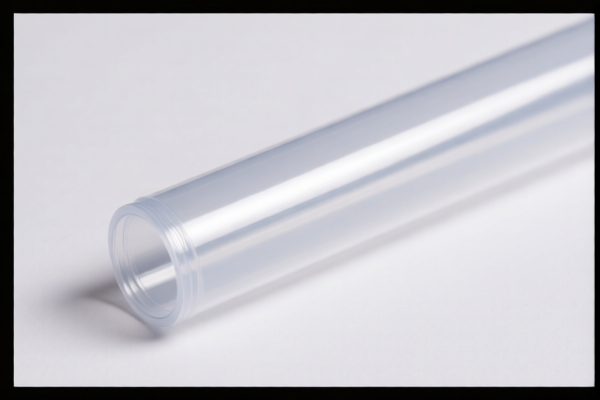
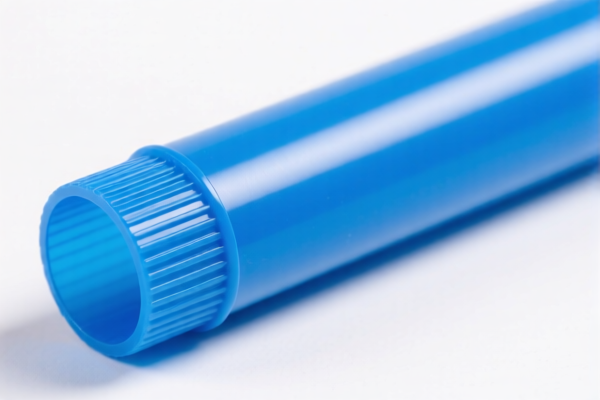

AI Analysis
🏗️ Polypropylene Rigid Pipe (Industrial Grade)
🌐 HS Code Classification & Customs Clearance Guide | 2026 Latest Tariff Analysis | Professional Strategic Clearance Strategy
📌 I. Product Definition & Classification: What Exactly is "Polypropylene Rigid Pipe"?
Polypropylene (PP) rigid pipes are industrial-grade thermoplastic pipes made primarily from propylene polymers. They are widely used in chemical processing, water supply, drainage, and industrial fluid transport due to their high chemical resistance, durability, and temperature stability.
In international trade, these pipes can be classified under different HS codes depending on their material state, physical form, and specific regulatory treatment. The key distinction lies between: 1. Primary Forms (Resins/Granules) vs. Finished Articles (Pipes) 2. Specific Polymer Types (e.g., homopolymer vs. other copolymers) 3. Regulatory Tariffs (Section 301, Section 232, or other trade measures)
⚠️ Critical Distinction Points: - If the product is raw resin/granules → Classify under Chapter 3902 (Primary Forms). - If the product is finished rigid pipes → Classify under Chapter 3917 (Plastic Pipes/Fittings). - Trade Policy Impact: Many Chinese-origin PP pipes face additional tariffs (Section 301 + Section 232/IEEPA), significantly increasing landing costs.
📦 II. HS Code Classification Matrix (2026 Latest Tariff Authority Reference)
| HS Code | Product Description | Key Classification Logic | Tariff Impact |
|---|---|---|---|
3902.30.00.00 |
Polypropylene (PP) Resin (Primary Form) | Unprocessed PP polymer, granules, or pellets. NOT pipes. | 🔴 41.5% (High) |
3917.22.00.00 |
Rigid Pipes of Polypropylene | Finished rigid PP pipes. Specific subheading for PP hard pipes. | 🟡 38.1% (High) |
3902.10.00.00 |
Polypropylene Homopolymer (Primary Form) | Raw PP resin, specifically homopolymer. NOT pipes. | 🔴 41.5% (High) |
3917.29.00.90 |
Other Rigid Plastic Pipes (Including PP) | PP pipes classified under "Other" if not explicitly 3917.22. | 🟡 38.1% (High) |
3926.90.99.87 |
Other Plastic Articles (Industrial PP Pipes) | Used if pipe does not fit 3917 criteria (rare for standard rigid pipes). | 🟢 22.8% (Lower) |
🔍 Key Clarification: -
3902.xxxxcodes apply to RAW MATERIALS (resins/granules), NOT finished pipes. Misclassifying pipes as resin leads to severe penalties. -3917.22.00.00is the most accurate for standard rigid PP pipes. -3926.90.99.87may apply if the pipe is considered a "part" or "article" not strictly defined as a pipe in 3917, but this is less common and requires strong justification.
💰 III. 2026 Tariff Rate Breakdown (Detailed Tax Structure)
✅ Applicable Country: United States (US)
✅ Origin: China (CN)
✅ Effective Date: Ongoing (Subject to Section 301 & IEEPA adjustments)
🎯 1. 3902.30.00.00 & 3902.10.00.00 – Primary PP Resin (NOT for Pipes)
| Item | Detail |
|---|---|
| Base Tariff | 6.5% (MFN Rate) |
| Section 301 Tariff | +25% (Trade Enquiry 301) |
| IEEPA/Section 232 Add-on | +10% (For China-origin goods under specific trade remedies) |
| Total Effective Rate | 41.5% |
| De Minimis Exemption | ❌ NOT Eligible (Deny_de_minimis applies to Section 301 goods) |
| Legal Basis | USITC:3902.30.00.00 → FOOTNOTE:301 → IEEPA:9903.01.25 |
📌 Explanation:
- This rate applies ONLY if you are importing raw PP resin, not finished pipes. - Warning: Do not use this code for pipes. Incorrect classification leads to seizure or penalty.
🎯 2. 3917.22.00.00 – Rigid Pipes of Polypropylene (Recommended for Standard Pipes)
| Item | Detail |
|---|---|
| Base Tariff | 3.1% (MFN Rate) |
| Section 301 Tariff | +25% (Trade Enquiry 301) |
| IEEPA/Section 232 Add-on | +10% (For China-origin goods) |
| Total Effective Rate | 38.1% |
| De Minimis Exemption | ❌ NOT Eligible |
| Legal Basis | USITC:3917.22.00.00 → FOOTNOTE:301 → IEEPA:9903.01.25 |
📌 Explanation:
- This is the standard classification for rigid PP pipes. - 3.1% base + 25% Section 301 + 10% IEEPA = 38.1% total. - No de minimis exemption applies to Chinese-origin goods under Section 301.
🎯 3. 3917.29.00.90 – Other Rigid Plastic Pipes (Alternative for PP)
| Item | Detail |
|---|---|
| Base Tariff | 3.1% (MFN Rate) |
| Section 301 Tariff | +25% |
| IEEPA/Section 232 Add-on | +10% |
| Total Effective Rate | 38.1% |
| De Minimis Exemption | ❌ NOT Eligible |
| Legal Basis | USITC:3917.29.00.90 → FOOTNOTE:301 → IEEPA:9903.01.25 |
📌 Explanation:
- Used if3917.22.00.00is not applicable (e.g., non-standard PP pipes). - Same total tax rate as 3917.22.00.00.
🎯 4. 3926.90.99.87 – Other Plastic Articles (Lower Rate Option)
| Item | Detail |
|---|---|
| Base Tariff | 5.3% (MFN Rate) |
| Section 301 Tariff | +7.5% (Note: Lower Section 301 rate applies to some plastic articles) |
| IEEPA/Section 232 Add-on | +10% |
| Total Effective Rate | 22.8% |
| De Minimis Exemption | ❌ NOT Eligible |
| Legal Basis | USITC:3926.90.99.87 → FOOTNOTE:301 → IEEPA:9903.01.25 |
📌 Explanation:
- Lower total rate (22.8%) but higher risk of misclassification. - Only use if the product cannot be classified as a "pipe" under Chapter 3917. - Must provide strong documentation that the product is an "article" rather than a "pipe."
🛠️ IV. Customs Clearance Practical Advice (Avoid Pitfalls)
✅ 1. Essential Documentation Checklist
| Document | Required? | Notes |
|---|---|---|
| Product Specification Sheet | ✔️ | Must state material: 100% Polypropylene, type: Rigid Pipe, industrial grade. |
| Material Safety Data Sheet (MSDS) | ✔️ | Required for chemical compliance. |
| Commercial Invoice | ✔️ | Clearly describe as "Polypropylene Rigid Pipe, Industrial Grade" – NOT "Plastic Resin". |
| Packing List | ✔️ | Detail dimensions, length, diameter, and weight. |
| Certificate of Origin | ✔️ | To confirm China origin (triggers additional tariffs). |
| Test Reports | ✔️ | ISO 9001, ASTM D2729, or equivalent for PP pipes. |
| Import License (if applicable) | ✔️ | Check if specific industrial goods require additional permits. |
✅ 2. Classification Strategy (Critical Tips)
🔥 "Pipes are Pipes, Resin is Resin. Don't Mix Them!"
| Scenario | Correct HS Code | Incorrect HS Code | Consequence |
|---|---|---|---|
| Finished Rigid PP Pipes | 3917.22.00.00 |
3902.30.00.00 |
41.5% vs 38.1% → Overpayment + Audit Risk |
| Raw PP Resin Granules | 3902.30.00.00 |
3917.22.00.00 |
Underpayment → Penalties + Seizure |
| Non-Standard PP Articles | 3926.90.99.87 |
3917.22.00.00 |
22.8% vs 38.1% → Potential Misclassification Risk |
📌 Key Tip:
- If the product is flexible, it may not qualify as "rigid pipe" under 3917.22.00.00. - If the product is cut to specific lengths for industrial use, it is still a "pipe" not an "article."
✅ 3. Special Cases & Mitigation
| Situation | Recommendation |
|---|---|
| High Value Shipment | Consider Section 301 Exclusion if available (check USTR list for 3917.22.00.00). |
| Origin Diversification | Ship from Vietnam, Malaysia, or Thailand to avoid Section 301/IEEPA tariffs (0–5% duty). |
| Pre-Ruling Request | Submit Binding Ruling Request to CBP for 3917.22.00.00 confirmation before shipment. |
| De Minimis (Section 321) | NOT AVAILABLE for China-origin goods under Section 301. Do not attempt to use $800 exemption. |
🌍 V. Global Market Comparison (2026)
| Country/Region | Recommended HS Code | Total Duty Rate | Certification Required | Notes |
|---|---|---|---|---|
| 🇺🇸 USA | 3917.22.00.00 |
38.1% | NSF/ANSI 61, ASTM | High duty due to Section 301 + IEEPA |
| 🇨🇳 China | 3917.22.00.00 |
3.1% | CCC (if applicable) | Low duty, no Section 301 |
| 🇪🇺 EU | 3917.22.00.00 |
3.5% | CE, REACH | No Section 301 equivalent |
| 🇬🇧 UK | 3917.22.00.00 |
3.5% | UKCA | Post-Brexit rules apply |
| 🇦🇺 Australia | 3917.22.00.00 |
5.0% | SAA | Competitive rate |
📌 Conclusion:
- USA is the most expensive market due to layered tariffs (Base + Section 301 + IEEPA). - EU/UK/Australia offer significantly lower duties (~3.5–5.0%). - Consider supply chain relocation to Southeast Asia to mitigate US tariff risks.
📌 VI. Common Mistakes & Pitfalls (Lessons Learned)
❌ Mistake 1: Classifying rigid PP pipes as "Plastic Resin" (3902.xxxx)
👉 Result: Incorrect classification → 41.5% duty + Audit Risk
❌ Mistake 2: Ignoring Section 301 and IEEPA additional tariffs
👉 Result: Underpayment → Back Taxes + Penalties + Interest
❌ Mistake 3: Attempting to use De Minimis ($800 exemption) for China-origin pipes
👉 Result: Shipment Blocked → Goods seized or returned
❌ Mistake 4: Using 3926.90.99.87 without justification
👉 Result: Misclassification → 22.8% vs 38.1% risk → Customs dispute
✅ Correct Approach:
"Polypropylene Rigid Pipe, Industrial Grade, ASTM D2729 Compliant, For Chemical Transport, Model XYZ"
🎯 VII. Final Recommendations
🎯 Key Takeaways:
🔹 "Rigid PP Pipes → 3917.22.00.00 → 38.1% Total Duty"
🔹 "Raw Resin → 3902.30.00.00 → 41.5% Total Duty"
🔹 "No De Minimis for China → Plan for Full Duty Payment"
🔹 "Consider Supply Chain Shift to Avoid US Tariffs"
📌 Pro Tip:
- Apply for a CBP Binding Ruling before your first shipment to lock in the correct HS code.
- Explore Section 301 Exclusions if your specific pipe type is eligible.
- For high-volume imports, consider bonded warehouses or FTA-eligible origins to reduce costs.
📣 Action Step:
📞 Consult a Customs Broker + Verify HS Code + Calculate Landed Cost
🚀 Ensure Smooth Clearance, Minimize Tariffs, Maximize Profit!
✨ Professional Customs Classification Starts with Precision!
💼 Every Percent of Duty Counts – Get It Right the First Time!
Customer Reviews
About HS Code Classification
The Harmonized System (HS) is an internationally standardized nomenclature developed by the World Customs Organization (WCO) to classify traded products. Over 200 countries use the HS system as the basis for customs tariffs, trade statistics, and import/export regulations.
Each HS code follows a hierarchical structure:
- Chapter (2 digits) — Broad category of goods (e.g., Chapter 84: Machinery and Mechanical Appliances)
- Heading (4 digits) — More specific grouping within the chapter
- Subheading (6 digits) — Internationally standardized breakdown, used by all WCO member countries
- National subdivisions (8-10 digits) — Country-specific extensions for further classification, such as US HTSUS 10-digit codes
Correct HS code classification is essential for smooth customs clearance, accurate duty payment, and compliance with trade regulations. Misclassification can lead to customs delays, overpayment of duties, or penalties.
When importing from CN to US, the applicable tariff rates may include:
- Most-Favored-Nation (MFN) rate — The standard duty rate applied to WTO members
- General rate — Applied to countries without trade agreements
- Trade remedy duties — Additional tariffs such as Section 301 (anti-dumping), Section 232 (national security), or countervailing duties
The information provided on this page is for reference purposes only. For official classification, please consult with your local customs authority or a licensed customs broker.