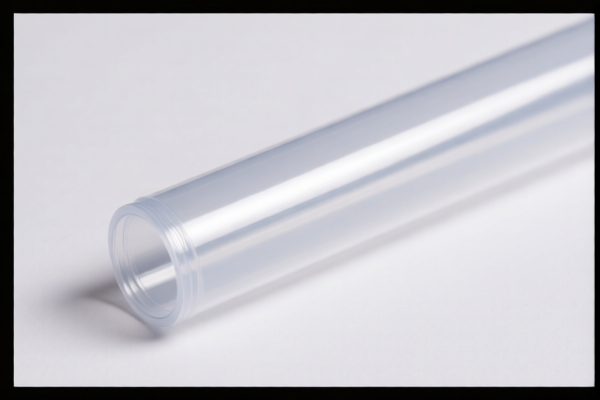
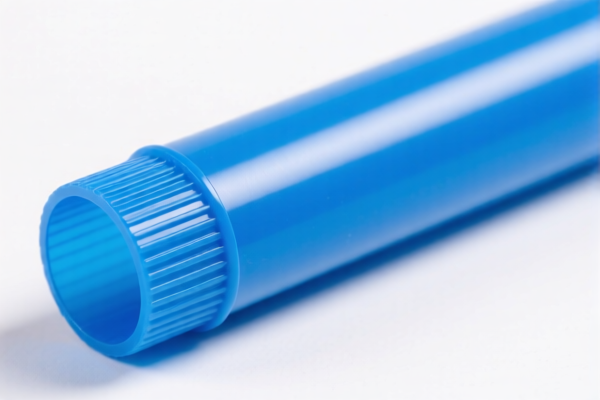
Polypropylene Rigid Pipe Industrial Grade
CN → US| HS Code | Tariff Rate | Origin | Destination | Doc |
|---|---|---|---|---|
| 3926909989 | 22.8% | CN | US | Official Doc |
| 3926909987 | 22.8% | CN | US | Official Doc |
| 3917210000 | 38.1% | CN | US | Official Doc |
| 3917320020 | 38.1% | CN | US | Official Doc |
| 3926909989 | 22.8% | CN | US | Official Doc |
Product Images


AI Analysis
🛠️ Polypropylene Rigid Pipe (Industrial Grade)
🌐 HS Code Reference & Customs Clearance Guide | 2026 Latest Tariff Analysis | Professional Strategy for PP Pipes
📌 Part I: Product Definition & Classification: Do You Really Understand "PP Pipes"?
Polypropylene (PP) rigid pipes are essential components in industrial fluid transport, chemical processing, and HVAC systems. They are valued for their chemical resistance, high strength, and lightweight nature.
In international trade, classification depends heavily on material composition and structural integrity:
- Plastic Pipes (3917): If the product is specifically defined as a "tube, pipe, or hose" made of plastic, it may fall under Chapter 39, Heading 3917 (Plastic tubes, pipes and hoses).
- Other Plastic Articles (3926): If the product does not fit the strict definition of "pipes/hoses" in 3917 (e.g., specific fittings, or rigid shapes not classified as tubing), it falls under the residual category of "Other articles of plastics" in Heading 3926.
⚠️ Key Classification Distinction:
- PP (Polypropylene) is not PE (Polyethylene). PE pipes fall under 3917.21/3917.32. PP pipes must be carefully distinguished from PE pipes to avoid misclassification.
- If classified as 3917, it implies a specific "tube/pipe" function.
- If classified as 3926, it is treated as a general plastic article (e.g., rigid conduit, structural pipe not defined as "tube").
📦 Part II: HS Code Classification Details (2026 Latest Tariff Authority)
Based on the provided data, here are the relevant HS Codes for Polypropylene (PP) Rigid Industrial Pipes:
| HS Code | Product Description | Applicable Scenario | Material Note |
|---|---|---|---|
3926.90.99.89 |
Other plastic articles, not specified elsewhere (PP Rigid Pipe fallback) | Rigid PP pipes not meeting specific "tube" definitions in 3917; general industrial plastic piping | ✅ Polypropylene (PP) |
3926.90.99.87 |
Plastic tubes/pipes (PP Rigid) | Rigid PP pipes explicitly classified as "tubes/pipes" under residual plastic headings | ✅ Polypropylene (PP) |
3917.21.00.00 |
Tubes/Pipes of Polyethylene (PE), not reinforced | ⚠️ Similar Code (Note: PE, not PP). Included for comparison due to similar "pipe" shape. | ❌ Polyethylene (PE) – Do NOT use for PP |
3917.32.00.20 |
Other tubes/pipes of Polyethylene (PE) | ⚠️ Similar Code (Note: PE, not PP). Flexible PE pipes. | ❌ Polyethylene (PE) – Do NOT use for PP |
3926.90.99.89 |
Other plastic articles (PE Rigid Pipe fallback) | ⚠️ Similar Code (Note: PE, not PP). Rigid PE articles. | ❌ Polyethylene (PE) – Do NOT use for PP |
🔍 Critical Reminder:
- Polypropylene (PP) is distinct from Polyethylene (PE).
- Codes3917.21and3917.32are for PE. Using them for PP is a misclassification error.
- For PP Rigid Pipes, the correct classifications are within 3926.90.99.87 or 3926.90.99.89, depending on whether customs views it as a "pipe" or "other article."
💰 Part III: 2026 Latest Tariff Rate Breakdown (Including Surtaxes & Policy Surcharges)
✅ Applicable Country: United States (US)
✅ Origin: China (CN)
✅ Effective Time: 2025/2026 (Includes subsequent imports)
🎯 1. 3926.90.99.89 —— Other Plastic Articles (PP Rigid Pipe)
| Item | Content |
|---|---|
| Base Tariff | 5.3% (ad valorem) |
| Section 301 Surcharge | +7.5% |
| Section 122 Tariff | +10% |
| Total Tariff Rate | 22.8% |
| Tax Calculation | CIF Value × 22.8% |
| De Minimis Eligibility | ❌ No (Denied) |
| Legal Basis Path | Section 301: 7.5% → Section 122: 10% → USITC: 3926.90.99.89 → Base: 5.3% |
📌 Explanation:
- Base Tariff (5.3%): Standard Most Favored Nation (MFN) rate for other plastic articles.
- Section 301 Surcharge (7.5%): Applied to Chinese-origin plastics under trade remedy measures.
- Section 122 Tariff (10%): Additional tariff under Section 122 of the Trade Expansion Act (national security).
- Total: 22.8%. This is a moderate-high tariff. Planning is essential.
🎯 2. 3926.90.99.87 —— Plastic Tubes/Pipes (PP Rigid)
| Item | Content |
|---|---|
| Base Tariff | 5.3% |
| Section 301 Surcharge | +7.5% |
| Section 122 Tariff | +10% |
| Total Tariff Rate | 22.8% |
| Tax Calculation | CIF Value × 22.8% |
| De Minimis Eligibility | ❌ No (Denied) |
| Legal Basis Path | Section 301: 7.5% → Section 122: 10% → USITC: 3926.90.99.87 → Base: 5.3% |
📌 Note:
- The tariff structure is identical to 3926.90.99.89.
- The key difference is legal description. Ensure the product description matches "Tubes/Pipes" if using 87, or "Other Articles" if using 89. Mislabeling can lead to audits.
🎯 3. 3917.21.00.00 —— Tubes/Pipes of Polyethylene (PE) [FOR COMPARISON ONLY]
| Item | Content |
|---|---|
| Base Tariff | 3.1% |
| Section 301 Surcharge | +25.0% |
| Section 122 Tariff | +10% |
| Total Tariff Rate | 38.1% |
| Tax Calculation | CIF Value × 38.1% |
| De Minimis Eligibility | ❌ No (Denied) |
| Legal Basis Path | Section 301: 25% → Section 122: 10% → USITC: 3917.21.00.00 → Base: 3.1% |
⚠️ Warning:
- This code is for PE (Polyethylene), NOT PP.
- If you mistakenly classify PP as PE, you face a 38.1% tariff instead of 22.8%.
- This is a higher tax burden. Correct material declaration is critical.
🎯 4. 3917.32.00.20 —— Other Tubes/Pipes of Polyethylene (PE) [FOR COMPARISON ONLY]
| Item | Content |
|---|---|
| Base Tariff | 3.1% |
| Section 301 Surcharge | +25.0% |
| Section 122 Tariff | +10% |
| Total Tariff Rate | 38.1% |
| Tax Calculation | CIF Value × 38.1% |
| De Minimis Eligibility | ❌ No (Denied) |
| Legal Basis Path | Section 301: 25% → Section 122: 10% → USITC: 3917.32.00.20 → Base: 3.1% |
⚠️ Warning:
- Also for PE.
- Same high tariff risk. PP pipes must NEVER be declared as PE.
🎯 5. 3926.90.99.89 —— Other Plastic Articles (PE Rigid) [FOR COMPARISON ONLY]
| Item | Content |
|---|---|
| Base Tariff | 5.3% |
| Section 301 Surcharge | +7.5% |
| Section 122 Tariff | +10% |
| Total Tariff Rate | 22.8% |
| Tax Calculation | CIF Value × 22.8% |
| De Minimis Eligibility | ❌ No (Denied) |
| Legal Basis Path | Section 301: 7.5% → Section 122: 10% → USITC: 3926.90.99.89 → Base: 5.3% |
⚠️ Warning:
- This code is for PE rigid articles.
- Tariff is 22.8%, same as PP. However, material mismatch is still a compliance violation.
🛠️ Part IV: Customs Clearance Practical Advice (Expert Pitfall Avoidance Guide)
✅ 1. Required Documentation Checklist (All are Mandatory)
| Document | Must Provide | Explanation |
|---|---|---|
| ✅ Product Specification Sheet | ✔️ | Must clearly state "Polypropylene (PP)", not generic "Plastic". Include density, melt flow index. |
| ✅ Material Safety Data Sheet (MSDS) | ✔️ | To confirm chemical composition (PP vs PE vs PVC). |
| ✅ Product Photos (Clear Labels) | ✔️ | Show markings like "PP", "Polypropylene", pressure rating, temperature range. |
| ✅ Commercial Invoice | ✔️ | Clearly state: "Polypropylene (PP) Rigid Pipe, Industrial Grade". Avoid vague terms like "Plastic Tube". |
| ✅ Packing List | ✔️ | Detail dimensions, length, diameter, and packaging type. |
| ✅ Certificate of Origin (CO) | ✔️ | Required to apply for any potential exemptions or verify origin. |
| ✅ Third-Party Test Report | ✔️ | ASTM/ISO standards for PP pipes (e.g., ASTM D4101). |
✅ 2. Declaration Tips (Key Mantras)
🔥 "Material is King, Shape is Queen. PP is not PE. Declare Clearly!"
| Scenario | Correct Declaration | Wrong Action |
|---|---|---|
| PP Rigid Pipe | 3926.90.99.87 or 3926.90.99.89 + "Polypropylene (PP)" |
Mislabeling as PE → 38.1% Tax + Penalty |
| PE Rigid Pipe | 3926.90.99.89 + "Polyethylene (PE)" |
Mislabeling as PP → Compliance Risk |
| PE Flexible Tube | 3917.32.00.20 + "Polyethylene (PE) Tube" |
Mislabeling as PP → 38.1% Tax |
| PP Fittings | 3926.90.99.89 + "PP Fitting" |
Splitting pipe and fitting → Complex Audit |
📌 Key Advice:
- Never use "Plastic Pipe" alone. Always specify PP or PE.
- If the pipe is rigid, it may be classified under 3926. If it is flexible, it may be under 3917.
- Industrial Grade implies higher pressure/temperature ratings. Provide technical data.
✅ 3. Special Case Handling
| Scenario | Handling Advice |
|---|---|
| OEM Custom PP Pipes | Provide customer design specs + material certificate. Avoid generic names. |
| PP Pipe + Fittings Shipped Together | Declare as "Set of PP Pipes and Fittings". May still be classified under the main item (pipes). |
| PP Pipes for Chemical Industry | Highlight "Chemical Resistance" in description. May aid in customs verification. |
| Mixed Container (PP & PE) | Must Separate. Declare each material separately. Mixing leads to rejection. |
🌍 Part V: Global Market Comparison (2026 Latest)
| Country/Region | Recommended HS Code (PP Rigid) | Tariff (China Origin) | Certification | Notes |
|---|---|---|---|---|
| 🇺🇸 USA | 3926.90.99.87 / 89 |
22.8% (5.3% Base + 7.5% 301 + 10% 122) | None Specific | High tariff due to Section 301 & 122. |
| 🇨🇳 China | 3926.90.99 |
5% | None | No surtaxes. |
| 🇪🇺 EU | 3917.39 or 3926.90 |
0% - 4.5% | REACH | No Section 301/122. |
| 🇦🇺 Australia | 3926.90 |
5% | None | Moderate tariff. |
| 🇯🇵 Japan | 3917.32 |
0% - 6% | JIS | Varies by exact type. |
📌 Conclusion:
- USA is the highest-cost market for PP pipes due to 22.8% total tariff.
- PE pipes face even higher tariffs (38.1%) if misclassified.
- Accuracy in material declaration is critical to avoid 15.3% penalty (difference between 22.8% and 38.1%).
📌 Part VI: Common Errors & Pitfalls (Lessons Learned)
❌ Error 1: Declaring PP pipes as PE to use 3917 codes
👉 Consequence: 38.1% tariff + fines for misdeclaration. Avoid!
❌ Error 2: Using generic "Plastic Pipe" in description
👉 Consequence: Customs may default to highest applicable tariff or request more info → Delay.
❌ Error 3: Confusing "Rigid" with "Flexible"
👉 Consequence: Rigid PP pipes should be 3926. Flexible might be 3917. Misclassification leads to wrong tax.
❌ Error 4: Ignoring Section 122 Tariff
👉 Consequence: Underpaying by 10% → Back taxes + interest.
✅ Correct Practice:
"Industrial Grade Polypropylene (PP) Rigid Pipe, ASTM D4101, 2-inch Diameter, Pressure Rating 150 PSI, Made in China"
🎯 Part VII: Conclusion: Professional Declaration, Cost Savings, Efficient Clearance
🎯 Remember the Mantra:
🔹 "PP is not PE. 22.8% vs 38.1%. Declare Material Clearly!"
🔹 "Section 301 + 122 = 17.5% Surtax. Plan Your Costs!"
🔹 "HS Code Determines Tax. Accuracy Saves Money!"
📌 Pro Tip:
If your PP pipes are originating from Vietnam, Mexico, Thailand, or Malaysia, you may apply for IEEPA Exemption or FTZ Benefits, reducing tariffs to 0% - 5%.
Recommend Advance Ruling from US Customs to confirm the correct HS Code for your specific PP pipe design.
📣 Immediate Action:
📞 Contact a Professional Customs Broker + Provide Material Certificate + Apply for HS Code Advance Ruling
🚀 Let your PP pipes Clear Customs Smoothly, Boost Profits!
✨ Professional Customs Clearance Starts with Accurate Classification!
💼 Every Dollar of Tax Saved is Pure Profit!
Customer Reviews
About HS Code Classification
The Harmonized System (HS) is an internationally standardized nomenclature developed by the World Customs Organization (WCO) to classify traded products. Over 200 countries use the HS system as the basis for customs tariffs, trade statistics, and import/export regulations.
Each HS code follows a hierarchical structure:
- Chapter (2 digits) — Broad category of goods (e.g., Chapter 84: Machinery and Mechanical Appliances)
- Heading (4 digits) — More specific grouping within the chapter
- Subheading (6 digits) — Internationally standardized breakdown, used by all WCO member countries
- National subdivisions (8-10 digits) — Country-specific extensions for further classification, such as US HTSUS 10-digit codes
Correct HS code classification is essential for smooth customs clearance, accurate duty payment, and compliance with trade regulations. Misclassification can lead to customs delays, overpayment of duties, or penalties.
When importing from CN to US, the applicable tariff rates may include:
- Most-Favored-Nation (MFN) rate — The standard duty rate applied to WTO members
- General rate — Applied to countries without trade agreements
- Trade remedy duties — Additional tariffs such as Section 301 (anti-dumping), Section 232 (national security), or countervailing duties
The information provided on this page is for reference purposes only. For official classification, please consult with your local customs authority or a licensed customs broker.