Polypropylene Rigid Tube Industrial Grade
CN → USProduct Images

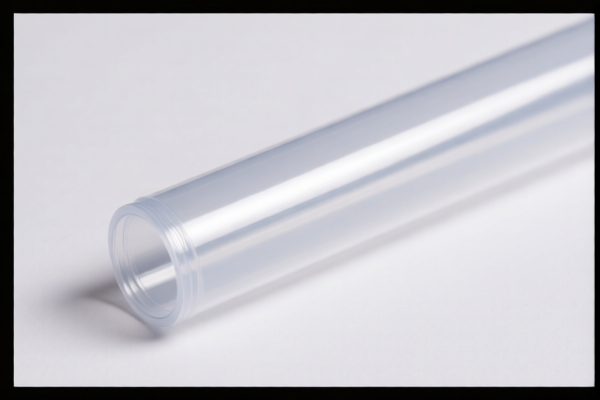
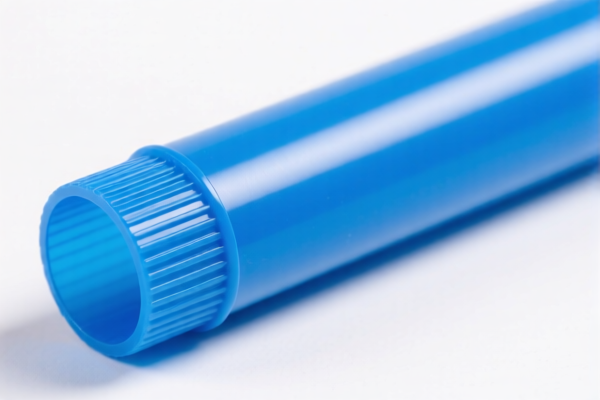
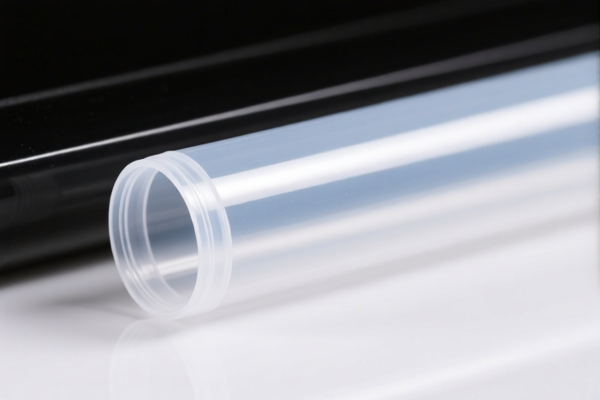
AI Analysis
🛢️ Industrial Grade Polypropylene (PP) Rigid Tubes
🌐 HS Code Reference & Customs Clearance Guide | 2026 Latest Tariff Analysis | Professional-Level Clearance Strategy
📌 I. Product Definition and Classification: What Exactly is "Industrial Grade PP Tube"?
Polypropylene (PP) rigid tubes are thermoplastic polymer pipes primarily used in industrial applications for conveying chemicals, drinking water, hot/cold water systems, and industrial fluids. The term "Industrial Grade" generally implies higher pressure ratings, specific chemical resistance, or compliance with industrial standards (e.g., ASTM, DIN, ISO) compared to simple household plumbing.
In international trade, PP tubes are classified based on their material composition and form. They are strictly categorized under Chapter 39 (Plastics and Articles Thereof).
⚠️ Key Distinction Points: - Rigid Tubes/Pipes: Hollow articles, cylindrical or similar cross-section. Must be rigid (not flexible hose). - Industrial Grade: This is a quality specification, not a separate HS code category. It does not change the HS code but affects the description and required certifications (e.g., NSF/ANSI 61 for potable water, or chemical resistance data sheets for industrial use). - Material: Must be 100% Polypropylene. If it is PP copolymer, it still falls under PP.
📦 II. HS Code Classification Details (2026 Latest Tariff Authority Comparison)
| HS Code | Product Description | Application Scenario | Rigid/Flexible |
|---|---|---|---|
3917.21.00.00 |
Tubes, pipes, and hoses, with a self-contracted fitting... of Polypropylene | Industrial PP pipes with pre-installed fittings (rare) | ✅ Rigid |
3917.23.00.00 |
Tubes, pipes, and hoses, of Polypropylene | Standard Rigid PP Pipes/Tubes (Most Common) | ✅ Rigid |
3917.39.00.00 |
Other tubes, pipes, and hoses, of Plastics | Non-PP plastics (PVC, PE, etc.) | ✅ Rigid |
3917.29.00.00 |
Other tubes, pipes... of Polyethylene | Flexible/semi-rigid PE pipes | ✅ Rigid/Flexible |
3917.21.00.00 |
Of Polypropylene, with self-contracted fittings | Specialized industrial assemblies | ✅ Rigid |
🔍 Key Reminder:
-3917.23.00.00is the primary HS Code for most industrial-grade rigid PP tubes.
- Do not confuse with3917.39.00.00: This is a catch-all for "other plastics" (like PVC). Since you specified Polypropylene, you must use the PP-specific code (3917.23).
- "Rigid" vs. "Flexible": If the tube is flexible (can be coiled easily), it may fall under3917.29(PE) or similar, but PP is typically rigid. If it’s rigid,3917.23.00.00is the correct choice.
💰 III. 2026 Latest Tariff Rate Details (Including Surtaxes, Policy Add-ons)
✅ Applicable Country: United States (US)
✅ Country of Origin: China (CN)
✅ Effective Date: November 10, 2025 (including subsequent imports)
🎯 1. 3917.23.00.00 —— Rigid Tubes, Pipes, and Hoses, of Polypropylene
| Item | Content |
|---|---|
| Base Tariff Rate | 3.4% (ad valorem) |
| USITC Surtax (Section 301) | +25% |
| IEEPA Surtax | +10% (For China/HK products, effective Nov 10, 2025) |
| Total Tariff Rate | 38.4% |
| Tax Calculation | CIF Value × 38.4% |
| De Minimis Eligibility | ❌ Not Eligible (deny_de_minimis) |
| Legal Authority Path | IEEPA:9903.01.25 → IEEPA:9903.01.24 → USITC:3917.23.00.00 → FOOTNOTE:9903.88.01 |
📌 Explanation:
- The 25% Section 301 surtax applies to "Plastics and Articles Thereof" from China.
- The 10% IEEPA surtax is the new 2025 addition for Chinese-origin goods.
- Total 38.4% is a high tariff, significantly impacting cost.
- Note: This tariff applies even if the PP is recycled or virgin, as long as it’s classified under this heading.
🎯 2. 3917.21.00.00 —— With Self-Contracted Fittings (If Applicable)
| Item | Content |
|---|---|
| Base Tariff Rate | 3.4% |
| USITC Surtax | +25% |
| IEEPA Surtax | +10% |
| Total Tariff Rate | 38.4% |
| De Minimis Eligibility | ❌ Not Eligible |
📌 Note:
- If the tube comes with pre-installed fittings that create a "self-contracted" joint (like press-fit systems), it may be classified here.
- Tariff is the same as standard rigid PP tubes, but the description must clearly state "with self-contracted fittings."
🛠️ IV. Customs Clearance Practical Advice (Battle-Hardened Pitfall Guide)
✅ 1. Required Documentation Checklist (No Exceptions)
| Document | Must Provide | Description |
|---|---|---|
| ✅ Product Spec Sheet | ✔️ | Material: 100% PP, Density, Melt Flow Index, Pressure Rating (PN), Temperature Range |
| ✅ Certificate of Origin (CO) | ✔️ | Must state "Made in China" to trigger IEEPA/301 taxes accurately |
| ✅ Commercial Invoice | ✔️ | Clearly state "Rigid Polypropylene Tubes, Industrial Grade, HS 3917.23.00.00" |
| ✅ Packing List | ✔️ | Weight, dimensions, number of pipes per bundle |
| ✅ Test Report (Optional but Recommended) | ✔️ | Chemical resistance data, pressure test reports (ASTM D2122) |
| ✅ Freight Forwarder Declaration | ✔️ | Confirm packaging is sturdy (PP tubes can be damaged in transit) |
✅ 2. Declaration Tips (Key Mantras)
🔥 "Material First, Structure Second, Origin is Key!"
| Scenario | Correct Declaration | Wrong Practice |
|---|---|---|
| Standard Rigid PP Pipe | 3917.23.00.00 - "Polypropylene Pipes" |
Using 3917.39.00.00 (Other Plastics) → Wrong HS, Penalty Risk |
| PP Pipe with Fittings | 3917.21.00.00 - "PP Pipes with Self-Contracted Fittings" |
Declaring as "Accessories" → Misclassification |
| Flexible PP Hose | Check if truly PP; if flexible, may be 3917.29.00.00 |
Declaring rigid tube as flexible → Audit Risk |
| Recycled PP | Still 3917.23.00.00 |
Using 3902 (Polymers) → Wrong Chapter |
✅ 3. Special Cases Handling
| Case | Handling Advice |
|---|---|
| PP for Drinking Water | Must provide NSF/ANSI 61 certification to prove food-grade compliance, even if "Industrial Grade" |
| PP for Chemical Transport | Provide chemical resistance chart from manufacturer to prove compatibility |
| Mixed Shipment (PP + PVC) | Separate HS Codes for each material. Do not mix 3917.23 and 3917.39 in one line item |
| Transshipment via Vietnam/Malaysia | High Risk: If PP is extruded in China and only cut in Vietnam, CBP may still assess Chinese origin. Requires substantial transformation proof |
🌍 V. Global Market Customs Comparison (2026 Latest)
| Country/Region | Recommended HS Code | Tariff (China Origin) | Certification Requirements | Notes |
|---|---|---|---|---|
| 🇺🇸 USA | 3917.23.00.00 |
38.4% (3.4% + 25% + 10%) | NSF/ANSI 61 (if potable) | High tariff burden |
| 🇨🇳 China | 3917.23.00.00 |
5% | CCC (if applicable) | No surtax |
| 🇪🇺 EU | 3917.23.00 |
0% (Most FTA partners) | REACH Compliance | Low barrier |
| 🇦🇺 Australia | 3917.23.00 |
5% | AAMI/AS/NZS Standards | Moderate |
| 🇯🇵 Japan | 3917.23.00 |
0% (JIS Compliance) | JIS Standard | High quality focus |
📌 Conclusion:
- USA is the most expensive market for PP tubes due to the 38.4% total tariff.
- EU and Japan offer low/no tariffs, making them more competitive for price-sensitive industrial goods.
- China domestic market has low tariffs, but quality standards may vary.
📌 VI. Common Mistakes & Pitfall Guide (Blood-Teaching Lessons)
❌ Mistake 1: Using 3917.39.00.00 (Other Plastics) for PP Tubes
👉 Consequence: Wrong HS code → Seizure or Penalties. PP has its own subheading.
❌ Mistake 2: Declaring "Flexible Hose" for Rigid PP Pipes
👉 Consequence: If inspected and found rigid, misclassification → Additional Duties + Interest.
❌ Mistake 3: Ignoring "Industrial Grade" Certification
👉 Consequence: If the pipe is for chemical use and fails resistance tests, product recall/liability.
❌ Mistake 4: Failing to Declare Origin Correctly
👉 Consequence: If origin is not clearly stated as "China," CBP may assume non-China origin → Audit for Fraud.
✅ Correct Practice:
"Rigid Polypropylene (PP) Pipes, Industrial Grade, PN16, ASTM D2122 Compliant, HS 3917.23.00.00, Made in China"
🎯 VII. Conclusion: Professional Declaration Saves Money!
🎯 Remember the Mantra:
🔹 "PP is 3917.23, Not 3917.39"
🔹 "China Origin = 38.4% Tariff in USA"
🔹 "Industrial Grade Needs Certification, Not Just a Name"
📌 Tips:
- If your PP tubes are recycled, ensure the description includes "Recycled Polypropylene" to avoid disputes.
- For large volume imports, consider Applying for an Exclusion under Section 301 if available (though rare for plastics now).
- Pre-clearance Consultation: Work with a US customs broker to verify HS code 3917.23.00.00 before shipment.
📣 Take Action Now:
📞 Contact a Customs Broker + Provide Product Specs + Verify HS Code
🚀 Ensure Smooth Clearance, Avoid Delays, Protect Your Margins!
✨ Professional Clearance Starts with Accurate Classification!
💼 Your Every Penny Counts in Global Trade!
Customer Reviews
About HS Code Classification
The Harmonized System (HS) is an internationally standardized nomenclature developed by the World Customs Organization (WCO) to classify traded products. Over 200 countries use the HS system as the basis for customs tariffs, trade statistics, and import/export regulations.
Each HS code follows a hierarchical structure:
- Chapter (2 digits) — Broad category of goods (e.g., Chapter 84: Machinery and Mechanical Appliances)
- Heading (4 digits) — More specific grouping within the chapter
- Subheading (6 digits) — Internationally standardized breakdown, used by all WCO member countries
- National subdivisions (8-10 digits) — Country-specific extensions for further classification, such as US HTSUS 10-digit codes
Correct HS code classification is essential for smooth customs clearance, accurate duty payment, and compliance with trade regulations. Misclassification can lead to customs delays, overpayment of duties, or penalties.
When importing from CN to US, the applicable tariff rates may include:
- Most-Favored-Nation (MFN) rate — The standard duty rate applied to WTO members
- General rate — Applied to countries without trade agreements
- Trade remedy duties — Additional tariffs such as Section 301 (anti-dumping), Section 232 (national security), or countervailing duties
The information provided on this page is for reference purposes only. For official classification, please consult with your local customs authority or a licensed customs broker.