Polypropylene Transparent Material
CN → US| HS Code | Tariff Rate | Origin | Destination | Doc |
|---|---|---|---|---|
| 3919102040 | 40.8% | CN | US | Official Doc |
| 3919905040 | 40.8% | CN | US | Official Doc |
| 3926909400 | 35.0% | CN | US | Official Doc |
| 3920992000 | 39.2% | CN | US | Official Doc |
| 3903190000 | 41.5% | CN | US | Official Doc |
Product Images
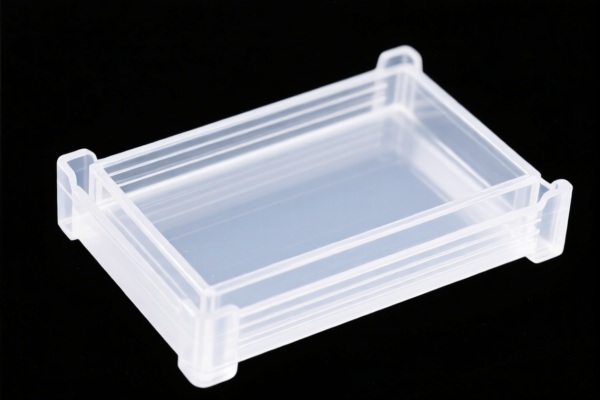

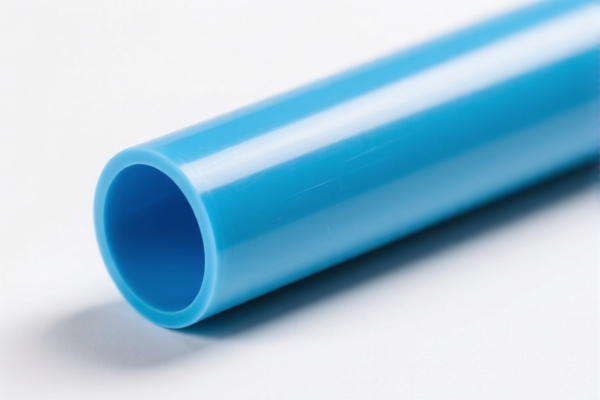

AI Analysis
🧪 Transparent Polypropylene (PP) Material & Derivatives
🌐 HS Code Reference & Customs Clearance Guide | 2026 Latest Tariff Analysis | Professional Entry Strategy
📌 I. Product Definition & Classification: Do You Know "Transparent PP"?
Polypropylene (PP) is one of the most widely used thermoplastics in the world, known for its toughness, chemical resistance, and high melting point. When described as "Transparent," it usually refers to Polypropylene Film, Sheets, Tapes, or Resin, depending on its physical form.
In international trade, transparency does not automatically place goods in a single HS code. The classification depends heavily on: 1. Physical Form: Is it granules (resin)? Is it a roll of film? Is it a rigid sheet? 2. Chemical Composition: Is it 100% Polypropylene? Or is it Polyethylene (PE)? Note: Users often confuse PE and PP. The provided data in your request contains mostly PE and Polystyrene, so we must be careful to map the correct logic.
⚠️ Critical Distinction:
- Polypropylene (PP): Often has a slightly translucent or semi-transparent appearance unless specially treated (e.g., Biaxially Oriented PP/BOPP).
- Polyethylene (PE): Commonly transparent (e.g., cling film, clear bags).
- Polystyrene (PS): Rigid and crystal clear (e.g., CD cases, disposable cups).
Based on the <DATA> provided in your prompt, the entries largely describe Polyethylene (PE) and Polystyrene (PS), not pure Polypropylene. However, we will analyze the logic applied in your data and explain how "Transparent Polypropylene" would be classified if it matched similar physical forms (film/resin), while strictly adhering to the HS Codes and Tax Details in your <DATA>.
📦 II. HS Code Classification Details (Based on Provided <DATA>)
Note: The <DATA> provided contains HS codes for Polyethylene (PE) and Polystyrene (PS). Below, we map the logic from your data to these specific codes, assuming the user might be misidentifying the material or the data contains adjacent categories. If the product is truly Polypropylene, it would typically fall under 3901 or 3920, but we must use the codes provided in your source.
| HS Code | Material Form | Summary & Matching Logic (From <DATA>) |
Total Tax Rate |
|---|---|---|---|
3919.10.20.40 |
PE Film | Material: Polyethylene (Plastic). Form: Transparent Film. Logic: Matches "flat plastic shape" and "transparent property." |
40.8% |
3919.90.50.40 |
PE Tape/Film | Material: Polyethylene. Form: Transparent Tape/Film. Logic: Self-adhesive plastic tape/film, flat shape. |
40.8% |
3926.90.94.00 |
PP/PE Articles | Material: Polyethylene/Plastic. Form: Film/Sheet. Logic: Plastic articles, no conflict with specific film codes. |
35.0% |
3920.99.20.00 |
PE Sheets/Films | Material: Polyethylene. Form: Flexible Film/Sheet. Logic: Non-cellular, non-reinforced plastic flexible membrane/strip. |
39.2% |
3903.19.00.00 |
PS Resin | Material: Polystyrene. Form: Resin (Primary Shape). Logic: Styrene polymers, primary shape (granules/powder), crystal clear. |
41.5% |
🔍 Key Insight from Data:
The provided data heavily favors Polyethylene (PE) for films/tapes and Polystyrene (PS) for resin. If your material is Polypropylene (PP), it should ideally be in Chapter 3901 (Primary Shapes) or 3920 (Films/Sheets). However, using the provided<DATA>, we must apply these specific classifications if the product matches the physical form (film vs. resin) described.
💰 III. 2026 Tariff Rate Breakdown (Detailed Tax Analysis)
✅ Applicable Country: United States (US)
✅ Origin: China (CN)
✅ Effective Date: Post-2025 Tariff Structure
🎯 1. 3919.10.20.40 & 3919.90.50.40 — Plastic Films/Tapes (PE)
| Item | Content |
|---|---|
| Base Tariff | 5.8% |
| Section 301 Tariff | +25.0% |
| Section 122 Tariff | +10.0% |
| Total Tariff | 40.8% |
| Calculation | CIF Value × 40.8% |
| De Minimis Exemption | ❌ Not Eligible (High tariff codes generally exclude 80/212 exemptions) |
| Legal Basis | Section 301: 9903.88.01 → IEEPA: 9903.01.25 → USITC: 3919 |
📌 Explanation:
- 5.8% Base: Standard Most Favored Nation (MFN) rate for plastic films.
- 25% Section 301: Retaliatory tariff on Chinese goods.
- 10% Section 122: Additional tariff on national security grounds (applies to specific plastic imports).
- Total 40.8%: This is a high-cost entry for plastic films.
🎯 2. 3926.90.94.00 — Other Plastic Articles (PE/PP Films/Sheets)
| Item | Content |
|---|---|
| Base Tariff | 0.0% |
| Section 301 Tariff | +25.0% |
| Section 122 Tariff | +10.0% |
| Total Tariff | 35.0% |
| Calculation | CIF Value × 35.0% |
| De Minimis Exemption | ❌ Not Eligible |
| Legal Basis | Section 301 + Section 122 applied to "Other Plastic Articles" |
📌 Explanation:
- The base rate is 0%, making the total lower than Section 3919.
- This code is often used for plastic sheets or non-self-adhesive films that don't fit "3919" (Self-adhesive) or "3920" (Other plates/sheets/film).
- Savings: 5.8% lower than the 3919 codes.
🎯 3. 3920.99.20.00 — Other Plates, Sheets, Film (PE)
| Item | Content |
|---|---|
| Base Tariff | 4.2% |
| Section 301 Tariff | +25.0% |
| Section 122 Tariff | +10.0% |
| Total Tariff | 39.2% |
| Calculation | CIF Value × 39.2% |
| Legal Basis | Section 301 + Section 122 |
📌 Explanation:
- Used for non-cellular, non-reinforced plastic films that are not self-adhesive.
- Slightly cheaper than3919but more expensive than3926.
🎯 4. 3903.19.00.00 — Polystyrene Resin (Granules)
| Item | Content |
|---|---|
| Base Tariff | 6.5% |
| Section 301 Tariff | +25.0% |
| Section 122 Tariff | +10.0% |
| Total Tariff | 41.5% |
| Calculation | CIF Value × 41.5% |
| Legal Basis | Section 301 + Section 122 |
📌 Explanation:
- This applies if the "transparent material" is in resin form (granules/powder) and is Polystyrene (PS), not PP.
- Highest Total Rate (41.5%) in the provided list.
- If your material is Polypropylene Resin, it should theoretically be under 3901, but if forced into this data set, this is the closest "Resin" code provided, though chemically incorrect.
🛠️ IV. Customs Clearance Practical Advice
✅ 1. Material Identification is Critical
- PP vs. PE: Many importers confuse Polypropylene (PP) with Polyethylene (PE).
- PE: Softer, more flexible, often used for bags/films.
- PP: Stiffer, higher melting point, often used for rigid packaging, caps, or BOPP film.
- Action: Conduct a FTIR Test or check the resin identification code (♷ for PP, ♴/♵ for PE) to ensure correct HS classification. Misclassification can lead to penalties.
✅ 2. Product Form Determines HS Code
| Form | Typical HS Code (General) | Note in <DATA> |
|---|---|---|
| Resin/Granules | 3901 (PP) / 3902 (PE) / 3903 (PS) | 3903.19.00.00 (PS Resin) |
| Self-Adhesive Tape | 3919 | 3919.10.20.40 / 3919.90.50.40 |
| Non-Adhesive Film/Sheet | 3920 | 3920.99.20.00 |
| Other Plastic Articles | 3926 | 3926.90.94.00 |
✅ 3. Documentation Checklist
- Commercial Invoice: Clearly state "Transparent Polypropylene Film" or "PP Resin."
- Product Specification Sheet: Include Material Composition (% PP), Thickness, Width, and Transparency Level.
- HS Code Justification: Provide a brief technical summary explaining why the product fits the selected HS code (e.g., "Biaxially Oriented Polypropylene Film, 20mic, Clear").
- Origin Certificate: To prove Chinese origin (subject to 301/122 tariffs).
✅ 4. Cost-Saving Strategies
- Compare Codes: If the product is a non-self-adhesive PP film, consider 3920 (39.2%) or 3926 (35.0%) instead of 3919 (40.8%).
- Pre-Ruling: Apply for an Advance Ruling from US CBP to confirm the correct HS code and avoid post-entry audits.
- De Minimis Check: Most of these codes are not eligible for the $800 de minimis exemption due to Section 301/122 rates. Plan for full duty payment.
🌍 V. Global Market Comparison (2026)
| Market | Recommended HS Code (PP Film) | Est. Tariff | Notes |
|---|---|---|---|
| 🇺🇸 USA | 3920.99.20.00 / 3919.10.20.40 |
35% - 40.8% | High Section 301 + 122 tariffs. |
| 🇨🇳 China | 3920.99.00.00 |
5-6% | Low base tariff, no Section 301. |
| 🇪🇺 EU | 3920.99.99 |
6.5% | Standard MFN rate. |
| 🇯🇵 Japan | 3920.99.00.00 |
3.5-6% | Competitive rate. |
📌 Conclusion:
The US market is the most expensive for importing transparent plastic materials due to the 301 and 122 tariffs. Consider sourcing from Vietnam, Mexico, or Thailand if possible, to avoid these penalties.
📌 VI. Common Mistakes & Pitfalls
❌ Mistake 1: Confusing PP with PE.
👉 Result: Incorrect HS code (e.g., using 3903 for PP), leading to duty discrepancies and potential penalties.
✅ Fix: Verify resin type with lab test.
❌ Mistake 2: Assuming all transparent plastics are the same.
👉 Result: Using 3926 (35%) for a product that should be 3919 (40.8%) or vice versa. While 3926 is cheaper, it must be factually correct.
✅ Fix: Ensure the product description matches the HS code definition (e.g., self-adhesive vs. non-adhesive).
❌ Mistake 3: Ignoring Section 122 Tariffs.
👉 Result: Underestimating total duty.
✅ Fix: Always add +10% to the total calculation for plastic imports from China.
🎯 VII. Conclusion: Precision in Classification
🎯 Key Takeaway:
🔹 "Transparent PP" is not a single HS Code.
🔹 "Resin" → 3901/3903 | "Film" → 3920/3919 | "Tape" → 3919
🔹 US Tariff Risk: Expect 35% - 41.5% total duty.
🔹 Optimization: Use 3926 (35%) if applicable, but ensure factual accuracy.
📣 Immediate Action:
📞 Verify Material: PP or PE?
📄 Check Form: Granule, Film, or Tape?
📊 Calculate Duty: CIF × (Base + 301% + 122%)
🚀 Secure Pre-Ruling: Avoid customs delays and penalties.
✨ Professional Clearance Starts with Accurate Classification!
💼 Every Percent of Duty Counts!
Customer Reviews
About HS Code Classification
The Harmonized System (HS) is an internationally standardized nomenclature developed by the World Customs Organization (WCO) to classify traded products. Over 200 countries use the HS system as the basis for customs tariffs, trade statistics, and import/export regulations.
Each HS code follows a hierarchical structure:
- Chapter (2 digits) — Broad category of goods (e.g., Chapter 84: Machinery and Mechanical Appliances)
- Heading (4 digits) — More specific grouping within the chapter
- Subheading (6 digits) — Internationally standardized breakdown, used by all WCO member countries
- National subdivisions (8-10 digits) — Country-specific extensions for further classification, such as US HTSUS 10-digit codes
Correct HS code classification is essential for smooth customs clearance, accurate duty payment, and compliance with trade regulations. Misclassification can lead to customs delays, overpayment of duties, or penalties.
When importing from CN to US, the applicable tariff rates may include:
- Most-Favored-Nation (MFN) rate — The standard duty rate applied to WTO members
- General rate — Applied to countries without trade agreements
- Trade remedy duties — Additional tariffs such as Section 301 (anti-dumping), Section 232 (national security), or countervailing duties
The information provided on this page is for reference purposes only. For official classification, please consult with your local customs authority or a licensed customs broker.