Polystyrene Foam Board
CN → US| HS Code | Tariff Rate | Origin | Destination | Doc |
|---|---|---|---|---|
| 3921190090 | 41.5% | CN | US | Official Doc |
| 3921110000 | 40.3% | CN | US | Official Doc |
| 3920300000 | 40.8% | CN | US | Official Doc |
| 3920991000 | 41.0% | CN | US | Official Doc |
| 4008111000 | 35.0% | CN | US | Official Doc |
Product Images


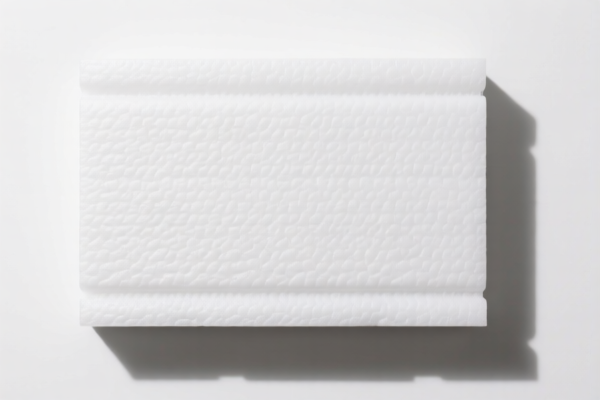
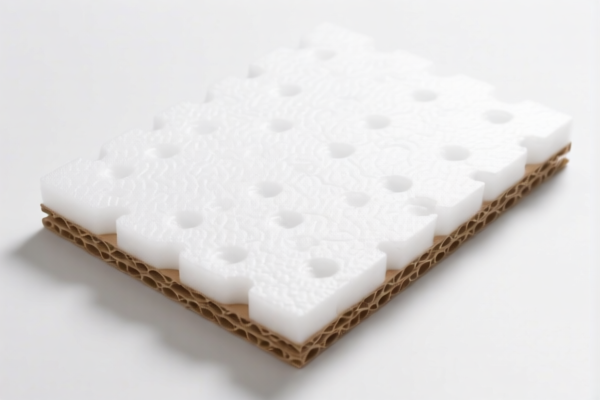
AI Analysis
🧱 Polystyrene Foam Board (Insulation & Packaging Materials)
🌐 HS Code Reference & Customs Clearance Guide | 2026 Latest Tariff Analysis | Professional Clearance Strategy
📌 1. Product Definition & Classification: Do You Really Know "Polystyrene Foam Board"?
Polystyrene Foam Boards are widely used in construction insulation, packaging, and industrial applications. In international trade, they are primarily divided into two categories based on their state of matter:
Expanded Polystyrene (EPS) / Extruded Polystyrene (XPS) Foam Boards: Material is polystyrene, state is foamy/porous板材 (e.g., insulation boards). Non-Foam Polystyrene Sheets/Plates: Material is polystyrene, state is solid/non-foamy plates/sheets (e.g., rigid plastic plates).
⚠️ Key Distinction Point:
- If the product is foamy/porous (bubbles visible, lightweight, insulating) → Classified under 3921.19.00.90 or 3921.11.00.00.
- If the product is solid/non-foamy (rigid, dense, no air cells) → Classified under 3920.30.00.00 or 3920.99.10.00.
- Do not confuse with Rubber Foam Boards (Material: Rubber) → Classified under 4008.11.10.00.
📦 2. HS Code Classification Details (2026 Latest Tariff Authority Comparison)
| HS Code | Product Description | Application Scenario | State/Material |
|---|---|---|---|
3921.19.00.90 |
Foam Polystyrene Insulation Board, Material: Polystyrene, State: Foam Board | EPS/XPS insulation walls, roof insulation, cold storage | ✅ Foam / Polystyrene |
3921.11.00.00 |
Foam Polystyrene Insulation Board, Material: Polystyrene, State: Foam Board | Similar to above, often used for specific expanded polystyrene types | ✅ Foam / Polystyrene |
3920.30.00.00 |
Polystyrene Plate, Material: Polystyrene, State: Non-foam Plastic Plate | Rigid PS sheets, advertising signs, packaging trays (non-foam) | ❌ Non-Foam / Polystyrene |
3920.99.10.00 |
Polystyrene Plate, Material: Polystyrene, State: Plate, Sheet, Film, Foil, Strip | General PS plates/sheets, non-foam rigid plastics | ❌ Non-Foam / Polystyrene |
4008.11.10.00 |
Rubber Foam Board, Material: Rubber, State: Foam Board | Rubber insulation, vibration dampening, gaskets | ✅ Foam / Rubber (NOT PS) |
🔍 Key Reminder:
- Foam vs. Non-Foam is the critical classification criteria. "Foam" usually falls under Chapter 3921 (Plastics, other than foam), while non-foam plates often fall under Chapter 3920 (Plates, sheets, etc.).
- Material Check: Ensure it is Polystyrene (PS), not Rubber or PVC. Rubber foam is classified under 4008, not 3921/3920.
- If the product is "Polystyrene Foam Board," it cannot be classified as4008.11.10.00(Rubber) or3920.*(Non-foam PS).
💰 3. 2026 Latest Tariff Rate Breakdown (Including Additional Duties & Policy Surcharges)
✅ Applicable Country: USA (US)
✅ Country of Origin: China (CN)
✅ Effective Time: Post-November 2025 (including subsequent imports)
🎯 1. 3921.19.00.90 —— Foam Polystyrene Insulation Board (Foam State)
| Item | Content |
|---|---|
| Base Duty Rate | 6.5% |
| Section 301 Additional Duty | +25.0% |
| 122 Clause Tariff | +10.0% |
| Total Tax Rate | 41.5% |
| Tax Calculation | CIF Value × 41.5% |
| De Minimis Eligibility | ❌ Not Eligible (Denied) |
| Legal Basis Path | Base Rate → Section 301 (USITC) → 122 Clause (USTR) |
📌 Explanation:
- The 6.5% base rate applies to polystyrene foam boards under HTSUS 3921.19.00.90.
- The 25% Section 301 duty is imposed on Chinese-origin goods in this category.
- The 10% "122 Clause" tariff (under USTR enforcement) applies to specific Chinese imports, adding an additional layer of cost.
- Total 41.5% is a high tariff rate. Importers must calculate landed costs accurately.
🎯 2. 3921.11.00.00 —— Foam Polystyrene Insulation Board (Foam State)
| Item | Content |
|---|---|
| Base Duty Rate | 5.3% |
| Section 301 Additional Duty | +25.0% |
| 122 Clause Tariff | +10.0% |
| Total Tax Rate | 40.3% |
| Tax Calculation | CIF Value × 40.3% |
| De Minimis Eligibility | ❌ Not Eligible |
| Legal Basis Path | Base Rate → Section 301 (USITC) → 122 Clause (USTR) |
📌 Note:
- Slightly lower base rate (5.3%) compared to3921.19.00.90(6.5%).
- Both3921.11.00.00and3921.19.00.90refer to Foam Polystyrene. The difference lies in specific sub-category definitions (e.g., Expanded vs. Extruded, or specific usage).
- Always verify the specific foam type (EPS vs. XPS) with customs broker to choose the most accurate code.
🎯 3. 3920.30.00.00 —— Polystyrene Plate (Non-Foam State)
| Item | Content |
|---|---|
| Base Duty Rate | 5.8% |
| Section 301 Additional Duty | +25.0% |
| 122 Clause Tariff | +10.0% |
| Total Tax Rate | 40.8% |
| Tax Calculation | CIF Value × 40.8% |
| De Minimis Eligibility | ❌ Not Eligible |
| Legal Basis Path | Base Rate → Section 301 (USITC) → 122 Clause (USTR) |
📌 Note:
- This code applies ONLY if the board is NOT FOAMY.
- Misclassifying a Foam Board as3920.30.00.00is a customs violation.
- If the product is actually foam, but declared as non-foam, penalties and back taxes will apply.
🎯 4. 3920.99.10.00 —— Polystyrene Plate (Non-Foam State)
| Item | Content |
|---|---|
| Base Duty Rate | 6.0% |
| Section 301 Additional Duty | +25.0% |
| 122 Clause Tariff | +10.0% |
| Total Tax Rate | 41.0% |
| Tax Calculation | CIF Value × 41.0% |
| De Minimis Eligibility | ❌ Not Eligible |
| Legal Basis Path | Base Rate → Section 301 (USITC) → 122 Clause (USTR) |
📌 Note:
- Similar to3920.30.00.00, this is for non-foam polystyrene plates/sheets.
- Use this code only if the product is solid, dense, and lacks the cellular foam structure.
🎯 5. 4008.11.10.00 —— Rubber Foam Board (NOT Polystyrene)
| Item | Content |
|---|---|
| Base Duty Rate | 0.0% |
| Section 301 Additional Duty | +25.0% |
| 122 Clause Tariff | +10.0% |
| Total Tax Rate | 35.0% |
| Tax Calculation | CIF Value × 35.0% |
| De Minimis Eligibility | ❌ Not Eligible |
| Legal Basis Path | Base Rate (0%) → Section 301 (USITC) → 122 Clause (USTR) |
📌 Critical Warning:
- This code is for Rubber foam, NOT Polystyrene.
- If you are importing Polystyrene Foam Board, DO NOT USE this code.
- While the total rate (35%) is lower than PS foam boards (40.3%-41.5%), using the wrong material classification is a serious customs fraud risk.
- Material Mismatch: Declaring PS as Rubber leads to immediate detention, fines, and potential blacklisting.
🛠️ 4. Customs Clearance Practical Advice (Avoid Pitfalls)
✅ 1. Required Documentation Checklist (No Exceptions)
| Document | Must Provide | Description |
|---|---|---|
| ✅ Product Spec Sheet | ✔️ | Must clearly state Material: Polystyrene (PS) and State: Foam/Non-Foam. |
| ✅ Product Photos (Clear) | ✔️ | Show texture: Foamy cells (for 3921) vs. Solid smooth surface (for 3920). |
| ✅ Commercial Invoice | ✔️ | Accurate description: "Polystyrene Foam Insulation Board" or "Polystyrene Plate". Avoid vague terms like "Plastic Board". |
| ✅ Packing List | ✔️ | Weight and volume details. |
| ✅ Certificate of Origin (CO) | ✔️ | To prove origin (China) and apply accurate tariffs. |
| ✅ Material Test Report | ✔️ | Lab report confirming PS content and no rubber/PVC. |
✅ 2. Declaration Tips (Key Mantra)
🔥 "Foam is 3921, Solid is 3920, Rubber is 4008, Get it Wrong, Pay the Price!"
| Scenario | Correct Declaration | Incorrect Action |
|---|---|---|
| EPS/XPS Insulation Board (Foamy) | 3921.19.00.90 or 3921.11.00.00 |
Misdeclare as 3920.30.00.00 (Non-foam) → Penalty for false classification |
| Rigid PS Sheet (Solid, no bubbles) | 3920.30.00.00 or 3920.99.10.00 |
Misdeclare as 3921 (Foam) → Higher tax rate (if applicable) or customs delay |
| Rubber Foam Gasket | 4008.11.10.00 |
Misdeclare as Polystyrene → Material mismatch, severe fines |
| Mixed Package (PS Foam + Rubber Foam) | Split Declaration | Declare all as PS → Risk of detention for undervalued/missclassified goods |
✅ 3. Special Case Handling
| Scenario | Handling Advice |
|---|---|
| OEM Custom Size Boards | Provide cut lists and design specs. Ensure description matches physical product (foam vs. solid). |
| Coated/Painted Foam Boards | Still classified as 3921 if foam structure is intact. Do not classify as "Finished Goods" unless significantly altered. |
| Recycled PS Foam | Same HS code, but may require additional environmental compliance documentation. |
| Small Samples | Even for small quantities, apply full tariff rates. No de minimis exemption for China-origin goods in this category. |
🌍 5. Global Market Clearance Comparison (2026 Latest)
| Country/Region | Recommended HS Code | Tariff (China Origin) | Certification | Notes |
|---|---|---|---|---|
| 🇺🇸 USA | 3921.19.00.90 |
41.5% (Foam) | No specific | High tariff due to 301 + 122 Clause |
| 🇨🇳 China | 3921.19.00.90 |
6.5% | No | No additional surcharges |
| 🇪🇺 EU | 3921.10.00 |
~6.5% | CE (if applicable) | No Section 301 equivalent |
| 🇬🇧 UK | 3921.10.00 |
~6.5% | UKCA | Post-Brexit tariffs similar to EU |
| 🇦🇺 Australia | 3921.10.00 |
~5.0% | No | Low tariff, no US-style surcharges |
📌 Conclusion:
- USA is the most expensive market for Polystyrene Foam Boards due to 301 and 122 Clause tariffs.
- China, EU, UK, and Australia have much lower tariff rates.
- Strategic Suggestion: If targeting the US market, consider supply chain diversification (e.g., sourcing from non-China countries) or cost absorption planning.
📌 6. Common Mistakes & Pitfalls (Lessons Learned)
❌ Mistake 1: Calling "Polystyrene Foam Board" just "Plastic Board"
👉 Consequence: Customs may classify it under the wrong sub-category, leading to incorrect tariff assessment and delays.
❌ Mistake 2: Misclassifying Foam Board as Non-Foam Plate (3920)
👉 Consequence: Customs Violation. If the product is foam but declared as non-foam, it is considered false declaration. Penalties can be 2-3x the duty evaded.
❌ Mistake 3: Confusing Polystyrene Foam with Rubber Foam
👉 Consequence: Material mismatch. PS and Rubber have different chemical properties and uses. Customs lab tests will confirm the material, leading to fines if incorrect.
❌ Mistake 4: Assuming De Minimis Applies
👉 Consequence: No de minimis exemption for these HS codes from China. Even small shipments are subject to full tariffs (35%-41.5%).
✅ Correct Practice:
"Expanded Polystyrene (EPS) Foam Insulation Board, Material: 100% Polystyrene, State: Foamy, Density: 15kg/m³, Model: XYZ, Certified for US Import"
🎯 7. Conclusion: Precision in Classification, Savings in Cost
🎯 Remember the Mantra:
🔹 "Foam is 3921, Solid is 3920, Rubber is 4008."
🔹 "US Tariff is 40%+, Always Declare Accurately."
🔹 "PS Foam Board, High Tax, No Exemption, Plan Ahead!"
📌 Pro Tip:
If your product is Extruded Polystyrene (XPS) vs. Expanded Polystyrene (EPS), consult a customs broker to determine the exact sub-code (3921.11 vs. 3921.19). The difference is small (40.3% vs. 41.5%), but accuracy prevents audits.
📣 Immediate Action:
📞 Contact a Licensed Customs Broker + Provide Product Photos + Apply for Pre-Ruling if volume is large.
🚀 Let your Polystyrene Foam Board Clear Customs Smoothly, Efficiently, and Profitably!
✨ Professional Clearance Starts with Accurate Classification!
💼 Every Cent Saved is a Cent Earned!
Customer Reviews
About HS Code Classification
The Harmonized System (HS) is an internationally standardized nomenclature developed by the World Customs Organization (WCO) to classify traded products. Over 200 countries use the HS system as the basis for customs tariffs, trade statistics, and import/export regulations.
Each HS code follows a hierarchical structure:
- Chapter (2 digits) — Broad category of goods (e.g., Chapter 84: Machinery and Mechanical Appliances)
- Heading (4 digits) — More specific grouping within the chapter
- Subheading (6 digits) — Internationally standardized breakdown, used by all WCO member countries
- National subdivisions (8-10 digits) — Country-specific extensions for further classification, such as US HTSUS 10-digit codes
Correct HS code classification is essential for smooth customs clearance, accurate duty payment, and compliance with trade regulations. Misclassification can lead to customs delays, overpayment of duties, or penalties.
When importing from CN to US, the applicable tariff rates may include:
- Most-Favored-Nation (MFN) rate — The standard duty rate applied to WTO members
- General rate — Applied to countries without trade agreements
- Trade remedy duties — Additional tariffs such as Section 301 (anti-dumping), Section 232 (national security), or countervailing duties
The information provided on this page is for reference purposes only. For official classification, please consult with your local customs authority or a licensed customs broker.