Polystyrene Plastic Model Board
CN → US| HS Code | Tariff Rate | Origin | Destination | Doc |
|---|---|---|---|---|
| 3921110000 | 40.3% | CN | US | Official Doc |
| 9503000090 | 10.0% | CN | US | Official Doc |
| 3921190090 | 41.5% | CN | US | Official Doc |
| 3923109000 | 38.0% | CN | US | Official Doc |
| 3923290000 | 38.0% | CN | US | Official Doc |
Product Images
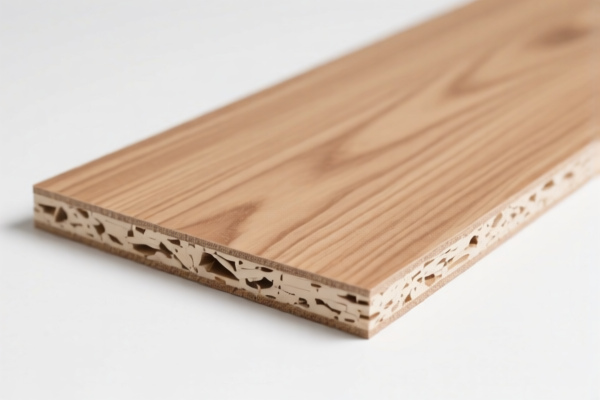
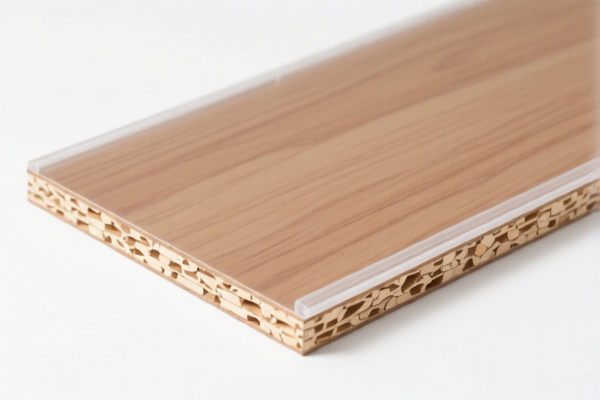
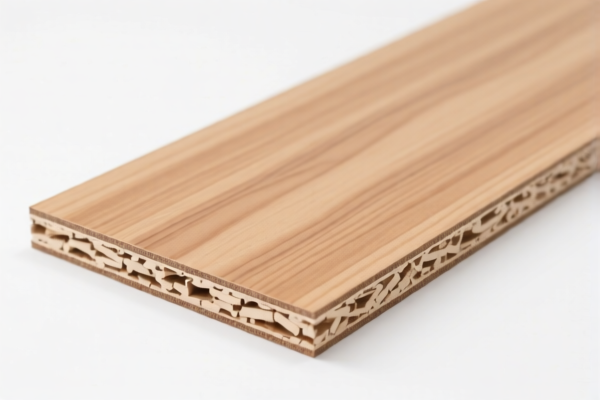
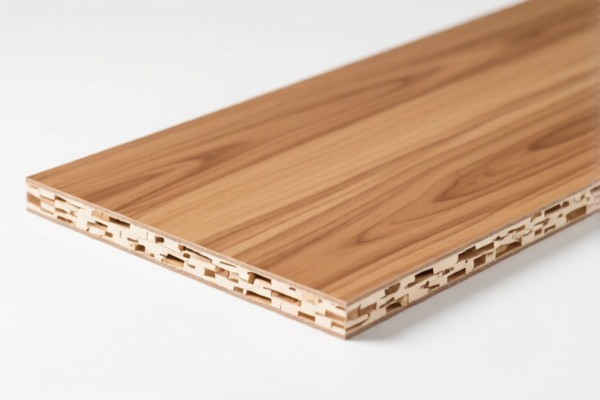
AI Analysis
🧱 Polystyrene Plastic Model Board: HS Code Classification & US Customs Clearance Guide (2026)
🌐 HS Code Reference & Customs Clearance Strategy | Latest Tariff Analysis for Polystyrene Products
📌 I. Product Definition & Classification: What Exactly is a "Polystyrene Plastic Model Board"?
In international trade, "Polystyrene Plastic Model Board" is a broad term that can refer to raw materials, packaging, or toy components. The critical factor for classification is the material composition, physical form, and intended use.
There are two primary categories: 1. Solid/Board Form (Chapter 39): Used for construction, insulation, industrial modeling, or packaging. Classified under heading 3921 (Other plates, sheets, film, foil, and strip). 2. Toy/Model Component Form (Chapter 95): Used for children's toys, architectural models, or hobby kits. Classified under heading 9503 (Tricycles, scooters, pedal cars; toys representing animals or human figures; puzzles; models).
⚠️ Key Distinction:
- If the board is a raw material or packaging component → Go to HS 3921.
- If the board is a finished toy part or model kit component → Go to HS 9503.
📦 II. HS Code Classification Details (Based on Provided Data)
Below is the precise breakdown of the four HS Codes provided in your data, with detailed tax implications for imports into the United States.
| HS Code | Product Description (Summary) | Category | Key Characteristics |
|---|---|---|---|
3921.11.00.00 |
Styrene Polymer Board | Raw Material/Industrial | Made of styrene polymer, in board form. Standard plastic plate. |
3921.19.00.90 |
Other Foam Styrene Board | Raw Material/Industrial | Other foam plastic boards (not foam polystyrene explicitly). Catch-all for non-specific foam boards. |
3923.10.90.00 |
PE Packaging Board | Packaging | Note: Summary says "Polyethylene" (PE). This is a mismatch if the product is Polystyrene (PS). Likely a fallback for generic plastic packaging. |
3923.29.00.00 |
PE Packaging Board | Packaging | Note: Also specifies "Polyethylene". Used for plastic packaging purposes. |
9503.00.00.90 |
Model Component (Fallback) | Toy/Hobby | Unspecified model components. Fallback for models not clearly defined elsewhere. |
🔍 Critical Warning:
- HS Codes3923.10.90.00and3923.29.00.00describe Polyethylene (PE), but your product is Polystyrene (PS). Do NOT use these codes unless the material is actually PE. Misclassification leads to severe penalties. - If the product is truly Polystyrene, choose between3921.11.00.00(Solid) or3921.19.00.90(Foam/Other) or9503.00.00.90(Toy).
💰 III. 2026 Tariff Rate Breakdown (US Imports from China)
✅ Applicable Country: United States (US)
✅ Origin: China (CN)
✅ Effective Date: Current tariffs under Section 301 and IEEPA apply.
🎯 1. 3921.11.00.00 – Styrene Polymer Plate/Sheet (Solid)
| Item | Detail |
|---|---|
| Base Tariff | 5.3% |
| Section 301 Tariff | 25.0% |
| IEEPA Tariff | 10.0% |
| Total Effective Rate | 40.3% |
| Calculation | (CIF Value) × 40.3% |
| De Minimis Exemption | ❌ Not Eligible (Denied for Section 301 goods) |
| Legal Basis | USITC 3921.11.00.00 + Section 301 Footnote + IEEPA China Tariff |
📌 Explanation:
This is the standard rate for solid polystyrene boards. The high tariff (40.3%) is due to the combination of base duties and US-China trade war tariffs.
🎯 2. 3921.19.00.90 – Other Plastic Foam Boards (Non-Polystyrene Specific)
| Item | Detail |
|---|---|
| Base Tariff | 6.5% |
| Section 301 Tariff | 25.0% |
| IEEPA Tariff | 10.0% |
| Total Effective Rate | 41.5% |
| Calculation | (CIF Value) × 41.5% |
| De Minimis Exemption | ❌ Not Eligible |
| Legal Basis | USITC 3921.19.00.90 + Section 301 Footnote + IEEPA China Tariff |
📌 Explanation:
Slightly higher total rate (41.5%) than solid boards. This category is often used for foam polystyrene (EPS/XPS) if not specifically listed under 3921.11. Ensure your foam type matches this code.
🎯 3. 9503.00.00.90 – Other Toys/Models (Fallback)
| Item | Detail |
|---|---|
| Base Tariff | 0.0% |
| Section 301 Tariff | 0.0% |
| IEEPA Tariff | 10.0% |
| Total Effective Rate | 10.0% |
| Calculation | (CIF Value) × 10.0% |
| De Minimis Exemption | ❌ Not Eligible (IEEPA 10% applies) |
| Legal Basis | USITC 9503.00.00.90 + IEEPA China Tariff |
📌 Explanation:
Significant Savings! If your "model board" is classified as a toy component or hobby model part, the tariff drops to just 10%. This is the optimal strategy IF the product can be legally justified as a toy/model.
🎯 4. 3923.10.90.00 & 3923.29.00.00 – Polyethylene Packaging (Use with Caution)
| Item | Detail |
|---|---|
| Base Tariff | 3.0% |
| Section 301 Tariff | 25.0% |
| IEEPA Tariff | 10.0% |
| Total Effective Rate | 38.0% |
| Calculation | (CIF Value) × 38.0% |
| Material Mismatch? | ⚠️ HIGH RISK: These codes specify Polyethylene (PE). If your product is Polystyrene (PS), this is a false declaration. |
📌 Warning:
Using PE codes for PS products is customs fraud. Penalties include seizure, fines, and loss of import privileges. Only use if the product is actually PE.
🛠️ IV. Customs Clearance Practical Advice
✅ 1. Documentation Checklist (Mandatory)
| Document | Requirement | Notes |
|---|---|---|
| Product Specifications | ✔️ Required | Must state: Material (Polystyrene), Form (Board/Sheet), Dimensions, Thickness. |
| Material Safety Data Sheet (MSDS) | ✔️ Required | For chemical safety, especially if foam or treated. |
| Commercial Invoice | ✔️ Required | Clearly describe item as "Polystyrene Model Board" or "Styrene Polymer Plate". Avoid vague terms like "Plastic Sheet". |
| Certificate of Origin | ✔️ Required | Prove origin to apply/avoid tariffs. |
| Packaging List | ✔️ Required | Detail weight, volume, and quantity. |
| Product Photos | ✔️ Recommended | Show material texture, edges, and any branding. |
✅ 2. Classification Strategy & Tips
🔥 Key Tip: "Material First, Use Second!"
| Scenario | Recommended HS Code | Why? |
|---|---|---|
| Raw Material (For manufacturing) | 3921.11.00.00 |
Accurately reflects styrene polymer board. |
| Foam Board (For insulation/modeling) | 3921.19.00.90 |
Covers other plastic foam boards. |
| Toy/Model Part (For kits) | 9503.00.00.90 |
Best for cost (10% tariff). Must be clearly a toy/model component. |
| Packaging (If PE, not PS) | 3923.10.90.00 |
Only if material is Polyethylene. |
⚠️ Avoid:
- Do not label a PS board as PE to use3923.xxcodes.
- Do not label a raw industrial board as a toy to use9503unless it is genuinely intended for play/modeling.
✅ 3. Special Cases
| Situation | Handling Advice |
|---|---|
| Mixed Materials | If board has metal edges or other materials, classify based on essential character. |
| Customs Audits | Be prepared to provide lab tests proving Polystyrene (PS) composition. |
| Tariff Engineering | If the product can be marketed as a toy model component, consider rebranding/packaging to qualify for 9503 (10% tariff). |
🌍 V. Global Market Comparison (2026)
| Country | HS Code | Tariff Rate | Notes |
|---|---|---|---|
| 🇺🇸 USA | 3921.11.00.00 |
40.3% | High due to Section 301 + IEEPA. |
| 🇺🇸 USA | 9503.00.00.90 |
10.0% | Lowest rate if classified as toy/model. |
| 🇪🇺 EU | 3921.11.00 | Varies | Generally lower than US, but verify local duty. |
| 🇨🇳 China | 3921.11.00 | Low | Import duty may be low; focus on export compliance. |
📌 Conclusion:
The US market imposes high tariffs on Chinese plastic products. The only way to reduce costs is to accurately classify the product as a toy/model component (9503) if applicable, rather than a raw material (3921).
📌 VI. Common Mistakes & Pitfalls
❌ Mistake 1: Using 3923.xx for Polystyrene products.
👉 Consequence: Customs seizure for misdeclaration of material.
❌ Mistake 2: Classifying raw boards as toys to save tariffs.
👉 Consequence: Audit failure if product lacks toy characteristics (packaging, marketing, safety certifications).
❌ Mistake 3: Ignoring IEEPA 10% tariff.
👉 Consequence: Underpayment of duties, leading to penalties.
✅ Correct Approach:
"Polystyrene Model Board, 12mm x 24inch, for Architectural Models, Made in China" → Use
9503.00.00.90(if justified) or3921.11.00.00(if industrial).
🎯 VII. Final Recommendation
- Assess Product Use: Is it a toy/model part? → Aim for
9503.00.00.90(10% tariff). - If Industrial/Raw: Use
3921.11.00.00(40.3% tariff). - Verify Material: Ensure it is Polystyrene, not Polyethylene.
- Prepare Documentation: MSDS, Invoice, and Photos are critical.
- Consult Customs Broker: For high-value shipments, consider a Binding Ruling from US Customs.
📣 Action Item:
📞 Contact your freight forwarder.
📄 Submit product specs for pre-classification.
🚀 Optimize your supply chain to handle 40.3% or 10% tariffs efficiently.
✨ Accurate Classification Saves Money!
💼 Don't let customs delays kill your profit margin.
Customer Reviews
About HS Code Classification
The Harmonized System (HS) is an internationally standardized nomenclature developed by the World Customs Organization (WCO) to classify traded products. Over 200 countries use the HS system as the basis for customs tariffs, trade statistics, and import/export regulations.
Each HS code follows a hierarchical structure:
- Chapter (2 digits) — Broad category of goods (e.g., Chapter 84: Machinery and Mechanical Appliances)
- Heading (4 digits) — More specific grouping within the chapter
- Subheading (6 digits) — Internationally standardized breakdown, used by all WCO member countries
- National subdivisions (8-10 digits) — Country-specific extensions for further classification, such as US HTSUS 10-digit codes
Correct HS code classification is essential for smooth customs clearance, accurate duty payment, and compliance with trade regulations. Misclassification can lead to customs delays, overpayment of duties, or penalties.
When importing from CN to US, the applicable tariff rates may include:
- Most-Favored-Nation (MFN) rate — The standard duty rate applied to WTO members
- General rate — Applied to countries without trade agreements
- Trade remedy duties — Additional tariffs such as Section 301 (anti-dumping), Section 232 (national security), or countervailing duties
The information provided on this page is for reference purposes only. For official classification, please consult with your local customs authority or a licensed customs broker.