Polystyrene Plastic Packaging Box
CN → US| HS Code | Tariff Rate | Origin | Destination | Doc |
|---|---|---|---|---|
| 3923102000 | 35.0% | CN | US | Official Doc |
| 3923109000 | 38.0% | CN | US | Official Doc |
Product Images
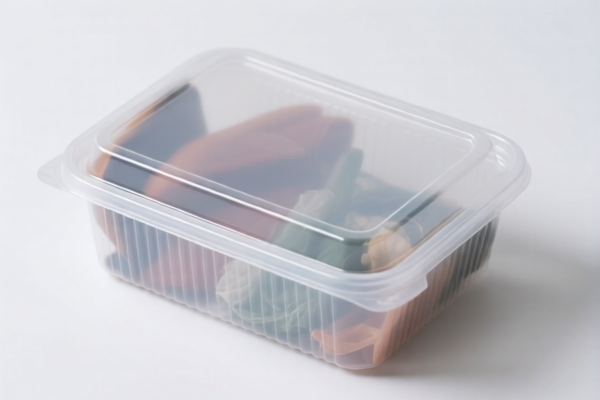
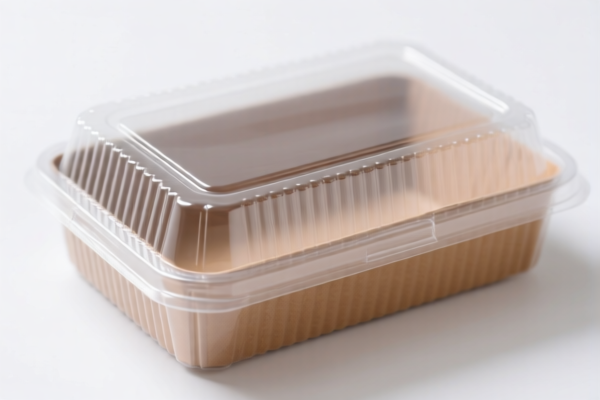
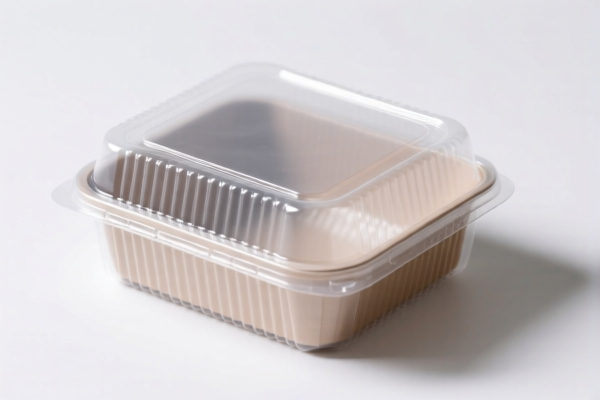
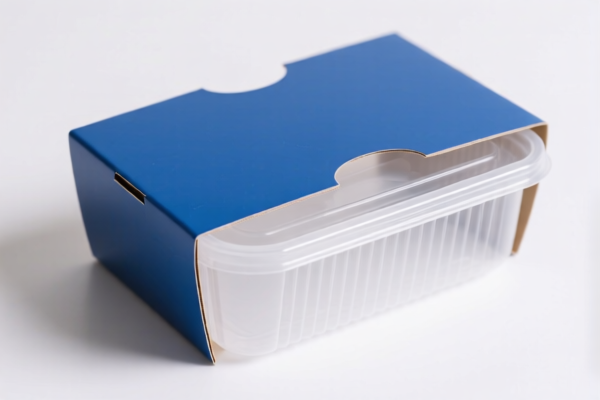
AI Analysis
📦 Polystyrene Plastic Packaging Box
🌐 HS Code Reference & Customs Clearance Guide | 2026 Latest Tariff Analysis | Professional Strategy
📌 I. Product Definition & Classification: Do You Really Know "Polystyrene Boxes"?
Polystyrene (PS) plastic boxes are widely used in logistics, electronics, and consumer goods packaging due to their lightweight, shock-absorbing, and cost-effective properties. In international trade, they are primarily classified under Chapter 39 (Plastics and Articles Thereof), specifically Heading 3923 (Articles for the conveyance or packing of goods, of plastics).
However, the exact HS Code and applicable tax rate depend entirely on the specific design and intended use of the box:
-
Standard General-Purpose Boxes:
Generic containers for general goods, food, or non-specialized items.
→ HS Code:3923.10.90.00 -
Specialized Semiconductor Packaging:
Boxes specifically shaped or fitted for the conveyance/packing of semiconductor wafers, masks, or reticles (used in chip manufacturing). These require precision fitting to protect sensitive electronics.
→ HS Code:3923.10.20.00
⚠️ Key Distinction Point:
- If the box is specially shaped/fitted for semiconductors →3923.10.20.00(0% Base + 25% Surcharge = 25% Total)
- If the box is general purpose (no specific semiconductor fit) →3923.10.90.00(3% Base + 25% Surcharge = 28% Total)
📊 II. HS Code Classification Details (2026 Latest Tariff Authority对照)
| HS Code | Product Description | Applicable Scenario | Semiconductor Specific? |
|---|---|---|---|
3923.10.20.00 |
Specially shaped/fitted boxes for semiconductor wafers, masks, reticles | Chip manufacturing, high-tech electronics supply chain | ✅ Yes (Specific Fit) |
3923.10.90.00 |
Other plastic boxes, cases, crates (General Purpose) | General logistics, food packaging, retail, non-semiconductor electronics | ❌ No |
🔍 Important Reminder:
- Do not misclassify general-purpose PS boxes as3923.10.20.00. While the base tax is lower (0% vs 3%), the 301 Tariff surcharge (25%) applies to BOTH. The total difference is small (25% vs 28%), but incorrect declaration can lead to customs audits, delays, or penalties.
- If the box is not specially fitted for semiconductors, it MUST be declared as3923.10.90.00.
💰 III. 2026 Latest Tariff Rate Details (Including Additional Taxes & Policy Surcharges)
✅ Applicable Country: United States (US)
✅ Origin: China (CN)
✅ Effective Date: 2025/2026 (Current 301 Tariffs Remain)
🎯 1. 3923.10.20.00 —— Specially Shaped Semiconductor Packaging Boxes
| Item | Content |
|---|---|
| Base Tariff | 0% (ad valorem) |
| USITC 301 Surcharge | +25% (Section 301 Tariff on Chinese Goods) |
| Total Tariff | 25% |
| Tax Calculation | CIF Value × 25% |
| De Minimis Exemption | ❌ Not Eligible (Section 301 goods are excluded from de minimis) |
| Legal Basis Path | USITC:3923.10.20.00 → FOOTNOTE:301 → USITC:3923.10.20.00 |
📌 Explanation:
- Although the base tariff is 0%, the 25% Section 301 surcharge makes the total cost significant.
- This code is reserved for high-precision, custom-fit containers for semiconductor wafers/masks. General PS boxes do not qualify.
🎯 2. 3923.10.90.00 —— Other Plastic Boxes (General Purpose)
| Item | Content |
|---|---|
| Base Tariff | 3% (ad valorem) |
| USITC 301 Surcharge | +25% (Section 301 Tariff on Chinese Goods) |
| Total Tariff | 28% |
| Tax Calculation | CIF Value × 28% |
| De Minimis Exemption | ❌ Not Eligible (Section 301 goods are excluded from de minimis) |
| Legal Basis Path | USITC:3923.10.90.00 → FOOTNOTE:301 → USITC:3923.10.90.00 |
📌 Note:
- This is the default code for most polystyrene plastic packaging boxes.
- The 3% base tax applies, plus the mandatory 25% surcharge.
- Total: 28% — Higher than specialized semiconductor boxes due to the higher base rate.
🛠️ IV. Customs Clearance Practical Advice (Battle-Tested Pitfall Guide)
✅ 1. Required Documentation Checklist (All Mandatory)
| Document | Must Provide? | Notes |
|---|---|---|
| ✅ Product Specification Sheet | ✔️ | Must clearly state material (Polystyrene/PS), dimensions, and intended use. |
| ✅ Technical Drawings / 3D Models | ✔️ | Critical if claiming 3923.10.20.00. Must show specialized fit for wafers/masks. |
| ✅ Commercial Invoice | ✔️ | Clearly describe as "Polystyrene Plastic Box for [Specific Use]". Avoid vague terms like "Packaging". |
| ✅ Packing List | ✔️ | Show item-by-item breakdown. |
| ✅ Origin Certificate (CO) | ✔️ | If not from China, may qualify for lower tariffs (e.g., ASEAN, USMCA). |
| ✅ Photos of Product | ✔️ | Show the box with/without goods to demonstrate fit. |
✅ 2. Declaration Tips (Key Mantra)
🔥 “Specific Fit = Semiconductor Code; General Use = Other Code. Never Guess!”
| Scenario | Correct Declaration | Wrong Declaration | Consequence |
|---|---|---|---|
| General PS Box (e.g., for electronics, retail) | 3923.10.90.00 |
3923.10.20.00 |
Audit Risk: Customs may reject "specialized fit" claim. Penalty for misclassification. |
| Semiconductor Wafer Box (Custom-Fitted) | 3923.10.20.00 |
3923.10.90.00 |
Overpayment: Paying 28% instead of 25%. Small saving, but accuracy matters. |
| Reusable Plastic Crate | 3923.10.90.00 |
3923.10.20.00 |
Misclassification: Crates are often not "specially fitted" for wafers. |
| Cardboard Box | ❌ Wrong Chapter | 3923.10.xx.xx |
Rejection: Must use Chapter 48 (Paper/Cardboard), e.g., 4819.10.00.00. |
✅ 3. Special Circumstances Handling
| Situation | Handling Advice |
|---|---|
| Mixed Shipment (Semiconductor + General Boxes) | Declare Separately. Do not mix HS Codes on one line item. Each line must have its own HS Code. |
| Custom-Made for One Client | Provide client’s design drawings. If it’s not for semiconductors, still use 3923.10.90.00. |
| Importing from Non-China Origin (e.g., Vietnam, Mexico) | May qualify for lower 301 tariffs or de minimis. Check FTAs (USMCA, ASEAN). |
| Reconditioned/Used Boxes | Generally classified under same HS Code, but may require additional sanitation certificates. |
🌍 V. Global Market Comparison (2026 Latest)
| Country/Region | Recommended HS Code | Total Tariff (China Origin) | Key Requirements | Notes |
|---|---|---|---|---|
| 🇺🇸 USA | 3923.10.90.00 / 3923.10.20.00 |
28% / 25% | Standard | 301 Tariff applies. No de minimis. |
| 🇨🇳 China | 3923.10.90.00 / 3923.10.20.00 |
5% / 5.5% | None | Low base tax. No surcharge for imports into China. |
| 🇪🇺 EU | 3923.10.90.00 / 3923.10.20.00 |
4.5% / 4.5% | CE (if applicable) | No 301-style surcharges. |
| 🇯🇵 Japan | 3923.10.90.00 / 3923.10.20.00 |
0% / 0% | JIS | Often 0% under JTEPA. |
| 🇰🇷 South Korea | 3923.10.90.00 / 3923.10.20.00 |
0% / 0% | KC Mark | Often 0% under KORUS. |
📌 Conclusion:
- USA is the most expensive market for these goods due to 301 Tariffs.
- EU, Japan, and Korea offer significantly lower tariffs (often 0-5%).
- Consider supply chain diversification if exporting to the US.
📌 VI. Common Mistakes & Pitfall Guide (Lessons Learned)
❌ Mistake 1: Declaring all plastic boxes as 3923.10.20.00 to save 3% base tax.
👉 Consequence: Customs audits. If not specifically fitted for semiconductors, you face penalties + back taxes. The 3% saving is not worth the risk.
❌ Mistake 2: Using vague terms like "Plastic Box" on the invoice.
👉 Consequence: Customs cannot determine the correct subheading. Leads to delays, additional inspections, or mandatory re-declaration.
❌ Mistake 3: Assuming "Polystyrene" means "EPS (Expanded Polystyrene/Foam)".
👉 Consequence: If the box is made of EPS (foam), it may still be 3923.10, but if it’s rigid PS, it’s definitely 3923.10. However, if it’s corrugated fiberboard, it’s Chapter 48. Misclassification leads to total tariff mismatch.
❌ Mistake 4: Ignoring the 301 Surcharge.
👉 Consequence: Budgeting only for the base tariff (0% or 3%) leads to unexpected 25-28% costs at customs.
✅ Correct Practice:
"Polystyrene Plastic Packaging Box, Rigid, 10x10x5cm, General Purpose, Model XYZ"
→ Declare as3923.10.90.00unless you have technical proof of semiconductor-specific fitting.
🎯 VII. Conclusion: Precise Classification, Cost Control, Smooth Clearance!
🎯 Remember the Mantra:
🔹 “Specific Fit = 3923.10.20.00 (25%)”
🔹 “General Use = 3923.10.90.00 (28%)”
🔹 “Don’t Guess! Documents Prove It!”
📌 Pro Tip:
If your packaging is not for semiconductors, always use 3923.10.90.00. The 3% base tax difference is minor compared to the risk of customs penalties for misclassification. For US imports, factor in the 25-28% total tariff in your pricing strategy. Consider sourcing from Vietnam or Mexico to avoid 301 tariffs if volumes are high.
📣 Immediate Action:
📞 Consult a licensed customs broker + Provide technical drawings + Apply for Advance Ruling if unsure.
🚀 Ensure smooth clearance, accurate tax calculation, and cost efficiency!
✨ Professional Clearance Starts with Accurate Classification!
💼 Every cent saved on taxes is profit earned!
Customer Reviews
About HS Code Classification
The Harmonized System (HS) is an internationally standardized nomenclature developed by the World Customs Organization (WCO) to classify traded products. Over 200 countries use the HS system as the basis for customs tariffs, trade statistics, and import/export regulations.
Each HS code follows a hierarchical structure:
- Chapter (2 digits) — Broad category of goods (e.g., Chapter 84: Machinery and Mechanical Appliances)
- Heading (4 digits) — More specific grouping within the chapter
- Subheading (6 digits) — Internationally standardized breakdown, used by all WCO member countries
- National subdivisions (8-10 digits) — Country-specific extensions for further classification, such as US HTSUS 10-digit codes
Correct HS code classification is essential for smooth customs clearance, accurate duty payment, and compliance with trade regulations. Misclassification can lead to customs delays, overpayment of duties, or penalties.
When importing from CN to US, the applicable tariff rates may include:
- Most-Favored-Nation (MFN) rate — The standard duty rate applied to WTO members
- General rate — Applied to countries without trade agreements
- Trade remedy duties — Additional tariffs such as Section 301 (anti-dumping), Section 232 (national security), or countervailing duties
The information provided on this page is for reference purposes only. For official classification, please consult with your local customs authority or a licensed customs broker.