Polystyrene Plastic Partition
CN → US| HS Code | Tariff Rate | Origin | Destination | Doc |
|---|---|---|---|---|
| 3921110000 | 40.3% | CN | US | Official Doc |
| 3921905050 | 39.8% | CN | US | Official Doc |
| 3926305000 | 22.8% | CN | US | Official Doc |
| 3926909989 | 22.8% | CN | US | Official Doc |
| 9403708031 | 35.0% | CN | US | Official Doc |
Product Images
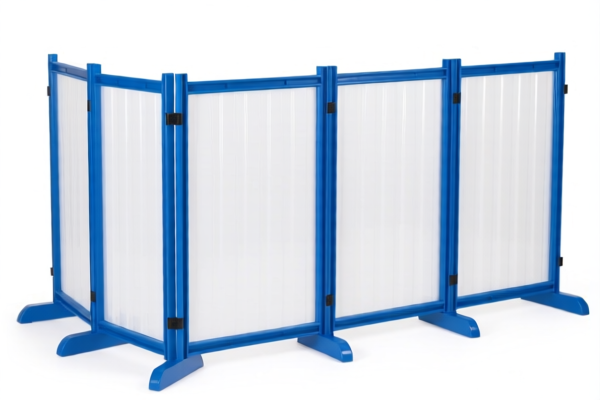
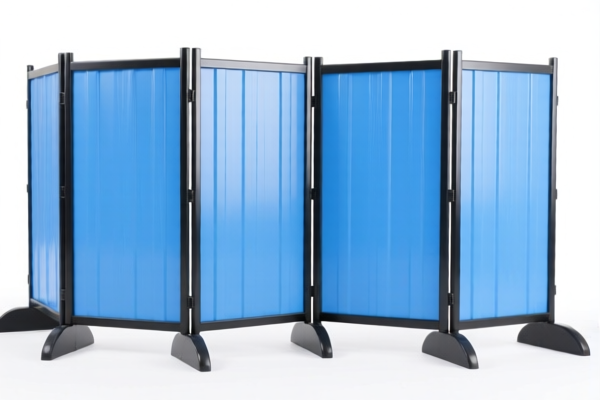
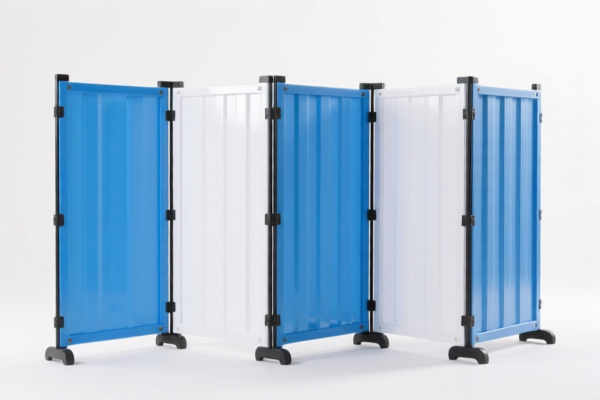
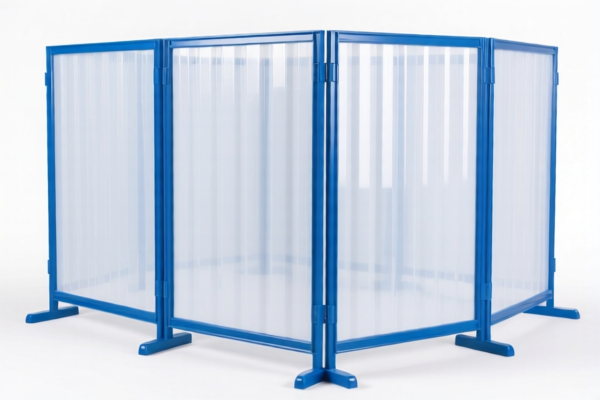
AI Analysis
🛍️ Polystyrene Plastic Partition (苯乙烯塑料隔板)
🌐 HS Code Reference & Customs Clearance Guide | 2026 Latest Tariff Analysis | Professional Clearance Strategy
📌 1. Product Definition and Classification: What is a "Polystyrene Plastic Partition"?
A Polystyrene Plastic Partition is generally defined as a flat panel or sheet made of polystyrene (PS) or other plastic materials, used for separation, furniture components, or general structural support. In international trade, the classification depends heavily on its material structure (foam vs. solid), intended use (furniture vs. general), and physical form.
⚠️ Key Classification Distinction:
- If it is a foamed polystyrene sheet/panel (e.g., EPS/XPS insulation or packaging material), it falls under Chapter 39 (Plastics and Articles Thereof), specifically Heading 3921.
- If it is a solid plastic plate not specifically foam, it may still fall under 3921 but under different subheadings.
- If it is intended as a component of furniture (e.g., shelf in a cabinet), it may be classified under Chapter 94 (Furniture).
- If it is a general-purpose plastic article without a specific furniture or foam designation, it falls under Chapter 39, Heading 3926.
📦 2. HS Code Classification Details (2026 Latest Tariff Authority Comparison)
| HS Code | Product Description | Application Scenario | Key Characteristics |
|---|---|---|---|
3921.11.00.00 |
Polystyrene foam plates, sheets, strip, film, foil, and flat shapes (other than cellular) | Foam insulation, packaging buffers, lightweight separators | ✅ Foam/Cellular Structure |
3921.90.50.50 |
Other plates, sheets, film, foil and flat shapes, of plastics | Solid plastic partitions, non-foamed PS sheets, general plastic sheets | ✅ Non-Foamed/Solid |
3926.30.50.00 |
Other articles of plastics for furniture | Plastic shelves, cabinet dividers, furniture components | ✅ Furniture Component |
3926.90.99.89 |
Other articles of plastics and articles of other materials of headings 3901 to 3914 | General plastic partitions, non-furniture, non-foam specialized items | ✅ General Plastic Article |
9403.70.80.31 |
Other furniture and parts thereof, of plastics | Plastic furniture parts, including partitions if sold as furniture parts | ✅ Furniture Part |
🔍 Critical Note:
- Foam vs. Solid: The presence of a foam structure significantly changes the HS code from3921.90to3921.11.
- Furniture Intent: If the partition is specifically designed as a shelf or divider for a cabinet,3926.30or9403.70may apply, potentially lowering the tariff rate.
- General Use: If the purpose is ambiguous,3926.90is often the fallback category for "other plastic articles."
💰 3. 2026 Latest Tariff Rate Breakdown (Including Surtaxes, Policy Surcharges)
✅ Applicable Country: United States (US)
✅ Country of Origin: China (CN)
✅ Effective Date: November 10, 2025 onwards (and subsequent imports)
🎯 1. 3921.11.00.00 —— Polystyrene Foam Plates/Sheets
| Item | Content |
|---|---|
| Base Tariff | 5.3% |
| Section 301 Surtax | +25.0% (Under USITC Footnote 9903.88.01) |
| IEEPA Surtax | +10.0% (Targeting China/HK products, effective Nov 10, 2025) |
| Total Tariff Rate | 40.3% |
| Tax Calculation | CIF Value × 40.3% |
| De Minimis Eligibility | ❌ Not Eligible (deny_de_minimis) |
| Legal Authority Path | IEEPA:9903.01.25 → IEEPA:9903.01.24 → USITC:3921.11.00.00 → FOOTNOTE:9903.88.01 |
📌 Explanation:
- 5.3%: Standard MFN base tariff for polystyrene foam.
- 25%: Section 301 tariff on Chinese plastic articles.
- 10%: Additional IEEPA tariff imposed on Chinese goods.
- Total 40.3%: High cost barrier. Foam products are heavily scrutinized.
🎯 2. 3921.90.50.50 —— Other Plastic Plates/Sheets (Non-Foam)
| Item | Content |
|---|---|
| Base Tariff | 4.8% |
| Section 301 Surtax | +25.0% |
| IEEPA Surtax | +10.0% |
| Total Tariff Rate | 39.8% |
| Tax Calculation | CIF Value × 39.8% |
| De Minimis Eligibility | ❌ Not Eligible |
| Legal Authority Path | IEEPA:9903.01.24 → USITC:3921.90.50.50 |
📌 Note:
- Slightly lower base rate (4.8%) than foam (5.3%), but total rate is still high.
- Applies to solid polystyrene sheets or other plastic plates not classified elsewhere.
🎯 3. 3926.30.50.00 —— Plastic Articles for Furniture
| Item | Content |
|---|---|
| Base Tariff | 5.3% |
| Section 301 Surtax | +7.5% (Reduced rate for specific furniture components) |
| IEEPA Surtax | +10.0% |
| Total Tariff Rate | 22.8% |
| Tax Calculation | CIF Value × 22.8% |
| De Minimis Eligibility | ❌ Not Eligible |
| Legal Authority Path | IEEPA:9903.01.24 → USITC:3926.30.50.00 |
📌 Opportunity:
- This is a cost-effective option if the partition can be legitimately classified as a furniture component.
- Requires proof of intended use (e.g., sold with furniture, designed for cabinet shelves).
🎯 4. 3926.90.99.89 —— Other Plastic Articles
| Item | Content |
|---|---|
| Base Tariff | 5.3% |
| Section 301 Surtax | +7.5% |
| IEEPA Surtax | +10.0% |
| Total Tariff Rate | 22.8% |
| Tax Calculation | CIF Value × 22.8% |
| De Minimis Eligibility | ❌ Not Eligible |
| Legal Authority Path | IEEPA:9903.01.24 → USITC:3926.90.99.89 |
📌 Note:
- This is the "catch-all" category for plastic articles not specified elsewhere.
- If the partition is not foam and not clearly a furniture part, this may apply.
- Same total rate (22.8%) as furniture components, making it a competitive option if functionality allows.
🎯 5. 9403.70.80.31 —— Furniture Parts, of Plastics
| Item | Content |
|---|---|
| Base Tariff | 0.0% |
| Section 301 Surtax | +25.0% |
| IEEPA Surtax | +10.0% |
| Total Tariff Rate | 35.0% |
| Tax Calculation | CIF Value × 35.0% |
| De Minimis Eligibility | ❌ Not Eligible |
| Legal Authority Path | IEEPA:9903.01.24 → USITC:9403.70.80.31 |
📌 Caution:
- Although the base tariff is 0%, the Section 301 surtax is 25%, leading to a total of 35%.
- This is higher than3926categories (22.8%).
- Only use if required by HS classification rules; otherwise,3926is cheaper.
🛠️ 4. Customs Clearance Practical Advice (Pitfall Avoidance Guide)
✅ 1. Required Documentation Checklist (Mandatory)
| Document | Must Provide | Description |
|---|---|---|
| ✅ Product Specification Sheet | ✔️ | Material (Polystyrene/PS), Form (Foam/Solid), Dimensions, Weight |
| ✅ Product Photos | ✔️ | Clear images showing texture (foam vs. smooth), edges, and any branding |
| ✅ Commercial Invoice | ✔️ | Clearly state "Polystyrene Plastic Partition" or "Plastic Shelf Component" |
| ✅ Packing List | ✔️ | Indicate if items are bundled with furniture |
| ✅ Certificate of Origin (CO) | ✔️ | If non-China origin, check for preferential rates |
| ✅ Intended Use Statement | ✔️ | Essential for 3926.30 or 9403 classification (e.g., "For use in plastic cabinets") |
✅ 2. Declaration Tips (Key Mantra)
🔥 "Foam is 3921.11, Solid is 3921.90, Furniture Part is 3926.30, General is 3926.90. Choose Wisely!"
| Scenario | Correct Declaration | Common Mistake |
|---|---|---|
| Foamed PS Board | 3921.11.00.00 |
Misdeclare as solid sheet → Risk of penalty + retroactive tax |
| Solid PS Sheet | 3921.90.50.50 |
Misdeclare as furniture part without proof → Rejection |
| Cabinet Shelf/Divider | 3926.30.50.00 |
Declare as general plastic → Higher tariff (22.8% vs 22.8% same, but safer if documented) |
| General Partition | 3926.90.99.89 |
Over-classify to furniture → 9403 has 35% tax |
📌 Note:
-3926.30and3926.90both offer 22.8% total tax, which is the lowest among all options.
- Prioritize classifying as furniture component (3926.30) if possible, as it is more specific.
- If not furniture, use3926.90.
- Avoid3921categories (39.8%-40.3%) unless the product is strictly foam or solid sheets not suitable for other uses.
✅ 3. Special Case Handling
| Scenario | Handling Advice |
|---|---|
| OEM Custom Partitions | Provide design drawings and end-use documentation to support 3926.30 classification. |
| Mixed Materials | If the partition has metal frames or fabric, declare separately or as a composite article. |
| Used/Recycled Plastic | Requires additional environmental compliance documentation; may face stricter scrutiny. |
| Sample vs. Bulk | Samples may still be subject to tariffs; declare accurately. |
🌍 5. Global Market Clearance Comparison (2026 Latest)
| Country/Region | Recommended HS Code | Tariff | Certification | Remarks |
|---|---|---|---|---|
| 🇺🇸 USA | 3926.30.50.00 or 3926.90.99.89 |
22.8% (China) | None specific | Avoid 3921 (40%+) if possible |
| 🇨🇳 China | 3921.11.00.00 / 3926.90.99.89 |
5-6.5% | RoHS | No surtaxes |
| 🇪🇺 EU | 3926.90.99 |
6.5% | REACH | No surtaxes |
| 🇦🇺 Australia | 3926.90.99 |
5% | ACCC | No surtaxes |
| 🇯🇵 Japan | 3926.90.99 |
7-8% | PSE | No surtaxes |
📌 Conclusion:
- USA has the highest tariffs for Chinese plastic partitions due to surtaxes.
- Optimize for3926.30or3926.90to achieve 22.8% instead of 40%.
- China, EU, Australia, and Japan have significantly lower rates (5-8%) with no surtaxes.
📌 6. Common Mistakes & Pitfalls (Lessons Learned)
❌ Mistake 1: Classifying foam partitions as solid sheets (3921.90)
👉 Consequence: Incorrect classification may lead to audits or misdeclaration penalties. However, tax rate is similar (39.8% vs 40.3%).
❌ Mistake 2: Classifying general partitions as furniture (9403.70)
👉 Consequence: 35% total tariff instead of 22.8%. Higher cost!
❌ Mistake 3: Failing to provide product photos for foam/solid distinction
👉 Consequence: Customs may default to the highest-rated category or delay clearance.
❌ Mistake 4: Ignoring IEEPA 10% surtax
👉 Consequence: Under-declaring tax liability, leading to fines and back taxes.
✅ Correct Approach:
"Polystyrene Plastic Shelf Divider, Solid, for Use in Plastic Storage Cabinets, Model XYZ, Made in China"
🎯 7. Conclusion: Precise Classification Saves Money!
🎯 Remember the Mantra:
🔹 "Foam is Expensive (40%), Solid is Expensive (40%), Furniture/General is Cheap (23%)!"
🔹 "HS Code Determines Profit Margin, Misclassification Costs Thousands!"
📌 Pro Tip:
If your partitions are originating from Vietnam, Mexico, Thailand, or Malaysia, you may apply for IEEPA Exemptions or Lower Section 301 Rates, reducing tariffs significantly.
Recommend Applying for Advance Ruling to confirm HS Code and avoid clearance risks.
📣 Immediate Action:
📞 Contact Professional Customs Broker + Provide Product Images + Apply for HS Code Advance Ruling
🚀 Ensure Smooth Clearance, Efficient Global Trade, Maximize Profits!
✨ Professional Clearance Starts with Accurate Classification!
💼 Every Dollar of Cost Deserves Precise Calculation!
Customer Reviews
About HS Code Classification
The Harmonized System (HS) is an internationally standardized nomenclature developed by the World Customs Organization (WCO) to classify traded products. Over 200 countries use the HS system as the basis for customs tariffs, trade statistics, and import/export regulations.
Each HS code follows a hierarchical structure:
- Chapter (2 digits) — Broad category of goods (e.g., Chapter 84: Machinery and Mechanical Appliances)
- Heading (4 digits) — More specific grouping within the chapter
- Subheading (6 digits) — Internationally standardized breakdown, used by all WCO member countries
- National subdivisions (8-10 digits) — Country-specific extensions for further classification, such as US HTSUS 10-digit codes
Correct HS code classification is essential for smooth customs clearance, accurate duty payment, and compliance with trade regulations. Misclassification can lead to customs delays, overpayment of duties, or penalties.
When importing from CN to US, the applicable tariff rates may include:
- Most-Favored-Nation (MFN) rate — The standard duty rate applied to WTO members
- General rate — Applied to countries without trade agreements
- Trade remedy duties — Additional tariffs such as Section 301 (anti-dumping), Section 232 (national security), or countervailing duties
The information provided on this page is for reference purposes only. For official classification, please consult with your local customs authority or a licensed customs broker.