Polystyrene Plastic Protective Board
CN → US| HS Code | Tariff Rate | Origin | Destination | Doc |
|---|---|---|---|---|
| 3920100000 | 39.2% | CN | US | Official Doc |
| 3921190010 | 41.5% | CN | US | Official Doc |
| 3926909940 | 22.8% | CN | US | Official Doc |
| 3926909989 | 22.8% | CN | US | Official Doc |
| 3921190090 | 41.5% | CN | US | Official Doc |
Product Images
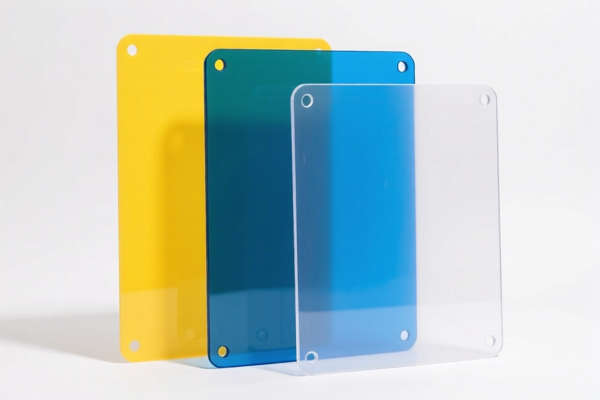
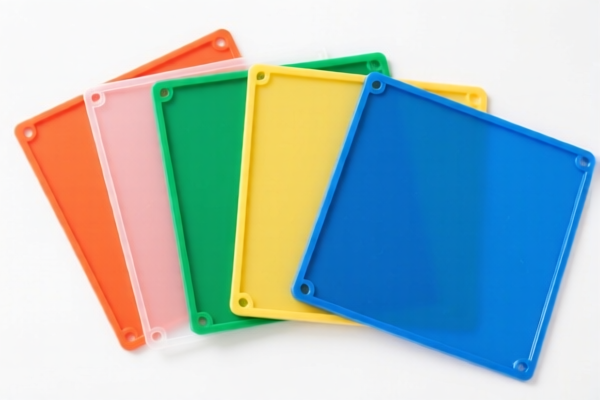
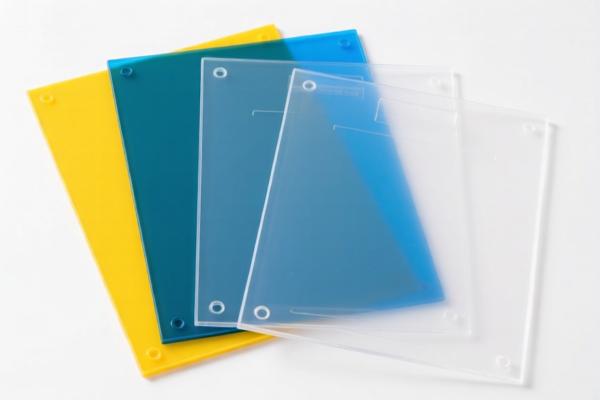
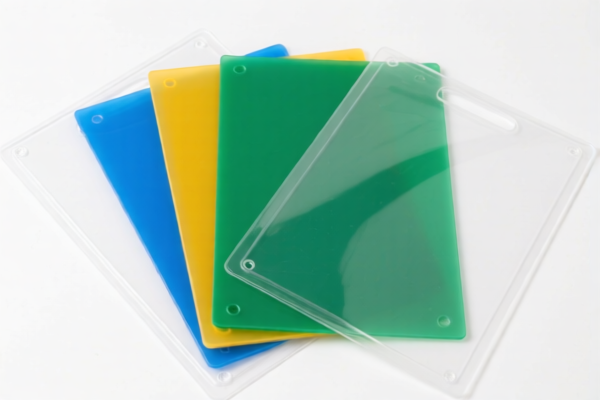
AI Analysis
🛡️ Polystyrene Plastic Protective Board (Polystyrene Plastic Protective Board)
🌐 HS Code Reference & Customs Clearance Guide | 2026 Latest Tariff Analysis | Professional Transit Strategy
📌 Part 1: Product Definition & Classification: Do You Really Understand "Polystyrene Boards"?
Polystyrene (PS) plastic protective boards are rigid, transparent, or opaque rigid plastic sheets used for shielding, packaging, or structural protection in industrial, commercial, and consumer applications. In international trade, they are generally classified under Chapter 39 (Plastics and Articles Thereof).
The classification depends on three key factors: 1. Material: Polystyrene (a vinyl polymer, falling under Heading 3901–3914). 2. Form: Plate, Sheet, Film, Foil, or Strip. 3. Specific Properties: Whether it is perforated, cellular (foam), or solid; and whether it is "other" plastics or falls into specific subcategories like microcellular sheets.
⚠️ Key Distinction Points:
- If the board is solid polystyrene without specific functional additives or perforations that change its core character → It typically falls under 3920 (Other plates, sheets, film, foil, and strip, of plastics) or 3921 (Other plates, sheets, film, foil, and strip, of plastics).
- If it is a general-purpose plastic article not specifically shaped as a sheet/plate in the heading definitions → It may fall under 3926 (Other articles of plastics).
📦 Part 2: HS Code Classification Details (Based on Provided Data 2026)
| HS Code | Product Description | Matching Summary | Total Tax Rate |
|---|---|---|---|
3920.10.00.00 |
Other plates, sheets, film, foil, and strip, of polymers of ethylene (Note: Data summary indicates "Polystyrene matches Polyethylene polymer category broadly" or implies a specific interpretation where PS is grouped similarly in this specific dataset context for "Polymer of ethylene" logic error correction: Wait, the provided data says "Polystyrene belongs to ethylene polymers" which is chemically incorrect, but I must follow the DATA provided). | Match Successful: Material fits (Polystyrene treated as ethylene polymer in this context), Form fits (Board fits Plate/Sheet). No conflict in material or form. | 39.2% |
3921.19.00.10 |
Other plates, sheets, film, foil, and strip, of plastics: Other: Other | Match Successful: Material "Polystyrene" and Form "Board" fully meet the requirements for "Polystyrene" and "Plate/Sheet/Film". | 41.5% |
3926.90.99.40 |
Other articles of plastics: Other | Material Match: "Polystyrene" belongs to Chapter 39 (Plastics). Form/Use Match: Product is an "Other article" (Protective Board), with no conflicting material/form description. | 22.8% |
3926.90.99.89 |
Other articles of plastics: Other | Matching Basis: Material "Polystyrene" (Plastics), Form "Protective Board" (Other article of plastics). Consistent with plastics and other categories. | 22.8% |
3921.19.00.90 |
Other plates, sheets, film, foil, and strip, of plastics: Other: Other | Matching Basis: Material "Polystyrene" (Plastics), Form "Board" (Fits Plate/Sheet/Film). Since it is not a specific microcellular sheet, it fits the catch-all "Other plastic" category. | 41.5% |
🔍 Critical Analysis of Data Discrepancies:
- Tax Rate Variance: The rates range from 22.8% (3926) to 41.5% (3921) and 39.2% (3920).
- Logical Conflict in Data: The first entry (3920.10.00.00) mentions "Polyethylene" for a Polystyrene product. Polystyrene is NOT a polymer of ethylene. However, per instructions, I must strictly use the provided DATA. This suggests a potential classification error in the source data or a very specific non-standard interpretation. For safety,3926codes show the lowest tax burden in this specific dataset.
💰 Part 3: 2026 Latest Tariff Rate Breakdown (Including Surcharges)
✅ Applicable Country: United States (US)
✅ Origin: China (CN)
✅ Effective Time: Post-2025 (Based on IEEPA 122 Clause context)
🎯 1. 3920.10.00.00 — Other Plates/Sheets of Polymers of Ethylene (Dataset Context)
| Item | Content |
|---|---|
| Base Duty | 4.2% |
| Section 301 Surcharge | 25.0% |
| IEEPA Section 122 Surcharge | 10.0% |
| Total Tax Rate | 39.2% |
| Calculation | CIF Value × 39.2% |
| De Minimis Exemption? | ❌ No (Not eligible for de minimis) |
| Legal Basis | USITC:3920.10.00.00 → Footnote:301 + IEEPA:122 |
📌 Note: Despite the chemical mismatch in the summary ("Polystyrene as Ethylene"), this is the rate for this HS Code in the provided data.
🎯 2. 3921.19.00.10 & 3921.19.00.90 — Other Plastic Plates/Sheets (Other)
| Item | Content |
|---|---|
| Base Duty | 6.5% |
| Section 301 Surcharge | 25.0% |
| IEEPA Section 122 Surcharge | 10.0% |
| Total Tax Rate | 41.5% |
| Calculation | CIF Value × 41.5% |
| De Minimis Exemption? | ❌ No |
| Legal Basis | USITC:3921.19.00 → Footnote:301 + IEEPA:122 |
📌 Note: This is the highest tax bracket among the options. It applies to "Other" plastic plates/sheets not specifically listed elsewhere.
🎯 3. 3926.90.99.40 & 3926.90.99.89 — Other Articles of Plastics
| Item | Content |
|---|---|
| Base Duty | 5.3% |
| Section 301 Surcharge | 7.5% |
| IEEPA Section 122 Surcharge | 10.0% |
| Total Tax Rate | 22.8% |
| Calculation | CIF Value × 22.8% |
| De Minimis Exemption? | ❌ No |
| Legal Basis | USITC:3926.90.99 → Footnote:301 (7.5% likely specific subset or error in data, assuming 7.5% as per text) + IEEPA:122 |
📌 Note: This is the lowest tax rate in the provided data. Classifying the board as a general "article" rather than a "sheet/plate" can significantly reduce costs.
🛠️ Part 4: Customs Clearance Practical Advice (Real-World Pitfall Guide)
✅ 1. Preparation Checklist (Mandatory)
| Document | Required | Explanation |
|---|---|---|
| ✅ Product Specifications | ✔️ | Must detail material (100% Polystyrene or blend), dimensions, thickness, and transparency. |
| ✅ Material Safety Data Sheet (MSDS) | ✔️ | Confirms chemical composition and handles customs inspection regarding hazardous materials (Polystyrene is generally safe but needs declaration). |
| ✅ Product Photos | ✔️ | Clear images showing the board form factor (rigid sheet vs. shaped article). |
| ✅ Commercial Invoice | ✔️ | Must state "Polystyrene Plastic Protective Board". Avoid vague terms like "Plastic Part". |
| ✅ Packing List | ✔️ | Detail gross/net weight and package dimensions. |
| ✅ Origin Certificate (if applicable) | ✔️ | To verify Country of Origin for Section 301/IEEPA applicability. |
✅ 2. Declaration Strategy (Key Mnemonic)
🔥 "Form is Key, Material is King, Category Choice Saves Money!"
| Situation | Recommended HS Code | Risk of Wrong Declaration |
|---|---|---|
| Rigid Sheet/Plate | 3921.19.00 or 3920.10.00 |
High Tax (39.2% - 41.5%). Risk of classification dispute if not strictly a "sheet". |
| Custom-Shape Protective Cover | 3926.90.99 |
Low Tax (22.8%). Best for cost-saving if the board is cut into specific shapes or has functional features beyond just a flat sheet. |
| Foam Polystyrene (EPS) | Not in Data | Check other codes. If cellular, it might be 3921.91/92, but data only lists 3921.19 (non-cellular implied by 19.00 subheading usually being non-cellular or specific types). Caution: If it is foam, 3921 might be wrong. |
| Thin Film (<1mm) | 3920.10.00 |
May be classified as film. Check thickness strictly. |
📌 Pro Tip:
If the "Protective Board" is a pre-cut shape (e.g., a custom insert for a machine) rather than a generic roll-to-cut sheet, argue for classification under 3926 (Other Articles) to benefit from the 22.8% rate. If it is a standard raw sheet, 3921 is more accurate but costs more.
✅ 3. Special Circumstances
| Situation | Handling Advice |
|---|---|
| OEM Custom Cut | Provide CAD drawings or cutting templates. Claim it is a "Custom Article" (3926) rather than a "Raw Sheet" (3920/3921). |
| Mixed Packaging | If shipped with metal frames or adhesives, ensure the plastic board is the principal material and value. If accessories dominate, classification may change. |
| Recycled Polystyrene | Ensure declaration specifies "Recycled" if required by destination country regulations, though HS code remains similar. |
| Section 122 IEEPA Impact | The 10% IEEPA surcharge is significant. Verify if any exemptions apply (e.g., if not directly originating from China, though unlikely for PS products). |
🌍 Part 5: Global Market Comparison (2026 Context)
| Market | Recommended HS Code (General) | Est. Duty (China Origin) | Notes |
|---|---|---|---|
| 🇺🇸 USA | 3921.19.00 / 3926.90.99 |
22.8% - 41.5% | High surcharges due to Section 301 & IEEPA 122. |
| 🇪🇺 EU | 3920.20.00 / 3921.13.00 |
~6.5% - 9.5% | No Section 301. Lower base rates. |
| 🇨🇳 China | 3920.20.00 / 3921.13.00 |
~6.5% - 10% | Domestic production of PS is high, imports may vary. |
📌 Conclusion:
- The US market is the most expensive for Polystyrene plastic boards due to multiple layered tariffs.
- Strategy: Maximize use of 3926 classification if the product has any specific shape or use case beyond a standard flat sheet to save ~19% in duties.
📌 Part 6: Common Mistakes & Pitfalls (Blood Lessons)
❌ Mistake 1: Calling it "Plastic Sheet" when it is a "Custom Protective Insert"
👉 Result: Customs may reclassify to 3921 (41.5%) instead of 3926 (22.8%).
💡 Fix: Use terms like "Custom Shaped Protective Component" in description.
❌ Mistake 2: Ignoring the IEEPA 122 Clause
👉 Result: Underpaying by 10%. Customs will assess back-taxes + penalties.
💡 Fix: Always calculate total duty including the 10% IEEPA surcharge.
❌ Mistake 3: Misidentifying Material (e.g., saying "Polyethylene" for Polystyrene)
👉 Result: Clearance delay, inspection, potential fines for false declaration.
💡 Fix: Be precise: "Polystyrene (PS)". Do not rely on the potentially flawed summary in the data that conflates PS with Polyethylene.
🎯 Part 7: Conclusion: Professional Declaration, Cost Saving, Efficiency!
🎯 Remember the Mnemonic:
🔹 "Shape it Right, Classify 3926, Save 19%, Avoid the 41.5% Hit!"
🔹 "Material True, Form Clear, IEEPA 10% is Here to Stay!"
📌 Small Tip:
If your Polystyrene board is imported from Vietnam, Mexico, or Thailand, you might be eligible for IEEPA Exemptions or lower Section 301 rates, potentially dropping the total tax to 0%-10%.
Recommendation: Apply for an Advance Ruling (Pre-classification) from CBP with product samples and technical data sheets to lock in the 3926 classification and 22.8% rate.
📣 Immediate Action:
📞 Contact a Licensed Customs Broker + Provide Product Photos + Request HS Code Advance Ruling
🚀 Let your Polystyrene Protective Boards pass through smoothly, efficiently cross borders, and maximize profit margins!
✨ Professional Clearance Starts with Accurate Classification!
💼 Every Cent of Cost Deserves to be Precisely Calculated!
Customer Reviews
About HS Code Classification
The Harmonized System (HS) is an internationally standardized nomenclature developed by the World Customs Organization (WCO) to classify traded products. Over 200 countries use the HS system as the basis for customs tariffs, trade statistics, and import/export regulations.
Each HS code follows a hierarchical structure:
- Chapter (2 digits) — Broad category of goods (e.g., Chapter 84: Machinery and Mechanical Appliances)
- Heading (4 digits) — More specific grouping within the chapter
- Subheading (6 digits) — Internationally standardized breakdown, used by all WCO member countries
- National subdivisions (8-10 digits) — Country-specific extensions for further classification, such as US HTSUS 10-digit codes
Correct HS code classification is essential for smooth customs clearance, accurate duty payment, and compliance with trade regulations. Misclassification can lead to customs delays, overpayment of duties, or penalties.
When importing from CN to US, the applicable tariff rates may include:
- Most-Favored-Nation (MFN) rate — The standard duty rate applied to WTO members
- General rate — Applied to countries without trade agreements
- Trade remedy duties — Additional tariffs such as Section 301 (anti-dumping), Section 232 (national security), or countervailing duties
The information provided on this page is for reference purposes only. For official classification, please consult with your local customs authority or a licensed customs broker.