Polystyrene Plastic Toolbox
CN → US| HS Code | Tariff Rate | Origin | Destination | Doc |
|---|---|---|---|---|
| 3926100000 | 15.3% | CN | US | Official Doc |
| 3926909989 | 22.8% | CN | US | Official Doc |
| 4202122120 | 55.0% | CN | US | Official Doc |
| 3926901000 | 20.9% | CN | US | Official Doc |
| 3926909989 | 22.8% | CN | US | Official Doc |
Product Images
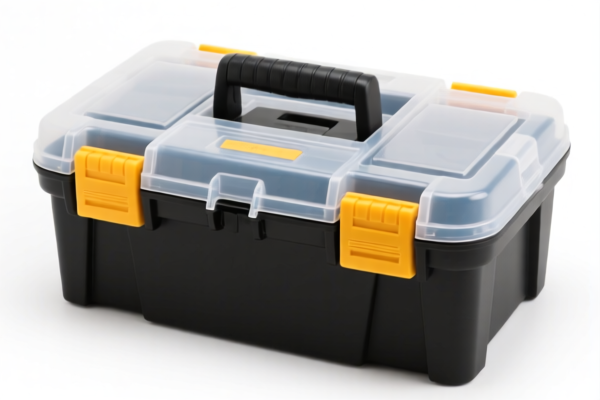
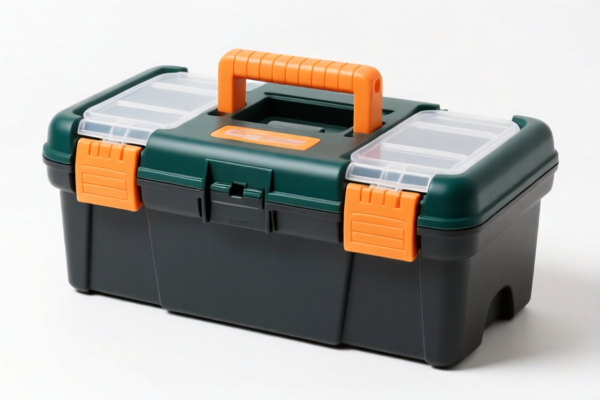


AI Analysis
🧰 Polystyrene Plastic Toolbox
🌐 HS Code Reference & Customs Clearance Guide | 2026 Latest Tariff Analysis | Professional Customs Strategy
📌 I. Product Definition and Classification: Do You Really Understand the "Polystyrene Plastic Toolbox"?
A Polystyrene Plastic Toolbox is a rigid or semi-rigid container made primarily of polystyrene (PS) plastic, designed to store, organize, and protect tools. In international trade, its classification depends heavily on whether it is viewed as a generic plastic article, a tool accessory, or a specific container type.
The core debate lies in distinguishing between: 1. Generic Plastic Containers/Articles (Chapter 39): Treated as general plastic goods. 2. Containers for Tools (Chapter 42): Treated as specialized luggage/tool cases.
⚠️ Key Distinction Point:
- If classified as a general plastic item or "other plastic tool" without specific tool-case features → Chapter 39 (e.g., 3926)
- If classified specifically as a "case for tools" (luggage-like structure) → Chapter 42 (4202)
- The latter attracts significantly higher tariffs due to different duty structures.
📦 II. HS Code Classification Details (2026 Latest Tariff Authoritative Comparison)
Based on the provided data, there are 4 distinct classification pathways for the "Polystyrene Plastic Toolbox," leading to vastly different tax burdens.
| HS Code | Product Description Summary | Applicable Scenario | Est. Total Tax Rate |
|---|---|---|---|
3926.10.00.00 |
Polystyrene plastic toolbox; material is PS; form is toolbox; use classified as office/school supplies or related plastic goods. | General purpose plastic storage, office/school context. | 15.3% |
3926.90.99.89 |
Polystyrene plastic toolbox; material is PS; form is toolbox; falls under "other plastic articles" not specifically excluded. | General industrial/commercial plastic tool storage, non-specific container. | 22.8% |
4202.12.21.20 |
Polystyrene plastic toolbox; material is PS; form is toolbox; classified under "Container" category. | Viewed as a dedicated tool case/luggage item. | 55.0% |
3926.90.10.00 |
Plastic tools; material is plastic; purpose conforms to "tools" as manufactured articles, fitting the logic of "other categories." | Classified broadly as "Plastic Tools" rather than containers. | 20.9% |
🔍 Critical Observation:
- The lowest rate (15.3%) is achieved by classifying it as office/school-related plastic goods (3926.10.00.00).
- The highest rate (55.0%) occurs if it is classified as a "Container" under Chapter 42 (4202.12.21.20).
- There is a duplicate entry for3926.90.99.89in the source data, confirming 22.8% as a common fallback for generic plastic articles.
💰 III. 2026 Latest Tariff Rate Breakdown (Including Additional Taxes & Policy Surcharges)
✅ Applicable Country: United States (US)
✅ Origin: China (CN) (Inferred from "122 Clause" and typical China-US tariff structures in the data)
✅ Effective Time: Current applicable rates per data provided
🎯 1. 3926.10.00.00 —— Polystyrene Plastic Toolbox (Office/School Supplies Category)
| Item | Content |
|---|---|
| Base Duty Rate | 5.3% |
| Additional Duty (Section 301/122) | 0.0% (Note: Data specifies 0.0% for additional duty, but includes 122 Clause) |
| Section 122 Clause Tariff | 10% |
| Total Tariff Rate | 15.3% |
| Tax Calculation | CIF Value × 15.3% |
| Legal Basis Path | Base Duty (5.3%) + Section 122 (10%) |
📌 Explanation:
- This is the most favorable classification among the options provided.
- It avoids the heavier "Additional Duty" often associated with broader plastic categories.
- The "122 Clause Tariff" likely refers to specific administrative measures or retaliatory tariffs applied to certain plastic goods.
🎯 2. 3926.90.99.89 —— Other Plastic Articles (Generic Fallback)
| Item | Content |
|---|---|
| Base Duty Rate | 5.3% |
| Additional Duty (Section 301) | 7.5% |
| Section 122 Clause Tariff | 10% |
| Total Tariff Rate | 22.8% |
| Tax Calculation | CIF Value × 22.8% |
| Legal Basis Path | Base Duty (5.3%) + Additional Duty (7.5%) + Section 122 (10%) |
📌 Explanation:
- This is a "catch-all" category for plastic articles not specifically named elsewhere in Chapter 39.
- It incurs both the 7.5% Additional Duty and the 10% Section 122 Tariff.
- This classification is riskier than3926.10.00.00due to the extra 7.5% levy.
🎯 3. 4202.12.21.20 —— Tool Cases (Container Category)
| Item | Content |
|---|---|
| Base Duty Rate | 20.0% |
| Additional Duty (Section 301) | 25.0% |
| Section 122 Clause Tariff | 10% |
| Total Tariff Rate | 55.0% |
| Tax Calculation | CIF Value × 55.0% |
| Legal Basis Path | Base Duty (20%) + Additional Duty (25%) + Section 122 (10%) |
📌 Explanation:
- This is the most expensive classification.
- Chapter 42 (Articles of leather, travel goods, sun umbrellas, etc.) carries a much higher base duty (20%).
- It also suffers from the highest Additional Duty (25%).
- Avoid this classification if possible unless the product is explicitly marketed and structured as a premium "tool case" with luxury features.
🎯 4. 3926.90.10.00 —— Plastic Tools
| Item | Content |
|---|---|
| Base Duty Rate | 3.4% |
| Additional Duty (Section 301) | 7.5% |
| Section 122 Clause Tariff | 10% |
| Total Tariff Rate | 20.9% |
| Tax Calculation | CIF Value × 20.9% |
| Legal Basis Path | Base Duty (3.4%) + Additional Duty (7.5%) + Section 122 (10%) |
📌 Explanation:
- This classification treats the toolbox itself as a "tool" or instrument of plastic.
- It has a lower base duty (3.4%) but still incurs the standard 7.5% Additional Duty and 10% Section 122 Tariff.
- It is cheaper than the generic plastic article (22.8%) but more expensive than the office-supply classification (15.3%).
🛠️ IV. Customs Clearance Practical Advice (Real-World Pitfall Avoidance Guide)
✅ 1. Preparation Checklist (No Shortcuts)
| Document | Mandatory? | Explanation |
|---|---|---|
| ✅ Product Photos | ✔️ | Must clearly show material (plastic), shape (toolbox), and any branding. |
| ✅ Material Specification | ✔️ | Confirm it is 100% Polystyrene (PS) or state the exact polymer blend. |
| ✅ Commercial Invoice | ✔️ | Description must be precise: "Polystyrene Plastic Toolbox, for household/office use." Avoid ambiguous terms like "Case" if aiming for 3926. |
| ✅ Packing List | ✔️ | Ensure quantity and weight match the invoice. |
| ✅ Function Description | ✔️ | Explain if it is used for office stationery, school supplies, or general hardware. This supports the 3926.10.00.00 classification. |
✅ 2. Declaration Strategy (Key Mnemonics)
🔥 “Describe as Office/Supply, Not as Luxury Case!”
| Scenario | Recommended HS Code | Risk Level |
|---|---|---|
| General Plastic Storage | 3926.10.00.00 |
✅ Low (15.3%) |
| Generic Plastic Article | 3926.90.99.89 |
⚠️ Medium (22.8%) |
| Plastic Tool Item | 3926.90.10.00 |
⚠️ Medium (20.9%) |
| Dedicated Tool Case/Luggage | 4202.12.21.20 |
❌ High (55.0%) |
Strategy:
- If the toolbox is a simple, open-top, or snap-fit plastic container, emphasize its "Plastic Article" nature.
- Avoid describing it as a "Tool Case" or "Luggage" in the invoice description, as this triggers Chapter 42.
- Use keywords like: "Storage Container," "Organizer," "Office Supply" to support3926.10.00.00.
✅ 3. Special Case Handling
| Situation | Handling Advice |
|---|---|
| Multi-material Toolbox (e.g., Plastic shell + Metal handle) | If plastic constitutes the essential character, it may still fall under Chapter 39. Provide material breakdown. |
| Transparent vs. Opaque | Does not change HS Code, but ensure photos match the declared description. |
| Set with Actual Tools | If sold with metal/plastic tools inside, the whole set is usually classified based on the essential character. If tools are the main value, classification changes entirely. |
🌍 V. Global Market Comparison (2026 Latest)
| Country/Region | Recommended HS Code | Est. Tariff | Notes |
|---|---|---|---|
| 🇺🇸 United States | 3926.10.00.00 |
15.3% | Best option per data. Avoid 4202. |
| 🇨🇳 China | 3926.10.00.00 |
~5-10% | Different tariff structure; data focused on US imports. |
| 🇪🇺 EU | 3926.90.00.90 |
~6.5% | EU does not typically have "Section 122" equivalent. |
| 🇨🇦 Canada | 3926.10.00.00 |
~5% | Preferential rates possible under CUSMA. |
📌 Conclusion:
- The United States presents the highest complexity due to Section 122 and Additional Duties.
- Careful classification is critical to avoid the 55% tax trap of Chapter 42.
📌 VI. Common Errors & Pitfall Guide (Lessons Learned)
❌ Error 1: Declaring as "Tool Case" (4202) when it is a simple plastic box.
👉 Consequence: Tax jumps from 15.3% to 55.0% → Extra cost ~40%!
❌ Error 2: Vague description "Plastic Box."
👉 Consequence: Customs may default to the generic 3926.90.99.89 (22.8%) instead of the optimized 3926.10.00.00 (15.3%).
❌ Error 3: Ignoring Material Composition.
👉 Consequence: If not Polystyrene, it might fall under different subheadings with different rates.
✅ Correct Approach:
"Polystyrene Plastic Storage Toolbox, for Office/School Supplies, Non-Electronic, No Locking Mechanism"
🎯 VII. Conclusion: Precision in Classification Saves Capital!
🎯 Remember the Mnemonic:
🔹 "Plastic Office Box: 15.3% (Win!)
Generic Plastic: 22.8% (Okay)
Plastic Tool: 20.9% (Better than Generic)
Tool Case/Luggage: 55.0% (Avoid!)"
📌 Tip:
- Always provide high-resolution photos showing the simple, utilitarian nature of the plastic box.
- If possible, seek a Pre-Ruling (Advance Ruling) from US Customs for definitive classification on this high-value difference (15.3% vs 55.0%).
📣 Immediate Action:
📞 Consult a Customs Broker: Provide product images and description.
📄 Draft Invoice Carefully: Use "Plastic Storage Container" rather than "Tool Case."
🚀 Save 39.7% in Duties: By choosing the right HS Code!
✨ Professional Customs Clearance Starts with Accurate Classification!
💼 Your Every Penny of Tax Matters!
Customer Reviews
About HS Code Classification
The Harmonized System (HS) is an internationally standardized nomenclature developed by the World Customs Organization (WCO) to classify traded products. Over 200 countries use the HS system as the basis for customs tariffs, trade statistics, and import/export regulations.
Each HS code follows a hierarchical structure:
- Chapter (2 digits) — Broad category of goods (e.g., Chapter 84: Machinery and Mechanical Appliances)
- Heading (4 digits) — More specific grouping within the chapter
- Subheading (6 digits) — Internationally standardized breakdown, used by all WCO member countries
- National subdivisions (8-10 digits) — Country-specific extensions for further classification, such as US HTSUS 10-digit codes
Correct HS code classification is essential for smooth customs clearance, accurate duty payment, and compliance with trade regulations. Misclassification can lead to customs delays, overpayment of duties, or penalties.
When importing from CN to US, the applicable tariff rates may include:
- Most-Favored-Nation (MFN) rate — The standard duty rate applied to WTO members
- General rate — Applied to countries without trade agreements
- Trade remedy duties — Additional tariffs such as Section 301 (anti-dumping), Section 232 (national security), or countervailing duties
The information provided on this page is for reference purposes only. For official classification, please consult with your local customs authority or a licensed customs broker.