Polystyrene Plastic Waste
CN → US| HS Code | Tariff Rate | Origin | Destination | Doc |
|---|---|---|---|---|
| 3903110000 | 41.5% | CN | US | Official Doc |
| 3915900090 | 35.0% | CN | US | Official Doc |
| 3903190000 | 41.5% | CN | US | Official Doc |
| 3915200000 | 35.0% | CN | US | Official Doc |
| 3915100000 | 35.0% | CN | US | Official Doc |
Product Images
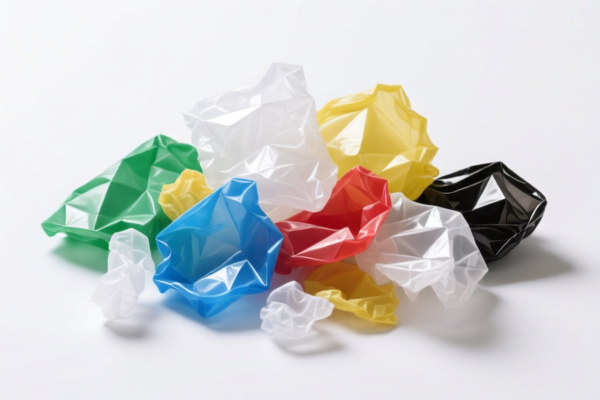
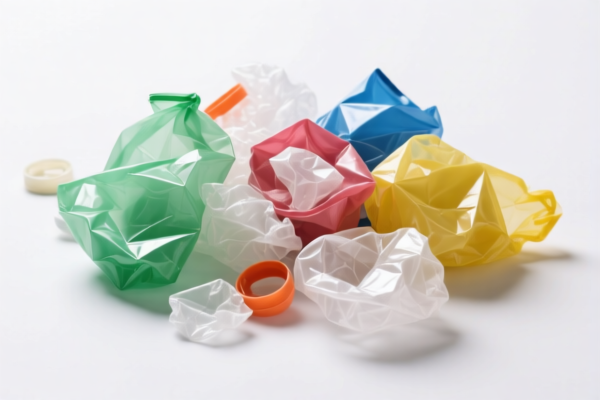
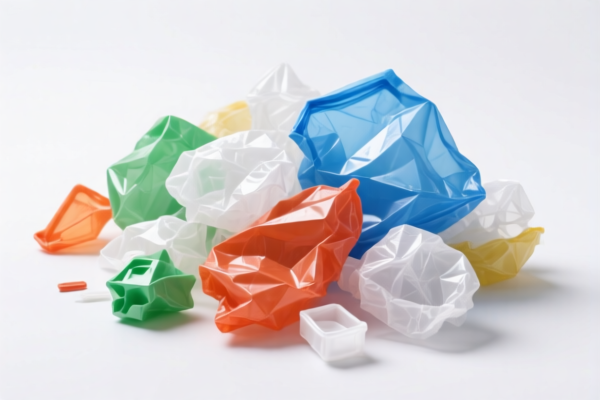

AI Analysis
♻️ Polystyrene Plastic Waste (聚苯乙烯塑料废料)
🌐 HS Code Reference & Customs Clearance Guide | 2026 Latest Tariff Analysis | Professional Clearance Strategy
📌 I. Product Definition & Classification: What is "Polystyrene Plastic Waste"?
Polystyrene (PS) is a common thermoplastic polymer. In international trade, when PS reaches its end-of-life or manufacturing scrap stage, it is classified as "Plastic Waste". However, the form of the waste (raw material vs. scrap) drastically changes its HS Code and tariff burden.
⚠️ Key Distinction:
- Primary Shape (Raw Material/Resin): If it is recycled into flakes/pellets suitable for immediate re-processing, it may still be considered "Plastics in Primary Forms" (3903).
- Scrap/Waste: If it is discarded fragments, trimmings, or unsorted waste, it falls under "Waste, Parings, and Scrap" (3915).
- Material Specificity: Polystyrene is specifically governed by heading 3915.20 for scrap, or general 3915.90 for mixed plastic waste.
📦 II. HS Code Classification Details (2026 Latest Tariff Authority Comparison)
Based on the provided data, Polystyrene items are classified into four specific HS Codes depending on their physical state and origin.
| HS Code | Product Description | Applicable Scenario | Key Identifier |
|---|---|---|---|
3903.11.00.00 |
Polystyrene, in primary forms | Recycled PS pellets/flakes used as raw material; matches Polystyrene | ✅ Raw Material State |
3915.90.00.90 |
Other waste, parings, and scrap of plastics | Mixed PS waste or waste with residues; matches Polystyrene + Waste Form | ✅ Waste/Mixed Form |
3903.19.00.00 |
Polystyrene, other than in primary forms | PS products with residual waste status; matches Polystyrene + Residual State | ✅ Non-Primary PS |
3915.20.00.00 |
Waste, parings, and scrap of styrene polymers | Pure Polystyrene scrap; matches Polystyrene + Waste Form | ✅ Pure PS Scrap |
3915.10.00.00 |
Waste, parings, and scrap of ethylene polymers | Misclassification Risk: Similar plastic waste code but different material (PE/PP vs PS) | ❌ Wrong Material |
🔍 Critical Reminder:
-3915.20.00.00is the most accurate code for pure Polystyrene scrap.
-3903.11.00.00applies if the "waste" is actually recycled raw material (pellets).
-3915.10.00.00must be AVOIDED unless the material is Polyethylene (PE), as declaring PE waste as PS waste leads to customs penalties.
💰 III. 2026 Latest Tariff Rate Breakdown (Including Surcharges & Policy Add-ons)
✅ Applicable Country: United States (US)
✅ Origin: China (CN)
✅ Effective Date: November 10, 2025 onwards (including subsequent imports)
🎯 1. 3903.11.00.00 & 3903.19.00.00 —— Polystyrene (Primary Forms & Others)
| Item | Content |
|---|---|
| Basic Tariff | 6.5% (Ad Valorem) |
| USITC Surcharge | +25% (Section 301 Duties) |
| Section 122 Duty | +10% (China-specific tariff) |
| Total Tax Rate | 41.5% |
| Tax Calculation | CIF Value × 41.5% |
| De Minimis Exemption | ❌ Not Eligible (deny_de_minimis) |
| Legal Basis Path | Section 122 → Section 301 → HS: 3903 |
📌 Explanation:
- Even if classified as "Raw Material" (3903), it is still subject to Section 301 (25%) and Section 122 (10%).
- The base rate of 6.5% adds up to a significant cost.
- High Risk: Misclassifying scrap as "primary form" to avoid higher scrutiny is dangerous; customs may audit material composition.
🎯 2. 3915.90.00.90 & 3915.20.00.00 —— Plastic Waste (Scrap & Parings)
| Item | Content |
|---|---|
| Basic Tariff | 0.0% (Ad Valorem) |
| USITC Surcharge | +25% (Section 301 Duties) |
| Section 122 Duty | +10% (China-specific tariff) |
| Total Tax Rate | 35.0% |
| Tax Calculation | CIF Value × 35.0% |
| De Minimis Exemption | ❌ Not Eligible (deny_de_minimis) |
| Legal Basis Path | Section 122 → Section 301 → HS: 3915 |
📌 Explanation:
- Lower Base Rate: Waste codes (3915) have a 0% base tariff, making the total rate 35% compared to 41.5% for raw materials.
- Material Specificity:3915.20.00.00is preferred for pure PS waste.3915.90.00.90is for mixed/other plastic waste.
- Savings Potential: Correctly classifying as waste (if actually waste) saves 6.5% on the CIF value.
🛠️ IV. Customs Clearance Practical Advice (Real-World Pitfall Guide)
✅ 1. Preparation Checklist (Mandatory)
| Document | Required? | Description |
|---|---|---|
| ✅ Material Certificate | ✔️ | Must prove material is Polystyrene (PS), not PE/PP/ABS. |
| ✅ Waste Status Declaration | ✔️ | Confirm if it is "Scrap" or "Recycled Pellets". |
| ✅ Product Photos | ✔️ | Clear images showing texture, color, and form (flakes, blocks, etc.). |
| ✅ Commercial Invoice | ✔️ | State "Polystyrene Plastic Waste" or "Recycled Polystyrene Resin". |
| ✅ Packing List | ✔️ | Weight details (Net/Gross). |
✅ 2. Declaration Tips (Key Mantra)
🔥 "State the Waste Form, Specify PS, Avoid 'Primary' if Scrap!"
| Scenario | Correct HS Code | Incorrect Action | Consequence |
|---|---|---|---|
| Pure PS Scrap | 3915.20.00.00 |
Declaring as 3915.10.00.00 (PE Waste) |
Refusal/Penalty (Wrong Material) |
| Recycled PS Pellets | 3903.11.00.00 |
Declaring as "Waste" (3915) |
Potential Audit (Is it waste or product?) |
| Mixed Plastic Waste | 3915.90.00.90 |
Claiming 100% PS without proof | Misclassification Fine |
| PS with Residues | 3903.19.00.00 |
Ignoring residue status | Complexity/Delay |
✅ 3. Special Handling
| Situation | Recommendation |
|---|---|
| Contaminated PS Waste | Must declare as 3915.90.00.90 (Other Plastic Waste). Pure 3915.20 requires high purity. |
| OEM Scraps from Factory | Provide production waste logs to justify "Waste" status under 3915. |
| Recycled Flakes for Re-use | If intended for immediate manufacturing, consider 3903.11.00.00. Check buyer’s intent. |
| Mixed with Other Plastics | Do NOT declare as PS. Use 3915.90.00.90 and provide segregation reports if possible. |
🌍 V. Global Market Clearance Comparison (2026 Latest)
| Country/Region | Recommended HS Code | Tariff Rate | Certification | Notes |
|---|---|---|---|---|
| 🇺🇸 USA | 3915.20.00.00 |
35% | No specific | High scrutiny on "Waste" definition. |
| 🇨🇳 China | 3915.20.00.00 |
0% - 5% | N/A | Import restrictions on solid waste may apply. |
| 🇪🇺 EU | 3915.20.00 |
Varies (Eco-taxes) | REACH | Strict waste shipment regulations (Basel Convention). |
| 🇬🇧 UK | 3915.20.00 |
0% - 5% | UKCA | Post-Brexit rules may differ from EU. |
| 🇯🇵 Japan | 3915.20.00 |
0% | JIS | Strict recycling laws. |
📌 Conclusion:
- USA is the most critical market due to the 35% - 41.5% total tariff burden.
- China is the largest source, so Section 301 and Section 122 are unavoidable for CN-origin goods.
- EU/UK focus more on environmental compliance than high tariffs, but waste shipment documentation is strict.
📌 VI. Common Errors & Pitfall Guide (Lessons Learned)
❌ Error 1: Declaring PS Scrap as Polyethylene (PE) Waste (3915.10.00.00)
👉 Consequence: Customs labs test material. Mismatch found → Seizure + Fine.
❌ Error 2: Declaring Recycled PS Pellets as Waste (3915) when they are Primary Forms (3903)
👉 Consequence: Wrong classification. If audited, you may face penalties for undervaluation or wrong duty rate.
❌ Error 3: Ignoring Section 122 (10%)
👉 Consequence: Unexpected cost increase. Many traders forget this add-on for China-origin goods.
❌ Error 4: Mixing Polystyrene with ABS/PP but declaring as "Pure PS"
👉 Consequence: Classification errors. Mixed waste must go to 3915.90.00.90.
✅ Correct Practice:
"Polystyrene (PS) Plastic Scrap, Post-Industrial Waste, Clean, Non-Hazardous, Origin: China"
HS Code:3915.20.00.00
🎯 VII. Conclusion: Precision Classification Saves Money!
🎯 Remember the Mantra:
🔹 "Waste is 3915, Raw is 3903. Pure PS is .20, Mixed is .90. Section 301+122 = 35% Minimum!"
🔹 "Don't guess the material. Test it. Declare it. Save the 6.5% base rate."
📌 Pro Tip:
If your Polystyrene is being recycled into new pellets in the US, consider if it qualifies as a "Product" rather than "Waste" to potentially avoid the "Waste" stigma, but Tariff Rate remains similar (35% vs 41.5%).
Always request a Pre-Ruling from US Customs (CBP) for large volumes of recycled plastics.
📣 Immediate Action:
📞 Contact a licensed customs broker.
📤 Provide Material Test Reports.
🚀 Ensure your declaration matches the physical state of the goods (Scrap vs. Pellets).
✨ Professional Clearance Starts with Accurate Classification!
💼 Every percentage point matters in plastic trade.
Customer Reviews
About HS Code Classification
The Harmonized System (HS) is an internationally standardized nomenclature developed by the World Customs Organization (WCO) to classify traded products. Over 200 countries use the HS system as the basis for customs tariffs, trade statistics, and import/export regulations.
Each HS code follows a hierarchical structure:
- Chapter (2 digits) — Broad category of goods (e.g., Chapter 84: Machinery and Mechanical Appliances)
- Heading (4 digits) — More specific grouping within the chapter
- Subheading (6 digits) — Internationally standardized breakdown, used by all WCO member countries
- National subdivisions (8-10 digits) — Country-specific extensions for further classification, such as US HTSUS 10-digit codes
Correct HS code classification is essential for smooth customs clearance, accurate duty payment, and compliance with trade regulations. Misclassification can lead to customs delays, overpayment of duties, or penalties.
When importing from CN to US, the applicable tariff rates may include:
- Most-Favored-Nation (MFN) rate — The standard duty rate applied to WTO members
- General rate — Applied to countries without trade agreements
- Trade remedy duties — Additional tariffs such as Section 301 (anti-dumping), Section 232 (national security), or countervailing duties
The information provided on this page is for reference purposes only. For official classification, please consult with your local customs authority or a licensed customs broker.