Polystyrene Polymer Plastic Composite Film
CN → US| HS Code | Tariff Rate | Origin | Destination | Doc |
|---|---|---|---|---|
| 3921190090 | 41.5% | CN | US | Official Doc |
| 3921110000 | 40.3% | CN | US | Official Doc |
| 3919905040 | 40.8% | CN | US | Official Doc |
| 3919905060 | 40.8% | CN | US | Official Doc |
| 3920995000 | 40.8% | CN | US | Official Doc |
Product Images
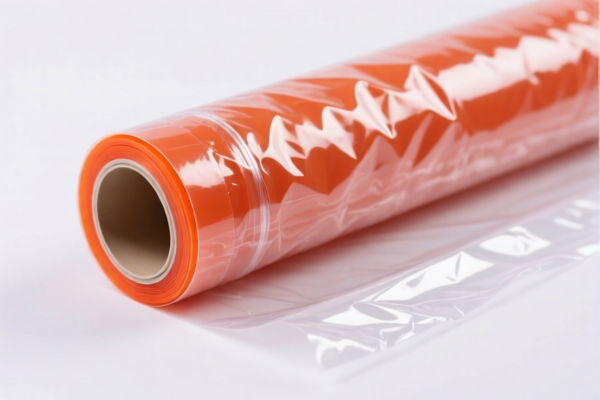
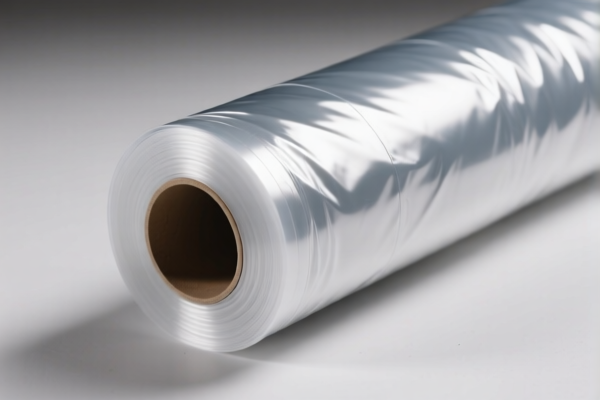
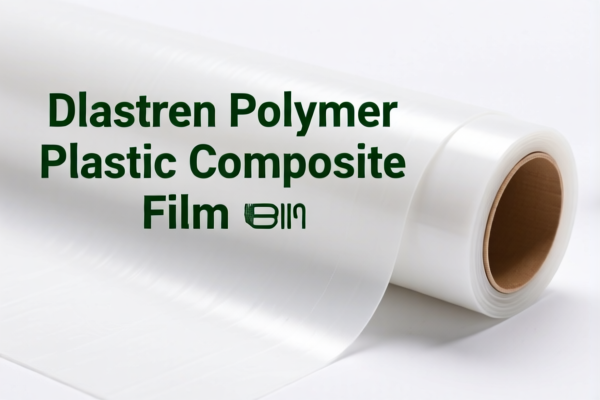

AI Analysis
🧪 Polystyrene Polymer Plastic Composite Film (Polymer Film/Sheet/Membrane)
🌐 HS Code Reference & Customs Clearance Guide | 2026 Latest Tariff Analysis | Professional Clearance Strategy
📌 I. Product Definition & Classification: Do You Really Understand "Polystyrene Film"?
Polystyrene (PS) is a rigid, transparent thermoplastic often used in packaging, insulation, and industrial films. In international trade, Polystyrene films are classified based on their physical form (flat vs. self-adhesive), processing method (extruded vs. composite), and specific polymer characteristics.
Key Distinctions: * Rigid/Flat Films (3920/3921): Non-self-adhesive sheets, plates, or films. * Self-Adhesive Films (3919): Films coated with adhesive on one or both sides. * Composite vs. Simple: Whether the film is laminated with other materials or is a single-layer PS structure.
⚠️ Critical Differentiation Point:
- If the film is non-adhesive and used for packaging or insulation → Likely 3920 or 3921.
- If the film is self-adhesive (e.g., tape backing, label film) → 3919.
- The specific HS code depends heavily on the exact physical description provided in the summary (e.g., "composite" vs. "simple").
📦 II. HS Code Classification Details (2026 Latest Tariff Authority Comparison)
Based on the provided data, here are the five possible HS Codes for Polystyrene Polymer Plastic Composite Film, categorized by their specific attributes.
| HS Code | Product Description (From Data) | Key Characteristic | Total Tax Rate |
|---|---|---|---|
3921.19.00.90 |
Material: Polystyrene Form: Film Category: Plastic sheets, plates, films, foil, and strips (Other) |
Classified under "Other" category; general non-adhesive film classification. | 41.5% |
3921.11.00.00 |
Material: Polystyrene Form: Film Category: Polymer of styrene |
Specifically for Styrene Polymers. This is a more precise fit for pure PS films. | 40.3% |
3919.90.50.40 |
Material: Polystyrene Form: Film Category: Self-adhesive Plastic Film |
Classified as Self-Adhesive. Used if the PS film has an adhesive backing. | 40.8% |
3919.90.50.60 |
Material: Polystyrene Form: Composite Plastic Film Category: Flat Shape / Film |
Specifically for Composite self-adhesive films. Combines "Self-adhesive" + "Composite". | 40.8% |
3920.99.50.00 |
Material: Polystyrene Form: Film Category: Other Plastic Films |
Classified as Other Plastic Films (non-styrene specific or general other). | 40.8% |
🔍 Key Insight:
-3921.11.00.00offers the lowest total tax (40.3%) because it specifically targets "Polymer of styrene."
-3921.19.00.90is the "catch-all" for other plastics, resulting in the highest tax (41.5%).
-3919codes apply only if the film is self-adhesive. If it is not, these codes are incorrect.
💰 III. 2026 Latest Tariff Rate Breakdown (Including Surcharges & Policy Add-ons)
✅ Applicable Country: United States (US)
✅ Country of Origin: China (CN)
✅ Effective Date: Post-November 2025 (Current Policy)
All codes listed above share the same structure of taxes: Base Tariff + Section 301 Surcharge + Section 122 Tariff.
🎯 1. 3921.19.00.90 — Other Plastic Sheets, Plates, Films (Polystyrene)
| Item | Content |
|---|---|
| Base Tariff | 6.5% (Ad Valorem) |
| Section 301 Surcharge | +25.0% |
| Section 122 Tariff | +10.0% |
| Total Tax Rate | 41.5% |
| Tax Calculation | CIF Value × 41.5% |
| De Minimis Exemption | ❌ Not Available (High risk of denial) |
| Legal Basis Path | Base: 3921.19.00.90 → Section 301: +25% → Section 122: +10% |
📌 Explanation:
- Base 6.5%: Standard MFN duty for "other" plastic sheets.
- Section 301 (+25%): Applied to most Chinese plastic products.
- Section 122 (+10%): Additional tariff on certain Chinese imports.
- Total: 6.5 + 25 + 10 = 41.5%.
🎯 2. 3921.11.00.00 — Polymer of Styrene (Polystyrene Film)
| Item | Content |
|---|---|
| Base Tariff | 5.3% |
| Section 301 Surcharge | +25.0% |
| Section 122 Tariff | +10.0% |
| Total Tax Rate | 40.3% |
| Tax Calculation | CIF Value × 40.3% |
| De Minimis Exemption | ❌ Not Available |
| Legal Basis Path | Base: 3921.11.00.00 → Section 301: +25% → Section 122: +10% |
📌 Advantage:
- This code has the lowest base tariff (5.3%) because it is specific to styrene polymers.
- Savings: 1.2% lower total tax compared to3921.19.00.90.
- Recommendation: If the product is pure polystyrene film (not composite or self-adhesive), this is the optimal code.
🎯 3. & 4. Self-Adhesive Films (3919.90.50.40 & 3919.90.50.60)
| Item | Content |
|---|---|
| Base Tariff | 5.8% |
| Section 301 Surcharge | +25.0% |
| Section 122 Tariff | +10.0% |
| Total Tax Rate | 40.8% |
| Tax Calculation | CIF Value × 40.8% |
| De Minimis Exemption | ❌ Not Available |
| Applicability | Only for Self-Adhesive PS Films |
📌 Comparison:
-3919.90.50.40: For simple self-adhesive PS film.
-3919.90.50.60: For composite self-adhesive PS film (e.g., PS film laminated with adhesive or other layers).
- Total Tax: 40.8% (Higher than3921.11.00.00but lower than3921.19.00.90).
- Crucial: Do NOT use these codes if the film is not self-adhesive. Misclassification leads to severe penalties.
🎯 5. 3920.99.50.00 — Other Plastic Films
| Item | Content |
|---|---|
| Base Tariff | 5.8% |
| Section 301 Surcharge | +25.0% |
| Section 122 Tariff | +10.0% |
| Total Tax Rate | 40.8% |
| Tax Calculation | CIF Value × 40.8% |
| De Minimis Exemption | ❌ Not Available |
📌 Note:
- This code is for "other" plastic films that do not fit into more specific categories.
- It is a fallback option if the film is not styrene-specific and not self-adhesive.
- Tax rate is identical to the3919self-adhesive codes.
🛠️ IV. Customs Clearance Practical Advice (Avoid Pitfalls)
✅ 1. Documentation Checklist (Essential)
| Document | Required | Notes |
|---|---|---|
| ✅ Product Specification Sheet | ✔️ | Must clearly state: Material (Polystyrene), Form (Film), Adhesive Status (Yes/No), Layer Structure (Single/Composite). |
| ✅ Commercial Invoice | ✔️ | Must match HS Code description precisely (e.g., "Polystyrene Polymer Film" vs. "Self-Adhesive PS Film"). |
| ✅ Packing List | ✔️ | Weight and dimensions must align with declared volume. |
| ✅ Certificate of Origin (CO) | ✔️ | To prove origin (China) and ensure correct tariff application. |
| ✅ Third-Party Test Report | ✔️ | Confirms material composition (Polystyrene) and adhesive properties if applicable. |
✅ 2. Declaration Tips (Critical Rules)
🔥 "Adhesive Defines Code, Composite Changes Detail, Styrene Lowers Tax!"
| Scenario | Correct HS Code | Wrong Code | Consequence |
|---|---|---|---|
| Pure PS Film (Non-adhesive) | 3921.11.00.00 (40.3%) |
3921.19.00.90 (41.5%) |
Overpayment by 1.2% |
| PS Film + Adhesive | 3919.90.50.40 (40.8%) |
3921.11.00.00 (40.3%) |
Misclassification Penalty + Retroactive Tax + Interest |
| Composite Self-Adhesive PS | 3919.90.50.60 (40.8%) |
3919.90.50.40 (40.8%) |
Minor error, but still incorrect description. |
| Non-PS Plastic Film | 3920.99.50.00 (40.8%) |
3921.11.00.00 (40.3%) |
Severe Penalty (False Declaration of Material) |
📌 Key Warning:
- Adhesive Status is the first filter. If it has adhesive, you must use3919.
- If no adhesive, Material Specificity is the second filter. If it is Polystyrene, use3921.11. If not, use3921.19or3920.99.
✅ 3. Special Cases
| Case | Handling Advice |
|---|---|
| Multi-layer Film | If it is a composite of PS and other materials, determine the essential character. If PS is dominant, use 3921.11 or 3919 depending on adhesive. |
| Recycled PS Film | Same HS codes apply, but may require additional environmental certifications. |
| OEM/Custom Orders | Provide client-specific specs to justify the "Composite" or "Self-Adhesive" claim if applicable. |
| Small Samples | Even small quantities are subject to the same taxes. No de minimis exemption for these codes. |
🌍 V. Global Market Comparison (2026 Latest)
| Country/Region | Recommended HS Code | Tax Rate (China Origin) | Certification | Notes |
|---|---|---|---|---|
| 🇺🇸 USA | 3921.11.00.00 |
40.3% | None specific | Highest tax burden due to Section 301 & 122. |
| 🇨🇳 China | 3921.11.00.00 |
~6-10% | GB Standards | Low import tax, high domestic production. |
| 🇪🇺 EU | 3920.99 / 3921.11 |
~6.5% | REACH / RoHS | No Section 301 equivalent, but CBAM may apply if plastic content is high. |
| 🇬🇧 UK | 3921.11 |
~6.5% | UKCA | Post-Brexit rules apply. |
| 🇯🇵 Japan | 3921.11 |
~6.0% | JIS | No major surcharges. |
📌 Conclusion:
- The USA is the most expensive market for Polystyrene films due to the 40.3% - 41.5% total tax.
- Optimization Strategy: Ensure correct classification to3921.11.00.00to save 1.2% compared to generic codes.
- Supply Chain: Consider sourcing from non-Chinese origins (e.g., Vietnam, India) if possible to avoid Section 301/122 tariffs.
📌 VI. Common Errors & Pitfalls (Lessons Learned)
❌ Error 1: Calling a self-adhesive film "Plastic Film" and using 3921.
👉 Consequence: Misclassification. Customs will reclassify to 3919, possibly penalizing for false declaration.
❌ Error 2: Using 3921.19.00.90 for Polystyrene film.
👉 Consequence: Overpayment. You pay 41.5% instead of 40.3%. Not a major error, but inefficient.
❌ Error 3: Not disclosing Composite Structure.
👉 Consequence: If the film is a laminate, customs may require detailed layer analysis. Failure to disclose can lead to seizure.
❌ Error 4: Assuming De Minimis applies.
👉 Consequence: All these codes are subject to full taxation. Do not rely on $800 exemption.
✅ Correct Practice:
"Polystyrene Polymer Film, Non-Adhesive, Flat, Single Layer, For Packaging, Model XYZ, Material: 100% PS"
🎯 VII. Conclusion: Precision Saves Money!
🎯 Remember the Rules:
🔹 "Adhesive? Use 3919."
🔹 "No Adhesive + PS? Use 3921.11 (Cheapest!)."
🔹 "No Adhesive + Other Plastic? Use 3921.19 or 3920.99."
🔹 "Total Tax is ~40-41.5%. Plan your pricing accordingly."
📌 Pro Tip:
If your Polystyrene film is part of a larger assembly (e.g., a printed label with PS backing), ensure the primary function is clear. If it is just the film, use the codes above.
📣 Immediate Action:
📞 Verify Adhesive Status and Material Composition with your supplier.
📝 Choose3921.11.00.00if it is pure PS and non-adhesive to minimize tax.
🚀 Ensure Documentation explicitly states "Non-Adhesive" if not using3919.
✨ Professional Clearance Starts with Accurate Classification!
💼 Your Margins Depend on Every Percent of Tax!
Customer Reviews
About HS Code Classification
The Harmonized System (HS) is an internationally standardized nomenclature developed by the World Customs Organization (WCO) to classify traded products. Over 200 countries use the HS system as the basis for customs tariffs, trade statistics, and import/export regulations.
Each HS code follows a hierarchical structure:
- Chapter (2 digits) — Broad category of goods (e.g., Chapter 84: Machinery and Mechanical Appliances)
- Heading (4 digits) — More specific grouping within the chapter
- Subheading (6 digits) — Internationally standardized breakdown, used by all WCO member countries
- National subdivisions (8-10 digits) — Country-specific extensions for further classification, such as US HTSUS 10-digit codes
Correct HS code classification is essential for smooth customs clearance, accurate duty payment, and compliance with trade regulations. Misclassification can lead to customs delays, overpayment of duties, or penalties.
When importing from CN to US, the applicable tariff rates may include:
- Most-Favored-Nation (MFN) rate — The standard duty rate applied to WTO members
- General rate — Applied to countries without trade agreements
- Trade remedy duties — Additional tariffs such as Section 301 (anti-dumping), Section 232 (national security), or countervailing duties
The information provided on this page is for reference purposes only. For official classification, please consult with your local customs authority or a licensed customs broker.