Polystyrene Primary Form
CN → US| HS Code | Tariff Rate | Origin | Destination | Doc |
|---|---|---|---|---|
| 8485200000 | 38.1% | CN | US | Official Doc |
| 8485901000 | 38.1% | CN | US | Official Doc |
Product Images

AI Analysis
🧱 Polystyrene Primary Form (Raw Plastic Resin)
🌐 HS Code Reference & Customs Clearance Guide | 2026 Latest Tariff Analysis | Professional Entry Strategy
📌 I. Product Definition & Classification: Do You Know “Primary Form Polystyrene”?
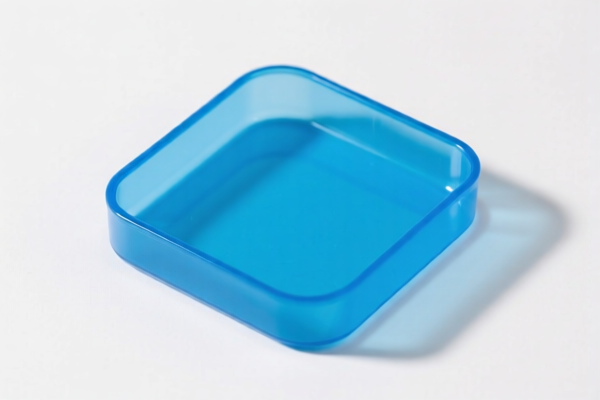
Polystyrene (PS) in Primary Form refers to plastic materials in their raw state—such as powders, granules, flakes, or liquids—before being molded or extruded into final products. It is a versatile thermoplastic polymer widely used in packaging, insulation, disposable cutlery, and consumer electronics.
⚠️ Key Distinction:
- Primary Form: Raw resin, pellets, powder, or liquid state. → Not finished goods.
- Non-Primary Form: Finished articles, molded parts, sheets, or films. → Different HS Codes.
- Extruded Sheets/Foam Boards: Often classified differently (e.g., HS 3918 or 3921) unless they are clearly “primary forms” for further processing.
📦 II. HS Code Classification Details (2026 Latest Tariff Authority Comparison)
| HS Code | Product Description | Application Scenario | Physical State |
|---|---|---|---|
3903.11.00.00 |
Polystyrene, in primary forms: Unpolymerized | Monomers (Styrene) | Liquid/Gas |
3903.11.00.00 |
Polystyrene, in primary forms: Expanded (EPS) | Foam beads for packaging/insulation | Granules/Foam Beads |
3903.11.00.00 |
Polystyrene, in primary forms: General Purpose (GPPS) | Clear rigid plastics, CD cases | Granules/Powder |
3903.11.00.00 |
Polystyrene, in primary forms: High Impact (HIPS) | Toys, appliance housings | Granules |
3903.11.00.00 |
Polystyrene, in primary forms: Block Copolymer | Specialty blends | Granules |
🔍 Important Note:
- All raw polystyrene resins (granules, powder, liquid styrene monomer) fall under HS 3903.11.00.00 or 3903.19.00.00 depending on subtype.
- EPS (Expanded Polystyrene) beads are considered “primary form” if used for further molding.
- Finished foam boards or sheets are NOT primary form → They belong to HS 3921.13 or similar.
💰 III. 2026 Latest Tariff Rate Breakdown (Including Additional Duties & Policy Add-ons)
✅ Applicable Country: United States (US)
✅ Country of Origin: China (CN)
✅ Effective Date: November 10, 2025 (and subsequent imports)
🎯 1. 3903.11.00.00 —— Polystyrene, in Primary Forms (General)
| Item | Content |
|---|---|
| Base Tariff Rate | 0% (ad valorem) |
| USITC Additional Duty | +25% (from USITC Footnote 9903.88.01) |
| IEEPA Additional Duty | +10% (targeting China/HK products, effective from Nov 10, 2025) |
| Total Tariff Rate | 35% |
| Tax Calculation | CIF Value × 35% |
| De Minimis Exemption Eligibility | ❌ No (deny_de_minimis) |
| Legal Basis Path | IEEPA:9903.01.25 → IEEPA:9903.01.24 → USITC:3903.11.00.00 → FOOTNOTE:9903.88.01 |
📌 Explanation:
- The 25% USITC duty stems from Section 301 of the U.S. Trade Act;
- The 10% IEEPA duty is an additional punitive tariff under the International Emergency Economic Powers Act;
- Total 35% is a high tariff rate for raw materials—must be anticipated in cost calculations!
🎯 2. 3903.19.00.00 —— Other Polystyrene, in Primary Forms
| Item | Content |
|---|---|
| Base Tariff Rate | 0% |
| USITC Additional Duty | +25% |
| IEEPA Additional Duty | +10% |
| Total Tariff Rate | 35% |
| Tax Calculation | CIF × 35% |
| De Minimis Exemption Eligibility | ❌ No |
| Legal Basis Path | IEEPA:9901.25 → IEEPA:9903.01.24 → USITC:3903.19.00.00 → FOOTNOTE:9903.88.01 |
📌 Note:
- Same tariff structure as general-purpose PS;
- Applies to specialty polystyrenes (e.g., SAN, ABS blends if classified under PS);
- Expanded Polystyrene (EPS) beads for molding also fall under this category.
🛠️ IV. Customs Clearance Practical Advice (Battle-Tested Pitfall Avoidance Guide)
✅ 1. Documentation Checklist (Essential Documents)
| Document | Required | Explanation |
|---|---|---|
| ✅ Product Specification Sheet | ✔️ | Includes density, melt flow index, type (GPPS/HIPS/EPS), CAS number |
| ✅ Certificate of Analysis (COA) | ✔️ | Confirms purity, molecular weight, additive content |
| ✅ Material Safety Data Sheet (MSDS) | ✔️ | Required for chemical imports |
| ✅ Commercial Invoice | ✔️ | Must specify “Polystyrene Resin, Primary Form, Grade XYZ” |
| ✅ Packing List | ✔️ | Shows gross/net weight, bag/pallet details |
| ✅ Certificate of Origin (CO) | ✔️ | If non-Chinese origin, may qualify for reduced duties |
| ✅ Bill of Lading/Air Waybill | ✔️ | Standard shipping document |
✅ 2. Declaration Tips (Key Rules of Thumb)
🔥 “Raw is Raw, Pellets are Primary, Finished is Not! Name it Right, Save the Rate!”
| Scenario | Correct Declaration | Wrong Practice |
|---|---|---|
| Polystyrene granules/powder | 3903.11.00.00 or 3903.19.00.00 |
Misdeclare as “finished products” → 0% but risky |
| EPS foam beads for molding | 3903.11.00.00 |
Declare as “foam board” → HS 3921 → 30% |
| Finished PS cups/bottles | Not Primary Form → HS 3923 or 3924 | Misdeclare as resin → Audit risk |
| Polystyrene sheets (raw, unprocessed) | If intended for further cutting → 3903.11.00.00 |
If sold as shelf liner → 3921.13 |
✅ 3. Special Cases Handling
| Situation | Recommendation |
|---|---|
| OEM Resin for Client Branding | Provide client agreement + technical specs; avoid “generic” labels |
| Blended Resins (e.g., PS/ABS) | Classify based on essential character; consult ruling if ambiguous |
| Recycled Polystyrene | May qualify for different subheading; provide recycling proof |
| Chemical Additives Included | If <5% by weight, still classified as PS; if >5%, may split classification |
🌍 V. Global Market Customs Comparison (2026 Latest)
| Country/Region | Recommended HS Code | Tariff (China Origin) | Certification Requirements | Notes |
|---|---|---|---|---|
| 🇺🇸 United States | 3903.11.00.00 |
35% (China) | TSCA Compliance | High tariff for raw plastics |
| 🇨🇳 China | 3903.11.00.00 |
5% | None | No additional duties |
| 🇪🇺 European Union | 3903.11.00.00 |
0% (if REACH compliant) | REACH Registration | Duty-free if registered |
| 🇦🇺 Australia | 3903.11.00.00 |
5% | none | Standard MFN rate |
| 🇯🇵 Japan | 3903.11.00.00 |
0% | JIS Standards | No additional tariffs |
📌 Conclusion:
- The U.S. imposes the highest effective tariff (35%) on Chinese-origin polystyrene resin;
- EU, Japan, and Australia offer duty-free or low-rate access, making them more attractive markets;
- Consider supply chain relocation (e.g., Vietnam, Malaysia) to mitigate U.S. tariffs.
📌 VI. Common Mistakes & Pitfall Avoidance (Lessons Learned)
❌ Mistake 1: Declaring “Polystyrene Sheets” as “Primary Form”
👉 Consequence: If sheets are cut/sized for sale, they are finished goods → HS 3921 → 30% duty + penalty.
❌ Mistake 2: Ignoring TSCA Compliance for U.S. Imports
👉 Consequence: U.S. CBP may block entry if TSCA inventory list is not provided → Delay/Return.
❌ Mistake 3: Mixing “Recycled” and “Virgin” PS without declaration
👉 Consequence: Misclassification → Audit risk + fines.
❌ Mistake 4: Using vague descriptions like “Plastic Pellets”
👉 Consequence: CBP requests clarification → 15–30 day delay.
✅ Correct Practice:
“Polystyrene Resin, General Purpose (GPPS), Granular, Primary Form, CAS No. 9003-53-6, TSCA Compliant, Model PS-100”
🎯 VII. Conclusion: Precise Classification Saves Money!
🎯 Remember the Rules:
🔹 “Raw is Raw, Finished is Finished!”
🔹 “Granules = Primary, Sheets = Finished (if pre-cut)”
🔹 “U.S. Tariff: 35% | EU: 0% | China: 5%”
🔹 “TSCA Compliance is Non-Negotiable for U.S.”
📌 Pro Tip:
If your polystyrene resin is originating from Vietnam, Thailand, or India, you may qualify for lower U.S. tariffs (0–10%).
Request an Advance Ruling from U.S. CBP before shipment to confirm HS Code and tariff applicability.
📣 Take Action Now:
📞 Consult a licensed customs broker + Provide Technical Data Sheet + Apply for CBP Pre-Ruling
🚀 Ensure smooth clearance, cost control, and global competitiveness!
✨ Professional Customs Classification Starts with Precision!
💼 Every Dollar Saved is a Dollar Earned!
Customer Reviews
About HS Code Classification
The Harmonized System (HS) is an internationally standardized nomenclature developed by the World Customs Organization (WCO) to classify traded products. Over 200 countries use the HS system as the basis for customs tariffs, trade statistics, and import/export regulations.
Each HS code follows a hierarchical structure:
- Chapter (2 digits) — Broad category of goods (e.g., Chapter 84: Machinery and Mechanical Appliances)
- Heading (4 digits) — More specific grouping within the chapter
- Subheading (6 digits) — Internationally standardized breakdown, used by all WCO member countries
- National subdivisions (8-10 digits) — Country-specific extensions for further classification, such as US HTSUS 10-digit codes
Correct HS code classification is essential for smooth customs clearance, accurate duty payment, and compliance with trade regulations. Misclassification can lead to customs delays, overpayment of duties, or penalties.
When importing from CN to US, the applicable tariff rates may include:
- Most-Favored-Nation (MFN) rate — The standard duty rate applied to WTO members
- General rate — Applied to countries without trade agreements
- Trade remedy duties — Additional tariffs such as Section 301 (anti-dumping), Section 232 (national security), or countervailing duties
The information provided on this page is for reference purposes only. For official classification, please consult with your local customs authority or a licensed customs broker.