Polystyrene Resin Mold Release Agent
CN → US| HS Code | Tariff Rate | Origin | Destination | Doc |
|---|---|---|---|---|
| 3824999397 | 40.0% | CN | US | Official Doc |
| 3403195000 | 40.8% | CN | US | Official Doc |
| 2919905010 | 38.7% | CN | US | Official Doc |
| 3824999361 | 40.0% | CN | US | Official Doc |
Product Images
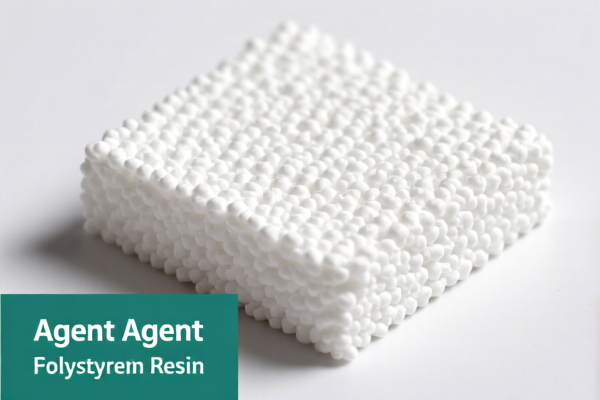
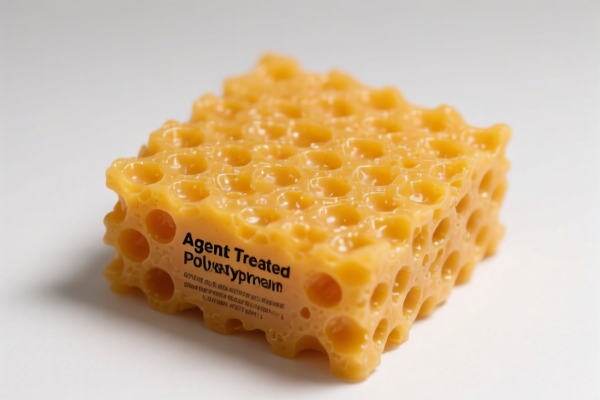
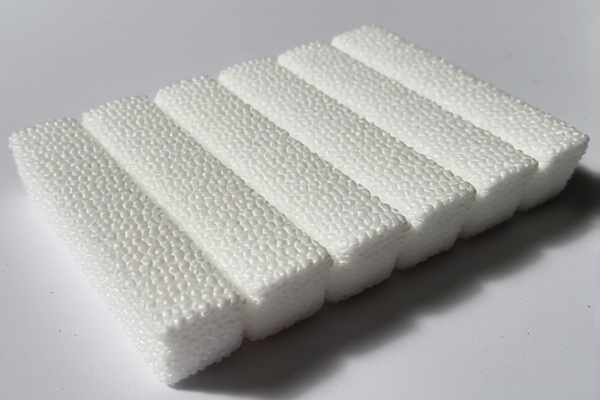

AI Analysis
🧪 Polystyrene Resin Mold Release Agent
🌐 HS Code Reference & Customs Clearance Guide | 2026 Latest Tariff Analysis | Professional Clearance Strategy 📌 I. Product Definition & Classification: Do You Truly Understand "Mold Release Agents"?
Polystyrene (PS) resin mold release agents are specialized chemical preparations used in the manufacturing process of polystyrene products (such as packaging, insulation, and consumer goods). Their primary function is to prevent the resin from sticking to molds, ensuring smooth demolding and high surface quality.
In international trade, these agents are not classified as "chemical raw materials" (like pure phosphate esters) but rather as "Chemical Preparations" or "Surface Treatment Preparations." The key distinction lies in their intended use: they are formulated specifically for industrial application on plastics, not for general chemical synthesis.
⚠️ Key Classification Logic: - If the product is a pure chemical compound (e.g., pure Phosphate Ester) with no specific formulation for mold release, it might fall under chemical headings (e.g., 2919). - If the product is a mixture/formulation (even if phosphate-based) specifically marketed and used as a mold release agent, it typically falls under the "Catch-all" or specific preparation headings (e.g., 3824 or 3403). - Crucial Insight: Customs authorities often prioritize the function (Mold Release) over the chemical composition (Phosphate) when specific functional headings exist.
📦 II. HS Code Classification Details (2026 Latest Tariff Authority Comparison)
Based on the provided data, here are the four potential HS Codes and the rationale for each:
| HS Code | Product Description | Applicable Scenario | Tax Rate | Rationale |
|---|---|---|---|---|
| 3824.99.93.97 | Mold Release Agent for Polystyrene Resin | General Chemical Preparation; Catch-all category for specialized chemical preparations not elsewhere specified. | 40.0% | The summary states this is a "Chemical Industrial Preparation" fitting the "Catch-all" (兜底) category. This is the safest classification for formulated release agents. |
| 3403.19.50.00 | Phosphate Ester Mold Release Agent (Oil-based/Alternative) | Prepared lubricants, oil preparations, or preparations containing petroleum oils/mineral oils. | 40.8% | Classified as a "Mold Release Preparation" under Chapter 34. It assumes the agent contains or acts as an alternative/additive to petroleum/mineral oils. |
| 2919.90.50.10 | Phosphate Ester (Chemical Compound) | Pure Phosphate Esters or derivatives used as plasticizers or additives in chemical fields. | 38.7% | Classified under Chapter 29 as a specific chemical organic compound. Lowest Tax, but requires the product to be pure/unmixed. |
| 3824.99.93.61 | Phosphate-Containing Chemical Preparation | Chemical preparations containing phosphorus atoms, categorized under general chemical industrial preparations. | 40.0% | Similar to 3824.99.93.97 but highlights the phosphorus content. Also falls under "Chemical Industrial Preparation." |
🔍 重点提醒 (Key Reminder): - 3403.19.50.00 is often the most accurate for functional mold release agents, as Chapter 34 covers "Lubricating preparations, prepared lubricants, etc." - 2919.90.50.10 offers the lowest tax (38.7%) but is risky if the product is a mixture/formulation rather than a pure chemical. - 3824 codes are the "Safe Harbor" for industrial preparations that don't fit perfectly into Chapter 34.
💰 III. 2026 Latest Tariff Rate Breakdown (Including Surtaxes & Policy Add-ons)
✅ Applicable Country: United States (US) ✅ Origin: China (CN) ✅ Effective Date: From November 10, 2025 (for subsequent imports)
🎯 1. 3824.99.93.97 & 3824.99.93.61 —— Chemical Industrial Preparations (Catch-all)
| Item | Detail |
|---|---|
| Base Tariff | 5.0% (ad valorem) |
| Section 301 Surtax | +25.0% |
| Section 122 Surtax | +10.0% |
| Total Tariff | 40.0% |
| Tax Calculation | CIF Value × 40% |
| De Minimis Exemption | ❌ Not Eligible (deny_de_minimis) |
| Legal Basis | USITC:3824.99.93.97 → Footnote:301 → IEEPA:122 |
📌 Explanation: - The 5% base rate applies to most chemical preparations. - The 25% is the standard Section 301 tariff on Chinese goods. - The 10% is the specific Section 122 tariff (often related to national security or specific trade remedies). - Total: 40%. This is a standard high tariff for chemical preparations from China.
🎯 2. 3403.19.50.00 —— Prepared Lubricants/Mold Release Agents
| Item | Detail |
|---|---|
| Base Tariff | 5.8% (ad valorem) |
| Section 301 Surtax | +25.0% |
| Section 122 Surtax | +10.0% |
| Total Tariff | 40.8% |
| Tax Calculation | CIF Value × 40.8% |
| De Minimis Exemption | ❌ Not Eligible |
| Legal Basis | USITC:3403.19.50.00 → Footnote:301 → IEEPA:122 |
📌 Note: - Base rate is slightly higher (5.8% vs 5.0%) due to Chapter 34 specifics. - Total: 40.8%. This is the most technically accurate classification for "Lubricating/Mold Release Preparations."
🎯 3. 2919.90.50.10 —— Phosphate Esters (Chemical Compound)
| Item | Detail |
|---|---|
| Base Tariff | 3.7% (ad valorem) |
| Section 301 Surtax | +25.0% |
| Section 122 Surtax | +10.0% |
| Total Tariff | 38.7% |
| Tax Calculation | CIF Value × 38.7% |
| De Minimis Exemption | ❌ Not Eligible |
| Legal Basis | USITC:2919.90.50.10 → Footnote:301 → IEEPA:122 |
📌 Caution: - Lowest Tax (38.7%), but only if the product is a pure chemical substance or a simple derivative, not a complex formulated mixture. - If customs suspects it is a "Preparation" (mixture), they may reclassify it to 3403 or 3824, resulting in additional taxes and penalties.
🛠️ IV. Customs Clearance Practical Advice (Field Guide)
✅ 1. Required Documentation Checklist (Non-negotiable)
| Document | Mandatory? | Purpose |
|---|---|---|
| ✅ Technical Data Sheet (TDS) | ✔️ | Must specify: Chemical composition, Function (Mold Release), Application method. |
| ✅ Formula/Ingredients List | ✔️ | To prove whether it is a "Pure Chemical" (Ch 29) or "Preparation" (Ch 34/38). |
| ✅ Product Photos | ✔️ | Clear label showing "Mold Release Agent" and chemical name. |
| ✅ Certificate of Analysis (COA) | ✔️ | Purity levels, CAS numbers for key ingredients. |
| ✅ Commercial Invoice | ✔️ | Must declare "Mold Release Agent for Polystyrene Resin" – do NOT just say "Chemical." |
| ✅ Safety Data Sheet (SDS) | ✔️ | Required for chemical imports. |
✅ 2. Declaration Strategy (Key Mantras)
🔥 "Function Over Formula, Preparation Over Pure, Full Disclosure, Lower Risk!"
| Scenario | Correct Declaration | Incorrect Action |
|---|---|---|
| Formulated Release Agent (Mixture) | 3403.19.50.00 or 3824.99.93.97 |
Declare as 2919 → Audit Risk + Back Taxes |
| Pure Phosphate Ester | 2919.90.50.10 |
Declare as 3824 → Overpay Tariff |
| Oil-based Release Agent | 3403.19.50.00 |
Declare as 3824 → Potential Rejection |
✅ 3. Special Handling Tips
| Situation | Recommendation |
|---|---|
| Customs Inquiry on "Preparation" vs "Compound" | Provide CAS numbers for main ingredients and emphasize the additives that make it a "preparation." |
| Phosphorus Content | If declaring under 3824.99.93.61, highlight the phosphorus content in the TDS. |
| High-Value Shipments | Consider Advance Ruling from US CBP to lock in the HS Code and tariff rate before shipping. |
| Small Quantity Samples | Even small quantities are subject to full tariffs if not under de minimis (which is denied here). |
🌍 V. Global Market Clearance Comparison (2026 Latest)
| Country/Region | Recommended HS Code | Total Tariff (China Origin) | Certification | Notes |
|---|---|---|---|---|
| 🇺🇸 USA | 3403.19.50.00 / 3824.99.93.97 |
40.0% - 40.8% | SDS, TDS | High tariffs due to Section 301 + 122. |
| 🇨🇳 China | 3403.19.50.00 |
~5-6% | GB Standards | No anti-dumping surtax. |
| 🇪🇺 EU | 3403.91.00 |
~0% - 6.5% | REACH, SDS | Low base duty, but REACH compliance is strict. |
| 🇯🇵 Japan | 3403.99.000 |
~6.0% | PSMS, SDS | Moderate duty, requires detailed chemical disclosure. |
📌 Conclusion: - USA is the most expensive market due to Section 301 and 122 surtaxes. - Accuracy is Key: Misclassifying a "Preparation" as a "Pure Chemical" (
2919) can lead to 301 + 122 penalties on the entire shipment if discovered during audit.
📌 VI. Common Mistakes & Pitfalls (Lessons Learned)
❌ Mistake 1: Declaring as 2919.90.50.10 (38.7%) for a formulated mixture.
👉 Consequence: Customs reclassifies to 3403 or 3824, leading to back taxes of 1.3% - 2.1% plus penalties and delay.
❌ Mistake 2: Vague Description: "Chemical Stuff" or "Plastic Additive." 👉 Consequence: Customs assigns a generic "Other Chemical" code with higher discretion-based tariffs or rejects entry.
❌ Mistake 3: Ignoring Section 122 Tariff. 👉 Consequence: Many importers forget the 10% Section 122 surtax, leading to unexpected costs at border.
✅ Correct Approach:
"Polystyrene Mold Release Agent, Phosphate Ester Based, Liquid, Formulated Preparation, CAS No. XXXXX-XX-X, Net Weight 200kg, Container ID: ABC1234567"
🎯 VII. Conclusion: Precision in Classification, Savings in Cost
🎯 Remember the Mantra:
🔹 "Preparation = 3403/3824 (40%+), Pure Chemical = 2919 (38.7%)." 🔹 "Do not guess. If it's a mix, it's a preparation. If it's pure, it's 2919." 🔹 "Section 122 is real. Don't forget the 10%."
📌 Pro Tip:
If your product is a complex mixture with multiple active ingredients, 3824.99.93.97 is the safest "Catch-all." If it is primarily a lubricant/release function, 3403.19.50.00 is more precise.
Recommendation: For high-volume shipments, apply for a US CBP Advance Ruling to secure the HS Code and avoid post-import audits.
📣 Immediate Action:
📞 Engage a Licensed Customs Broker + Provide TDS & SDS + Request Pre-Ruling 🚀 Ensure your Polystyrene Mold Release Agent clears US Customs smoothly, avoiding costly reclassifications!
✨ Professional Clearance Starts with Accurate Classification! 💼 Your Cost Structure Depends on the First 8 Digits of the HS Code!
Customer Reviews
About HS Code Classification
The Harmonized System (HS) is an internationally standardized nomenclature developed by the World Customs Organization (WCO) to classify traded products. Over 200 countries use the HS system as the basis for customs tariffs, trade statistics, and import/export regulations.
Each HS code follows a hierarchical structure:
- Chapter (2 digits) — Broad category of goods (e.g., Chapter 84: Machinery and Mechanical Appliances)
- Heading (4 digits) — More specific grouping within the chapter
- Subheading (6 digits) — Internationally standardized breakdown, used by all WCO member countries
- National subdivisions (8-10 digits) — Country-specific extensions for further classification, such as US HTSUS 10-digit codes
Correct HS code classification is essential for smooth customs clearance, accurate duty payment, and compliance with trade regulations. Misclassification can lead to customs delays, overpayment of duties, or penalties.
When importing from CN to US, the applicable tariff rates may include:
- Most-Favored-Nation (MFN) rate — The standard duty rate applied to WTO members
- General rate — Applied to countries without trade agreements
- Trade remedy duties — Additional tariffs such as Section 301 (anti-dumping), Section 232 (national security), or countervailing duties
The information provided on this page is for reference purposes only. For official classification, please consult with your local customs authority or a licensed customs broker.