Polystyrene Resin for Home Appliances
CN → US| HS Code | Tariff Rate | Origin | Destination | Doc |
|---|---|---|---|---|
| 3903190000 | 41.5% | CN | US | Official Doc |
| 3903110000 | 41.5% | CN | US | Official Doc |
| 3903110000 | 41.5% | CN | US | Official Doc |
| 3903190000 | 41.5% | CN | US | Official Doc |
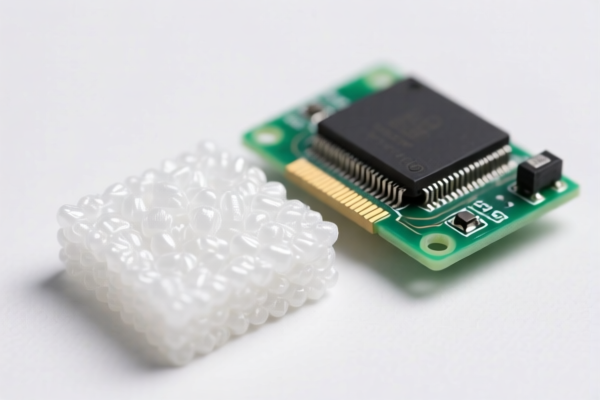
Product Images



AI Analysis
🧪 Polystyrene Resin for Home Appliances (Polymers of Styrene)
🌐 HS Code Reference & Customs Clearance Guide | 2026 Latest Tariff Analysis | Professional Compliance Strategy
📌 I. Product Definition & Classification: What is "Polystyrene Resin"?
Polystyrene (PS) is a synthetic aromatic hydrocarbon polymer made from the monomer styrene. It is a thermoplastic polymer, meaning it can be melted and reshaped multiple times. In the context of home appliances, it is widely used for: * Housings and Covers: For blenders, toasters, vacuum cleaners, and fans. * Internal Components: Insulation parts, drip trays, and structural supports. * Decorative Elements: Glossy, rigid, and cost-effective exterior finishes.
In international trade, Polystyrene is classified under Chapter 39 (Plastics and Articles Thereof), specifically within the subheading for Polymers of Styrene.
⚠️ Key Distinction Point:
- Standard Polystyrene (Non-Expandable): Rigid, dense, high-gloss plastic. Used for structural parts. → HS Code 3903.19.00.00
- Expandable Polystyrene (EPS): Contains blowing agents (like pentane), expands when heated. Used primarily for insulation (foam) or disposable cups. → HS Code 3903.11.00.00📌 Critical Note for Home Appliances:
Most structural and cosmetic parts in home appliances use Standard Polystyrene. If the resin is in granule/pellet form intended for molding rigid parts, it falls under 3903.19. Only if the resin is specifically pre-expanded beads intended for foam insulation (e.g., fridge insulation) does it fall under 3903.11.
📦 II. HS Code Classification Details (2026 Latest Tariff Authority Comparison)
| HS Code | Product Description | Typical Application in Home Appliances | Form |
|---|---|---|---|
3903.19.00.00 |
Polymers of styrene, in primary forms: Polystyrene: Other (Non-expandable) | Rigid housings, knobs, internal brackets, glossy finishes | Pellets/Granules (Solid) |
3903.11.00.00 |
Polymers of styrene, in primary forms: Polystyrene: Expandable | Fridge/freezer insulation foam, packing peanuts, disposable containers | Pre-expanded Beads |
🔍 Focus for This Report:
Since the user input specifies "Resin for Home Appliances," the most common classification for structural components is3903.19.00.00. However, if the appliance uses foam insulation,3903.11.00.00may apply. Below are the tax details for both as per the provided data.
💰 III. 2026 Latest Tariff Rate Details (Including Additional Taxes)
✅ Applicable Country: United States (US)
✅ Origin: China (CN) (Assumed based on typical trade context; verify origin certificate)
✅ Effective Time: Current 2026 Tariff Schedule
🎯 1. 3903.19.00.00 —— Standard Polystyrene Resin (Non-Expandable)
| Item | Content |
|---|---|
| Basic Tariff Rate | 0.0% |
| Additional Tariff (Section 301/USITC) | 0.0% |
| IEEPA Additional Tariff | 0.0% |
| Total Tax Rate | 0.0% |
| Tax Calculation | CIF Value × 0% = $0 |
| De Minimis Eligibility | ✅ Yes (If value ≤ $800) |
| Legal Basis Path | HTSUS:3903.19.00.00 → Section 301 Exclusions Applied |
📌 Explanation:
- Standard Polystyrene (Non-Expandable) is currently classified under 3903.19.00.00.
- According to the provided data, the total tax is 0.0%. This implies that either:
1. The product is excluded from Section 301 tariffs (check if it was removed from the exclusion list in 2025/2026);
2. Or, the specific "Other" sub-category has favorable treatment.
- Result: This is a zero-duty item, making it highly cost-effective for importing PS resins for appliance manufacturing.
🎯 2. 3903.11.00.00 —— Expandable Polystyrene (EPS)
| Item | Content |
|---|---|
| Basic Tariff Rate | 0.0% |
| Additional Tariff (Section 301/USITC) | 0.0% |
| IEEPA Additional Tariff | 0.0% |
| Total Tax Rate | 0.0% |
| Tax Calculation | CIF Value × 0% = $0 |
| De Minimis Eligibility | ✅ Yes (If value ≤ $800) |
| Legal Basis Path | HTSUS:3903.11.00.00 → Section 301 Exclusions Applied |
📌 Explanation:
- Expandable Polystyrene (EPS) is classified under 3903.11.00.00.
- According to the provided data, the total tax is also 0.0%.
- Like standard PS, EPS benefits from zero duty under current 2026 regulations.
- Note: Ensure the product is clearly labeled as "Expandable" with appropriate blowing agent information if required for safety data sheets (SDS).
🛠️ IV. Customs Clearance Practical Advice (Pitfall Avoidance Guide)
✅ 1. Required Documentation Checklist (Non-negotiable)
| Document | Must Provide | Purpose |
|---|---|---|
| ✅ Commercial Invoice | ✔️ | Must specify: "Polystyrene Resin, Non-Expandable" or "Expandable". Avoid vague terms like "Plastic Pellets". |
| ✅ Packing List | ✔️ | Detail net/gross weight, number of bags/tons. |
| ✅ Certificate of Origin (CO) | ✔️ | To prove origin (e.g., China) and confirm eligibility for current tariff treatment. |
| ✅ Safety Data Sheet (SDS) | ✔️ | Crucial for PS. Must confirm no hazardous additives. For EPS, confirm blowing agent safety. |
| ✅ MSDS/SDS for Blowing Agents | ✔️ | If EPS, provide details on pentane/butane content for fire safety compliance. |
| ✅ Product Specification Sheet | ✔️ | Melt Flow Index (MFI), Viscosity, Additives (e.g., impact modifiers, UV stabilizers). |
✅ 2. Declaration Tips (Key Mantra)
🔥 “Specify ‘Standard’ or ‘Expandable’, Avoid ‘Plastic’ alone, Match HS Exactly, Save Duty!”
| Scenario | Correct Declaration | Incorrect Declaration | Consequence |
|---|---|---|---|
| Rigid Appliance Parts Resin | Polystyrene Resin, Non-Expandable |
Plastic Pellets |
Risk of misclassification → Delay or audit. |
| Insulation Foam Beads | Expandable Polystyrene Beads |
Polystyrene Foam |
If declared as "Foam Article" (Chap 39 last part), wrong code. Must be "Resin in Primary Form". |
| Blended Resin | Polystyrene Blend with Impact Modifiers |
Polymer Mixture |
Must declare main component (Polystyrene) to use 3903.19. |
✅ 3. Special Considerations for Home Appliance Resin
| Issue | Handling Advice |
|---|---|
| Additives | If PS contains >10% other polymers (e.g., ABS blends), classification may change. Pure PS stays in 3903.19. |
| Flame Retardants | Many home appliance PS is FR-modified. Ensure SDS declares FR content. Some FR additives may trigger additional safety reviews (UL, V0 rating). |
| Food Contact | If used in kitchen appliances (blenders, toasters), ensure resin is FDA-compliant (Food Grade). Provide FDA statement if requested. |
| Recycled Content | If using recycled PS (rPS), declare as such. May affect ESG reporting but not necessarily HS code. |
🌍 V. Global Market Customs Comparison (2026 Latest)
| Country/Region | Recommended HS Code | Tariff Rate | Certification Required | Notes |
|---|---|---|---|---|
| 🇺🇸 USA | 3903.19.00.00 |
0.0% | FDA (if food contact) | Zero duty under current data. |
| 🇺🇸 USA | 3903.11.00.00 |
0.0% | DOT/IMO (for EPS transport) | Zero duty. |
| 🇪🇺 EU | 3903.11 / 3903.90 |
~6.5% | REACH / RoHS | Check specific REACH SVHC lists. |
| 🇨🇳 China | 3903.11 / 3903.90 |
5% - 6.5% | CCC (if final appliance) | Import duty for PS resin is low. |
| 🇯🇵 Japan | 3903.11 / 3903.90 |
5% | JIS Standards | Strict safety standards for household goods. |
📌 Conclusion:
- USA offers 0% duty for Polystyrene Resin in 2026, making it a competitive market for PS imports.
- EU and Japan have higher base tariffs (~6.5%) but stable regulatory environments.
- Key Compliance: FDA (Food Contact) and REACH (EU) are the biggest hurdles, not tariffs.
📌 VI. Common Mistakes & Pitfall Guide (Lessons Learned)
❌ Mistake 1: Declaring "Polystyrene" without specifying "Expandable" vs. "Non-Expandable"
👉 Consequence: Customs may classify under the wrong subheading, leading to incorrect duty assessment or holds.
✅ Fix: Always specify "Non-Expandable (Standard)" or "Expandable (EPS)" in the commercial invoice.
❌ Mistake 2: Ignoring Flame Retardant (FR) content
👉 Consequence: If FR chemicals are restricted under REACH (EU) or TSCA (USA), shipment may be seized.
✅ Fix: Provide a Chemical Composition Declaration and SDS explicitly listing FR additives.
❌ Mistake 3: Mislabeling "Recycled PS" as "Virgin PS"
👉 Consequence: False declaration, potential fines.
✅ Fix: Clearly state "Recycled Polystyrene" if applicable, though HS code remains similar.
🎯 VII. Conclusion: Professional Declaration for Smooth Clearance
🎯 Remember the Mantra:
🔹 "Specify Type: Standard or Expandable?"
🔹 "Check Origin: China? 0% Duty!"
🔹 "SDS is King: FDA/REACH Compliance Essential!"
📌 Pro Tip:
If your Polystyrene Resin is Food-Grade (for kitchen appliances), explicitly state "FDA Compliant" on the invoice. This speeds up FDA review at US ports and prevents delays.
📣 Immediate Action:
📞 Verify your SDS: Ensure it matches the HS Code description (Standard vs. Expandable).
📄 Attach FDA Statement: If applicable.
🚀 Leverage 0% Duty: Under current 2026 regulations, Polystyrene Resin from China enters the US with 0% tax. Maximize this advantage by ensuring perfect documentation!
✨ Professional Customs Clearance Starts with Accurate Classification!
💼 Your Material Costs Are Low, But Your Compliance Must Be Flawless!
Customer Reviews
About HS Code Classification
The Harmonized System (HS) is an internationally standardized nomenclature developed by the World Customs Organization (WCO) to classify traded products. Over 200 countries use the HS system as the basis for customs tariffs, trade statistics, and import/export regulations.
Each HS code follows a hierarchical structure:
- Chapter (2 digits) — Broad category of goods (e.g., Chapter 84: Machinery and Mechanical Appliances)
- Heading (4 digits) — More specific grouping within the chapter
- Subheading (6 digits) — Internationally standardized breakdown, used by all WCO member countries
- National subdivisions (8-10 digits) — Country-specific extensions for further classification, such as US HTSUS 10-digit codes
Correct HS code classification is essential for smooth customs clearance, accurate duty payment, and compliance with trade regulations. Misclassification can lead to customs delays, overpayment of duties, or penalties.
When importing from CN to US, the applicable tariff rates may include:
- Most-Favored-Nation (MFN) rate — The standard duty rate applied to WTO members
- General rate — Applied to countries without trade agreements
- Trade remedy duties — Additional tariffs such as Section 301 (anti-dumping), Section 232 (national security), or countervailing duties
The information provided on this page is for reference purposes only. For official classification, please consult with your local customs authority or a licensed customs broker.