Polystyrene Resin for Paint
CN → US| HS Code | Tariff Rate | Origin | Destination | Doc |
|---|---|---|---|---|
| 3903110000 | 41.5% | CN | US | Official Doc |
| 3209100000 | 40.1% | CN | US | Official Doc |
| 3903190000 | 41.5% | CN | US | Official Doc |
| 3209900000 | 40.9% | CN | US | Official Doc |
| 3208900000 | 38.2% | CN | US | Official Doc |
Product Images

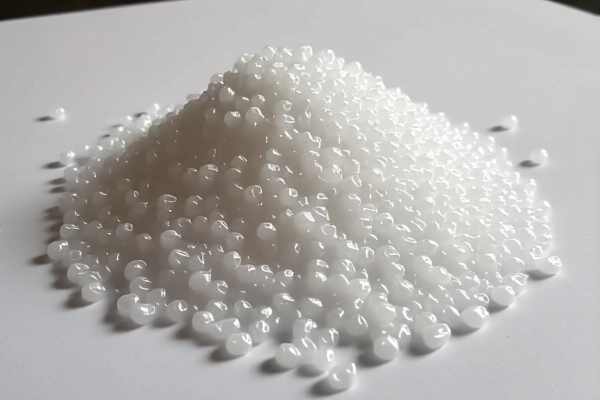
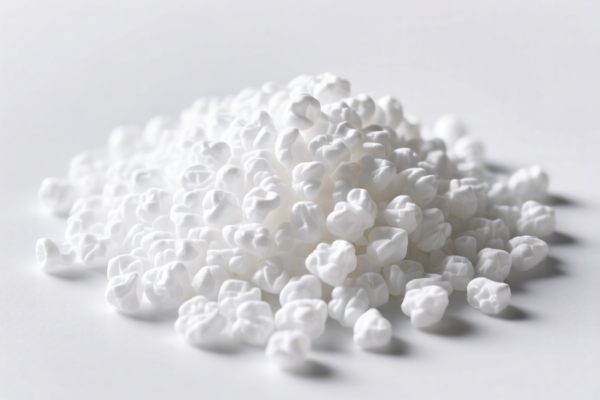
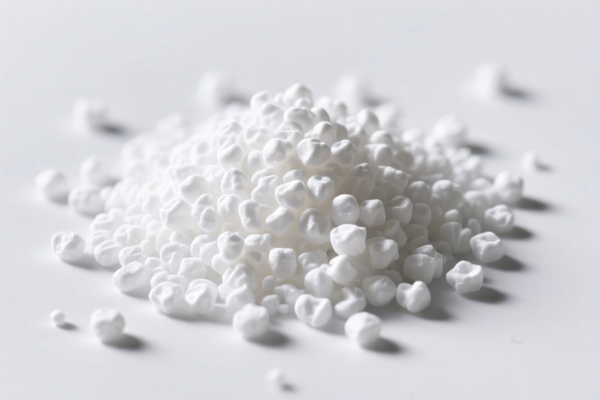
AI Analysis
🎨 Polystyrene Resin for Paint (Chemical Raw Materials)
🌐 HS Code Reference & Customs Clearance Guide | 2026 Latest Tariff Analysis | Professional Entry Strategy 📌 Part 1: Product Definition & Classification: What is "Polystyrene Resin for Paint"?
Polystyrene (PS) resin is a versatile synthetic aromatic hydrocarbon polymer. When specified "for paint," it serves as a binder or film-forming agent in coatings, varnishes, and lacquers. In international trade, the classification depends critically on whether the resin is in its raw, primary shape (pellets/granules) or if it has already been processed into a finished coating product (liquid/paste).
⚠️ Key Distinction:
- If the product is solid resin pellets/granules (raw material) → It falls under Chapter 39 (Plastics).
- If the product is liquid/paste mixed with solvents/pigments for immediate application → It falls under Chapter 32 (Tanning or Dyeing Extracts; Pigments; Paints, Varnishes, etc.).
📦 Part 2: HS Code Classification Details (2026 Latest Tariff Authority对照)
Based on the provided data, here are the four most relevant HS Codes for Polystyrene-related products, ranging from raw resins to finished paints.
| HS Code | Product Description | Application Scenario | Taxable Category |
|---|---|---|---|
| 3903.11.00.00 | Primary forms of Polystyrene; Styrene polymer | Raw resin pellets, standard general-purpose PS | ✅ Raw Material |
| 3903.19.00.00 | Other primary forms of Polystyrene | Specialized PS resins (e.g., high impact, expanded) | ✅ Raw Material |
| 3209.10.00.00 | Coatings based on vinyl polymers | Paints/Varnishes where PS acts as a vinyl-based binder | ✅ Finished Paint |
| 3208.90.00.00 | Paints/Varnishes based on synthetic polymers | General synthetic polymer coatings (PS-based) | ✅ Finished Paint |
| 3209.90.00.00 | Coatings based on synthetic polymers | Other synthetic polymer paints not specified above | ✅ Finished Paint |
🔍 Critical Reminder:
- Raw Resin (3903.x): Always declared as "Polystyrene Resin, Primary Form." Do not mix with solvents if claiming this code.
- Paint/Coating (3209.x / 3208.x): Declared as "Paint," "Varnish," or "Coating." The PS resin must be in a liquid solution or dispersion form.
- Confusion Point: If you import PS pellets and mix them locally with solvents, you are importing raw materials (3903). If you import ready-to-use paint, you are importing finished goods (3209/3208).
💰 Part 3: 2026 Latest Tariff Rate Breakdown (Including Surtaxes & Policy Add-ons)
✅ Applicable Country: United States (US)
✅ Origin: China (CN)
✅ Effective Time: 2025/2026 Import Period
🎯 1. Raw Resin: 3903.11.00.00 & 3903.19.00.00
Used for: Polystyrene pellets, beads, or granules.
| Item | Content |
|---|---|
| Base Tariff | 6.5% (Ad Valorem) |
| Section 301 Surcharge | +25.0% |
| Section 122 Tariff | +10.0% |
| Total Tariff Rate | 41.5% |
| Tax Calculation | CIF Value × 41.5% |
| De Minimis Exemption | ❌ Not Applicable (High tariff rate disqualifies de minimis) |
| Legal Basis | HTSUS 3903 → Section 301 Footnote → Section 122 Proclamation |
📌 Explanation:
- The 6.5% is the standard Most Favored Nation (MFN) rate for polystyrene.
- The 25% is the Section 301 tariff targeting Chinese manufactured goods/plastics.
- The 10% is the additional Section 122 tariff (often related to national security or trade remedy measures).
- Total 41.5% is a heavy burden for raw material importers. Cost optimization strategies are essential.
🎯 2. Paint/Coating: 3209.10.00.00 (Vinyl-based PS)
Used for: Paints where PS is classified under vinyl polymers.
| Item | Content |
|---|---|
| Base Tariff | 5.1% (Ad Valorem) |
| Section 301 Surcharge | +25.0% |
| Section 122 Tariff | +10.0% |
| Total Tariff Rate | 40.1% |
| Tax Calculation | CIF Value × 40.1% |
| De Minimis Exemption | ❌ Not Applicable |
| Legal Basis | HTSUS 3209 → Section 301 → Section 122 |
🎯 3. Paint/Coating: 3209.90.00.00 (Synthetic Polymer PS)
Used for: Other PS-based paints not fitting 3209.10.
| Item | Content |
|---|---|
| Base Tariff | 5.9% (Ad Valorem) |
| Section 301 Surcharge | +25.0% |
| Section 122 Tariff | +10.0% |
| Total Tariff Rate | 40.9% |
| Tax Calculation | CIF Value × 40.9% |
| De Minimis Exemption | ❌ Not Applicable |
🎯 4. Paint/Coating: 3208.90.00.00 (Synthetic Polymer Paints)
Used for: General synthetic polymer paints/lacquers.
| Item | Content |
|---|---|
| Base Tariff | 3.2% (Ad Valorem) |
| Section 301 Surcharge | +25.0% |
| Section 122 Tariff | +10.0% |
| Total Tariff Rate | 38.2% |
| Tax Calculation | CIF Value × 38.2% |
| De Minimis Exemption | ❌ Not Applicable |
📌 Key Insight:
- Finished paints (3208.x,3209.x) have slightly lower base tariffs (3.2%–5.9%) compared to raw resin (6.5%).
- However, once the 35% (25%+10%) surcharges are added, the total rates are nearly identical (38.2%–41.5%).
- Strategy: If you can import raw resin (3903) and dilute/mix it locally in the US, you pay 41.5% on the resin. If you import finished paint, you pay 38.2%–40.9% on the finished good. Usually, the value added (solvents, pigments) in finished paint makes the raw resin route more cost-effective if local mixing is permitted and compliant with VOC regulations.
🛠️ Part 4: Customs Clearance Practical Advice (Combat Pitfalls Guide)
✅ 1. Preparation Checklist (Non-negotiable)
| Document | Required? | Notes |
|---|---|---|
| ✅ Product Specification Sheet | ✔️ | Must state: "Polystyrene," "Melt Flow Index," "Solid Content," "Solvent Type" (if paint). |
| ✅ Formula / SDS (Safety Data Sheet) | ✔️ | Critical for 3209 codes. Must show it is a "Coating/Paint" and not raw resin. |
| ✅ Commercial Invoice | ✔️ | Clearly describe as "Polystyrene Resin, Primary Form" OR "Acrylic/Polystyrene Based Paint." |
| ✅ Certificate of Origin (CO) | ✔️ | Confirm CN origin to apply correct Section 301/122 rates. |
| ✅ Packaging List | ✔️ | Detail net/gross weight. Ensure no moisture damage (PS pellets absorb water). |
✅ 2. Declaration Tips (Key Mantras)
🔥 "Raw Pellets go to 39, Liquid Paint goes to 32; Do Not Mix Forms!"
| Scenario | Correct HS Code | Wrong Practice | Consequence |
|---|---|---|---|
| Importing PS Granules/Pellets | 3903.11.00.00 or 3903.19.00.00 |
Declaring as "Paint" | ❌ Misclassification → Fine + Delay |
| Importing PS Dissolved in Solvent | 3208.90.00.00 or 3209.10.00.00 |
Declaring as "Resin" | ❌ Under-declaration → High Risk of Audit |
| Importing PS Latex (Emulsion) | 3209.90.00.00 |
Declaring as "Resin" | ❌ Incorrect physical state declaration |
⚠️ VOC Compliance:
For3209codes, ensure the product complies with US EPA VOC limits. If the solvent content is too high, it may be rejected or require additional environmental declarations.
✅ 3. Special Handling
| Situation | Advice |
|---|---|
| Mixed Shipment | If importing both resin pellets and finished paint, declare separately. Do not bundle. |
| Private Label | If you buy resin and bottle it yourself, import under 3903. If you buy bottled paint, import under 320x. |
| Packaging | PS resin pellets are hygroscopic. Use sealed, moisture-proof bags to prevent degradation during transit. |
🌍 Part 5: Global Market Comparison (2026 Update)
| Country/Region | Recommended HS Code | Base Tariff | Surcharge | Total Est. Rate | Notes |
|---|---|---|---|---|---|
| 🇺🇸 USA | 3903.11.00.00 (Resin) |
6.5% | +35% (301+122) | 41.5% | High barrier. Consider local blending. |
| 🇺🇸 USA | 3208.90.00.00 (Paint) |
3.2% | +35% (301+122) | 38.2% | Slightly lower base, but value-added tax applies. |
| 🇨🇳 China | 3903.11.00.00 |
6.5% | 0% | 6.5% | Import duty for entering China. |
| 🇪🇺 EU | 3903.11.00 |
6.5% | 0% | 6.5% | No US-style Section 301 tariffs. |
📌 Conclusion:
- USA is the most expensive market due to the叠加 of Section 301 and Section 122 tariffs.
- Strategy: If you are a US importer, consider sourcing PS resin from non-China countries (e.g., South Korea, Singapore, Vietnam) to avoid the 35% surcharge entirely, reducing the total rate to just the base ~6.5%.
📌 Part 6: Common Mistakes & Pitfalls (Lessons Learned)
❌ Mistake 1: Declaring liquid paint as "Polystyrene Resin" (3903).
👉 Result: Customs will reject it for incorrect physical state. You will be forced to redeclare, incurring demurrage fees.
👉 Correct: Declare as 3209 or 3208 with "Coating" in the description.
❌ Mistake 2: Ignoring Section 122 in documentation.
👉 Result: If the 10% Section 122 tariff is not accounted for, the broker may underestimate duties, leading to sudden balance due notices from CBP.
👉 Correct: Ensure all 3 components (Base + 301 + 122) are explicitly calculated in your landed cost.
❌ Mistake 3: Mixing raw resin and finished paint in one container without clear segregation.
👉 Result: Customs inspection may flag the entire shipment for scrutiny.
👉 Correct: Clearly label separate pallets as "Raw Material" and "Finished Paint."
🎯 Part 7: Conclusion: Precision Classification Saves Money
🎯 Remember the Mantra:
🔹 "Resin is Solid (39), Paint is Liquid (32)"
🔹 "China Origin = +35% Surtax (Base + 25% + 10%)"
🔹 "Total Tax: 38.2% to 41.5%"📌 Pro Tip:
If your volume is high, consider non-China sourcing (e.g., Asian alternatives) to bypass the 35% surcharge. Even with higher material costs, the total landed cost may be lower than paying ~40% tariff on Chinese goods.
📣 Immediate Action:
📞 Verify Product State: Solid? →
3903. Liquid? →320x.
📄 Request SDS: Confirm it is a "Coating" if declaring under3209.
🚀 Calculate Landed Cost: Include 38.2%–41.5% in your P&L. Do not ignore Section 122.
✨ Professional Customs Clearance Starts with Accurate Classification!
💼 Every Percent of Tariff Matters. Optimize Your Supply Chain Today!
Customer Reviews
About HS Code Classification
The Harmonized System (HS) is an internationally standardized nomenclature developed by the World Customs Organization (WCO) to classify traded products. Over 200 countries use the HS system as the basis for customs tariffs, trade statistics, and import/export regulations.
Each HS code follows a hierarchical structure:
- Chapter (2 digits) — Broad category of goods (e.g., Chapter 84: Machinery and Mechanical Appliances)
- Heading (4 digits) — More specific grouping within the chapter
- Subheading (6 digits) — Internationally standardized breakdown, used by all WCO member countries
- National subdivisions (8-10 digits) — Country-specific extensions for further classification, such as US HTSUS 10-digit codes
Correct HS code classification is essential for smooth customs clearance, accurate duty payment, and compliance with trade regulations. Misclassification can lead to customs delays, overpayment of duties, or penalties.
When importing from CN to US, the applicable tariff rates may include:
- Most-Favored-Nation (MFN) rate — The standard duty rate applied to WTO members
- General rate — Applied to countries without trade agreements
- Trade remedy duties — Additional tariffs such as Section 301 (anti-dumping), Section 232 (national security), or countervailing duties
The information provided on this page is for reference purposes only. For official classification, please consult with your local customs authority or a licensed customs broker.