Polystyrene Resin for Toys
CN → US| HS Code | Tariff Rate | Origin | Destination | Doc |
|---|---|---|---|---|
| 3903190000 | 41.5% | CN | US | Official Doc |
| 3903110000 | 41.5% | CN | US | Official Doc |
| 3926909989 | 22.8% | CN | US | Official Doc |
| 3903110000 | 41.5% | CN | US | Official Doc |
| 3903190000 | 41.5% | CN | US | Official Doc |
Product Images
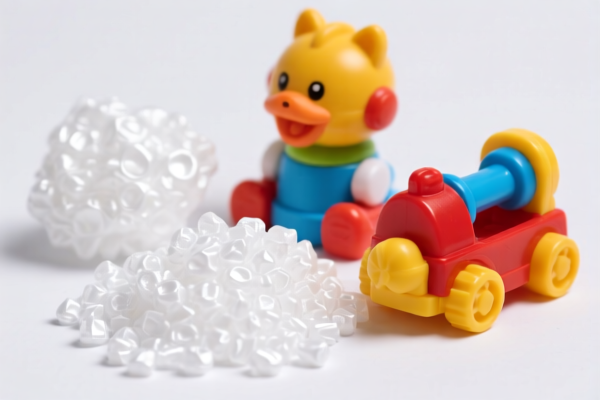
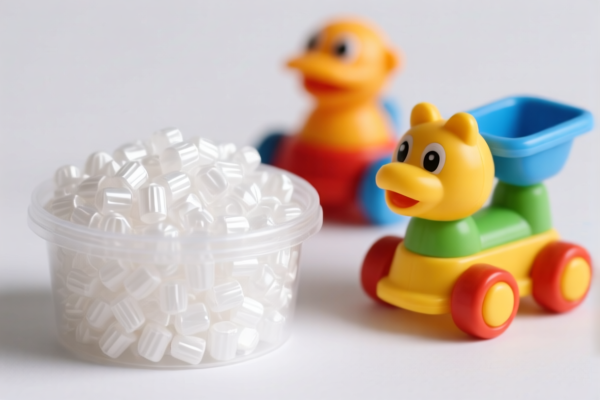


AI Analysis
🧸 Polystyrene Resin for Toys – HS Code & Tariff Guide 2026 | Full Compliance & Customs Strategy
🌐 HS Code Reference & Customs Clearance Master Guide | 2026 Updated Tariff Breakdown | Expert-Level Import Strategy
📌 One: Product Definition & Classification – What Exactly Is "Polystyrene Resin for Toys"?
Polystyrene resin for toys refers to plastic granules or pellets used in the molding, injection, or extrusion of children’s toys, such as action figures, building blocks, dolls, and playsets. It is not the final toy product — it is the raw material used in manufacturing.
⚠️ Critical Distinction:
- Raw resin (pellets) → HS Code 3903.11.00.00 / 3903.19.00.00 / 3926.90.99.89
- Finished toy → HS Code 9503.00.00.00 (e.g., plastic toy figures)
- Resin used in non-toy plastic products → May fall under other categories✅ Key Clue: If your shipment contains plastic pellets, granules, or resin in bulk form, and is not yet molded into a toy, it qualifies as raw material and must be classified under 3903.11, 3903.19, or 3926.90.
📦 Two: HS Code Classification Details (2026 Updated Tariff Authority)
| HS Code | Product Description | Applicable Use Case | Key Features |
|---|---|---|---|
3903.11.00.00 |
Polystyrene resin, in primary forms, for use in toys | Raw pellets used in injection molding of toy parts | Polymer-based, non-reinforced, for toy manufacturing |
3903.19.00.00 |
Other polystyrene resin, not elsewhere specified, for toys | General-purpose polystyrene resin for toy production | Same as above, but not specifically listed under 3903.11 |
3926.90.99.89 |
Other plastic materials, not elsewhere specified, for toys | Resin blends or specialty grades used in toy production | Non-standard or mixed resins, not covered by 3903.11/19 |
🔍 Critical Note:
- All three codes apply to raw polystyrene resin used in toy manufacturing
- No final toy is present — only plastic granules/pellets
- Must not be labeled as “toy” or “finished product” in commercial documents
💰 Three: 2026 Updated Tariff Breakdown (Including All附加 Taxes)
✅ Applicable Country: United States (US)
✅ Origin: China (CN)
✅ Effective Date: November 10, 2025 (and ongoing)
🎯 1. 3903.11.00.00 – Polystyrene Resin for Toys (Polymer-Based)
| Item | Detail |
|---|---|
| Base Duty | 6.5% (ad valorem) |
| Section 301 (USITC) Additional Tariff | +25.0% |
| Section 122 (IEEPA) Emergency Tariff | +10.0% |
| Total Effective Tariff | 41.5% |
| Tax Calculation | CIF Value × 41.5% |
| De Minimis Exemption? | ❌ No (denied under US law) |
| Legal Basis Path | IEEPA:9903.01.24 → USITC:3903.11.00.00 → FOOTNOTE:9903.88.01 |
📌 Explanation:
- 25% USITC Tariff: Imposed under Section 301 of the Trade Act of 1974 due to China’s unfair trade practices (IP theft, forced tech transfer).
- 10% IEEPA Tariff: Enforced under the International Emergency Economic Powers Act (IEEPA), targeting Chinese-origin goods for national security concerns.
- Total 41.5% — one of the highest tariffs on plastic raw materials in the US.
🎯 2. 3903.19.00.00 – Other Polystyrene Resin for Toys (Not Elsewhere Specified)
| Item | Detail |
|---|---|
| Base Duty | 6.5% |
| Section 301 (USITC) Additional Tariff | +25.0% |
| Section 122 (IEEPA) Emergency Tariff | +10.0% |
| Total Effective Tariff | 41.5% |
| Tax Calculation | CIF × 41.5% |
| De Minimis Exemption? | ❌ No |
| Legal Basis Path | IEEPA:9903.01.24 → USITC:3903.19.00.00 → FOOTNOTE:9903.88.01 |
📌 Note:
- Applies to non-standard polystyrene resins, such as modified grades, impact-resistant blends, or color- or additive-enhanced pellets used in toys.
- Same 41.5% rate as 3903.11 — no difference in tariff treatment.
🎯 3. 3926.90.99.89 – Other Plastic Resin for Toys (General Category)
| Item | Detail |
|---|---|
| Base Duty | 5.3% |
| Section 301 (USITC) Additional Tariff | +7.5% |
| Section 122 (IEEPA) Emergency Tariff | +10.0% |
| Total Effective Tariff | 22.8% |
| Tax Calculation | CIF × 22.8% |
| De Minimis Exemption? | ❌ No |
| Legal Basis Path | IEEPA:9903.01.24 → USITC:3926.90.99.89 → FOOTNOTE:9903.88.01 |
📌 Explanation:
- This code is for non-standard plastic resins not covered by 3903.11 or 3903.19.
- Often used for resin blends, recycled plastic, or specialty formulations.
- Lower base rate (5.3%) but still subject to 10% IEEPA + 7.5% USITC → 22.8% total
- Still high, but significantly lower than 41.5%.🔥 Key Insight:
- If your resin meets the definition of polystyrene polymer, you MUST use 3903.11 or 3903.19 — not 3926.90.99.89
- Misclassification = higher risk of audit, penalties, or seizure
🛠️ Four: Customs Clearance Best Practices (Real-World Pro Tips)
✅ 1. Must-Have Documentation (Do NOT Skip!)
| Document | Required? | Why It Matters |
|---|---|---|
| ✅ Product Specification Sheet | ✔️ | Must confirm polystyrene content, molecular weight, melt flow index, additives |
| ✅ Material Safety Data Sheet (MSDS) | ✔️ | Proves non-toxicity, compliance with CPSIA (US) |
| ✅ Certificate of Origin (CO) | ✔️ | If origin is Vietnam, Mexico, or Thailand, may qualify for IEEPA exemption |
| ✅ Commercial Invoice | ✔️ | Must clearly state: “Polystyrene Resin for Toy Manufacturing – Not a Finished Toy” |
| ✅ Packing List | ✔️ | Shows bulk pellets, no molded parts |
| ✅ Lab Test Report (e.g., ASTM, ISO) | ✔️ | Proves polymer identity, purity, non-hazardous |
| ✅ Third-Party Compliance Certificates | ✔️ | FCC, RoHS, REACH (if applicable) |
✅ 2.申报技巧 (申报口诀)
🔥 “Resin not toy, polymer not blend, 3903 not 3926, or you’ll pay double!”
| Scenario | Correct HS Code | Wrong Code | Risk |
|---|---|---|---|
| Pure polystyrene pellets for toy molds | 3903.11.00.00 or 3903.19.00.00 |
3926.90.99.89 |
Higher tax, audit risk |
| Modified polystyrene (e.g., HIPS, ABS blend) | 3903.19.00.00 |
3926.90.99.89 |
Missed classification |
| Recycled or blended resin | 3926.90.99.89 |
3903.11.00.00 |
Incorrect – risk of seizure |
| Resin shipped with toy molds | Keep separate | Combine in one shipment | Could be treated as finished toy |
✅ 3. Special Cases & Risk Mitigation
| Situation | Recommended Action |
|---|---|
| Resin from Vietnam/Mexico/Thailand | Apply for IEEPA exemption — tariff drops to 0%–5% |
| Recycled polystyrene resin | Use 3926.90.99.89 only if not polymer-based; otherwise, still 3903.19.00.00 |
| Colorant or additive added | Must be non-toxic and compliant — include test reports |
| Shipment includes molds or tooling | Do NOT ship together — risk of being treated as finished toy |
| High-value shipment (>$100k) | Apply for Advance Ruling (Pre-Clearance) to lock in HS Code & tariff |
🌍 Five: Global Market Comparison (2026)
| Country | Recommended HS Code | Base Duty | Additional Taxes | Notes |
|---|---|---|---|---|
| 🇺🇸 USA | 3903.11.00.00 / 3903.19.00.00 |
6.5% | +25% +10% → 41.5% | High risk |
| 🇨🇳 China | 3903.11.00.00 |
5% | None | No extra tariffs |
| 🇪🇺 EU | 3903.11.00.00 |
0% (if CE) | None | No 301/IEEPA |
| 🇦🇺 Australia | 3903.11.00.00 |
5% | None | No extra tariffs |
| 🇯🇵 Japan | 3903.11.00.00 |
0% | None | No extra tariffs |
📌 Insight:
- Only the US imposes 41.5% tariff on Chinese-origin polystyrene resin for toys
- China, EU, Australia, Japan: No extra tariffs — ideal for export planning
📌 Six: Common Mistakes & Costly Pitfalls (Learn from Others’ Errors)
❌ Mistake 1: Labeling resin as “toy material” or “for toy production” in invoice
👉 Risk: Customs may assume it’s part of a toy, leading to higher scrutiny or seizure
❌ Mistake 2: Using 3926.90.99.89 for pure polystyrene resin
👉 Risk: Underpayment of duties → penalties + back taxes + audit
❌ Mistake 3: Shipment includes toy molds or tooling
👉 Risk: Treated as finished toy → 41.5% tariff on entire shipment
❌ Mistake 4: No lab report or MSDS
👉 Risk: Delayed clearance, refusal of entry, destruction of goods
✅ Correct Labeling Example:
“Polystyrene Resin (PS), Grade: General Purpose, MFI: 15 g/10min, For Injection Molding of Toys – Not a Finished Toy”
🎯 Seven: Final Verdict – How to Win the Tariff Game
✅ Key Rule:
- If it’s raw resin, not a toy — use 3903.11 or 3903.19
- If it’s a blend or non-standard — use 3926.90.99.89
- Never mix resin with toys or molds
- Always provide proof of polymer identity and safety🔥 Pro Tip:
- Shift production to Vietnam/Mexico/Thailand → avoid IEEPA/301 tariffs
- Apply for Advance Ruling → lock in 0% or low tariff
- Use a customs broker with US tariff expertise
📣 Take Action Now!
📞 Contact a certified customs broker + provide:
- Product specs
- Lab reports
- Origin documents
- Commercial invoice🚀 Get your HS Code pre-approved — avoid surprises at the border!
✨ Professional Customs Starts with Perfect Classification!
💼 Your resin shipment is only as strong as your HS Code!
✅ Your profit margin depends on this one decision.
🔍 Get it right — or pay the price.
Customer Reviews
About HS Code Classification
The Harmonized System (HS) is an internationally standardized nomenclature developed by the World Customs Organization (WCO) to classify traded products. Over 200 countries use the HS system as the basis for customs tariffs, trade statistics, and import/export regulations.
Each HS code follows a hierarchical structure:
- Chapter (2 digits) — Broad category of goods (e.g., Chapter 84: Machinery and Mechanical Appliances)
- Heading (4 digits) — More specific grouping within the chapter
- Subheading (6 digits) — Internationally standardized breakdown, used by all WCO member countries
- National subdivisions (8-10 digits) — Country-specific extensions for further classification, such as US HTSUS 10-digit codes
Correct HS code classification is essential for smooth customs clearance, accurate duty payment, and compliance with trade regulations. Misclassification can lead to customs delays, overpayment of duties, or penalties.
When importing from CN to US, the applicable tariff rates may include:
- Most-Favored-Nation (MFN) rate — The standard duty rate applied to WTO members
- General rate — Applied to countries without trade agreements
- Trade remedy duties — Additional tariffs such as Section 301 (anti-dumping), Section 232 (national security), or countervailing duties
The information provided on this page is for reference purposes only. For official classification, please consult with your local customs authority or a licensed customs broker.