Polysulfide Thermosetting Coating
CN → US| HS Code | Tariff Rate | Origin | Destination | Doc |
|---|---|---|---|---|
| 3208100000 | 38.7% | CN | US | Official Doc |
| 3911909150 | 41.5% | CN | US | Official Doc |
| 3911904500 | 40.8% | CN | US | Official Doc |
| 3208900000 | 38.2% | CN | US | Official Doc |
Product Images

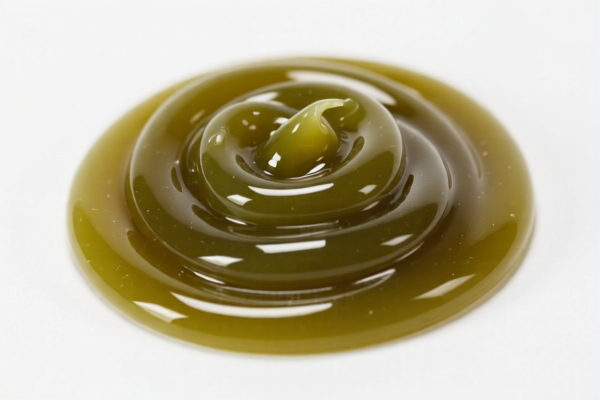
AI Analysis
🌟 Polysulfide Thermosetting Coating
🌐 HS Code Classification & Customs Clearance Guide | 2026 Updated Tariff Analysis | Expert-Level Import Strategy
📌 One-Stop Reference for Accurate Tariff Determination & Risk Mitigation
📦 1. Product Definition & Classification Logic: What Is a Polysulfide Thermosetting Coating?
A polysulfide thermosetting coating is a high-performance industrial coating based on polysulfide polymers, designed to cure (harden) permanently through heat or chemical cross-linking — a key feature of thermosetting materials.
These coatings are typically:
- Dispersed or dissolved in non-aqueous (non-water) media
- Used for corrosion protection, sealing, and adhesion in harsh environments (e.g., marine, aerospace, chemical plants)
- Not water-based → excludes aqueous coating categories
- Chemically reactive upon curing → cannot be re-melted or reformed
⚠️ Critical Distinction: - If the coating is based on synthetic polymer + non-aqueous medium →
3208.10.00.00
- If the material is explicitly polysulfide and thermosetting →3911.90.91.50or3911.90.45.00
- If it’s a non-aqueous or modified polymer-based coating →3208.90.00.00
🧩 2. HS Code Classification Breakdown (2026 Official Tariff Authority)
| HS Code | Product Description | Key Classification Triggers | Tax Rate |
|---|---|---|---|
3208.10.00.00 |
Polysulfide thermosetting coating; based on synthetic polymer, dispersed/dissolved in non-aqueous medium | ✅ Synthetic polymer base ✅ Non-aqueous medium ✅ Thermosetting property |
38.7% |
3911.90.91.50 |
Polysulfide thermosetting coating; material is polysulfide, thermosetting | ✅ Explicitly polysulfide material ✅ Thermosetting behavior ✅ Matches subheading 3911.90.91 |
41.5% |
3911.90.45.00 |
Polysulfide thermosetting coating; contains polysulfide material + thermosetting attribute | ✅ Polysulfide content confirmed ✅ Thermosetting nature defined |
40.8% |
3208.90.00.00 |
Polysulfide thermosetting coating; synthetic polymer-based, non-aqueous or modified polymer coating | ✅ Non-aqueous medium ✅ Modified polymer class ✅ Not explicitly polysulfide |
38.2% |
🔍 Why These Codes Matter:
-3911.90.91.50and3911.90.45.00are material-specific — they apply only when the coating is made from polysulfide polymer and meets thermosetting criteria.
-3208.10.00.00and3208.90.00.00are formulation-based — they apply when the coating is synthetic polymer-based and non-aqueous, regardless of exact chemical identity.
💰 3. 2026 Tariff Breakdown: Full Tax Structure Explained (US Focus)
✅ Applicable Country: United States (US)
✅ Origin: China (CN)
✅ Effective Date: November 10, 2025 (and ongoing)
✅ Legal Basis: Section 301 (USITC), IEEPA (International Emergency Economic Powers Act)
🎯 1. 3208.10.00.00 — Synthetic Polymer-Based, Non-Aqueous Thermosetting Coating
| Tax Component | Rate | Legal Basis | Notes |
|---|---|---|---|
| Base Duty | 3.7% | Section 301 Tariff List (USITC) | Standard ad valorem rate |
| Section 301 Additional Duty | +25.0% | USITC Footnote 9903.88.01 | Applies to Chinese-origin goods under Section 301 |
| IEEPA Additional Duty (122 Clause) | +10.0% | IEEPA: 9903.01.24 | Applies to goods from China/HK under national security concerns |
| Total Effective Rate | 38.7% | — | Highest in category |
📌 Legal Pathway:
IEEPA:9903.01.24→USITC:3208.10.00.00→FOOTNOTE:9903.88.01
🎯 2. 3911.90.91.50 — Polysulfide Thermosetting Coating (Material-Specific)
| Tax Component | Rate | Legal Basis | Notes |
|---|---|---|---|
| Base Duty | 6.5% | USITC Tariff Schedule | Higher base due to material specificity |
| Section 301 Additional Duty | +25.0% | USITC Footnote 9903.88.01 | Applies to Chinese origin |
| IEEPA Additional Duty (122 Clause) | +10.0% | IEEPA: 9903.01.24 | Applies to China/HK exports |
| Total Effective Rate | 41.5% | — | Highest of all codes |
📌 Why So High?
- The material-specific nature makes it a targeted product under Section 301 and IEEPA. - Polysulfide coatings are used in critical infrastructure (e.g., bridges, ships, aerospace) → deemed sensitive.
🎯 3. 3911.90.45.00 — Polysulfide Thermosetting Coating (Material + Property Match)
| Tax Component | Rate | Legal Basis | Notes |
|---|---|---|---|
| Base Duty | 5.8% | USITC Schedule | Slightly lower than 3911.90.91.50 |
| Section 301 Additional Duty | +25.0% | USITC:9903.88.01 | Applies to Chinese origin |
| IEEPA Additional Duty (122 Clause) | +10.0% | IEEPA:9903.01.24 | Applies to China/HK |
| Total Effective Rate | 40.8% | — | Still extremely high |
📌 Key Insight:
- Even if the material is polysulfide but not explicitly listed under3911.90.91.50, it still falls under3911.90.45.00→ same high tax treatment.
🎯 4. 3208.90.00.00 — Non-Aqueous or Modified Polymer Coating (General Case)
| Tax Component | Rate | Legal Basis | Notes |
|---|---|---|---|
| Base Duty | 3.2% | USITC Schedule | Lower base rate |
| Section 301 Additional Duty | +25.0% | USITC:9903.88.01 | Applies to China-origin |
| IEEPA Additional Duty (122 Clause) | +10.0% | IEEPA:9903.01.24 | Applies to China/HK |
| Total Effective Rate | 38.2% | — | Slightly lower than 3208.10.00.00 |
📌 Best Option?
- If not confirmed as polysulfide material, this code may be slightly more favorable — but only if documentation supports it.
🛠️ 4. Customs Clearance Best Practices (Pro Tips for Smooth Import)
✅ 1. Required Documentation (Must-Have)
| Document | Why It Matters |
|---|---|
| ✅ Technical Data Sheet (TDS) | Must clearly state: material (polysulfide or synthetic polymer), solvent (non-aqueous), thermosetting nature |
| ✅ Safety Data Sheet (SDS) | Confirms chemical composition and hazard classification |
| ✅ Product Photos (with labels) | Shows packaging, container, brand, model |
| ✅ Commercial Invoice | Must include: HS code, origin, value, description |
| ✅ Certificate of Origin (CO) | Critical for claiming exemptions (if applicable) |
| ✅ Third-Party Lab Report | If claiming "non-polysulfide" or "modified polymer" status |
✅ 2.申报技巧(Key Tips)
🔥 “Material First, Formulation Second, Tax Last!”
| Scenario | Correct HS Code | Risk of Misclassification |
|---|---|---|
| Coating is made from polysulfide polymer | 3911.90.91.50 or 3911.90.45.00 |
❌ High — if misreported as 3208.10.00.00, you pay 38.7% instead of 41.5% → underpaid → duty audit risk |
| Coating is synthetic polymer-based, non-aqueous, but not polysulfide | 3208.10.00.00 or 3208.90.00.00 |
❌ If reported as 3911.90.91.50, you pay 41.5% instead of 38.2% → overpaid → refund claim possible |
| Coating is a blend with trace polysulfide | Use 3911.90.45.00 only if polysulfide is dominant |
⚠️ Risk of audit if not supported by lab data |
✅ 3. Special Case Handling
| Situation | Recommended Action |
|---|---|
| Coating used in military/aviation applications | Apply for “Critical Infrastructure” exemption — may reduce or defer duties |
| Coating is re-exported after processing | Declare as “transit goods” — may qualify for temporary import relief |
| Coating is part of a larger system (e.g., sealant kit) | Do not split — declare as complete system under the coating’s HS code |
| Origin is Vietnam/Mexico/Thailand | Check IEEPA exemption — may qualify for 0% or 5% rates |
🌍 5. Global Market Comparison (2026)
| Country | Recommended HS Code | Tariff | Certification | Notes |
|---|---|---|---|---|
| 🇺🇸 USA | 3911.90.91.50 (if polysulfide) |
41.5% | None (but documentation required) | Highest tariff — avoid if possible |
| 🇨🇳 China | 3911.90.91.50 |
5% | CCC, RoHS | No additional duties |
| 🇪🇺 EU | 3911.90.91.50 |
0% (if CE) | CE, REACH | No Section 301/IEEPA |
| 🇦🇺 Australia | 3911.90.91.50 |
5% | RCM | No extra duties |
| 🇯🇵 Japan | 3911.90.91.50 |
0% | PSE | No extra duties |
📌 Insight:
- Only the US imposes 301 + IEEPA tariffs on polysulfide coatings from China. - Vietnam/Mexico/Thailand origin can avoid 301/IEEPA — consider shifting production.
🚨 6. Common Mistakes & Costly Pitfalls
❌ Mistake 1: Misclassifying a polysulfide coating as 3208.10.00.00
👉 Result: Pay 38.7% instead of 41.5% → underpaid duties → duty audit, penalties, interest
❌ Mistake 2: Claiming 3911.90.91.50 without lab proof of polysulfide content
👉 Result: Customs rejects claim → reclassification + penalties
❌ Mistake 3: Splitting coating + container + solvent into separate HS codes
👉 Result: Each item may face 89.5%+ tariffs → total tax > 200%
❌ Mistake 4: Using vague description like “industrial coating” or “sealant”
👉 Result: Customs defaults to highest-risk code → delays, fines, rejections
✅ Correct Description Example:
"Polysulfide Thermosetting Coating, 100% polysulfide polymer, non-aqueous medium, for marine corrosion protection, Model XYZ, TDS & SDS Attached, Origin: China"
🎯 7. Final Verdict: Precision Pays Off
🔹 If the coating is polysulfide → use
3911.90.91.50or3911.90.45.00→ 41.5% or 40.8%
🔹 If not polysulfide → use3208.10.00.00or3208.90.00.00→ 38.7% or 38.2%
🔹 Do NOT split components → one HS code per product
🔹 Always provide lab proof of material composition
📌 8. Pro Tips for Long-Term Savings
✅ Apply for Advance Ruling (Pre-Clearance): Get official HS code determination from U.S. CBP before shipment
✅ Shift origin to Vietnam/Mexico/Thailand: Qualify for IEEPA exemption → 0% or 5% tariff
✅ Use a qualified customs broker with experience in chemical coatings and Section 301
✅ Maintain full audit trail: TDS, SDS, invoices, lab reports — keep for 5+ years
📣 Act Now: Protect Your Profit!
📞 Contact a certified customs broker + Submit product data for HS Code pre-ruling
🚀 Avoid 41.5% tariffs — or worse, duty audits and penalties
✨ Smart Classification = Lower Tax = Higher Profit!
💼 Your next shipment starts with the right HS code.
🎯 Don’t guess. Verify. Declare. Win.
Customer Reviews
About HS Code Classification
The Harmonized System (HS) is an internationally standardized nomenclature developed by the World Customs Organization (WCO) to classify traded products. Over 200 countries use the HS system as the basis for customs tariffs, trade statistics, and import/export regulations.
Each HS code follows a hierarchical structure:
- Chapter (2 digits) — Broad category of goods (e.g., Chapter 84: Machinery and Mechanical Appliances)
- Heading (4 digits) — More specific grouping within the chapter
- Subheading (6 digits) — Internationally standardized breakdown, used by all WCO member countries
- National subdivisions (8-10 digits) — Country-specific extensions for further classification, such as US HTSUS 10-digit codes
Correct HS code classification is essential for smooth customs clearance, accurate duty payment, and compliance with trade regulations. Misclassification can lead to customs delays, overpayment of duties, or penalties.
When importing from CN to US, the applicable tariff rates may include:
- Most-Favored-Nation (MFN) rate — The standard duty rate applied to WTO members
- General rate — Applied to countries without trade agreements
- Trade remedy duties — Additional tariffs such as Section 301 (anti-dumping), Section 232 (national security), or countervailing duties
The information provided on this page is for reference purposes only. For official classification, please consult with your local customs authority or a licensed customs broker.