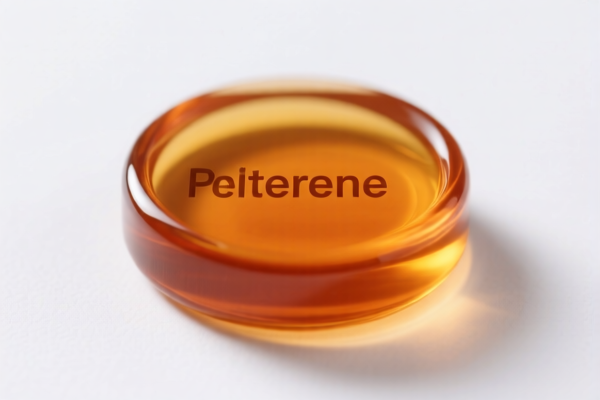
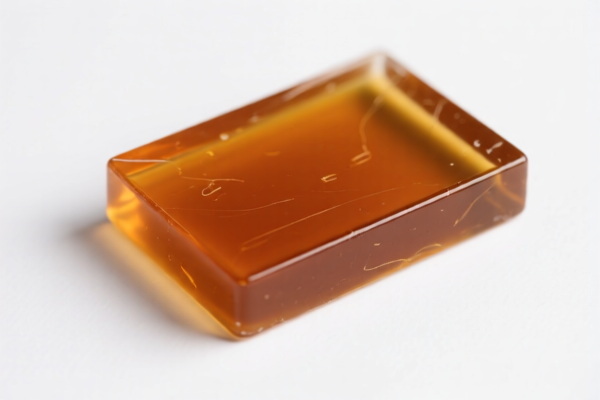
Polyterpene Elastomer Toughening Agent
CN → USProduct Images


AI Analysis
🧪 Polyterpene Elastomer Toughening Agent
🌐 HS Code Reference & Customs Clearance Guide | 2026 Latest Tariff Analysis | Professional Entry Strategy
📌 I. Product Definition & Classification: Do You Really Understand "Polyterpene Elastomer"?
Polyterpene Elastomers are high-molecular-weight hydrocarbons derived from the polymerization of monoterpenes (such as α-pinene, limonene, or myrcene). They are widely used as toughening agents, adhesion promoters, and impact modifiers in rubber compounds, plasticizers, adhesives, and sealants.
In international trade, they are generally categorized based on their chemical nature and state:
- Primary Classification (Chemicals/Resins): If they are raw resin-like substances or powders/granules used for industrial modification, they fall under Chapter 39 (Plastics) or Chapter 38 (Miscellaneous Chemical Products).
- Secondary Classification (Essential Oils/Oleochemicals): If they are closely related to essential oil by-products and not fully polymerized into high-molecular-weight plastics, they may fall under Chapter 13 (Resins) or Chapter 33 (Essential Oils).
⚠️ Key Distinction Point:
- If the substance is a polymerized hydrocarbon resin used as a plastic/rubber additive → HS Code 3913 or 3824.
- If it is a natural terpene resin (unpolymerized or lightly polymerized) → HS Code 1302 or 3805.
- Most commercial "Polyterpene Elastomer Toughening Agents" are synthetic or semi-synthetic polymers, pointing to 3913.90 or 3824.99.
📦 II. HS Code Classification Details (2026 Latest Tariff Authority Comparison)
| HS Code | Product Description | Application Scenario | Polymerization Degree |
|---|---|---|---|
3913.90.90.00 |
Other natural polymers (e.g., alginate, agar, gum arabic) – Less likely for synthetic polyterpenes | Natural rubber modifiers | ✅ Natural/Modified |
3911.90.90.00 |
Petroleum resins, polyterpenes, polyphenols, etc., in primary forms or in plates, sheets, or shapes | Primary Candidate for Synthetic Polyterpene Resins | ✅ Fully Polymerized |
3824.99.92.00 |
Other chemical products (including toughening agents, plasticizers, additives not elsewhere specified) | Most Common for Industrial Toughening Additives | ✅ Mixture/Additive |
3305.90.00.00 |
Hair preparations (unlikely, but sometimes misclassified if scent-based) | Perfumed additives | ❌ Incorrect |
1302.39.00.00 |
Vegetable saps and extracts (e.g., pine resin, terpenes) | Raw terpene extracts before polymerization | ❌ Pre-polymer |
🔍 Key Reminder:
-3911.90.90.00is often used for pure polyterpene resins in solid forms (granules/powders) that act as binding agents.
-3824.99.92.00is the catch-all for functional additives (like toughening agents) that are mixed into rubber/plastic formulations.
- Customs may scrutinize whether the product is a "resin" (3911) or an "additive mixture" (3824). Check MSDS and technical data sheets.
💰 III. 2026 Latest Tariff Rate Breakdown (Including Surcharge Policies)
✅ Applicable Country: United States (US)
✅ Origin: China (CN)
✅ Effective Date: November 10, 2025 (and onwards)
🎯 1. 3911.90.90.00 —— Polyterpene Resins (Primary Form)
| Item | Content |
|---|---|
| Base Tariff | 5.3% (Ad Valorem) |
| USITC Surcharge | +25% (Section 301, Footnote 9903.88.01) |
| IEEPA Surcharge | +10% (China/HK origin, from Nov 10, 2025) |
| Total Tariff | 40.3% |
| Calculation Method | CIF Value × 40.3% |
| De Minimis Exemption | ❌ Not Eligible (deny_de_minimis) |
| Legal Path | IEEPA:9903.01.25 → USITC:3911.90.90.00 → FOOTNOTE:9903.88.01 |
📌 Explanation:
- If classified as a "polymer," it falls under Section 301 high tariffs.
- 40.3% is a significant cost driver; ensure the product is indeed a "polymer" and not a simpler chemical.
🎯 2. 3824.99.92.00 —— Other Chemical Products (Toughening Agents)
| Item | Content |
|---|---|
| Base Tariff | 5.6% (Ad Valorem) |
| USITC Surcharge | +25% (Section 301) |
| IEEPA Surcharge | +10% (China/HK origin) |
| Total Tariff | 40.6% |
| Calculation Method | CIF Value × 40.6% |
| De Minimis Exemption | ❌ Not Eligible |
| Legal Path | IEEPA:9903.01.25 → USITC:3824.99.92.00 → FOOTNOTE:9903.88.01 |
📌 Note:
- This is the most common classification for industrial toughening agents.
- Even if the product is a "mixture" or "additive," it is still subject to Section 301 tariffs.
- 40.6% is slightly higher than 3911; verify if a lower-rate code (e.g., 3824.99.94.00 for other chemicals) applies, but 3824.99.92 is typical for "other chemical products."
🛠️ IV. Customs Clearance Practical Advice (Pitfall Avoidance Guide)
✅ 1. Required Documentation Checklist (Non-Negotiable)
| Document | Mandatory? | Description |
|---|---|---|
| ✅ Material Safety Data Sheet (MSDS) | ✔️ | Must specify composition (e.g., % polyterpene, carrier agents), CAS number, and physical state. |
| ✅ Technical Data Sheet (TDS) | ✔️ | Confirms function (e.g., "impact modifier for rubber") to justify HS Code 3824 over 3911. |
| ✅ Commercial Invoice | ✔️ | Clearly state "Polyterpene Elastomer Toughening Agent," not just "Chemical." |
| ✅ Packing List | ✔️ | Show net/gross weight, packaging type (drums, bags). |
| ✅ Origin Certificate | ✔️ | If eligible for preferential rates (rare for China-US, but required for other routes). |
| ✅ FCC/REACH Compliance | ✔️ | If applicable to end-use (e.g., consumer goods), provide relevant certifications. |
✅ 2. Declaration Tips (Key Mnemonics)
🔥 "Function First, State Second, Name Precise, Tariff Predictable!"
| Scenario | Correct Declaration | Incorrect Practice |
|---|---|---|
| Pure Polyterpene Resin (Granules) | 3911.90.90.00 "Polyterpene Resin, Solid" |
Mislabel as "Plastic Pellets" → 3904 (Different Tariff) |
| Toughening Additive (Mixed/Blended) | 3824.99.92.00 "Chemical Additive for Rubber" |
Mislabel as "Rubber" → 4001 (Very High Tariff) |
| Liquid Terpene Oil (Unpolymerized) | 3805.90.00.00 "Terpene Solvents/Oils" |
Mislabel as "Resin" → Wrong Chapter |
| Pre-packaged for Consumer Use | 3824.99.92.00 + Consumer Safety Certs |
Omitting End-Use Info → Customs Hold |
✅ 3. Special Cases Handling
| Scenario | Handling Advice |
|---|---|
| OEM/Private Label | Provide client agreement + formula sheet to prove it's not a new chemical entity (which requires EPA registration). |
| Mixed with Plasticizers | If >50% by weight is polyterpene, classify as resin (3911). If <50%, classify as mixture (3824). |
| Bio-based Source | If derived from 100% bio-sources, may qualify for lower base rates in non-US markets (e.g., EU, Japan). |
| Sample Shipments | Even for samples, if commercial value >$800, de minimis does not apply due to Section 301. |
🌍 V. Global Market Comparison (2026 Latest)
| Country/Region | Recommended HS Code | Tariff (China Origin) | Certification Required | Notes |
|---|---|---|---|---|
| 🇺🇸 USA | 3824.99.92.00 |
~40.6% | FDA (if food-contact), REACH (if EU-bound) | High tariffs due to Section 301 |
| 🇨🇳 China | 3824.99.92.00 |
6.5% | None | Low tariff, no surcharge |
| 🇪🇺 EU | 3824.99.98 |
6.5% | REACH Registration | No surcharge; REACH compliance critical |
| 🇦🇺 Australia | 3824.99.90 |
5.0% | AICIS (Australian Industrial Chemicals) | Moderate tariff |
| 🇯🇵 Japan | 3824.99.90 |
6.0% | PSIA (Pre-manufacture Notification) | Low tariff; strict chemical notifications |
📌 Conclusion:
- USA remains the highest-cost market due to 301 tariffs.
- EU and Japan offer more favorable rates but require strict chemical compliance (REACH/PSIA).
- China origin products face significant hurdles in the US; consider transshipment or third-country processing (Vietnam, Thailand) if feasible and compliant with rules of origin.
📌 VI. Common Mistakes & Pitfall Guide (Lessons Learned)
❌ Mistake 1: Classifying as Rubber (4001)
👉 Consequence: Tariff jumps to ~8-10% base + potential anti-dumping duties → Higher cost & legal risk.
❌ Mistake 2: Ignoring Section 301 on Chemicals
👉 Consequence: Customs audit reveals hidden 35% surcharge → Back taxes + Penalties.
❌ Mistake 3: Vague Description ("Chemical Mixture")
👉 Consequence: Customs flags for missing MSDS/REACH → Shipment held for weeks.
❌ Mistake 4: Claiming De Minimis for < $800
👉 Consequence: Denied entry for Section 301 goods → Return/Destroy.
✅ Correct Practice:
"Polyterpene Elastomer, Solid, CAS No. 9003-38-5, Used as Toughening Agent for Thermoplastics, MSDS Attached, Origin: China"
🎯 VII. Conclusion: Precision Classification, Cost Control, Compliance
🎯 Remember These Key Points:
🔹 "Resin vs. Additive: 3911 vs. 3824, both have 35% Surcharge!"
🔹 "MSDS is King: No MSDS, No Clearance!"
🔹 "USA Tariff is High: Plan Ahead or Reroute!"
📌 Pro Tip:
If your polyterpene elastomer is bio-based or non-toxic, highlight this in documentation to facilitate EU/Japan clearance. For the US market, consider pre-ruling from CBP if the classification is ambiguous.
📣 Immediate Action:
📞 Consult with a licensed customs broker + Provide MSDS/TDS + Verify Section 301 Applicability
🚀 Ensure smooth entry, accurate duty payment, and full compliance.
✨ Professional Classification Starts with Accurate Data!
💼 Every percentage point saved is pure profit!
Customer Reviews
About HS Code Classification
The Harmonized System (HS) is an internationally standardized nomenclature developed by the World Customs Organization (WCO) to classify traded products. Over 200 countries use the HS system as the basis for customs tariffs, trade statistics, and import/export regulations.
Each HS code follows a hierarchical structure:
- Chapter (2 digits) — Broad category of goods (e.g., Chapter 84: Machinery and Mechanical Appliances)
- Heading (4 digits) — More specific grouping within the chapter
- Subheading (6 digits) — Internationally standardized breakdown, used by all WCO member countries
- National subdivisions (8-10 digits) — Country-specific extensions for further classification, such as US HTSUS 10-digit codes
Correct HS code classification is essential for smooth customs clearance, accurate duty payment, and compliance with trade regulations. Misclassification can lead to customs delays, overpayment of duties, or penalties.
When importing from CN to US, the applicable tariff rates may include:
- Most-Favored-Nation (MFN) rate — The standard duty rate applied to WTO members
- General rate — Applied to countries without trade agreements
- Trade remedy duties — Additional tariffs such as Section 301 (anti-dumping), Section 232 (national security), or countervailing duties
The information provided on this page is for reference purposes only. For official classification, please consult with your local customs authority or a licensed customs broker.