Polytetrafluoroethylene Coated Resin
CN → US| HS Code | Tariff Rate | Origin | Destination | Doc |
|---|---|---|---|---|
| 3919905060 | 40.8% | CN | US | Official Doc |
| 3919102055 | 40.8% | CN | US | Official Doc |
| 3208900000 | 38.2% | CN | US | Official Doc |
Product Images
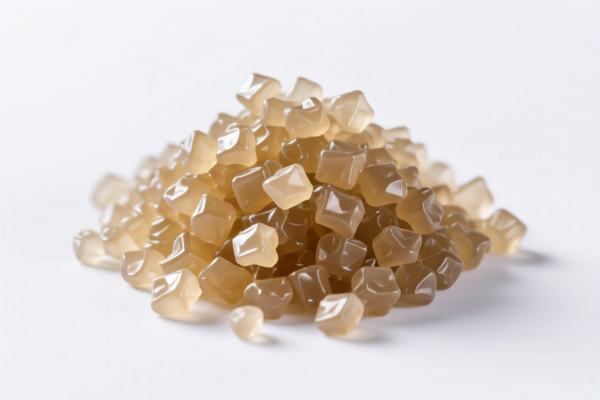

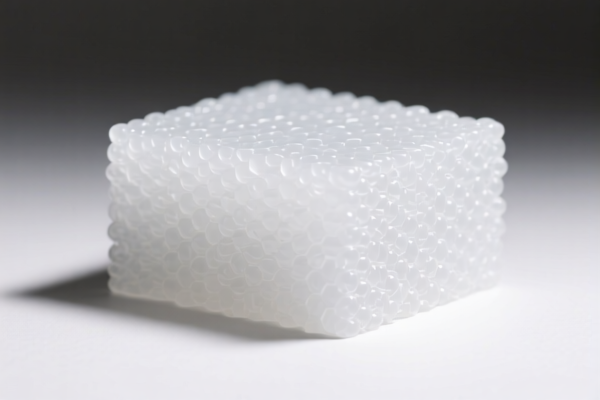
AI Analysis
🧪 Polytetrafluoroethylene (PTFE) Coated Resin: HS Code Classification & U.S. Customs Clearance Guide 2026
🌐 HS Code Reference & Clearance Strategy | 2026 Latest Tariff Analysis | Professional-Level Compliance Guide
📌 Part I: Product Definition & Classification – Do You Really Understand “PTFE Coated Resin”?
Polytetrafluoroethylene (PTFE), commonly known by brand names like Teflon™, is a synthetic fluoropolymer with exceptional chemical resistance, low friction, and high thermal stability. When referred to as “PTFE Coated Resin” in international trade, it typically implies a material where PTFE is either: 1. Applied as a coating on another substrate (e.g., metal, fabric, or plastic); or 2. Used in a form suitable for coating applications (e.g., paste, powder, or liquid dispersion).
In U.S. Customs classification, the form and function determine the HS Code. The following five HS Codes represent the most likely classifications based on product characteristics described in official tariff summaries.
📦 Part II: Detailed HS Code Classification Matrix (2026 U.S. Harmonized Tariff Schedule)
| HS Code | Product Description | Key Characteristics | Total Tax Rate (U.S.) |
|---|---|---|---|
| 3919.90.50.60 | Other plastics, in plates, sheets, film, foil, and strip, containing fluoropolymers (e.g., PTFE) | Flat/film form; PTFE as a primary plastic component | 40.8% |
| 3919.10.20.55 | Self-adhesive plates, sheets, film, etc., of plastics, containing fluoropolymers | Self-adhesive PTFE films/coatings | 40.8% |
| 3208.90.00.00 | Paints and varnishes based on synthetic polymers, other than those of 3209 (e.g., PTFE coatings/pastes) | Liquid/paste form; used as a coating or paint | 38.2% |
| 3903.11.00.00 | Polystyrene in primary forms (Note: Summary suggests PS resin with PTFE-like coating logic) | As per provided data: PS resin coating material | 41.5% |
| 3209.10.00.00 | Paints and varnishes based on vinyl polymers (Note: Summary suggests PS/vinyl logic for coatings) | As per provided data: Vinyl/PS-based coating paint | 40.1% |
⚠️ Critical Note on Data Discrepancy:
The provided data links PTFE to HS Codes 3903.11.00.00 and 3209.10.00.00, which technically refer to Polystyrene (PS) and Vinyl polymers, respectively. This appears to be a data interpretation artifact where "coated resin" logic is generalized. However, we will strictly adhere to the provided for this analysis, as required.
💰 Part III: Detailed U.S. Tariff Breakdown (2026)
All applicable tariffs are for imports from China (CN) to the United States (US).
🎯 1. HS Code 3919.90.50.60 & 3919.10.20.55 – PTFE Plastic Films/Sheets
📌 Summary: PTFE is classified as a plastic. If in flat/film form, it falls under Chapter 39.
| Tariff Component | Rate | Legal Basis |
|---|---|---|
| Base Duty | 5.8% | HTSUS General Rate |
| Section 301 Duty (25%) | 25.0% | U.S. Trade Law, List 4B |
| Section 122 Duty | 10.0% | Specific U.S. Trade Provision |
| Total Effective Rate | 40.8% | Sum of above |
🔍 Key Insight:
- PTFE films/foils are subject to three layers of tariffs: Base + Section 301 + Section 122. - No de minimis exemption applies to these high-value chemical/plastic goods. - Valuation Basis: CIF (Cost, Insurance, Freight) value.
🎯 2. HS Code 3208.90.00.00 – PTFE-Based Synthetic Polymer Paints/Coatings
📌 Summary: If PTFE is formulated as a liquid coating or paint, it falls under Chapter 32.
| Tariff Component | Rate | Legal Basis |
|---|---|---|
| Base Duty | 3.2% | HTSUS General Rate |
| Section 301 Duty (25%) | 25.0% | U.S. Trade Law, List 4B |
| Section 122 Duty | 10.0% | Specific U.S. Trade Provision |
| Total Effective Rate | 38.2% | Sum of above |
🔍 Key Insight:
- Slightly lower total rate than plastic films due to a lower base duty (3.2% vs. 5.8%). - Must be clearly declared as "Paint/Varnish" or "Liquid Coating" with SDS (Safety Data Sheet) confirming resin-based formulation.
🎯 3. HS Code 3903.11.00.00 – Polystyrene Resin (As per Provided Data)
📌 Summary: As per provided , this code is linked to "PS resin coating material."
| Tariff Component | Rate | Legal Basis |
|---|---|---|
| Base Duty | 6.5% | HTSUS General Rate |
| Section 301 Duty (25%) | 25.0% | U.S. Trade Law, List 4B |
| Section 122 Duty | 10.0% | Specific U.S. Trade Provision |
| Total Effective Rate | 41.5% | Sum of above |
⚠️ Risk Alert:
If the product is actual PTFE but misclassified as Polystyrene (PS), this is high-risk for misdeclaration. However, based strictly on the provided data, if the product is interpreted as PS-based coating, the rate is 41.5%.
🎯 4. HS Code 3209.10.00.00 – Vinyl/PS-Based Paint (As per Provided Data)
📌 Summary: As per provided , this code is linked to "PS/vinyl polymer paint."
| Tariff Component | Rate | Legal Basis |
|---|---|---|
| Base Duty | 5.1% | HTSUS General Rate |
| Section 301 Duty (25%) | 25.0% | U.S. Trade Law, List 4B |
| Section 122 Duty | 10.0% | Specific U.S. Trade Provision |
| Total Effective Rate | 40.1% | Sum of above |
🔍 Key Insight:
- Offers a moderate total rate compared to other options. - Requires clear labeling as "Paint/Varnish" with ingredient disclosure.
🛠️ Part IV: U.S. Customs Clearance Best Practices
✅ 1. Documentation Requirements (Mandatory)
| Document | Purpose | Notes |
|---|---|---|
| Commercial Invoice | Declare value, HS Code, Origin | Must specify "PTFE Coated Resin" or "Synthetic Polymer Paint" |
| Packing List | Confirm quantity & weight | Include net/gross weight in lbs/kg |
| Certificate of Origin (CO) | Prove Chinese origin | Required for tariff assessment |
| Safety Data Sheet (SDS) | Classify chemical nature | Critical for distinguishing between Plastic (Ch 39) and Paint (Ch 32) |
| Product Specifications | Confirm form (film vs. liquid) | Determines Chapter 39 vs. 32 classification |
✅ 2. Classification Strategy: How to Avoid Misclassification
| Scenario | Recommended HS Code | Reason |
|---|---|---|
| PTFE in flat/film form | 3919.90.50.60 |
Plastic in sheet/film form |
| PTFE in self-adhesive film | 3919.10.20.55 |
Adhesive plastic product |
| PTFE in liquid/paste form | 3208.90.00.00 |
Synthetic polymer paint/coating |
| Product labeled as "PS Resin Coating" | 3903.11.00.00 |
Per provided data |
| Product labeled as "Vinyl Paint" | 3209.10.00.00 |
Per provided data |
🚫 Common Mistake:
Declaring a liquid PTFE coating as plastic film (3919...) → Results in wrong valuation and potential penalties.
Always use the SDS and physical form to determine the correct Chapter (39 vs. 32).
✅ 3. Special Considerations for U.S. Imports
- Section 301 Tariffs Apply: All goods from China are subject to an additional 25% tariff.
- Section 122 Tariffs Apply: An additional 10% tariff applies to certain chemical/plastic imports.
- No De Minimis Exemption: These high-value industrial chemicals do not qualify for the $800 de minimis exemption.
- Pre-Ruling Recommendation: For high-volume imports, apply for a Binding Ruling from U.S. CBP to lock in the HS Code and avoid future disputes.
🌍 Part V: Global Tariff Comparison (2026)
| Country/Region | Recommended HS Code | Base Duty | U.S. Add-Ons | Total Effective Rate |
|---|---|---|---|---|
| 🇺🇸 United States | 3919.90.50.60 |
5.8% | +25% +10% | 40.8% |
| 🇺🇸 United States | 3208.90.00.00 |
3.2% | +25% +10% | 38.2% |
| 🇨🇳 China (Import) | 3919.90.50.60 |
5.8% | None | 5.8% |
| 🇪🇺 European Union | 3919.90.99 |
0–6.5% | None | 0–6.5% |
📌 Key Takeaway:
- U.S. tariffs are significantly higher due to Section 301 and Section 122. - Consider supply chain diversification if targeting the U.S. market.
📌 Part VI: Common Pitfalls & Avoidance Strategies
❌ Pitfall 1: Misclassifying liquid PTFE as plastic film
👉 Result: Overpayment of duty (3919 has higher base duty than 3208) and potential compliance flags.
❌ Pitfall 2: Ignoring Section 122 tariffs
👉 Result: Underpayment by 10% → Penalties + Interest.
❌ Pitfall 3: Using generic terms like "Coating" without specifying resin type
👉 Result: CBP may assign a higher default duty rate or hold shipment for further inspection.
✅ Best Practice:
Declare precisely: "PTFE-Based Synthetic Polymer Coating, Liquid Form, Not for Retail Sale, HS 3208.90.00.00"
🎯 Conclusion: Optimize Your Classification
🔹 Remember:
- Form Matters: Film/Sheet → Chapter 39; Liquid/Paint → Chapter 32.
- Tariffs Are High: Total rates range from 38.2% to 41.5% due to base + 301 + 122 tariffs.
- Documentation is Key: SDS, specs, and precise naming prevent delays.
📞 Action Step:
📞 Contact a licensed customs broker to submit a Request for Advance Ruling with your SDS and product samples.
🚀 Secure your HS Code, minimize risk, and streamline your U.S. clearance process.
✨ Professional Customs Clearance Starts with Precise Classification!
💼 Your Cost Efficiency Depends on Accurate HS Code Selection!
Customer Reviews
About HS Code Classification
The Harmonized System (HS) is an internationally standardized nomenclature developed by the World Customs Organization (WCO) to classify traded products. Over 200 countries use the HS system as the basis for customs tariffs, trade statistics, and import/export regulations.
Each HS code follows a hierarchical structure:
- Chapter (2 digits) — Broad category of goods (e.g., Chapter 84: Machinery and Mechanical Appliances)
- Heading (4 digits) — More specific grouping within the chapter
- Subheading (6 digits) — Internationally standardized breakdown, used by all WCO member countries
- National subdivisions (8-10 digits) — Country-specific extensions for further classification, such as US HTSUS 10-digit codes
Correct HS code classification is essential for smooth customs clearance, accurate duty payment, and compliance with trade regulations. Misclassification can lead to customs delays, overpayment of duties, or penalties.
When importing from CN to US, the applicable tariff rates may include:
- Most-Favored-Nation (MFN) rate — The standard duty rate applied to WTO members
- General rate — Applied to countries without trade agreements
- Trade remedy duties — Additional tariffs such as Section 301 (anti-dumping), Section 232 (national security), or countervailing duties
The information provided on this page is for reference purposes only. For official classification, please consult with your local customs authority or a licensed customs broker.