Polyurea Curing Agent for Casting
CN → US| HS Code | Tariff Rate | Origin | Destination | Doc |
|---|---|---|---|---|
| 3506990000 | 37.1% | CN | US | Official Doc |
| 3903905000 | 41.5% | CN | US | Official Doc |
| 3901909000 | 41.5% | CN | US | Official Doc |
| 3901905501 | 41.5% | CN | US | Official Doc |
| 3506915000 | 37.1% | CN | US | Official Doc |
Product Images
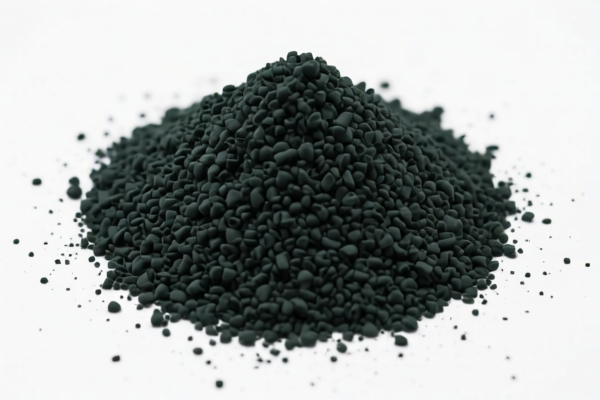
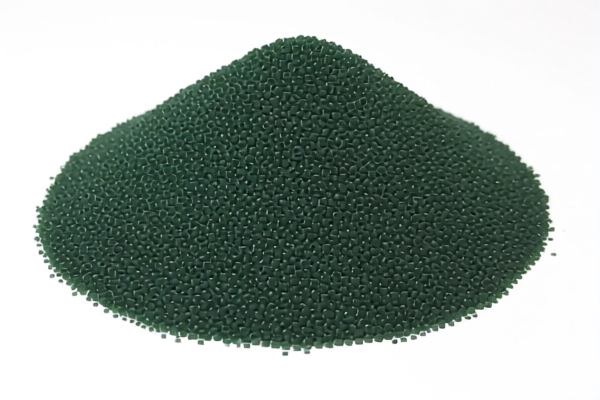
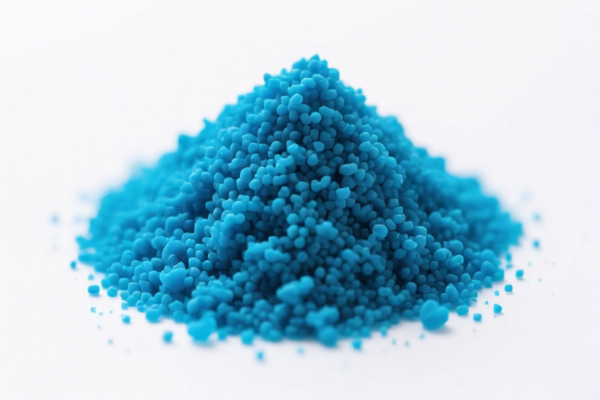
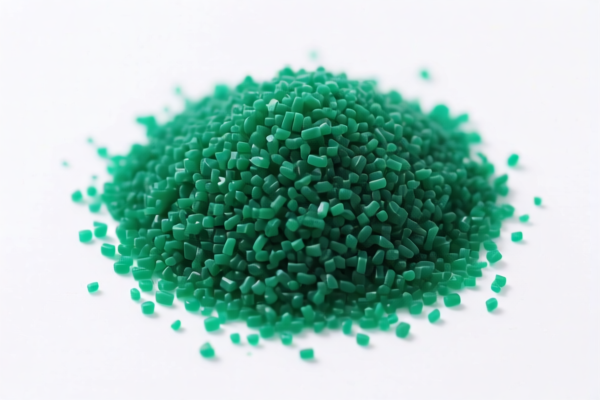
AI Analysis
🏗️ Polyurea Curing Agent for Casting
🌐 HS Code Reference & Customs Clearance Guide | 2026 Latest Tariff Analysis | Professional-Level Entry Strategy
📌 I. Product Definition & Classification: What Exactly is "Polyurea Curing Agent"?
A Polyurea Curing Agent is a critical chemical component used in the production of polyurea coatings, sealants, and casting materials. In international trade, it is primarily classified based on its chemical nature and primary function.
There is often confusion between classifying it as a Polymer (Chapter 39) or an Adhesive/Binding Agent (Chapter 35). The distinction lies in whether the product is sold primarily as a raw polymer material or as a finished functional agent (like an adhesive) for bonding or casting.
⚠️ Key Distinction Point:
- If the product is a pre-polymer or raw chemical resin intended for further polymerization → It may fall under Chapter 39 (Plastics/Polymers).
- If the product is a formulated curing agent used specifically to bind materials (casting/adhesion) → It is more accurately classified under Chapter 35 (Animal/Vegetable Substances & Adhesives).
📦 II. HS Code Classification Details (2026 Latest Tariff Authority Comparison)
| HS Code | Product Description | Application Scenario | Material Conflict? |
|---|---|---|---|
3506.99.00.00 |
Adhesives and other prepared bonding agents, not specified or included elsewhere | General-purpose polyurea casting binders | ❌ No Conflict: Fits "Adhesive" category broadly |
3903.90.50.00 |
Other primary forms of styrene polymers | Styrene-based polyurea precursors | ⚠️ Risk: Only if styrene is the primary component |
3901.90.90.00 |
Other primary forms of ethylene polymers | Ethylene-based precursors | ⚠️ Risk: Only if ethylene polymer is primary |
3901.90.55.01 |
Ethylene copolymers, primary forms | Copolymer precursors | ⚠️ Risk: Specific to ethylene copolymers |
3506.91.50.00 |
Adhesives and other prepared binding agents, whether or not in the form of sheets or rolls, other than those of heading 3506 | Polyurea casting agents as specific binding agents | ❌ No Conflict: Specific binding agent category |
🔍 Key Reminder:
- Polyurea is a reaction product. If the "Curing Agent" is a separate component (e.g., isocyanate component), it is often viewed as a pre-polymer (Chapter 39). However, many customs authorities classify the final formulated casting binder as an adhesive/binder (Chapter 35) because its primary function is binding/casting.
- Chapter 35 (Adhesives) generally offers lower base tariffs compared to Chapter 39 for these specific chemical preparations.
💰 III. 2026 Latest Tariff Rate Breakdown (Including Surcharges & Policy Add-ons)
✅ Applicable Country: United States (US)
✅ Country of Origin: China (CN)
✅ Effective Time: November 10, 2025 (and subsequent imports)
🎯 1. 3506.99.00.00 & 3506.91.50.00 —— Adhesives & Prepared Binding Agents
| Item | Content |
|---|---|
| Base Duty Rate | 2.1% (Ad Valorem) |
| USITC Surcharge | +25% (Under Section 301 Trade Act) |
| IEEPA Surcharge | +10% (Against China/HK Products, effective Nov 10, 2025) |
| Total Tax Rate | 37.1% |
| Tax Calculation | CIF Value × 37.1% |
| De Minimis Eligibility | ❌ No (deny_de_minimis) |
| Legal Authority Path | IEEPA:9903.01.25 → IEEPA:9903.01.24 → USITC:3506.99.00.00 → FOOTNOTE:9903.88.01 |
📌 Explanation:
- "Base Tariff 2.1%": Standard MFN rate for adhesives.
- "USITC Surcharge 25%": Additional tariff under Section 301 for Chinese goods.
- "IEEPA 10%": New surcharge under the International Emergency Economic Powers Act.
- Total 37.1%: A significant cost increase compared to pre-2025 rates.
🎯 2. 3903.90.50.00 —— Styrene Polymers (Primary Forms)
| Item | Content |
|---|---|
| Base Duty Rate | 6.5% |
| USITC Surcharge | +25% |
| IEEPA Surcharge | +10% |
| Total Tax Rate | 41.5% |
| Tax Calculation | CIF Value × 41.5% |
| De Minimis Eligibility | ❌ No |
| Legal Authority Path | IEEPA:9901.25 → IEEPA:9903.01.24 → USITC:3903.90.50.00 → FOOTNOTE:9903.88.01 |
📌 Note:
- If your polyurea curing agent is chemically classified as a styrene polymer in primary form, the base rate is higher (6.5% vs 2.1%).
- Result: Total tax is 41.5%, which is 4.4% higher than the adhesive classification.
🎯 3. 3901.90.90.00 & 3901.90.55.01 —— Ethylene & Ethylene Copolymers
| Item | Content |
|---|---|
| Base Duty Rate | 6.5% |
| USITC Surcharge | +25% |
| IEEPA Surcharge | +10% |
| Total Tax Rate | 41.5% |
| Tax Calculation | CIF Value × 41.5% |
| De Minimis Eligibility | ❌ No |
| Legal Authority Path | IEEPA:9901.25 → IEEPA:9903.01.24 → USITC:3901.90.90.00 |
📌 Note:
- Similar to styrene, ethylene-based precursors incur the higher base rate.
- Conflict Check: If the product is clearly a "curing agent" for casting, using Chapter 39 may invite scrutiny from customs officers who expect Chapter 35 for functional agents.
🛠️ IV. Customs Clearance Practical Advice (Real-World Pitfall Guide)
✅ 1. Required Documentation Checklist (No Exceptions)
| Document | Mandatory? | Description |
|---|---|---|
| ✅ Product Specification Sheet | ✔️ | Must detail chemical composition, MSDS, and intended use (casting/binding). |
| ✅ MSDS (Material Safety Data Sheet) | ✔️ | Critical for hazardous chemical clearance. |
| ✅ Product Photos | ✔️ | Clear images of packaging, labels, and product form. |
| ✅ Commercial Invoice | ✔️ | Must accurately describe product as "Polyurea Curing Agent for Casting" or "Adhesive". |
| ✅ Certificate of Origin (CO) | ✔️ | Essential for determining origin and potential exemptions. |
| ✅ Packing List | ✔️ | Must match invoice exactly. |
| ✅ Third-Party Lab Report | ✔️ | Proof of chemical composition (e.g., percentage of isocyanate/polyol). |
✅ 2. Declaration Tips (Key Mnemonics)
🔥 "Function First, Chemistry Second! Binders go to 35, Polymers go to 39!"
| Scenario | Correct Declaration | Incorrect Practice |
|---|---|---|
| Formulated Casting Agent | 3506.99.00.00 or 3506.91.50.00 |
Misreport as "Plastic Resin" → 41.5% |
| Raw Polymer Precursor | 3903.90.50.00 or 3901.90.90.00 |
Misreport as "Adhesive" → Potential Audit |
| Mixed Package (Agent + Hardener) | Declare as Set under 3506 |
Split declaration → 89.5% on parts! |
| Industrial Use | Specify "For Casting/Bonding" | Vague description "Chemical" → Delay |
✅ 3. Special Case Handling
| Scenario | Handling Advice |
|---|---|
| OEM/Private Label | Provide client order + design specs to prove it's a "prepared binding agent". |
| Hazardous Chemicals | Ensure proper UN packaging and hazard labels; IEEPA applies regardless. |
| Dual-Use Items | If used in military/casting, declare accurately to avoid anti-dumping scrutiny. |
| Re-imports | If previously exported and returned, apply for duty relief if eligible. |
🌍 V. Global Market Customs Comparison (2026 Latest)
| Country/Region | Recommended HS Code | Tariff Rate | Certification Requirements | Notes |
|---|---|---|---|---|
| 🇺🇸 USA | 3506.99.00.00 |
37.1% | FDA/MSDS | High tariff due to IEEPA + Section 301 |
| 🇨🇳 China | 3506.99.00.00 |
5-10% | CCC (if applicable) | Lower base tariff, no extra surcharges |
| 🇪🇺 EU | 3506.99.00.00 |
0-4% | REACH + CLP | No surcharges, but strict chemical compliance |
| 🇦🇺 Australia | 3506.99.00.00 |
5% | AICIS | Moderate rates, standard customs |
| 🇯🇵 Japan | 3506.99.00.00 |
3-5% | JIS | No surcharges, focus on safety standards |
📌 Conclusion:
- USA is the most expensive market due to 37.1% total tax rate.
- EU/Asia markets are significantly more cost-effective if supply chains can be diversified.
- Strategy: Consider sourcing from non-China origins (e.g., Vietnam, Thailand) to mitigate IEEPA surcharges where possible.
📌 VI. Common Errors & Pitfall Guide (Lessons Learned)
❌ Error 1: Declaring "Polyurea Curing Agent" as "Plastic Raw Material" (3903)
👉 Consequence: Higher base tax (6.5% vs 2.1%) → Total 41.5%. Missed savings!
❌ Error 2: Splitting "Curing Agent" and "Polyol Component" into separate shipments
👉 Consequence: Each part taxed separately at high rates → Total tax >100%.
❌ Error 3: Vague description "Chemical Liquid"
👉 Consequence: Customs delays, potential seizure, or forced reclassification.
❌ Error 4: Ignoring IEEPA Surcharge (9903.01.25)
👉 Consequence: Underpayment of 10% → Back taxes + Penalties.
✅ Correct Approach:
"Polyurea Casting Curing Agent, Isocyanate-Based, Formulated for Industrial Bonding, HS Code 3506.99.00.00, MSDS Attached"
🎯 VII. Conclusion: Precise Classification Saves Money!
🎯 Remember the Mnemonic:
🔹 "Adhesives 37%, Polymers 41%, Split Packages = Disaster!"
🔹 "Function defines HS, not just chemistry. Get the 2.1% base rate, not 6.5%!"
📌 Pro Tip:
If your polyurea curing agent is manufactured in Vietnam, Mexico, or Malaysia, you may qualify for IEEPA Exemption, reducing the total tax to ~2.1-37% (depending on local FTAs).
Recommendation: Apply for a Binding Ruling (Advance Ruling) from US Customs (CBP) to lock in the3506classification.
📣 Immediate Action Required:
📞 Contact your customs broker + Provide MSDS + Apply for HS Code Advance Ruling
🚀 Let your polyurea products clear customs smoothly, save costs, and boost profit margins!
✨ Professional Clearance Starts with Accurate Classification!
💼 Every percentage point of tax matters!
Customer Reviews
About HS Code Classification
The Harmonized System (HS) is an internationally standardized nomenclature developed by the World Customs Organization (WCO) to classify traded products. Over 200 countries use the HS system as the basis for customs tariffs, trade statistics, and import/export regulations.
Each HS code follows a hierarchical structure:
- Chapter (2 digits) — Broad category of goods (e.g., Chapter 84: Machinery and Mechanical Appliances)
- Heading (4 digits) — More specific grouping within the chapter
- Subheading (6 digits) — Internationally standardized breakdown, used by all WCO member countries
- National subdivisions (8-10 digits) — Country-specific extensions for further classification, such as US HTSUS 10-digit codes
Correct HS code classification is essential for smooth customs clearance, accurate duty payment, and compliance with trade regulations. Misclassification can lead to customs delays, overpayment of duties, or penalties.
When importing from CN to US, the applicable tariff rates may include:
- Most-Favored-Nation (MFN) rate — The standard duty rate applied to WTO members
- General rate — Applied to countries without trade agreements
- Trade remedy duties — Additional tariffs such as Section 301 (anti-dumping), Section 232 (national security), or countervailing duties
The information provided on this page is for reference purposes only. For official classification, please consult with your local customs authority or a licensed customs broker.