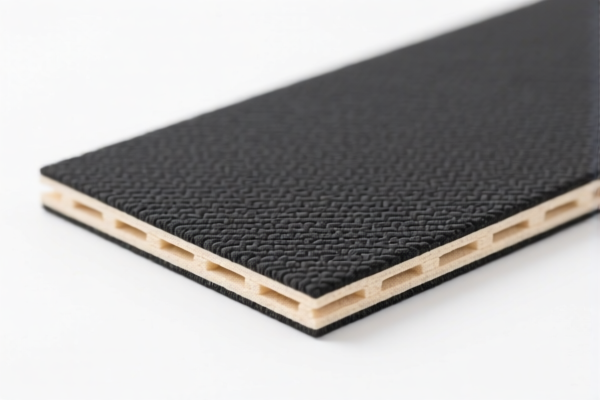
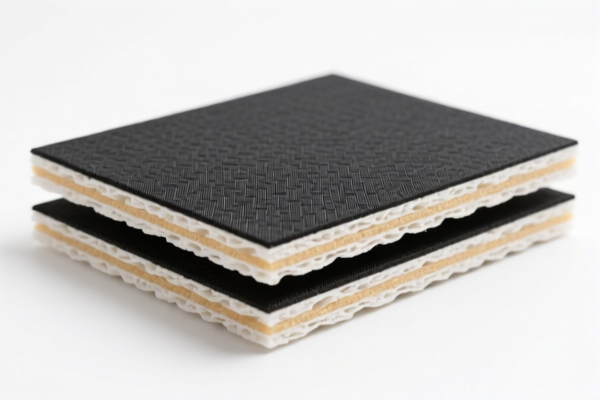
Polyurethane Fiber Fabric Sandwich Panel
CN → US| HS Code | Tariff Rate | Origin | Destination | Doc |
|---|---|---|---|---|
| 6808000000 | 35.0% | CN | US | Official Doc |
| 6810000000 | 0.0% | CN | US | Official Doc |
Product Images


AI Analysis
🏗️ Polyurethane Fiber Fabric Sandwich Panel: HS Code, Taxation & Clearance Strategy
🌐 HS Code Reference & Clearance Guide | 2026 Latest Tariff Analysis | Professional Compliance Strategy
📌 I. Product Definition: What Exactly Is a "Polyurethane Fiber Fabric Sandwich Panel"?
The term "Polyurethane Fiber Fabric Sandwich Panel" is ambiguous and technically imprecise in international trade. It likely refers to one of two distinct material types, which leads to different HS Codes and vastly different tax outcomes. We must distinguish between:
🔹 Type A: Wood-Based Agglomerated Panels (Common Misnomer)
Often, "fiber fabric" is incorrectly used to describe wood shavings, chips, or sawdust agglomerated with mineral binders (cement, plaster). If the core is polyurethane foam bonded to wood fibers/chips and the outer layers are rigid, it may fall under Chapter 68.
🔹 Type B: Insulation Panels with Polyurethane Core (Typical Construction Product)
If the panel consists of mineral wool, rockwool, or other non-organic fibers with a polyurethane facing or core, it falls under Chapter 68 or Chapter 39/48 depending on composition. However, the provided DATA only lists two specific HS Codes from Chapters 68.
⚠️ Critical Distinction:
- If the panel is made of vegetable fiber, straw, shavings, chips, or sawdust agglomerated with cement, plaster, or other mineral binders → HS Code 6808.00.00.00
- If the panel is made of other mineral materials (not vegetable/wood-based) and used for construction → HS Code 6810.00.00.00
📦 II. HS Code Classification Details (Based on Provided DATA)
| HS Code | Product Description | Material Composition | Tax Status |
|---|---|---|---|
6808.00.00.00 |
Panels, boards, tiles, blocks of vegetable fiber, straw, shavings, chips, particles, sawdust, or other waste of wood, agglomerated with cement, plaster, or other mineral binders | Wood fiber/chips + mineral binder | ✅ Taxable |
6810.00.00.00 |
Panels, boards, tiles, blocks of mineral materials, not elsewhere specified, for building/construction | Mineral-based (e.g., concrete, gypsum, ceramic) | ❌ Error/Failed |
📌 Key Insight:
The term "Polyurethane Fiber Fabric" does not explicitly match either HS Code. However: - If the "fiber fabric" is actually wood-based (e.g., MDF, OSB, particleboard with PU foam core), it may be classified under 6808.00.00.00 if agglomerated with mineral binders. - If it is pure polyurethane foam with no mineral binder or wood fiber, it may not fit either code and could fall under Chapter 39 (Plastics) or Chapter 48 (Paper/Cardboard), but these are not in the provided DATA.
💰 III. 2026 Tariff Rate Breakdown (Based on Provided DATA)
🎯 1. HS Code 6808.00.00.00 – Wood-Based Agglomerated Panels
| Item | Detail |
|---|---|
| Base Tariff | 0.0% (Ad Valorem) |
| Additional Tariff | 25.0% (Likely Section 301 Tariff for Chinese Goods) |
| Total Tax Rate | 25.0% |
| Tax Calculation | CIF Value × 25% |
| De Minimis Exemption | ❌ Not Applicable (High-value construction materials) |
| Legal Basis | Standard Section 301 Additional Duty for China-origin goods |
📌 Explanation:
- The 0% base rate reflects standard MFN (Most Favored Nation) treatment for wood-based construction materials. - The 25% additional tariff is likely imposed under Section 301 of the Trade Act (if originating from China). This is a significant cost driver. - No de minimis exemption applies due to the high value and construction nature of the product.
🎯 2. HS Code 6810.00.00.00 – Mineral Material Panels
| Item | Detail |
|---|---|
| Tax Status | Error / Failed to Retrieve |
| Action Required | Manual verification needed; contact customs broker |
📌 Warning:
- The system failed to retrieve tax information for this HS Code. - This could be due to: - Outdated tariff data - Restricted product classification - Need for manual customs broker input - Do not rely on this code for clearance without verification.
🛠️ IV. Clearance Practical Advice (Risk Mitigation Strategy)
✅ 1. Preparation Checklist (Essential Documents)
| Document | Required | Purpose |
|---|---|---|
| ✅ Product Specification Sheet | ✔️ | Clarify material composition (wood fiber vs. mineral vs. PU foam) |
| ✅ Material Safety Data Sheet (MSDS) | ✔️ | Confirm no hazardous materials (PU foam may contain blowing agents) |
| ✅ Certificate of Origin (CO) | ✔️ | Determine if Section 301 tariffs apply (China origin triggers 25%) |
| ✅ Commercial Invoice | ✔️ | Must accurately describe product as "Wood Fiber Agglomerated Panel" or "Mineral Construction Panel" |
| ✅ Packing List | ✔️ | Detail dimensions, weight, and packaging to avoid misdeclaration |
| ✅ Third-Party Test Report | ✔️ | Fire rating, density, and durability tests (critical for construction materials) |
✅ 2. Classification Tips (Key Rules)
🔥 "Know Your Core: Wood = 6808, Mineral = 6810 (Unverified)"
| Scenario | Correct HS Code | Risk if Incorrect |
|---|---|---|
| Panel made of wood shavings/chips + cement | 6808.00.00.00 |
Misclassification → 25% tariff + penalties |
| Panel made of rockwool/gypsum/concrete | 6810.00.00.00 |
Tax retrieval failure → clearance delay |
| Panel made of pure polyurethane foam | Not Listed | May require Chapter 39 classification → different tax |
| Panel with mixed materials (e.g., wood + PU foam) | Likely 6808.00.00.00 if mineral binder present |
Must prove mineral binder usage |
📌 Critical Note:
- If the panel contains polyurethane foam as the primary core material, it may not fit 6808 or 6810. PU foam is typically classified under Chapter 39 (Plastics). - However, since the provided DATA only includes 6808 and 6810, you must ensure the product actually contains wood fibers or mineral binders to use these codes.
✅ 3. Special Cases & Workarounds
| Scenario | Recommendation |
|---|---|
| Pure PU Foam Panels | Do not use 6808/6810. Classify under Chapter 39 (e.g., 3921.13.00.00 for PU sheets) and consult a customs broker for tax accuracy. |
| Mixed Material Panels | Provide a material breakdown percentage (e.g., 60% wood fiber, 30% PU foam, 10% cement) to justify classification under 6808. |
| Chinese Origin | Budget for 25% additional tariff on HS Code 6808.00.00.00. Consider sourcing from non-China countries (e.g., Vietnam, Thailand) to avoid Section 301 tariffs. |
| Mineral-Based Panels | Verify HS Code 6810.00.00.00 tax status with a customs broker before shipment. Do not assume 0% or any specific rate. |
🌍 V. Global Market Comparison (2026 Latest)
| Country | Recommended HS Code | Tariff Rate | Notes |
|---|---|---|---|
| 🇺🇸 USA | 6808.00.00.00 |
25% (Additional) | Only if wood-based + mineral binder. Pure PU may face different taxes. |
| 🇨🇳 China | 6808.00.00.00 |
Varies | Import duties may apply; check latest Chinese tariff schedule. |
| 🇪🇺 EU | 6808.00.00 |
0%–5% | Generally low tariffs for construction materials; CE certification required. |
| 🇬🇧 UK | 6808.00.00 |
0%–5% | Post-Brexit tariffs may vary; check UK Trade Tariff tool. |
| 🇦🇺 Australia | 6808.00.00 |
5% | No additional tariffs; standard MFN rate. |
📌 Conclusion:
- USA imposes a significant 25% additional tariff on wood-based agglomerated panels (HS 6808) if originating from China. - Pure polyurethane panels are not covered by the provided DATA and require separate classification. - Mineral-based panels (HS 6810) have uncertain tax status and require manual verification.
📌 VI. Common Errors & Pitfalls (Lessons Learned)
❌ Error 1: Misclassifying pure PU foam panels as wood-based panels (6808.00.00.00)
👉 Consequence: Customs may reject the classification, leading to delays, audits, or penalties.
❌ Error 2: Assuming HS 6810.00.00.00 has a known tax rate
👉 Consequence: Tax retrieval failure → clearance delay, storage fees, or fines.
❌ Error 3: Ignoring Section 301 tariffs for Chinese-origin goods
👉 Consequence: Unexpected 25% additional duty → profit margin erosion.
❌ Error 4: Failing to provide material composition details
👉 Consequence: Customs may assign a higher tariff code or require additional documentation.
✅ Best Practice:
"Declare Material Composition Clearly: Wood Fiber + Mineral Binder = 6808 (25% Tax). Pure PU = Not Covered. Mineral = Verify."
🎯 VII. Conclusion: Precision in Classification Saves Costs
🎯 Key Takeaways: 1. "Polyurethane Fiber Fabric Sandwich Panel" is ambiguous – clarify if it is wood-based, mineral-based, or pure PU foam. 2. HS Code 6808.00.00.00 applies to wood-based panels with mineral binders → 25% total tax (0% base + 25% additional). 3. HS Code 6810.00.00.00 has failed tax retrieval – do not use without broker verification. 4. Pure PU foam panels are not listed in the provided DATA – likely fall under Chapter 39 and require separate classification. 5. Chinese origin triggers 25% additional tariff under Section 301 – consider sourcing alternatives.
📌 Pro Tip:
If your product is pure polyurethane foam, contact a customs broker to classify it under Chapter 39 (e.g., 3921.13.00.00 for PU sheets/panels) and verify tax rates. Do not force it into 6808 or 6810.
📣 Action Required:
📞 Consult a Customs Broker to verify material composition and confirm HS Code.
📄 Prepare Material Breakdown (wood/mineral/PU percentages) to justify classification.
🚀 Plan for 25% Additional Tariff if originating from China and classified under 6808.00.00.00.
✨ Professional Clearance, Starts with Accurate Classification!
💼 Every Tax Dollar Saved Matters!
Customer Reviews
About HS Code Classification
The Harmonized System (HS) is an internationally standardized nomenclature developed by the World Customs Organization (WCO) to classify traded products. Over 200 countries use the HS system as the basis for customs tariffs, trade statistics, and import/export regulations.
Each HS code follows a hierarchical structure:
- Chapter (2 digits) — Broad category of goods (e.g., Chapter 84: Machinery and Mechanical Appliances)
- Heading (4 digits) — More specific grouping within the chapter
- Subheading (6 digits) — Internationally standardized breakdown, used by all WCO member countries
- National subdivisions (8-10 digits) — Country-specific extensions for further classification, such as US HTSUS 10-digit codes
Correct HS code classification is essential for smooth customs clearance, accurate duty payment, and compliance with trade regulations. Misclassification can lead to customs delays, overpayment of duties, or penalties.
When importing from CN to US, the applicable tariff rates may include:
- Most-Favored-Nation (MFN) rate — The standard duty rate applied to WTO members
- General rate — Applied to countries without trade agreements
- Trade remedy duties — Additional tariffs such as Section 301 (anti-dumping), Section 232 (national security), or countervailing duties
The information provided on this page is for reference purposes only. For official classification, please consult with your local customs authority or a licensed customs broker.