Polyurethane Film
CN → US| HS Code | Tariff Rate | Origin | Destination | Doc |
|---|---|---|---|---|
| 3921135000 | 39.2% | CN | US | Official Doc |
| 3921904010 | 39.2% | CN | US | Official Doc |
| 3920620090 | 39.2% | CN | US | Official Doc |
| 3920992000 | 39.2% | CN | US | Official Doc |
| 3919905060 | 40.8% | CN | US | Official Doc |
Product Images
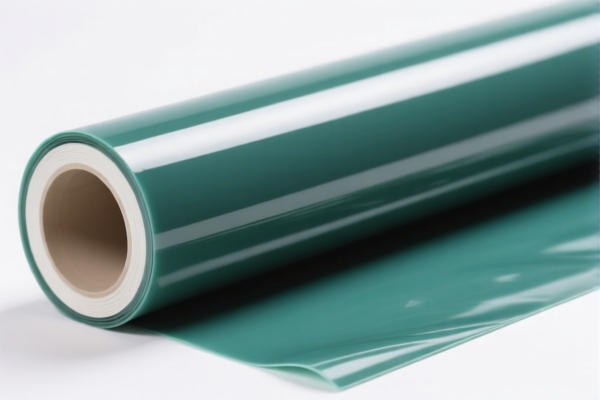
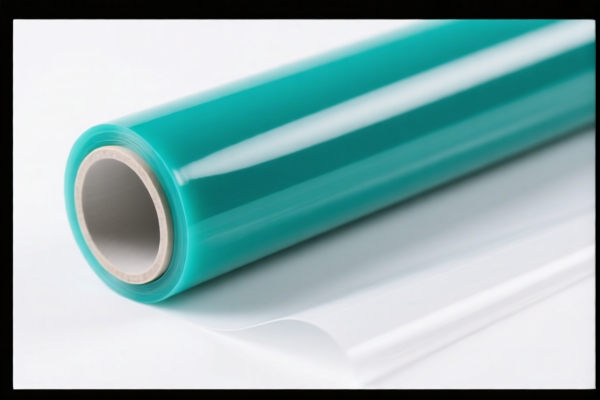
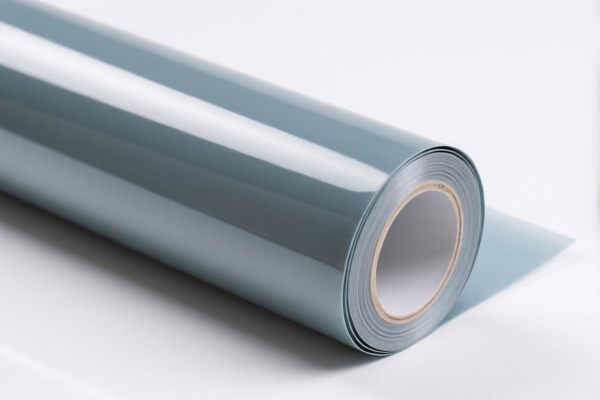
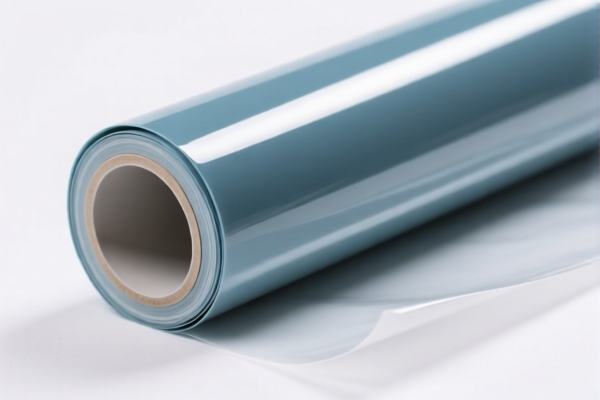
AI Analysis
🎞️ Polyurethane Film (PU Film)
🌐 HS Code Reference & Customs Clearance Guide | 2026 Latest Tariff Analysis | Professional Compliance Strategy
📌 I. Product Definition & Classification: Do You Really Know "PU Film"?
Polyurethane (PU) Film is a versatile plastic film made from polyurethane polymers. In international trade, its classification depends heavily on its material composition, physical form, and specific application features (e.g., self-adhesive, foam-like, or reinforced). The data provided highlights four distinct classifications based on these nuances:
1. PU Foam/Laminated Film
Form: Foam-like board/sheet/film.
Key Feature: Contains foam structure or is a laminated PU product.
2. General PU Film (Non-Paper Reinforced)
Form: Plain film.
Key Feature: Pure polyurethane plastic film without paper backing.
3. Polyester (PET) Film
Form: Plastic film.
Key Feature: Made from Polyethylene Terephthalate (PET), often confused with PU due to similar packaging but chemically distinct.
4. Polycarbonate (PC) Self-Adhesive Film
Form: Self-adhesive film.
Key Feature: Made from Polycarbonate, specifically classified under self-adhesive plastic sheets/films.
⚠️ Key Distinction Point:
- Material Matters: Is it PU, PET, or PC? Misidentifying the polymer leads to wrong HS Codes.
- Form Matters: Is it foam-like? Is it self-adhesive? These trigger different subheadings.
- Tax Implication: While base duties are similar (~4.2%-5.8%), the additional tariffs drastically increase the total cost.
📦 II. HS Code Classification Details (2026 Latest Tariff Authority Comparison)
| HS Code | Product Description | Key Characteristics | Material |
|---|---|---|---|
3921.13.50.00 |
Polyurethane Film (Foam/Laminated) | Foam-like board, sheet, or film; PU material. | Polyurethane |
3921.90.40.10 |
Polyurethane Film (General) | Plastic film, PU material, no paper reinforcement specified. | Polyurethane |
3920.62.00.90 |
Polyester (PET) Film | Plastic film, Polyester resin. | PET/Polyester |
3920.99.20.00 |
Polyester Resin Film | Board/sheet/film feature, Polyester resin. | Polyester Resin |
3919.90.50.60 |
Polycarbonate Self-Adhesive Film | Self-adhesive plastic film/sheet. | Polycarbonate |
🔍 Critical Reminder:
- PU vs. PET: Do not confuse Polyurethane (PU) with Polyester (PET). Although both are films, they fall under different chapters (39.21 vs. 39.20).
- Self-Adhesive Feature: Polycarbonate films with adhesive backing fall under Chapter 39.19, not 39.20 or 39.21.
- China-Origin Impact: All these codes attract significant additional tariffs when imported into the US from China.
💰 III. 2026 Latest Tariff Rate Breakdown (Including Surcharges & Policy Add-ons)
✅ Applicable Country: United States (US)
✅ Country of Origin: China (CN)
✅ Effective Date: November 10, 2025 onwards
🎯 1. 3921.13.50.00 & 3921.90.40.10 —— Polyurethane Films
| Item | Content |
|---|---|
| Base Duty Rate | 4.2% (ad valorem) |
| Section 301 Surcharge | +25.0% (USITC Footnote 9903.88.01) |
| Section 122 Tariff | +10.0% (Specific to China) |
| Total Tax Rate | 39.2% |
| Tax Calculation | CIF Value × 39.2% |
| De Minimis Exemption | ❌ Not Eligible |
| Legal Basis Path | Base: 3921.13/3921.90 → 301: 25% → 122: 10% |
📌 Explanation:
- Base Duty (4.2%): Standard MFN rate for plastic articles.
- Section 301 (25%): Retaliatory tariff on Chinese plastic goods.
- Section 122 (10%): Additional tariff under specific trade provisions for Chinese origin.
- Total: 39.2% is the effective tax burden. This is a high-cost commodity for US importers.
🎯 2. 3920.62.00.90 & 3920.99.20.00 —— Polyester (PET) Films
| Item | Content |
|---|---|
| Base Duty Rate | 4.2% (ad valorem) |
| Section 301 Surcharge | +25.0% |
| Section 122 Tariff | +10.0% |
| Total Tax Rate | 39.2% |
| Tax Calculation | CIF Value × 39.2% |
| De Minimis Exemption | ❌ Not Eligible |
| Legal Basis Path | Base: 3920.62/3920.99 → 301: 25% → 122: 10% |
📌 Note:
- Despite being Polyester (PET) instead of PU, the tariff structure is identical due to similar US trade policy treatment for plastic films from China.
- Do not assume PET is taxed differently; verify the specific HS code suffix.
🎯 3. 3919.90.50.60 —— Polycarbonate Self-Adhesive Film
| Item | Content |
|---|---|
| Base Duty Rate | 5.8% (ad valorem) |
| Section 301 Surcharge | +25.0% |
| Section 122 Tariff | +10.0% |
| Total Tax Rate | 40.8% |
| Tax Calculation | CIF Value × 40.8% |
| De Minimis Exemption | ❌ Not Eligible |
| Legal Basis Path | Base: 3919.90 → 301: 25% → 122: 10% |
📌 Special Attention:
- This code has a slightly higher base duty (5.8%) due to its self-adhesive classification under Chapter 39.19.
- Total Rate: 40.8%, which is 1.6% higher than the PU/PET films.
- Self-adhesive films often require additional documentation proving the adhesive nature.
🛠️ IV. Customs Clearance Practical Advice (Pitfall Avoidance Guide)
✅ 1. Required Documentation Checklist (No Exceptions)
| Document | Mandatory | Description |
|---|---|---|
| ✅ Product Specification Sheet | ✔️ | Must specify: Material (PU/PET/PC), Thickness, Width, Function (Adhesive/Non-adhesive). |
| ✅ Material Certificate | ✔️ | Proof of Polymer Type (e.g., ASTM D1238 for melt flow). Crucial to distinguish PU from PET. |
| ✅ Product Photos | ✔️ | Clear images of roll ends, labels, and any adhesive backing if applicable. |
| ✅ Commercial Invoice | ✔️ | Must accurately describe goods: "Polyurethane Film, 50mic, Non-adhesive" vs "PET Film". |
| ✅ Packing List | ✔️ | Net/Gross weight per roll/carton. |
| ✅ Certificate of Origin (CO) | ✔️ | Essential for determining origin-based tariffs (China vs. Vietnam/Malaysia). |
✅ 2. Declaration Tips (Key Mnemonic)
🔥 “Material First, Form Second, Adhesive Specific, Tariff Accurate!”
| Scenario | Correct Declaration | Wrong Practice |
|---|---|---|
| Pure PU Film (Foam-like) | 3921.13.50.00 |
Misdeclared as PET → Risk of Penalty |
| Pure PU Film (General) | 3921.90.40.10 |
Generic "Plastic Film" → Delays |
| PET Film | 3920.62.00.90 |
Labeled as "PU Film" → 100% Error |
| PC Self-Adhesive Film | 3919.90.50.60 |
Declared as non-adhesive → Underpayment Risk |
| Mixed Rolls (PU+PET) | Separate Declaration | Mixed HS Code on one line → Seizure Risk |
✅ 3. Special Case Handling
| Situation | Handling Advice |
|---|---|
| OEM Custom Films | Provide customer order + technical drawing to prove material composition. |
| Films with Paper Reinforcement | If PU film is laminated with paper, it may shift to Chapter 48 (Paper). Check carefully! |
| Origin Diversification | If produced in Vietnam, Malaysia, or Thailand, check for Section 301/122 exemptions. Rates could drop to ~4-6%. |
| Sample Shipments | Even samples from China face 39.2-40.8% tax if declared as commercial samples with value. No de minimis for this category. |
🌍 V. Global Market Clearance Comparison (2026 Latest)
| Country/Region | Recommended HS Code | Tariff (China Origin) | Certification Requirements | Notes |
|---|---|---|---|---|
| 🇺🇸 USA | 3921.13.50.00 etc. |
39.2% - 40.8% | None specific | High Tariff Barrier |
| 🇨🇳 China | 3921.13.50.00 etc. |
0% - 5% (Import Duty) | CCC (if applicable) | No additional surcharges |
| 🇪🇺 EU | 3920 or 3921 |
6.5% (Standard) | REACH, RoHS | No Section 301/122 |
| 🇬🇧 UK | 3920 or 3921 |
6.5% (Standard) | UKCA, REACH | Post-Brexit rules apply |
| 🇦🇺 Australia | 3920 or 3921 |
5.0% | RCM | Low tariff advantage |
📌 Conclusion:
- USA is the most expensive market for Chinese-made PU/PET films due to the ~40% effective tariff.
- EU/UK/AU offer much lower entry costs (~5-7%) if quality standards (REACH/RoHS) are met.
- Supply Chain Strategy: Consider sourcing from non-China origins (e.g., Malaysia, South Korea) to mitigate US tariffs.
📌 VI. Common Errors & Pitfall Guide (Blood Lessons)
❌ Error 1: Confusing Polyurethane (PU) with Polyester (PET)
👉 Consequence: Wrong HS Code → Seizure or Forced Re-export.
👉 Fix: Always provide a Material Certificate from the manufacturer.
❌ Error 2: Ignoring the Self-Adhesive feature
👉 Consequence: Declaring 3920 (Non-adhesive) for a self-adhesive film (3919) → Underpayment + Penalties.
👉 Fix: If it has adhesive, declare under 3919.
❌ Error 3: Assuming De Minimis applies
👉 Consequence: Using 80/86 form for small shipments → Accounting Fraud Risks and 100% Duty + Penalty.
👉 Fix: All PU/PET films from China are excluded from de minimis.
❌ Error 4: Vague Description "Plastic Film"
👉 Consequence: Customs officer may assign a worst-case scenario code or hold shipment for classification review.
👉 Fix: Be specific: "100% Polyurethane TPU Film, 50 Microns, Non-Adhesive".
✅ Correct Declaration Example:
"Thermoplastic Polyurethane (TPU) Film, 50 Micron Thickness, 1200mm Width, Non-Adhesive, For Industrial Lamination, Model XYZ, Made in China"
🎯 VII. Conclusion: Professional Declaration, Cost Savings, Efficiency!
🎯 Remember the Mnemonic:
🔹 "Material is King: PU, PET, PC – Don't Mix!"
🔹 "USA Tariff: ~40%, No De Minimis, No Excuses!"
🔹 "Self-Adhesive = 3919, Base Film = 3920/3921!"
📌 Pro Tip:
- If your film is produced in Vietnam, Malaysia, or Thailand, apply for Pre-Ruling to confirm exemption from Section 301/122.
- For US imports, calculate landed cost including the 39.2-40.8% tariff before pricing.
- Consider HS Code Pre-Adjudication with US CBP to avoid post-clearance audits.
📣 Immediate Action:
📞 Contact a licensed customs broker + Provide Material Spec Sheet + Request HS Code Pre-Ruling
🚀 Ensure your Polyurethane Film clears customs smoothly, legally, and profitably!
✨ Professional Customs Clearance Starts with Accurate Classification!
💼 Every Cent of Tariff Counts – Know Your Code, Save Your Profit!
Customer Reviews
About HS Code Classification
The Harmonized System (HS) is an internationally standardized nomenclature developed by the World Customs Organization (WCO) to classify traded products. Over 200 countries use the HS system as the basis for customs tariffs, trade statistics, and import/export regulations.
Each HS code follows a hierarchical structure:
- Chapter (2 digits) — Broad category of goods (e.g., Chapter 84: Machinery and Mechanical Appliances)
- Heading (4 digits) — More specific grouping within the chapter
- Subheading (6 digits) — Internationally standardized breakdown, used by all WCO member countries
- National subdivisions (8-10 digits) — Country-specific extensions for further classification, such as US HTSUS 10-digit codes
Correct HS code classification is essential for smooth customs clearance, accurate duty payment, and compliance with trade regulations. Misclassification can lead to customs delays, overpayment of duties, or penalties.
When importing from CN to US, the applicable tariff rates may include:
- Most-Favored-Nation (MFN) rate — The standard duty rate applied to WTO members
- General rate — Applied to countries without trade agreements
- Trade remedy duties — Additional tariffs such as Section 301 (anti-dumping), Section 232 (national security), or countervailing duties
The information provided on this page is for reference purposes only. For official classification, please consult with your local customs authority or a licensed customs broker.