Polyurethane Flooring Cement
CN → US| HS Code | Tariff Rate | Origin | Destination | Doc |
|---|---|---|---|---|
| 3909502000 | 37.1% | CN | US | Official Doc |
| 3909505000 | 41.3% | CN | US | Official Doc |
| 3824401000 | 41.5% | CN | US | Official Doc |
| 3824405000 | 40.0% | CN | US | Official Doc |
| 3909502000 | 37.1% | CN | US | Official Doc |
Product Images
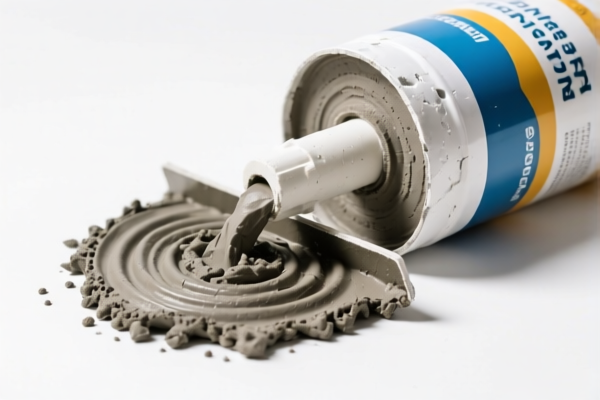
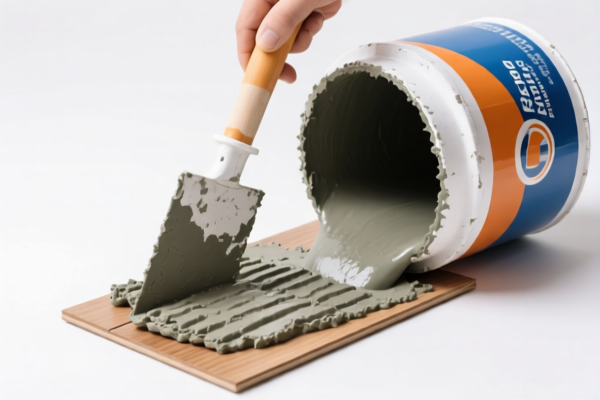
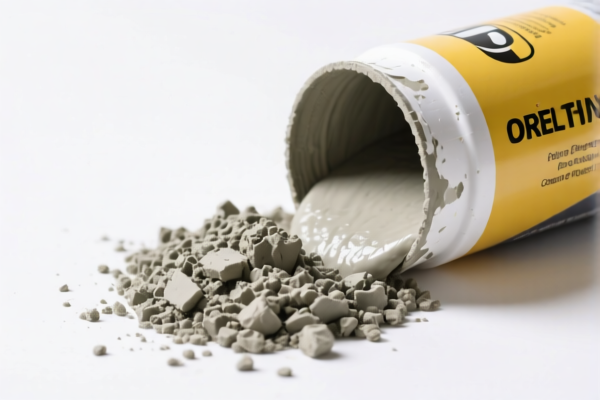
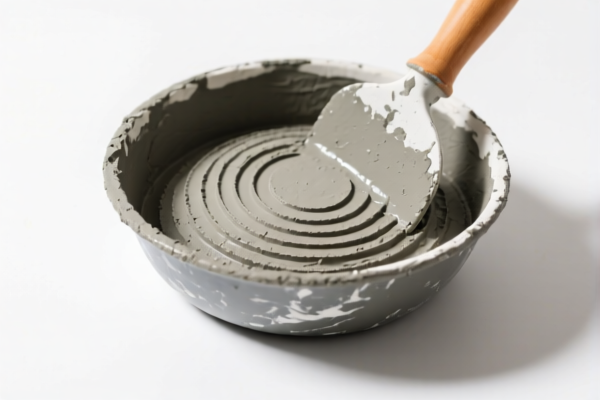
AI Analysis
🏗️ Polyurethane Flooring Cement: HS Code Classification & Customs Clearance Strategy | 2026 Tariff Update
🌐 HS Code Reference & Customs Guide | 2026 Latest Tariff Analysis | Professional Clearance Strategy
📌 I. Product Definition: What is "Polyurethane Flooring Cement"?
Polyurethane Flooring Cement is a high-performance construction material designed for industrial, commercial, and residential flooring applications. It is not a traditional Portland cement but rather a polymer-modified cementitious system or a polyurethane-based structural adhesive/coating.
In international trade, this product falls into two main categories based on its primary composition and function: 1. Polyurethane Resins/Polymers: If the product is primarily a PU resin used as a binder or structural component. 2. Chemical Products/Adhesives/Modifiers: If the product is an additive, modifier, or chemical mixture designed to enhance cement or concrete properties.
⚠️ Key Distinction Point: - If the product is a finished polyurethane resin used structurally → Likely HS 3909. - If the product is a chemical additive/modifier for cement → Likely HS 3824.
📦 II. HS Code Classification Details (2026 Latest Tariff Authority Comparison)
Based on the provided data, the following four HS Codes are relevant for "Polyurethane Flooring Cement" products. The classification depends on whether the product is viewed as a primary polyurethane structure or a chemical additive/modifier.
| HS Code | Product Description | Application Scenario | Primary Material Attribute |
|---|---|---|---|
3909.50.20.00 |
Polyurethane Structural Cement, material is polyurethane, form is cement, meets code definition. | Structural PU flooring, direct PU application | ✅ Primary PU Resin |
3909.50.50.00 |
Polyurethane Structural Cement, contains PU components, considered a composite application form of PU products. | PU-modified cementitious systems | ✅ PU Composite |
3824.40.10.00 |
Polyurethane Cement Additive, contains PU components, fits modified additive characteristics. | Additives for cement/concrete | ✅ Chemical Modifier |
3824.40.50.00 |
Polyurethane Cement Additive, contains PU components, fits chemical preparation material attribute. | Chemical mixtures for flooring | ✅ Chemical Preparation |
🔍 Key Reminder: - If the product is sold as a primary polyurethane product (e.g., a PU resin mix for flooring), it falls under Chapter 39 (Plastics and Articles Thereof). - If the product is sold as an additive or chemical mixture to be mixed with traditional cement, it falls under Chapter 38 (Miscellaneous Chemical Products).
💰 III. 2026 Latest Tariff Rate Breakdown (Including Surcharges & Policy Add-ons)
✅ Applicable Country: USA (US)
✅ Origin: China (CN)
✅ Effective Date: From November 10, 2025 (including subsequent imports)
🎯 1. 3909.50.20.00 — Polyurethane Structural Cement (Primary PU)
| Item | Content |
|---|---|
| Base Tariff | 2.1% (ad valorem) |
| USITC Surcharge | +25.0% (Section 301) |
| Section 122 Surcharge | +10.0% (China-specific) |
| Total Tax Rate | 37.1% |
| Tax Calculation | CIF Value × 37.1% |
| De Minimis Eligibility | ❌ No (deny_de_minimis) |
| Legal Path | Base: 3909.50.20.00 → Surcharge: 25% → Section 122: 10% |
📌 Explanation: - This classification assumes the product is primarily a polyurethane resin. - The 37.1% total rate is a combination of base duty, Section 301 tariffs, and Section 122 surcharges. - High tariff impact: Significant cost increase for importers.
🎯 2. 3909.50.50.00 — Polyurethane Structural Cement (PU Composite)
| Item | Content |
|---|---|
| Base Tariff | 6.3% (ad valorem) |
| USITC Surcharge | +25.0% (Section 301) |
| Section 122 Surcharge | +10.0% (China-specific) |
| Total Tax Rate | 41.3% |
| Tax Calculation | CIF Value × 41.3% |
| De Minimis Eligibility | ❌ No (deny_de_minimis) |
| Legal Path | Base: 3909.50.50.00 → Surcharge: 25% → Section 122: 10% |
📌 Note: - Higher base tariff (6.3%) compared to
3909.50.20.00. - Total rate 41.3% is even higher, making this classification less favorable for cost control. - Still considered a PU-based product, so Section 301 and Section 122 apply.
🎯 3. 3824.40.10.00 — Polyurethane Cement Additive (Modified Additive)
| Item | Content |
|---|---|
| Base Tariff | 6.5% (ad valorem) |
| USITC Surcharge | +25.0% (Section 301) |
| Section 122 Surcharge | +10.0% (China-specific) |
| Total Tax Rate | 41.5% |
| Tax Calculation | CIF Value × 41.5% |
| De Minimis Eligibility | ❌ No (deny_de_minimis) |
| Legal Path | Base: 3824.40.10.00 → Surcharge: 25% → Section 122: 10% |
📌 Explanation: - Classified as a chemical additive for cement. - Despite being an "additive," it is still subject to Section 301 and Section 122 due to its PU content and origin. - Total rate 41.5% is the highest among the four options.
🎯 4. 3824.40.50.00 — Polyurethane Cement Additive (Chemical Preparation)
| Item | Content |
|---|---|
| Base Tariff | 5.0% (ad valorem) |
| USITC Surcharge | +25.0% (Section 301) |
| Section 122 Surcharge | +10.0% (China-specific) |
| Total Tax Rate | 40.0% |
| Tax Calculation | CIF Value × 40.0% |
| De Minimis Eligibility | ❌ No (deny_de_minimis) |
| Legal Path | Base: 3824.40.50.00 → Surcharge: 25% → Section 122: 10% |
📌 Note: - Lowest total rate (40.0%) among all four options. - Base tariff is only 5.0%, but Section 301 and 122 still add 35%. - Suitable if the product is clearly defined as a chemical preparation rather than a structural PU resin.
🛠️ IV. Customs Clearance Practical Advice (Real-World Pitfall Avoidance Guide)
✅ 1. Required Documentation List (None Can Be Omitted)
| Document | Must Provide | Description |
|---|---|---|
| ✅ Product Specification Sheet | ✔️ | Includes composition, weight, curing time, application method |
| ✅ MSDS/SDS (Safety Data Sheet) | ✔️ | Mandatory for chemical products; confirms PU content |
| ✅ Product Photos (Including Label) | ✔️ | Clear image of packaging, ingredients, and manufacturer |
| ✅ Third-Party Test Report | ✔️ | ASTM, ISO, or other relevant standards for flooring cements |
| ✅ Commercial Invoice | ✔️ | Must specify "Polyurethane Flooring Cement" or "PU Additive" |
| ✅ Packing List | ✔️ | Detail net/gross weight, number of packages |
| ✅ Certificate of Origin (CO) | ✔️ | If non-China origin, may qualify for preferential treatment |
✅ 2. Declaration Tips (Key Mantra)
🔥 "Accurate Description, Clear Composition, Avoid Ambiguity!"
| Scenario | Correct Declaration | Incorrect Practice |
|---|---|---|
| Primary PU Resin for Flooring | 3909.50.20.00 or 3909.50.50.00 |
Misdeclare as "Construction Cement" → Potential penalty |
| PU Additive for Cement | 3824.40.10.00 or 3824.40.50.00 |
Misdeclare as "Structural PU" → Higher tax or audit |
| Mixed PU-Cement Product | Clarify primary function in description | Vague term "Flooring Material" → Customs discretion |
| Samples for Testing | Declare as "Sample, Not for Sale" | Full commercial value → Unnecessary tax burden |
📌 Key Point: - If the product is primarily polyurethane, declare under Chapter 39. - If the product is primarily a chemical additive for cement, declare under Chapter 38. - Do not use generic terms like "Building Material" or "Flooring Cement" without specifying PU content.
✅ 3. Special Case Handling
| Scenario | Handling Advice |
|---|---|
| OEM Custom Formula | Provide formula details and client order to justify HS code |
| PU Additive in Bulk | Declare as chemical preparation (3824.40.50.00) for lower base tariff |
| PU Additive in Kits | Declare as modified additive (3824.40.10.00) if part of a system |
| High PU Content (>50%) | Strongly recommend 3909 classification; risk of reclassification if misdeclared |
🌍 V. Global Market Comparison (2026 Latest)
| Country/Region | Recommended HS Code | Tariff Rate | Certification Requirements | Notes |
|---|---|---|---|---|
| 🇺🇸 USA | 3909.50.20.00 / 3824.40.50.00 |
37.1% - 41.5% (China) | EPA, TSCA, OSHA Compliance | High tariffs due to Section 301 & 122 |
| 🇨🇳 China | 3909.50.20.00 / 3824.40.50.00 |
5% - 6.5% | CCC (if applicable) | No additional surcharges |
| 🇪🇺 EU | 3909.50.20.00 / 3824.40.50.00 |
0% - 6.5% | REACH, CLP | No Section 301/122 |
| 🇦🇺 Australia | 3909.50.20.00 / 3824.40.50.00 |
5% - 10% | GEMS Certification | No additional surcharges |
| 🇯🇵 Japan | 3909.50.20.00 / 3824.40.50.00 |
0% - 5% | JIS Standards | No additional surcharges |
📌 Conclusion: - USA is the only market imposing Section 301 (25%) and Section 122 (10%) surcharges on Chinese-origin PU products. - Total tariff rates in the USA range from 37.1% to 41.5%, which is significantly higher than other markets. - Cost Optimization Strategy: Consider sourcing from Vietnam, Mexico, or Thailand to avoid US surcharges (check FTA eligibility).
📌 VI. Common Errors & Pitfall Avoidance (Lessons Learned)
❌ Error 1: Misdeclaring PU Additive as "General Cement"
👉 Consequence: Customs reclassification to 3909 or 3824 → Back taxes + Penalties
❌ Error 2: Not declaring PU Content 👉 Consequence: Lack of MSDS → Shipment held at port → Storage fees
❌ Error 3: Using Vague Product Names 👉 Consequence: Customs unable to determine HS code → Delayed clearance → Demurrage charges
❌ Error 4: Ignoring Section 122 Surcharge 👉 Consequence: Underpayment of 10% → Audit + Interest
✅ Correct Practice:
"Polyurethane Flooring Cement, 20kg bag, 80% PU Resin, 20% Cement, for Industrial Flooring, Model XYZ, MSDS Available"
🎯 VII. Conclusion: Professional Declaration, Save Time, Reduce Costs!
🎯 Remember the Mantra:
🔹 "Primary Material Defines HS, PU Goes to 3909, Additive to 3824." 🔹 "Section 301 and 122 Add 35%, Total Tax 37-41%." 🔹 "Declare Accurately, Avoid Penalties, Keep Cash Flow Healthy."
📌 Pro Tip:
If your product is originally from Vietnam, Mexico, Thailand, or Malaysia, you may be eligible for IEEPA Exemptions or FTA Benefits, reducing tariffs to 0% - 5%. Recommendation: Apply for Advance Ruling from US Customs (CBP) to confirm HS code and tax rate before shipment.
📣 Immediate Action:
📞 Contact a Professional Customs Broker + Provide Product Photos + Apply for HS Code Advance Ruling
🚀 Ensure Your Polyurethane Flooring Cement Clears Customs Smoothly, Efficiently, and Profitably!
✨ Professional Customs Clearance Starts with Accurate Classification!
💼 Every Penny of Cost Deserves Precise Calculation!
Customer Reviews
About HS Code Classification
The Harmonized System (HS) is an internationally standardized nomenclature developed by the World Customs Organization (WCO) to classify traded products. Over 200 countries use the HS system as the basis for customs tariffs, trade statistics, and import/export regulations.
Each HS code follows a hierarchical structure:
- Chapter (2 digits) — Broad category of goods (e.g., Chapter 84: Machinery and Mechanical Appliances)
- Heading (4 digits) — More specific grouping within the chapter
- Subheading (6 digits) — Internationally standardized breakdown, used by all WCO member countries
- National subdivisions (8-10 digits) — Country-specific extensions for further classification, such as US HTSUS 10-digit codes
Correct HS code classification is essential for smooth customs clearance, accurate duty payment, and compliance with trade regulations. Misclassification can lead to customs delays, overpayment of duties, or penalties.
When importing from CN to US, the applicable tariff rates may include:
- Most-Favored-Nation (MFN) rate — The standard duty rate applied to WTO members
- General rate — Applied to countries without trade agreements
- Trade remedy duties — Additional tariffs such as Section 301 (anti-dumping), Section 232 (national security), or countervailing duties
The information provided on this page is for reference purposes only. For official classification, please consult with your local customs authority or a licensed customs broker.