Polyurethane Foam Anti static Board
CN → US| HS Code | Tariff Rate | Origin | Destination | Doc |
|---|---|---|---|---|
| 5911101000 | 37.9% | CN | US | Official Doc |
| 5911102000 | 38.8% | CN | US | Official Doc |
| 3926905900 | 37.4% | CN | US | Official Doc |
| 3926905700 | 41.5% | CN | US | Official Doc |
Product Images
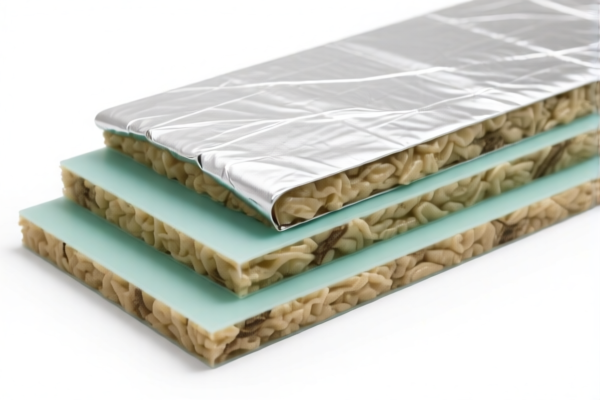
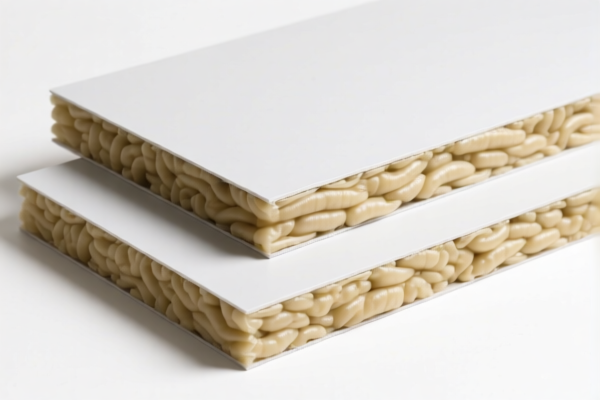
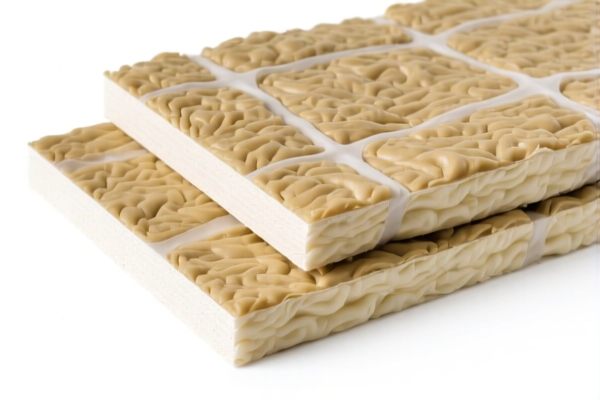
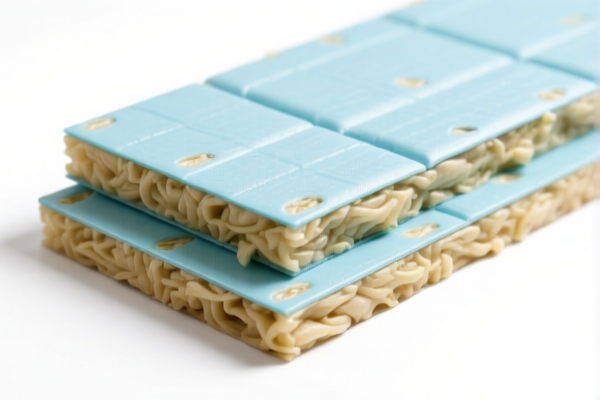
AI Analysis
🛡️ Polyurethane Foam Anti-static Board (PU Textile Composite Anti-static Coated Board)
🌐 HS Code Reference & Customs Clearance Guide | 2026 Latest Tariff Analysis | Professional Customs Strategy
📌 I. Product Definition & Classification: What Exactly Is "PU Anti-static Board"?
This product is a specialized composite material primarily composed of Polyurethane (PU) and Textile Fabrics, engineered for anti-static functionality. In international trade, its classification depends heavily on its physical form (board, laminated fabric, or panel) and structure (coated, laminated, or solid board with textile fibers).
Key Distinction Points: * If it is a "Laminated Fabric": Where PU is coated/laminated onto textile layers primarily for surface properties → Likely falls under Chapter 59 (Textile Impregnated/Coated/Laminated Articles). * If it is a "Board/Panel": Where the structure is rigid, board-like, or contains significant textile fibers embedded within a plastic matrix → Likely falls under Chapter 39 (Plastics and Articles Thereof).
⚠️ Critical Classification Trigger:
- Textile Focus: If the textile layer is the structural base and PU is a surface coating → HS Code 5911.
- Plastic/Composite Focus: If it is a rigid board where textile fibers are embedded or secondary to the plastic/board structure → HS Code 3926.
📦 II. HS Code Classification Details (2026 Latest Tariff Authoritative Comparison)
| HS Code | Product Description | Application Scenario | Classification Logic |
|---|---|---|---|
5911.10.10.00 |
Polyurethane textile composite anti-static coated board; Material: PU; Form: Composite coated board; Use: Anti-static. | Rigid boards with PU coating on textile; industrial anti-static mats/panels. | ✅ Textile Composite: PU coated on textile, rigid form. |
5911.10.20.00 |
Polyurethane textile composite anti-static coated board; Material: PU; Form: Textile fabric lamination; Use: Anti-static. | Flexible or semi-rigid laminated textile fabrics with PU and anti-static properties. | ✅ Textile Lamination: Primarily textile fabric structure with lamination. |
3926.90.59.00 |
Polyurethane textile composite anti-static coated board; Material: PU; Form: Board; Contains textile fibers. | Rigid PU boards containing textile fibers; general composite board use. | ✅ Plastic Board: Board form, plastic (PU) dominant, textile as filler/component. |
3926.90.57.00 |
Polyurethane textile composite anti-static coated board; Material: PU; Form: Composite board; Has anti-static function. | Composite plastic boards with integrated anti-static features and textile components. | ✅ Specialty Plastic: Composite plastic board with specific functional (anti-static) attributes. |
🔍 Key Reminder:
- Chapter 59 applies if the product is essentially a textile article that has been impregnated, coated, covered, or laminated with polyurethane to gain anti-static properties. - Chapter 39 applies if the product is essentially a plastic article (board/panel) where textile fibers are embedded or present, and the anti-static feature is achieved through the plastic matrix or additive. - Form Factor: "Coated board" (5911.10.10) vs. "Fabric lamination" (5911.10.20) vs. "Board with fibers" (3926.90.59/57).
💰 III. 2026 Latest Tariff Rate Breakdown (Including Surcharges & Policy Add-ons)
✅ Applicable Country: United States (US)
✅ Origin: China (CN)
✅ Effective Date: From November 10, 2025 (for subsequent imports)
🎯 1. 5911.10.10.00 —— Polyurethane Textile Composite Anti-static Coated Board
| Item | Content |
|---|---|
| Base Tariff | 2.9% (ad valorem) |
| Section 301 Surtax | +25.0% (USITC Footnote 9903.88.01) |
| Section 122 Surtax | +10.0% (Against China/India, effective 2024-2026) |
| Total Tax Rate | 37.9% |
| Tax Calculation | CIF Value × 37.9% |
| De Minimis Exemption | ❌ Not Eligible (deny_de_minimis) |
| Legal Path | IEEPA:9903.01.25 → USITC:5911.10.10.00 → SECTION122:10% |
📌 Explanation:
- "Base 2.9%" is the standard MFN rate for textile composites. - "25% Surtax" is the standard Section 301 tariff for Chapter 59 goods from China. - "10% Section 122" is an additional surcharge applied to goods from China/India under current executive orders. - Total 37.9%: This is a high tariff burden. Must be factored into cost calculations.
🎯 2. 5911.10.20.00 —— Polyurethane Textile Composite Anti-static Coated Board (Fabric Lamination)
| Item | Content |
|---|---|
| Base Tariff | 3.8% (ad valorem) |
| Section 301 Surtax | +25.0% |
| Section 122 Surtax | +10.0% |
| Total Tax Rate | 38.8% |
| Tax Calculation | CIF Value × 38.8% |
| De Minimis Exemption | ❌ Not Eligible |
| Legal Path | IEEPA:9903.01.25 → USITC:5911.10.20.00 → SECTION122:10% |
📌 Note:
- Slightly higher base rate (3.8%) than the previous code due to specific sub-heading classification for "laminated textile fabrics". - Same surcharges apply. Total 38.8% is the highest base rate among the options.
🎯 3. 3926.90.59.00 —— Polyurethane Textile Composite Anti-static Coated Board (Board with Fibers)
| Item | Content |
|---|---|
| Base Tariff | 2.4% (ad valorem) |
| Section 301 Surtax | +25.0% |
| Section 122 Surtax | +10.0% |
| Total Tax Rate | 37.4% |
| Tax Calculation | CIF Value × 37.4% |
| De Minimis Exemption | ❌ Not Eligible |
| Legal Path | IEEPA:9903.01.25 → USITC:3926.90.59.00 → SECTION122:10% |
📌 Analysis:
- This code offers the lowest total tariff (37.4%) among the four options. - Applicable if the product is classified as a plastic board containing textile fibers, rather than a textile fabric with PU coating. - Strategy: If the product structure allows, classifying under Chapter 39 may save 0.4%-1.4% compared to Chapter 59.
🎯 4. 3926.90.57.00 —— Polyurethane Textile Composite Anti-static Coated Board (Composite Board)
| Item | Content |
|---|---|
| Base Tariff | 6.5% (ad valorem) |
| Section 301 Surtax | +25.0% |
| Section 122 Surtax | +10.0% |
| Total Tax Rate | 41.5% |
| Tax Calculation | CIF Value × 41.5% |
| De Minimis Exemption | ❌ Not Eligible |
| Legal Path | IEEPA:9903.01.25 → USITC:3926.90.57.00 → SECTION122:10% |
📌 Warning:
- This code has the highest total tariff (41.5%). - The higher base rate (6.5%) reflects a "specialty" or "other" plastics classification with specific functional attributes. - Avoid unless legally required by the product's exact composite nature.
🛠️ IV. Customs Clearance Practical Advice (Real-World Pitfall Guide)
✅ 1. Preparation Checklist (All are Mandatory)
| Document | Required | Explanation |
|---|---|---|
| ✅ Product Specification Sheet | ✔️ | Detail material composition (PU % vs. Textile %), thickness, density, anti-static resistance (Ohms). |
| ✅ Structure Diagram | ✔️ | Show layer structure: Is it Textile+PU Coating (Ch.59) or PU Board with embedded fibers (Ch.39)? |
| ✅ Product Photos | ✔️ | Clear images of cross-section, surface, and any labels/markings. |
| ✅ Third-Party Test Report | ✔️ | Certify anti-static performance (e.g., ASTM D257, IEC 61340-5-1). |
| ✅ Commercial Invoice | ✔️ | Use precise description: "PU Composite Anti-static Board" or "Laminated Textile Anti-static Fabric". Avoid vague terms like "Plastic Sheet". |
| ✅ Packing List | ✔️ | Detail weight, dimensions, and package structure. |
✅ 2. Declaration Strategy (Key Mantra)
🔥 “Structure Determines Chapter, Form Dictates Code!”
| Scenario | Correct Declaration | Incorrect Practice |
|---|---|---|
| Rigid Board, PU Dominant | 3926.90.59.00 (37.4%) |
Misdeclare as "Textile" → 38.8%+ |
| Flexible Laminated Fabric | 5911.10.20.00 (38.8%) |
Misdeclare as "Plastic Board" → 37.4% (Risk of Correction) |
| Coated Rigid Board | 5911.10.10.00 (37.9%) |
Misdeclare as "Plastic" → 37.4% (Risk of Correction) |
| Specialty Composite Board | 3926.90.57.00 (41.5%) |
Avoid if possible due to high tax. |
⚠️ Critical:
- If the product is flexible and behaves like a fabric, even if rigidified, customs may lean towards Chapter 59. - If the product is rigid and behaves like a plastic board, even if textile-reinforced, customs may lean towards Chapter 39. - Consistency is Key: Ensure the invoice description matches the technical documentation and the chosen HS Code logic.
✅ 3. Special Cases
| Situation | Handling Advice |
|---|---|
| OEM Customized Boards | Provide customer specs + design drawings to prove structure. |
| Multi-Layer Composite | Provide cross-section diagram showing which layer is primary (textile vs. plastic). |
| Anti-Static Certification | Ensure test reports are recent (<1 year) and from accredited labs. |
| Mixed Shipments | Declare each item separately with correct HS Code. Do not lump under one code. |
🌍 V. Global Market Customs Comparison (2026 Latest)
| Country/Region | Recommended HS Code | Tariff (China Origin) | Certification | Notes |
|---|---|---|---|---|
| 🇺🇸 USA | 3926.90.59.00 / 5911.10.10.00 |
37.4% - 38.8% | None Specific | High surcharges (301 + 122). |
| 🇨🇳 China | 3926.90.59.00 / 5911.10.10.00 |
2.4% - 2.9% | CCC (if applicable) | Low base tariffs, no surcharges. |
| 🇪🇺 EU | 3926.90.59.00 / 5911.10.10.00 |
6.5% - 6.8% | CE | No Section 301/122. |
| 🇬🇧 UK | 3926.90.59.00 / 5911.10.10.00 |
6.5% - 6.8% | UKCA | Post-Brexit rules apply. |
| 🇦🇺 Australia | 3926.90.59.00 / 5911.10.10.00 |
5% - 5% | RCM | Low tariffs, no surcharges. |
📌 Conclusion:
- USA is the most challenging market due to combined surcharges.
- EU/UK/Australia offer significantly lower tariff burdens.
- For US imports, selecting the Chapter 39 code (3926.90.59.00) offers the lowest total rate (37.4%) if structurally defensible.
📌 VI. Common Errors & Pitfalls (Lessons Learned)
❌ Error 1: Declaring a "PU Board" as "Textile Fabric" to avoid plastic tariffs.
👉 Consequence: If deemed misclassification, penalties + back taxes.
❌ Error 2: Declaring a "Laminated Fabric" as a "Plastic Board" to get 37.4% instead of 38.8%.
👉 Consequence: If customs proves it's primarily textile, they may reassess to Chapter 59, causing delays.
❌ Error 3: Omitting "Anti-Static" feature in description.
👉 Consequence: Customs may reject functional claims or require additional testing.
❌ Error 4: Not providing structural diagrams.
👉 Consequence: Customs cannot determine primary material → Ruling delay or default to higher duty.
✅ Correct Approach:
"Polyurethane Composite Anti-Static Board, Rigid, Textile-Reinforced, ASTM D257 Compliant, Model XYZ"
🎯 VII. Conclusion: Precise Classification Saves Money!
🎯 Remember the Mantra:
🔹 "Structure First, Form Second, Chapter 39 Lower, Chapter 59 Higher."
🔹 "37.4% vs 41.5%, Choose Wisely, Don't Let Tariffs Destroy Your Profit!"
📌 Pro Tip:
If your product can be structurally defined as a plastic board containing textile fibers, prioritize 3926.90.59.00 for the lowest US tariff (37.4%).
Recommend Advance Ruling (Pre-classification) with US Customs to secure the correct HS Code and mitigate risk.
📣 Immediate Action:
📞 Contact a Professional Customs Broker + Provide Product Diagrams + Apply for HS Code Advance Ruling
🚀 Ensure your Polyurethane Anti-static Board clears smoothly, efficiently, and profitably!
✨ Professional Customs Clearance Starts with Accurate Classification!
💼 Every Percent of Tariff Counts!
Customer Reviews
About HS Code Classification
The Harmonized System (HS) is an internationally standardized nomenclature developed by the World Customs Organization (WCO) to classify traded products. Over 200 countries use the HS system as the basis for customs tariffs, trade statistics, and import/export regulations.
Each HS code follows a hierarchical structure:
- Chapter (2 digits) — Broad category of goods (e.g., Chapter 84: Machinery and Mechanical Appliances)
- Heading (4 digits) — More specific grouping within the chapter
- Subheading (6 digits) — Internationally standardized breakdown, used by all WCO member countries
- National subdivisions (8-10 digits) — Country-specific extensions for further classification, such as US HTSUS 10-digit codes
Correct HS code classification is essential for smooth customs clearance, accurate duty payment, and compliance with trade regulations. Misclassification can lead to customs delays, overpayment of duties, or penalties.
When importing from CN to US, the applicable tariff rates may include:
- Most-Favored-Nation (MFN) rate — The standard duty rate applied to WTO members
- General rate — Applied to countries without trade agreements
- Trade remedy duties — Additional tariffs such as Section 301 (anti-dumping), Section 232 (national security), or countervailing duties
The information provided on this page is for reference purposes only. For official classification, please consult with your local customs authority or a licensed customs broker.