Polyurethane Foam Granules
CN → USProduct Images
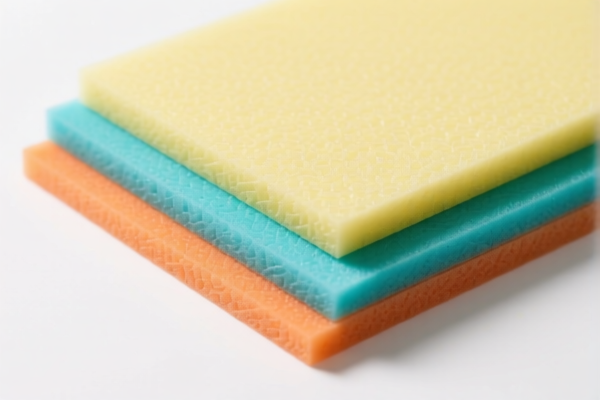
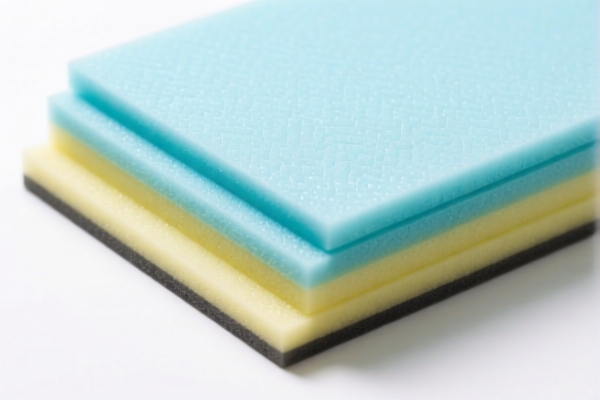
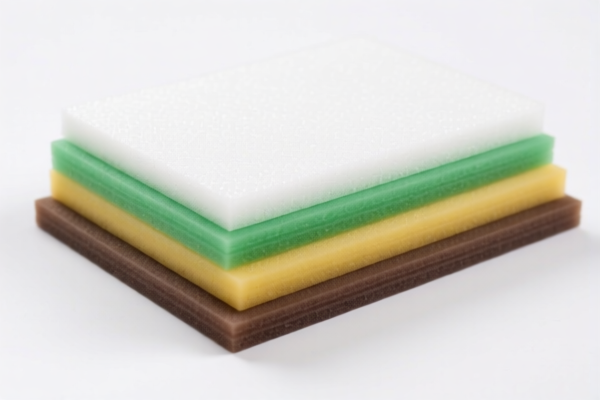
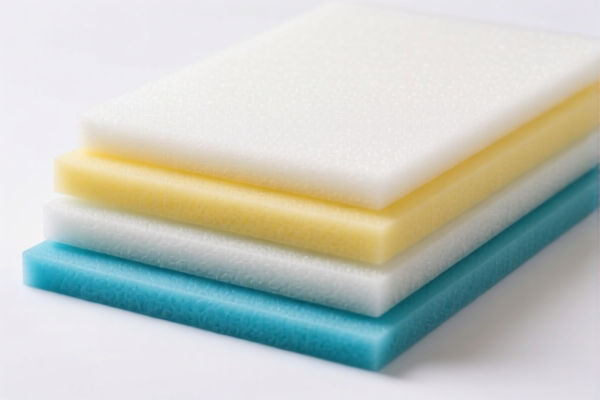
AI Analysis
🧱 Polyurethane Foam Granules (PU Foam Granules)
🌐 HS Code Reference & Customs Clearance Guide | 2026 Latest Tariff Analysis | Professional Entry Strategy
📌 I. Product Definition & Classification: What Exactly Are "PU Foam Granules"?
Polyurethane Foam Granules are small, loose pieces of polyurethane foam, typically ranging from 1mm to 10mm in size. They are primarily used as filling material for plush toys, pet beds, cushioning for furniture, and packaging.
In international trade, they are distinct from: 1. PU Foam Sheets/Rolls: Solid blocks of foam (HS 3921). 2. Finished Toys/Products: Goods where the foam is integrated into a finished article. 3. Chemical Raw Materials: Liquid isocyanates or polyols used to make foam.
⚠️ Critical Distinction:
- If the granules are loose, unattached, and used for filling → Classified under Chapters 39 (Plastics) or 40 (Rubber).
- If they are bonded together into a block or shape → Classified as Plastic Articles (3926).
- If they are part of a finished toy → Classified under the toy chapter (e.g., 9503), not as granules.
📦 II. HS Code Classification Details (2026 Latest Tariff Authority)
| HS Code | Product Description | Applicable Scenario | Key Characteristic |
|---|---|---|---|
3904.90.00.00 |
Other primary forms of polyurethane | Standard PU Foam Granules (Loose, for filling) | Most Common. Primary form of plastic. |
3907.90.60.00 |
Other polyacetals and other polyethers | If PU contains high ether content (Rare) | Specific chemical composition required. |
4014.90.00.00 |
Other articles of vulcanized rubber | If labeled as "Rubber Granules" (Misclassification Risk) | Do not use if product is PU (Plastic). |
3926.90.97.90 |
Other plastic articles | If granules are bonded/molded | Not loose granules. |
9503.00.00.00 |
Toys / Puzzles | Finished Plush Toys filled with PU granules | The finished product, not the raw material. |
🔍 Key Reminder:
-3904.90.00.00is the standard HS Code for loose Polyurethane Foam Granules used as stuffing.
- Do NOT classify finished stuffed animals as3904. They are toys (9503).
- Ensure the product is not classified as "rubber" (40) unless it is technically a thermoplastic elastomer (TPE) explicitly declared as such.
💰 III. 2026 Latest Tariff Rates Detailed (Including Additional Duties)
✅ Applicable Country: United States (US)
✅ Country of Origin: China (CN)
✅ Effective Date: Post-November 2025 (Current IEEPA/Section 301 status)
🎯 1. 3904.90.00.00 —— Polyurethane Foam Granules (Loose)
| Item | Detail |
|---|---|
| Base Rate | 5.3% (Ad Valorem) |
| USITC Additional Duty (Section 301) | +25% |
| IEEPA Additional Duty (China-Specific) | +10% (Effective Nov 10, 2025) |
| Total Effective Rate | ~40.3% |
| Calculation Basis | CIF Value × Total Rate |
| De Minimis Exemption? | ❌ No (deny_de_minimis applies to most plastics from China over $250 if Section 301 applies, but typically Section 301 applies regardless of value for these codes). |
| Legal Path | IEEPA:9903.01.25 → USITC:3904.90.00.00 → FOOTNOTE:3904.90.00.00 |
📌 Explanation:
- Polyurethane is considered a "plastic article" or "primary form."
- Section 301 tariffs (25%) apply to most plastic granules/powders from China.
- The additional IEEPA tariff (10%) further increases the burden.
- Total ~40% is a significant cost driver.
🎯 2. 3907.90.60.00 —— If Misclassified as Other Polyethers
| Item | Detail |
|---|---|
| Base Rate | 5.6% |
| Section 301 | +25% |
| IEEPA | +10% |
| Total | ~40.6% |
| Risk | Misclassification can lead to audits. Stick to 3904 for PU. |
🛠️ IV. Customs Clearance Practical Advice (Avoiding Pitfalls)
✅ 1. Documentation Checklist (Mandatory)
| Document | Required | Notes |
|---|---|---|
| ✅ Commercial Invoice | ✔️ | Must state: "Polyurethane Foam Granules, for stuffing/plush toys" |
| ✅ Packing List | ✔️ | Net weight vs. Gross weight clearly defined |
| ✅ Certificate of Origin (CO) | ✔️ | To claim FTA benefits if shipped from Vietnam/Malaysia (see below) |
| ✅ MSDS (Material Safety Data Sheet) | ✔️ | Crucial. Proves it is non-hazardous, solid foam. |
| ✅ Product Photos | ✔️ | Show loose granules in a clear bag or bin. |
| ✅ Declaration of Content | ✔️ | "100% Polyurethane Foam Granules" |
✅ 2. Classification Strategy (Key Rules)
🔥 "Loose Granules = Plastics (3904). Finished Toys = Toys (9503). Never mix them!"
| Scenario | Correct HS Code | Wrong HS Code | Consequence |
|---|---|---|---|
| Loose PU granules in bulk bag | 3904.90.00.00 |
9503.00.00.00 |
Over-declaring value, potential fraud alert |
| Finished stuffed bear filled with PU | 9503.00.00.00 |
3904.90.00.00 |
Under-declaring, penalty for wrong classification |
| PU Granules from China | 3904.90.00.00 |
4014.90.00.00 |
Misclassification as rubber (different tariff) |
| PU Granules from Vietnam | 3904.90.00.00 |
3904.90.00.00 |
Apply for AKFTA benefit! |
✅ 3. Special Cases
| Case | Handling Advice |
|---|---|
| Recycled PU Granules | Still 3904.90.00.00, but add "Recycled" to description. No extra duty, but ensure it meets US EPA standards. |
| Antimicrobial Treated Granules | Add "Treated with Antimicrobial Agent" to invoice. May require EPA registration docs if making health claims. |
| Mixed with Other Plastics | Classify based on principal material. If >50% PU, use 3904. |
🌍 V. Global Market Customs Comparison (2026 Latest)
| Country/Region | Recommended HS Code | Tariff (China Origin) | Certification | Notes |
|---|---|---|---|---|
| 🇺🇸 USA | 3904.90.00.00 |
~40% (incl. 301+IEEPA) | FDA (if food contact), CPSIA (if for toys) | High tariff. Consider supply chain shift. |
| 🇨🇳 China | 3904.90.00.00 |
5.0% | None specific for export | Low duty for domestic use. |
| 🇪🇺 EU | 3904.90.00.00 |
0% (Most FTA countries) | REACH Compliance | No import duty if from many origins. REACH registration required for chemicals. |
| 🇦🇺 Australia | 3904.90.00.00 |
5.0% | ACCC Standards | Standard tariff. |
| 🇯🇵 Japan | 3904.90.00.00 |
5.0% | JIS Standards | No anti-dumping on PU granules. |
📌 Conclusion:
- USA is the most expensive market due to Section 301 and IEEPA.
- EU and Japan are more favorable with 0-5% duties, but strict on chemical compliance (REACH/JIS).
📌 VI. Common Errors & Pitfalls (Lessons Learned)
❌ Error 1: Declaring "Plastic Fillers" as 3926.90 (Other Plastic Articles)
👉 Result: Misclassification. Granules are "primary forms" (3904), not "articles." Customs may reclassify and fine.
❌ Error 2: Not providing MSDS
👉 Result: Shipment held at port. PU foam is generally non-hazardous, but without MSDS, customs cannot verify safety.
❌ Error 3: Mixing Loose Granules with Finished Toys in one shipment without separate lines
👉 Result: Confusion. Must separate Bulk Raw Material (3904) from Finished Goods (9503).
❌ Error 4: Ignoring IEEPA Additional Tariff
👉 Result: Unexpected 10% surcharge on top of 301 tariffs. Budget accordingly!
✅ Correct Declaration Example:
"Polyurethane Foam Granules, Loose, 2-5mm, for Plush Toy Stuffing, Recycled Content 30%, MSDS Available, HS Code 3904.90.00.00"
🎯 VII. Conclusion: Professional Classification Saves Money
🎯 Remember the Golden Rules:
🔹 "Loose Granules = 3904. Finished Toys = 9503."
🔹 "China Origin + PU Granules = ~40% Total Duty."
🔹 "MSDS is Mandatory for Plastic Foam Imports."
📌 Pro Tip:
If you are sourcing from Vietnam, Malaysia, or Thailand, apply for FTA Certificates (AKFTA, ATIGA, etc.). This can waive the Section 301 and IEEPA tariffs, reducing duty to 0-5%.
🚀 Recommendation: Evaluate supply chain shift to ASEAN countries for US-bound PU granules to save ~35% in duties!
📣 Immediate Action:
📞 Confirm origin country → Request MSDS → Apply for Pre-Ruling if volume is high
🚀 Optimize your classification and avoid costly customs delays!
✨ Professional Customs Clearance Starts with Accurate Classification!
💼 Every percentage point saved counts!
Customer Reviews
About HS Code Classification
The Harmonized System (HS) is an internationally standardized nomenclature developed by the World Customs Organization (WCO) to classify traded products. Over 200 countries use the HS system as the basis for customs tariffs, trade statistics, and import/export regulations.
Each HS code follows a hierarchical structure:
- Chapter (2 digits) — Broad category of goods (e.g., Chapter 84: Machinery and Mechanical Appliances)
- Heading (4 digits) — More specific grouping within the chapter
- Subheading (6 digits) — Internationally standardized breakdown, used by all WCO member countries
- National subdivisions (8-10 digits) — Country-specific extensions for further classification, such as US HTSUS 10-digit codes
Correct HS code classification is essential for smooth customs clearance, accurate duty payment, and compliance with trade regulations. Misclassification can lead to customs delays, overpayment of duties, or penalties.
When importing from CN to US, the applicable tariff rates may include:
- Most-Favored-Nation (MFN) rate — The standard duty rate applied to WTO members
- General rate — Applied to countries without trade agreements
- Trade remedy duties — Additional tariffs such as Section 301 (anti-dumping), Section 232 (national security), or countervailing duties
The information provided on this page is for reference purposes only. For official classification, please consult with your local customs authority or a licensed customs broker.