Polyurethane Textile Composite Automotive Interior Panel
CN → US| HS Code | Tariff Rate | Origin | Destination | Doc |
|---|---|---|---|---|
| 3926301000 | 24.0% | CN | US | Official Doc |
| 3921190090 | 41.5% | CN | US | Official Doc |
| 3926305000 | 22.8% | CN | US | Official Doc |
| 3921905050 | 39.8% | CN | US | Official Doc |
| 6810990080 | 35.0% | CN | US | Official Doc |
Product Images
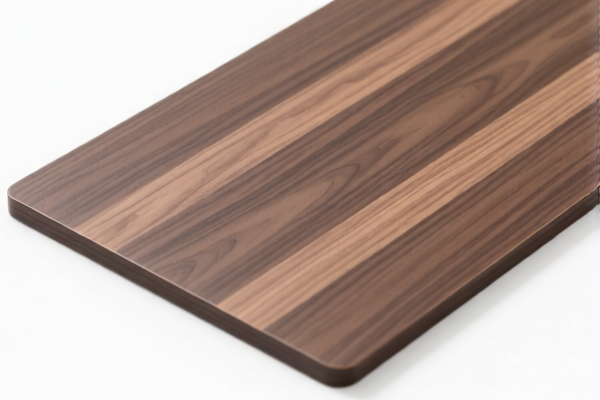
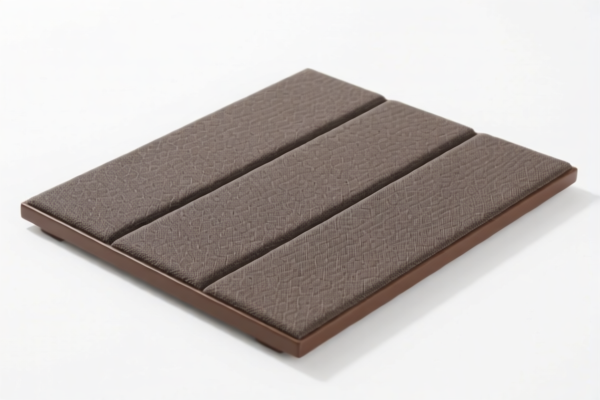
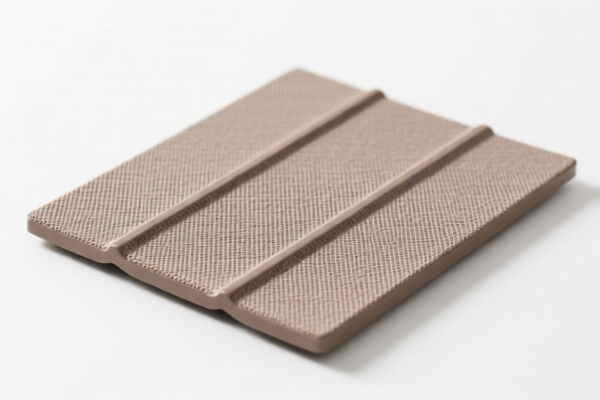
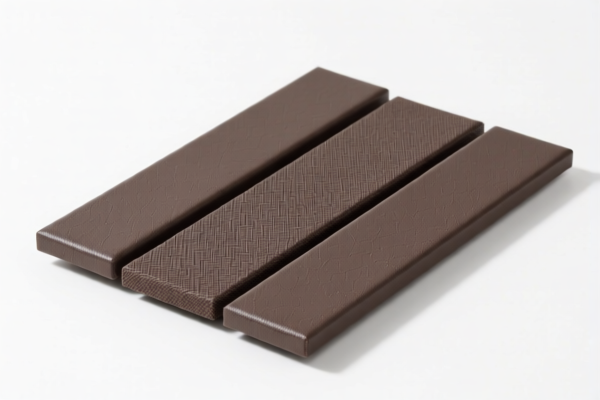
AI Analysis
🚗 Polyurethane Textile Composite Automotive Interior Panel
🌐 HS Code Reference & Clearance Guide | 2026 Latest Tariff Analysis | Professional Customs Strategy
📌 I. Product Definition & Classification: What Exactly Is an "Automotive Interior Panel"?
Automotive interior panels (including door trim, dashboard substrates, and headliners) are critical components of the vehicle's cabin structure. In international trade, their classification hinges on two main factors:
1. Material Composition: Is it made of plastics (e.g., Polyamide/Nylon, Polyurethane) or textiles?
2. Function/Form: Is it a generic "plastic sheet/board" or a "finished article" specifically designed for automotive use?
⚠️ Key Distinction Point:
- If the product is a generic plastic board (even if made of Polyamide or Polyurethane) and lacks specific automotive mounting points or complex shaping → It may fall under Chapter 39 (Articles of Plastics).
- If the product is a finished automotive part (e.g., door panel, trim) specifically identified as such → It may fall under Chapter 39 (Other Articles of Plastics) or potentially Chapter 87/68 if composite structures are involved (though Chapter 39 is dominant for plastic-based panels).
📦 II. HS Code Classification Details (2026 Latest Tariff Authority Comparison)
Based on the provided data, here are the four potential classifications for Polyamide (Nylon) Automotive Interior Panels and Polyurethane Textile Composite Boards.
| HS Code | Product Description | Applicable Scenario | Material/Form | Why This Code? |
|---|---|---|---|---|
3926.30.10.00 |
Automotive Interior Parts (General) | General automotive interior trim, body accessories | Polyamide (Nylon) | Classified under "Articles of plastic for the body of vehicles." Recognized as a finished automotive part. |
3921.19.00.90 |
Plastic Boards/Sheets (Polyamide) | Raw or semi-finished polyamide boards used in auto manufacturing | Polyamide (Nylon) | Classified as "Other plastic boards/sheets." Lacks specific automotive finishing. |
3926.30.50.00 |
Automotive Body Connectors/Components | Specific automotive interior components (connectors, brackets, specific trim) | Polyamide (Nylon) | Classified under "Other articles of plastic for the body of vehicles," specifically for connecting/parts. |
3921.90.50.50 |
Other Plastic Sheets/Films (Polyamide) | Generic polyamide sheets/films not fitting other specific plastic board categories | Polyamide (Nylon) | Classified as "Other plastic sheets/films." Generic raw material form. |
6810.99.00.80 |
Polyurethane Textile Composite Boards (Construction) | Composite boards made of PU and textile, used in construction or general purposes | Polyurethane + Textile | Classified as "Other articles of cement, concrete, or stone" (Note: HS 6810 is often for cement/concrete, but the data implies a composite board. See Critical Note Below). |
🔍 Critical Clarification on
6810.99.00.80:
Standard HS Code 6810 refers to "Articles of cement, concrete, or artificial stone." A Polyurethane Textile Composite should typically fall under Chapter 39 (Plastics) or Chapter 59 (Impregnated Textiles). However, the provided data explicitly lists6810.99.00.80for "Polyurethane Textile Composite Building Board."
Hypothesis: This code might be used in specific jurisdictions for construction-grade composite panels where the polymer matrix is treated similarly to stone-like composites, OR it may be a data anomaly specific to the provided dataset. For automotive use, Chapter 39 is standard for PU/Nylon. If the product is truly for automotive use,3926is far more accurate than6810.
💰 III. 2026 Latest Tariff Rate Breakdown (Including Add-on Taxes, Policy Surcharges)
✅ Applicable Country: United States (US)
✅ Origin: China (CN)
✅ Effective Date: 2025/2026 (Post-Section 301 & IEEPA adjustments)
🎯 1. 3926.30.10.00 — Automotive Interior Parts (Polyamide)
| Item | Detail |
|---|---|
| Base Tariff | 6.5% (Most Favored Nation) |
| USITC Surcharge (Section 301) | +7.5% |
| IEEPA Surcharge (China-specific) | +10% |
| Total Tariff Rate | 24.0% |
| De Minimis Exemption? | ❌ No (Deny De Minimis for Section 301 goods) |
| Legal Basis | HTSUS 3926.30.10 → Section 301 List 4A → IEEPA Proclamation |
📌 Explanation:
- This is the most favorable rate for finished automotive interior panels made of Polyamide.
- It classifies the item as a finished automotive part, not a raw material.
- Total tax is 24%, significantly lower than raw plastic boards.
🎯 2. 3921.19.00.90 — Plastic Boards/Sheets (Polyamide)
| Item | Detail |
|---|---|
| Base Tariff | 6.5% |
| USITC Surcharge (Section 301) | +25.0% |
| IEEPA Surcharge (China-specific) | +10% |
| Total Tariff Rate | 41.5% |
| De Minimis Exemption? | ❌ No |
| Legal Basis | HTSUS 3921.19.00 → Section 301 List 4C → IEEPA |
📌 Explanation:
- High Risk: If Customs interprets your panel as a "plastic board" rather than an "automotive part," you face a 41.5% tariff.
- This classification ignores the automotive end-use and focuses on the material form (sheet/board).
🎯 3. 3926.30.50.00 — Automotive Body Components (Polyamide)
| Item | Detail |
|---|---|
| Base Tariff | 5.3% |
| USITC Surcharge (Section 301) | +7.5% |
| IEEPA Surcharge (China-specific) | +10% |
| Total Tariff Rate | 22.8% |
| De Minimis Exemption? | ❌ No |
| Legal Basis | HTSUS 3926.30.50 → Section 301 List 4A → IEEPA |
📌 Explanation:
- Lowest Rate: This code offers the lowest total tax (22.8%) among Polyamide options.
- It is suitable for specific automotive components (connectors, brackets, trim pieces) rather than generic boards.
- Recommendation: If your product can be described as a "body part" or "component" rather than a "board," use this code.
🎯 4. 3921.90.50.50 — Other Plastic Sheets/Films (Polyamide)
| Item | Detail |
|---|---|
| Base Tariff | 4.8% |
| USITC Surcharge (Section 301) | +25.0% |
| IEEPA Surcharge (China-specific) | +10% |
| Total Tariff Rate | 39.8% |
| De Minimis Exemption? | ❌ No |
| Legal Basis | HTSUS 3921.90.50 → Section 301 List 4C → IEEPA |
📌 Explanation:
- Another high-tariff option (39.8%) for generic plastic sheets.
- Avoid this unless the product is strictly a raw sheet with no automotive shaping.
🎯 5. 6810.99.00.80 — Polyurethane Textile Composite Board
| Item | Detail |
|---|---|
| Base Tariff | 0.0% |
| USITC Surcharge (Section 301) | +25.0% |
| IEEPA Surcharge (China-specific) | +10% |
| Total Tariff Rate | 35.0% |
| De Minimis Exemption? | ❌ No |
| Legal Basis | HTSUS 6810.99.00 → Section 301 List 4C → IEEPA |
📌 Explanation:
- Despite 0% base tariff, the high surcharges bring the total to 35.0%.
- Risk: Misclassification as a "construction board" (6810) for an automotive part could lead to severe penalties for false declaration.
- Only use if the product is explicitly for construction or if the composite structure is legally defined as a stone-like article in the destination country. For automotive PU panels, Chapter 39 is safer.
🛠️ IV. Customs Clearance Practical Advice (Pitfall Avoidance Guide)
✅ 1. Preparation Checklist (Non-Negotiable)
| Document | Required | Purpose |
|---|---|---|
| ✅ Product Specification Sheet | ✔️ | Details material (Polyamide vs. Polyurethane), dimensions, thickness, and automotive application. |
| ✅ Technical Data Sheet (TDS) | ✔️ | Proves material composition. Critical for distinguishing between 3926 (Articles) and 3921 (Sheets). |
| ✅ Product Photos (Clear) | ✔️ | Show mounting holes, clips, or specific automotive shaping to prove it is a finished part, not a raw sheet. |
| ✅ Bill of Lading / Commercial Invoice | ✔️ | Must clearly state "Automotive Interior Panel" or "Polyamide Trim Part," NOT "Plastic Sheet." |
| ✅ Material Declaration | ✔️ | Explicitly state % of Polyamide/Polyurethane and any textile backing. |
| ✅ OEM/Design Drawings | ✔️ | If available, prove the part is custom-designed for a specific vehicle model. |
✅ 2. Declaration Strategy (Key Tips)
🔥 "Shape Matters, Name Matters, Tax Halves!"
| Scenario | Correct Declaration | Incorrect Declaration |
|---|---|---|
| Finished Trim Panel | "Polyamide Automotive Door Trim Panel" | "Polyamide Plastic Board" |
| Composite PU Panel | "Polyurethane Textile Composite Automotive Liner" | "Textile-Backed Plastic Sheet" |
| Raw Sheet for Cutting | "Polyamide Plastic Sheet, Unshaped" | "Automotive Part" |
Critical Rule:
- If the panel has bevels, mounting clips, or vehicle-specific contours, declare it as an Automotive Part (3926) to benefit from lower Section 301 surcharges (7.5% vs 25%).
- If it is a flat, generic board, it will likely be classified as a Sheet (3921), incurring higher surcharges.
✅ 3. Special Cases & Handling
| Situation | Handling Advice |
|---|---|
| Polyurethane (PU) vs. Polyamide (PA) | PU is often used in foams/leather-like surfaces. If it's a hard plastic panel, use 3926. If it's a flexible foam-backed textile, consider Chapter 59 or 3926 depending on rigidity. |
| Mixed Materials | If the panel is >50% plastic by weight/value, Chapter 39 applies. If it's mostly textile, Chapter 59 might apply (check local rules). |
| OEM Parts | Provide the Part Number and Vehicle Make/Model. This strongly supports classification under 3926.30 (Automotive Parts). |
| Construction vs. Auto Use | If you declare 6810 (Construction), ensure the product is not being used in a car. If it's an auto panel, 6810 is fraudulent risk. |
🌍 V. Global Market Comparison (2026 Latest)
| Country/Region | Recommended HS Code | Tariff Rate (China Origin) | Certification Requirements | Notes |
|---|---|---|---|---|
| 🇺🇸 USA | 3926.30.10.00 |
24.0% (Part) vs 41.5% (Sheet) | No specific auto certs, but FCC/UL not needed for trim | Avoid Sheets unless necessary. |
| 🇨🇳 China | 3926.30.10.00 |
6.5% (Base) | CCC (if applicable) | Lower base tariff, no Section 301. |
| 🇪🇺 EU | 3926.30.10.00 |
6.5% (Most Favored) | REACH, RoHS, ELV | No "Section 301" style surcharges. |
| 🇯🇵 Japan | 3926.30.10.00 |
5.0% - 6.0% | PSE (if electronic) | Competitive rates for auto parts. |
| 🇲🇽 Mexico | 3926.30.10.00 |
0% (under USMCA if qualifies) | NOM Certifications | USMCA Origin is key for 0% tariff. |
📌 Conclusion:
- USA is the highest-risk market due to Section 301 and IEEPA surcharges.
- Classification as "Automotive Part" (3926) is crucial to save ~17% in taxes compared to "Plastic Sheet" (3921).
- EU/China/Japan offer more stable and lower base rates, but documentation must still prove automotive end-use.
📌 VI. Common Mistakes & Pitfalls (Lessons Learned)
❌ Mistake 1: Declaring an automotive panel as "Plastic Sheet"
👉 Consequence: Tariff jumps from 24% to 41.5%. Loss of profit margin!
❌ Mistake 2: Using "Composite Board" (6810) for an automotive PU panel
👉 Consequence: Customs rejects declaration as "non-conforming." Delays, fines, or return shipment.
❌ Mistake 3: Omitting "Automotive Use" in the description
👉 Consequence: Customs defaults to generic plastic code (3921). Higher taxes applied.
❌ Mistake 4: Not providing technical data for material composition
👉 Consequence: Customs assigns a default higher tariff rate due to uncertainty.
✅ Correct Approach:
"Polyamide Automotive Interior Door Panel, Model XYZ, for Toyota Camry, Shaped with Mounting Clips, Compliant with US Safety Standards."
🎯 VII. Conclusion: Precise Classification Saves Money!
🎯 Remember the Mantra:
🔹 "Shape is King, Function is Queen, 3926 is the Green Light!"
🔹 "Sheet is 41.5%, Part is 24%, Difference is Cash!"
📌 Pro Tip:
If your Polyurethane Textile Composite panel is flexible and fabric-like, consider if it qualifies under Chapter 59 (Impregnated Textiles) or Chapter 40 (Rubber/Plastic Coated Textiles). However, for hard automotive trim, stick to Chapter 39.
Always apply for a Customs Ruling (ISF/ACE) before shipment if the product is new or borderline.
📣 Immediate Action:
📞 Engage a Customs Broker to review your technical drawings.
🚀 Declare as "Automotive Interior Part" to secure the 22.8% - 24.0% rate.
💼 Your Bottom Line Depends on Your HS Code!
✨ Professional Customs Clearance, Starting with Accurate Classification!
💼 Every Percent of Tariff Saved is Pure Profit!
Customer Reviews
About HS Code Classification
The Harmonized System (HS) is an internationally standardized nomenclature developed by the World Customs Organization (WCO) to classify traded products. Over 200 countries use the HS system as the basis for customs tariffs, trade statistics, and import/export regulations.
Each HS code follows a hierarchical structure:
- Chapter (2 digits) — Broad category of goods (e.g., Chapter 84: Machinery and Mechanical Appliances)
- Heading (4 digits) — More specific grouping within the chapter
- Subheading (6 digits) — Internationally standardized breakdown, used by all WCO member countries
- National subdivisions (8-10 digits) — Country-specific extensions for further classification, such as US HTSUS 10-digit codes
Correct HS code classification is essential for smooth customs clearance, accurate duty payment, and compliance with trade regulations. Misclassification can lead to customs delays, overpayment of duties, or penalties.
When importing from CN to US, the applicable tariff rates may include:
- Most-Favored-Nation (MFN) rate — The standard duty rate applied to WTO members
- General rate — Applied to countries without trade agreements
- Trade remedy duties — Additional tariffs such as Section 301 (anti-dumping), Section 232 (national security), or countervailing duties
The information provided on this page is for reference purposes only. For official classification, please consult with your local customs authority or a licensed customs broker.