Polyurethane Textile Composite Building Board
CN → US| HS Code | Tariff Rate | Origin | Destination | Doc |
|---|---|---|---|---|
| 3921131950 | 40.3% | CN | US | Official Doc |
| 5903202000 | 35.0% | CN | US | Official Doc |
| 3921131500 | 41.5% | CN | US | Official Doc |
| 5903202500 | 42.5% | CN | US | Official Doc |
| 6810990080 | 35.0% | CN | US | Official Doc |
Product Images



AI Analysis
🏗️ Polyurethane Textile Composite Building Board
🌐 HS Code Reference & Customs Clearance Guide | 2026 Latest Tariff Full Analysis | Professional Level Clearance Strategy
📌 I. Product Definition & Classification: Do You Really Understand "Polyurethane Building Boards"?
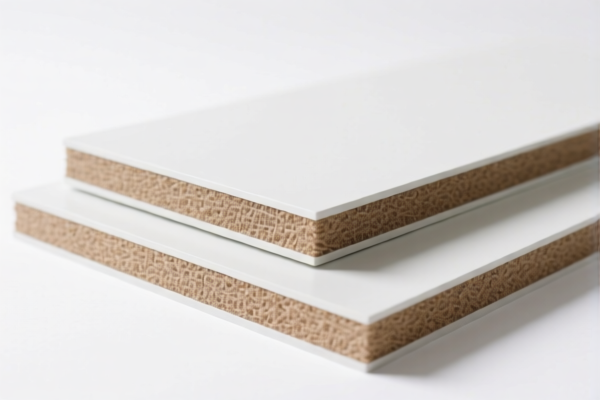
The Polyurethane Textile Composite Building Board is a specialized construction material combining the thermal insulation and structural properties of polyurethane (PU) with the durability and tensile strength of textile composites. In international trade, its classification depends heavily on its physical form (plate/sheet vs. fabric-like) and manufacturing process (lamination vs. impregnation).
Key Distinctions: 1. Rigid/Composite Board (Plastic Article): If the PU acts as the primary structural matrix and is formed into a rigid board/sheet, it is classified under Chapter 39 (Plastics and Articles Thereof). 2. Textile Composite (Fabric Article): If the PU is used to coat, impregnate, or laminate onto a textile substrate, altering the fabric's character, it may fall under Chapter 59 (Impregnated, Coated, Covered or Laminated Textile Fabrics). 3. Mineral-Based Composite: If the board is primarily a cementitious or stone-based product with PU as a secondary coating/insulation layer, it may fall under Chapter 68 (Mineral Products).
⚠️ Critical Differentiation Point:
- If the item is a rigid panel where PU is the dominant material by weight or function → Chapter 39
- If the item is a flexible or semi-rigid laminate where PU coats/textiles are the visible surface → Chapter 59
- If the item is a cement/concrete board with PU finish → Chapter 68
📦 II. HS Code Classification Details (2026 Latest Tariff Authority Comparison)
| HS Code | Product Description | Applicable Scenario | Material Dominance |
|---|---|---|---|
3921.13.19.50 |
Polyurethane plates, sheets, film, and other shapes, other than rigid foam boards or specific laminates | Rigid PU building panels, insulation boards, non-textile primary structure | ✅ PU Primary |
5903.20.20.00 |
Textile fabrics impregnated, coated, covered or laminated with polyurethane, other than those of heading 59.03... | PU-impregnated textile building wraps, waterproof membranes, flexible composite sheets | ✅ Textile + PU Coating |
3921.13.15.00 |
Polyurethane plates, sheets, film, and other shapes, laminated with plastics, other than rigid foam | PU boards laminated with plastic films or composite plastic layers | ✅ Plastic-Laminated PU |
5903.20.25.00 |
Textile fabrics impregnated, coated, covered or laminated with polyurethane, of synthetic fibers | PU-treated synthetic fiber textile facades or interior linings | ✅ Synthetic Textile + PU |
6810.99.00.80 |
Articles of cement, concrete or artificial stone, other | Building boards where concrete/stone is the base, PU is only a surface treatment or additive | ✅ Mineral Base |
🔍 Key Reminder:
- If the product is a rigid construction panel used for walls/roofs and PU is the core material,3921.13.19.50is the most common classification.
- If the product is a flexible membrane used for waterproofing or cladding with a textile backing,5903.20.20.00applies.
- Misclassification can lead to significant duty differences due to the Section Notes of the Harmonized System.
💰 III. 2026 Latest Tariff Rate Detailed Explanation (Including Surcharges, Policy Add-ons)
✅ Applicable Country: United States (US)
✅ Country of Origin: China (CN)
✅ Effective Date: From November 10, 2025 (including subsequent imports)
🎯 1. 3921.13.19.50 —— Polyurethane Plates, Sheets, etc. (Plastic Article)
| Item | Content |
|---|---|
| Base Tariff Rate | 5.3% (ad valorem) |
| Section 301 Surcharge | +25.0% |
| Section 122 Tariff | +10.0% |
| Total Tariff Rate | 40.3% |
| Tax Calculation | CIF Value × 40.3% |
| De Minimis Eligibility | ❌ Not Eligible (deny_de_minimis) |
| Legal Basis Path | USITC:3921.13.19.50 → SECTION_301:3921.13 → SECTION_122:3921 |
📌 Explanation:
- The 5.3% base rate is the standard Most Favored Nation (MFN) rate for plastic plates/sheets.
- The 25% Section 301 tariff applies to all plastic articles from China under this heading.
- The 10% Section 122 tariff is a national security-related surcharge on plastics and plastic articles imported from China.
- Total 40.3% is a high cost factor; precise classification is critical to avoid overpayment.
🎯 2. 5903.20.20.00 —— Impregnated/Coated Textile Fabrics with PU
| Item | Content |
|---|---|
| Base Tariff Rate | 0.0% (ad valorem) |
| Section 301 Surcharge | +25.0% |
| Section 122 Tariff | +10.0% |
| Total Tariff Rate | 35.0% |
| Tax Calculation | CIF Value × 35.0% |
| De Minimis Eligibility | ❌ Not Eligible (deny_de_minimis) |
| Legal Basis Path | USITC:5903.20.20.00 → SECTION_301:5903 → SECTION_122:5903 |
📌 Explanation:
- The base rate is 0%, which makes this classification highly attractive if applicable.
- However, the 35% total rate (25% + 10%) still applies due to China origin.
- Crucial: You must prove the product is primarily a textile fabric that has been impregnated/coated, not a plastic plate with textile backing.
🎯 3. 3921.13.15.00 —— Laminated Polyurethane Plates
| Item | Content |
|---|---|
| Base Tariff Rate | 6.5% |
| Section 301 Surcharge | +25.0% |
| Section 122 Tariff | +10.0% |
| Total Tariff Rate | 41.5% |
| Tax Calculation | CIF Value × 41.5% |
| De Minimis Eligibility | ❌ Not Eligible (deny_de_minimis) |
| Legal Basis Path | USITC:3921.13.15.00 → SECTION_301:3921 → SECTION_122:3921 |
📌 Explanation:
- Slightly higher base rate (6.5%) than3921.13.19.50.
- Applies when PU plates are laminated with other plastic materials, not textiles.
🎯 4. 5903.20.25.00 —— Synthetic Fiber Textiles with PU
| Item | Content |
|---|---|
| Base Tariff Rate | 7.5% |
| Section 301 Surcharge | +25.0% |
| Section 122 Tariff | +10.0% |
| Total Tariff Rate | 42.5% |
| Tax Calculation | CIF Value × 42.5% |
| De Minimis Eligibility | ❌ Not Eligible (deny_de_minimis) |
| Legal Basis Path | USITC:5903.20.25.00 → SECTION_301:5903 → SECTION_122:5903 |
📌 Explanation:
- Higher base rate due to synthetic fiber content.
- Best for synthetic fabric facades or textile-backed PU membranes.
🎯 5. 6810.99.00.80 —— Cement/Concrete/Artificial Stone Articles
| Item | Content |
|---|---|
| Base Tariff Rate | 0.0% |
| Section 301 Surcharge | +25.0% |
| Section 122 Tariff | +10.0% |
| Total Tariff Rate | 35.0% |
| Tax Calculation | CIF Value × 35.0% |
| De Minimis Eligibility | ❌ Not Eligible (deny_de_minimis) |
| Legal Basis Path | USITC:6810.99.00.80 → SECTION_301:6810 → SECTION_122:6810 |
📌 Explanation:
- Only applicable if the core material is cement, concrete, or artificial stone.
- PU is merely a coating, insulation layer, or additive, not the primary structural material.
🛠️ IV. Customs Clearance Practical Advice (Pitfall Avoidance Guide)
✅ 1. Document Checklist (Indispensable)
| Document | Required | Description |
|---|---|---|
| ✅ Product Specification Sheet | ✔️ | Must detail composition: % PU, % Textile, % Concrete, layer structure |
| ✅ Cross-Section Diagram | ✔️ | Visual proof of whether it’s a laminate, impregnated fabric, or solid board |
| ✅ Material Safety Data Sheet (MSDS) | ✔️ | Confirms chemical composition |
| ✅ Certificate of Origin (CO) | ✔️ | Essential for origin determination (China vs. Non-China) |
| ✅ Commercial Invoice | ✔️ | Must clearly state "Polyurethane Composite Building Board" |
| ✅ Packing List | ✔️ | Detailed weight and dimensions |
| ✅ Third-Party Test Report | ✔️ | Certifying material composition and thermal/structural properties |
✅ 2. Declaration Strategy (Key Mnemonics)
🔥 "Structure Defines HS: Board=39, Fabric=59, Stone=68!"
| Scenario | Correct Classification | Wrong Action |
|---|---|---|
| Rigid PU insulation board with no textile core | 3921.13.19.50 |
Misdeclaring as textile fabric → Penalty |
| Flexible PU-coated fabric for waterproofing | 5903.20.20.00 |
Misdeclaring as plastic plate → Higher duty |
| Concrete board with thin PU surface layer | 6810.99.00.80 |
Misdeclaring as plastic article → Compliance risk |
| PU-laminated plastic film board | 3921.13.15.00 |
Misdeclaring as general plastic plate → Minor overpayment |
✅ 3. Special Handling Tips
| Situation | Recommendation |
|---|---|
| Hybrid Products | If the product has both textile and plastic layers, provide Section 20 Notes analysis to prove primary character |
| OEM Custom Boards | Provide client design specs showing whether textile is structural or decorative |
| Import from Non-China | If manufactured in Vietnam or Mexico, IEEPA exemptions may apply, reducing total tax significantly |
| High-Value Insulation | Consider Section 301 Exclusions if available (check latest USTR lists) |
🌍 V. Global Market Clearance Comparison (2026 Latest)
| Country/Region | Recommended HS Code | Tariff | Certification | Notes |
|---|---|---|---|---|
| 🇺🇸 USA | 3921.13.19.50 |
40.3% | FCC, UL (if applicable) | High tariffs due to 301/122 |
| 🇨🇳 China | 3921.13.19.50 |
5.3% | CCC, RoHS | Base rate only |
| 🇪🇺 EU | 3921.13.19.50 |
6.5% | CE, REACH | No Section 301 equivalent |
| 🇦🇺 Australia | 3921.13.19.50 |
5.0% | RCM | Preferential rates possible |
| 🇯🇵 Japan | 3921.13.19.50 |
0-5% | PSE, JIS | Depends on specific subheading |
📌 Conclusion:
- The USA imposes the highest burden due to 301 and 122 tariffs.
- China-origin goods face a 35%-42.5% effective rate.
- Alternative sourcing (e.g., Vietnam, Thailand) can drastically reduce costs.
📌 VI. Common Errors & Pitfall Guide (Lessons Learned)
❌ Error 1: Declaring a rigid PU board as "Textile Fabric" to get 0% base rate
👉 Consequence: Customs rejects based on cross-section analysis → Seizure + Penalty
❌ Error 2: Declaring a concrete board as "Plastic Article"
👉 Consequence: Classification error → Back taxes + Audit
❌ Error 3: Ignoring Section 122 surcharges
👉 Consequence: Underpayment → Refund demand + Interest
❌ Error 4: Using vague terms like "Building Material"
👉 Consequence: Delays in clearance → Storage fees
✅ Correct Approach:
"Polyurethane Composite Building Board, Rigid, 25mm Thickness, PU Core with Textile Face, Model XYZ, for Wall Insulation"
🎯 VII. Conclusion: Professional Declaration, Time-Saving, Cost-Effective!
🎯 Remember the Mnemonic:
🔹 "Structure is King: Plate=39, Fabric=59, Stone=68!"
🔹 "301 & 122 Add 35-42%, Origin Matters, Exemptions Save!"
📌 Pro Tip:
If your polyurethane composite building board is originating from Vietnam, Mexico, or Thailand, you may qualify for IEEPA Exemptions or FTA benefits, reducing tariffs to 0%-5%.
Recommend Advance Ruling from US Customs (CBP) to secure classification certainty.
📣 Immediate Action:
📞 Contact professional customs broker + Provide cross-section diagrams + Apply for HS Code Advance Ruling
🚀 Let your building boards pass smoothly, clear efficiently, and maximize profits!
✨ Professional clearance starts with precise classification!
💼 Every cent of cost deserves precise calculation!
Customer Reviews
About HS Code Classification
The Harmonized System (HS) is an internationally standardized nomenclature developed by the World Customs Organization (WCO) to classify traded products. Over 200 countries use the HS system as the basis for customs tariffs, trade statistics, and import/export regulations.
Each HS code follows a hierarchical structure:
- Chapter (2 digits) — Broad category of goods (e.g., Chapter 84: Machinery and Mechanical Appliances)
- Heading (4 digits) — More specific grouping within the chapter
- Subheading (6 digits) — Internationally standardized breakdown, used by all WCO member countries
- National subdivisions (8-10 digits) — Country-specific extensions for further classification, such as US HTSUS 10-digit codes
Correct HS code classification is essential for smooth customs clearance, accurate duty payment, and compliance with trade regulations. Misclassification can lead to customs delays, overpayment of duties, or penalties.
When importing from CN to US, the applicable tariff rates may include:
- Most-Favored-Nation (MFN) rate — The standard duty rate applied to WTO members
- General rate — Applied to countries without trade agreements
- Trade remedy duties — Additional tariffs such as Section 301 (anti-dumping), Section 232 (national security), or countervailing duties
The information provided on this page is for reference purposes only. For official classification, please consult with your local customs authority or a licensed customs broker.