Polyurethane Textile Composite Ceiling Panel
CN → US| HS Code | Tariff Rate | Origin | Destination | Doc |
|---|---|---|---|---|
| 3921131500 | 41.5% | CN | US | Official Doc |
| 3921131950 | 40.3% | CN | US | Official Doc |
| 5903202500 | 42.5% | CN | US | Official Doc |
| 5903202000 | 35.0% | CN | US | Official Doc |
| 6810990080 | 35.0% | CN | US | Official Doc |
Product Images
AI Analysis
🏗️ Polyurethane Textile Composite Ceiling Panel (聚氨酯纺织复合吊顶板)
🌐 HS Code Reference & Customs Clearance Guide | 2026 Latest Tariff Analysis | Professional Clearance Strategy
📌 I. Product Definition & Classification: What Exactly Is This Product?
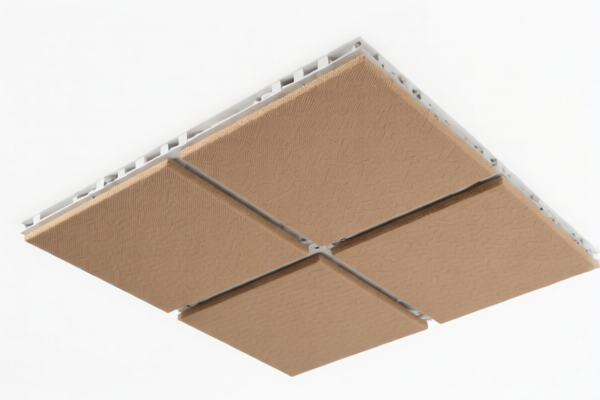
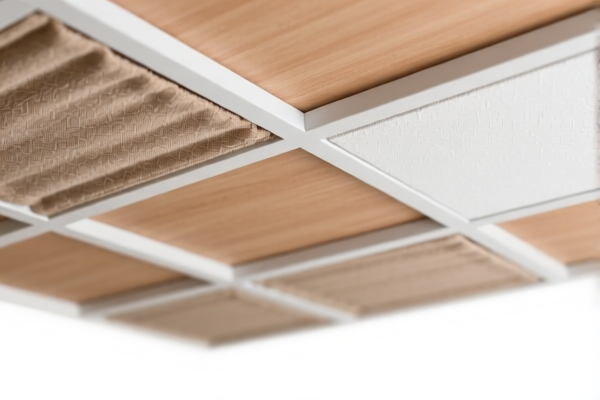
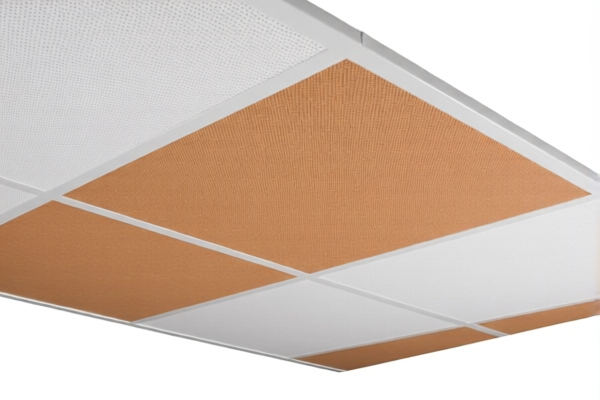
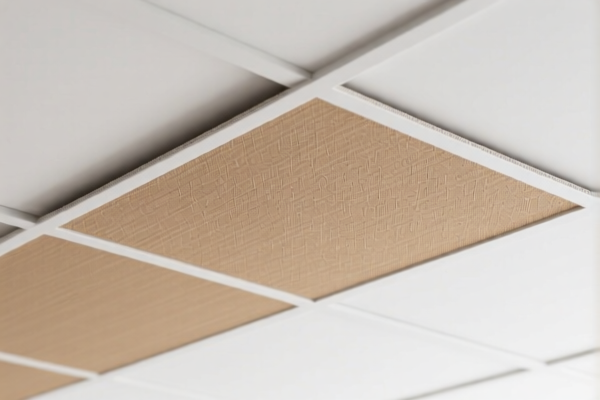
Polyurethane Textile Composite Ceiling Panels are specialized building materials used in interior decoration, specifically for ceilings. They consist of a core or surface layer of Polyurethane (PU) combined with Textile Materials (such as fiberglass, polyester fabric, or other woven/non-woven fabrics) through processes like impregnation, coating, or lamination.
In international trade, the classification hinges on whether the panel is viewed primarily as: 1. A Plastic Product: Where PU is the essential material characterizing the good. 2. A Textile Product: Where the textile fabric impregnated with plastic is the essential character. 3. A Construction Material: Where the final application (ceiling/construction) and composite nature (possibly with mineral cores, though less common for pure PU-textile) drive the classification.
⚠️ Key Distinction Point:
- If the product is essentially a fabric treated with polyurethane for sound absorption or aesthetic finish → It leans towards Chapter 59 (Textiles).
- If the product is essentially a plastic board with a textile backing or layer → It leans towards Chapter 39 (Plastics).
- If it is perceived as a construction board (like gypsum or cement board) with a composite surface → It might be pushed to Chapter 68 (though less likely for pure PU-textile, it appears in the data as a potential risk area).
📦 II. HS Code Classification Details (2026 Latest Tariff Authority Comparison)
Based on the provided data, here are the five potential HS Codes for "Polyurethane Textile Composite Ceiling Panel," ranging from most likely (Plastic/Textile chapters) to less likely (Construction materials).
| HS Code | Product Description & Logic | Application/Context | Primary Material Character |
|---|---|---|---|
| 5903.20.25.00 | Polyurethane-impregnated textile fabrics (Other) | Sound-absorbing ceiling tiles, decorative wall panels made of fabric | ✅ Textile (Fabric impregnated with PU) |
| 5903.20.20.00 | Polyurethane-impregnated textile fabrics (Specific subheading) | Composite boards where the textile structure is dominant | ✅ Textile (Fabric impregnated with PU) |
| 3921.13.15.00 | Polyurethane textile composite building boards | Building boards where PU is the primary matrix, textile is a composite layer | ✅ Plastic (Composite plastic board) |
| 3921.13.19.50 | Other plates, sheets, film of Polyurethane | Building boards classified as general PU plates/sheets | ✅ Plastic (General PU plate) |
| 6810.99.00.80 | Other articles of cement, concrete or artificial stone | Risk Classification: Misclassified as a construction board due to "ceiling/building" use | ⚠️ Construction (Inaccurate but possible if mineral fillers are present) |
🔍 Key Takeaway:
- Chapter 59 (5903) is often the most accurate for textile fabrics impregnated/coated with plastics, especially if the fabric provides the structural integrity or aesthetic finish.
- Chapter 39 (3921) is appropriate if the product is a plastic sheet/board with a textile backing or layer.
- Chapter 68 (6810) is a high-risk misclassification trap. If the panel contains any mineral or cementitious components, customs may reclassify it here. For pure PU-textile, this is likely incorrect but appears in data as a potential dispute outcome.
💰 III. 2026 Latest Tariff Rate Breakdown (Including Surtaxes & Policy Add-ons)
✅ Applicable Country: United States (US)
✅ Origin: China (CN)
✅ Effective Time: 2025/2026 Import Cycle
📌 Note: All rates below include Base Tariff, Section 301 Surtax (25%), and Section 122 Tariff (10%).
🎯 1. 5903.20.25.00 – Polyurethane Impregnated Textile Fabrics (Other)
| Item | Content |
|---|---|
| Base Tariff | 7.5% (ad valorem) |
| Section 301 Surtax | +25.0% |
| Section 122 Tariff | +10.0% |
| Total Effective Tax Rate | 42.5% |
| Tax Calculation | CIF Value × 42.5% |
| De Minimis Exemption | ❌ No (Not eligible) |
| Legal Basis | USITC 5903.20.25.00 → Footnote references for Surtaxes |
📌 Explanation:
- This code applies if the product is primarily a textile fabric that has been impregnated with polyurethane.
- 7.5% is the highest base rate among the options, but it avoids the misclassification risk of Chapter 39 or 68.
- Total 42.5% is significant. Ensure your commercial invoice clearly states "Polyurethane-Impregnated Textile Fabric" if this classification is chosen.
🎯 2. 5903.20.20.00 – Polyurethane Impregnated Textile Fabrics (Specific)
| Item | Content |
|---|---|
| Base Tariff | 0.0% (ad valorem) |
| Section 301 Surtax | +25.0% |
| Section 122 Tariff | +10.0% |
| Total Effective Tax Rate | 35.0% |
| Tax Calculation | CIF Value × 35.0% |
| De Minimis Exemption | ❌ No |
| Legal Basis | USITC 5903.20.20.00 → Footnote references for Surtaxes |
📌 Explanation:
- This is the most cost-effective option among the textile classifications.
- 0% Base Tariff makes it attractive.
- Crucial: You must prove the product fits the specific subheading definition (e.g., specific type of impregnation or textile structure). If customs disputes this and moves you to5903.20.25.00, you face a 7.5%+ penalty.
- Risk: High scrutiny on whether the product meets the precise definition of this subheading.
🎯 3. 3921.13.15.00 – Polyurethane Textile Composite Building Boards
| Item | Content |
|---|---|
| Base Tariff | 6.5% (ad valorem) |
| Section 301 Surtax | +25.0% |
| Section 122 Tariff | +10.0% |
| Total Effective Tax Rate | 41.5% |
| Tax Calculation | CIF Value × 41.5% |
| De Minimis Exemption | ❌ No |
| Legal Basis | USITC 3921.13.15.00 → Footnote references for Surtaxes |
📌 Explanation:
- This code treats the product as a plastic board (Chapter 39) with textile composite.
- 6.5% Base Tariff.
- Total 41.5%.
- Use Case: If the PU layer is thick and structural, and the textile is just a facing, this may be more accurate than Chapter 59.
🎯 4. 3921.13.19.50 – Other Polyurethane Plates/Sheets
| Item | Content |
|---|---|
| Base Tariff | 5.3% (ad valorem) |
| Section 301 Surtax | +25.0% |
| Section 122 Tariff | +10.0% |
| Total Effective Tax Rate | 40.3% |
| Tax Calculation | CIF Value × 40.3% |
| De Minimis Exemption | ❌ No |
| Legal Basis | USITC 3921.13.19.50 → Footnote references for Surtaxes |
📌 Explanation:
- A "catch-all" for PU plates not specified elsewhere.
- 5.3% Base Tariff.
- Total 40.3%.
- Risk: Customs may argue this is too generic for a composite building material and push for5903or6810.
🎯 5. 6810.99.00.80 – Other Articles of Cement/Concrete/Artificial Stone
| Item | Content |
|---|---|
| Base Tariff | 0.0% (ad valorem) |
| Section 301 Surtax | +25.0% |
| Section 122 Tariff | +10.0% |
| Total Effective Tax Rate | 35.0% |
| Tax Calculation | CIF Value × 35.0% |
| De Minimis Exemption | ❌ No |
| Legal Basis | USITC 6810.99.00.80 → Footnote references for Surtaxes |
📌 Explanation:
- ⚠️ HIGH RISK CATEGORY.
- Only applicable if the panel contains cement, concrete, or artificial stone components.
- If your product is pure PU and Textile, this classification is incorrect.
- However, if customs inspects and finds mineral fillers, they may reclassify here.
- Base 0% makes it look attractive, but the misclassification penalty is severe.
- Recommendation: Only use if the product truly contains mineral/building aggregates.
🛠️ IV. Customs Clearance Practical Advice (Avoid Pitfalls)
✅ 1. Documentation Checklist (Non-Negotiable)
| Document | Required? | Purpose |
|---|---|---|
| ✅ Technical Data Sheet (TDS) | ✔️ | Must specify % of PU, type of textile, density, and composite process (lamination vs. impregnation). |
| ✅ Product Photos | ✔️ | Close-up of cross-section to show layer structure. Is PU the core or just a coating? |
| ✅ Bill of Materials (BOM) | ✔️ | Lists all components. Crucial for determining "Essential Character." |
| ✅ Commercial Invoice | ✔️ | Must clearly state: "Polyurethane Textile Composite Panel for Ceiling Use, NOT for Structural Support." |
| ✅ Certificate of Origin | ✔️ | For Surtax assessment. |
| ✅ Third-Party Lab Report | ✔️ | Recommended to confirm material composition (e.g., FTIR analysis for PU vs. other plastics). |
✅ 2. Classification Strategy (Key Mnemonic)
🔥 "Textile Core? Go 59. Plastic Core? Go 39. Mineral Fill? Go 68. Don't Guess!"
| Scenario | Recommended HS Code | Why? |
|---|---|---|
| Fabric is the main structure, PU is a coating/impregnation | 5903.20.20.00 (0% base) or 5903.20.25.00 (7.5% base) | Textile provides essential character. |
| PU Board with textile facing/backing | 3921.13.15.00 (6.5% base) or 3921.13.19.50 (5.3% base) | Plastic provides essential character. |
| Panel contains cement/mineral aggregate | 6810.99.00.80 (0% base) | Construction material classification. |
| Uncertain Composition | Apply for Advance Ruling | Avoids 35-42.5% liability and penalties. |
✅ 3. Special Handling
| Situation | Advice |
|---|---|
| OEM Custom Panels | Provide design specs to prove if it's a "textile fabric" or "plastic board." |
| Mixed Shipments | Do not mix PU-textile panels with pure gypsum boards. Declare separately to avoid confusion. |
| Sound Absorption Use | Emphasize "textile fabric" in description if aiming for Chapter 59, as fabric is key for acoustics. |
| Fire Retardant Treatment | Declare fire retardants explicitly. May affect chemical composition analysis. |
🌍 V. Global Market Comparison (2026 Latest)
| Country/Region | Recommended HS Code | Estimated Total Tax (China Origin) | Certification Requirements |
|---|---|---|---|
| 🇺🇸 USA | 5903.20.20.00 (Best Case) |
35.0% (incl. 35% surtax) | CPC (Children's Product if applicable), FIRE RETARDANT TESTS (ASTM E84) |
| 🇪🇺 EU | 5903.20.90 or 3921.13 |
~0-7.5% + VAT | REACH, CE Marking, Euroclass Fire Rating |
| 🇨🇳 China | 5903.20 or 3921.13 |
~0-6.5% + VAT | CCC (if electrical, unlikely), Fire Safety Standard GB 8624 |
| 🇬🇧 UK | 5903.20 |
~0-7.5% + VAT | UKCA Marking, Fire Safety Regulations |
📌 Conclusion:
- USA is the most challenging market due to Section 301 and 122 tariffs (Total 25-35% extra on top of base).
- EU/UK have lower base tariffs but strict Fire Safety and REACH compliance.
- China Origin faces high tariffs in the US, so cost optimization through accurate classification (e.g., 5903.20.20.00) is critical.
📌 VI. Common Errors & Pitfalls (Lessons Learned)
❌ Error 1: Misclassifying as 6810 (Construction Board) when no mineral content exists.
👉 Result: Customs rejection, forced reclassification, and potential fraud investigation.
👉 Correct: If no cement/concrete, do NOT use 6810.
❌ Error 2: Using 3921 for a product where fabric is the main structural element.
👉 Result: Customs may assess higher base tariff (7.5% vs 5.3%) or demand retroactive duties.
👉 Correct: Analyze "Essential Character." If fabric gives it strength/aesthetics, use Chapter 59.
❌ Error 3: Failing to declare Fire Retardant Treatment.
👉 Result: Customs may hold shipment for chemical analysis, causing delays.
👉 Correct: Clearly state "Fire Retardant Treated" on invoice and provide test reports.
❌ Error 4: Assuming De Minimis Exemption applies.
👉 Result: Package seized and taxed.
👉 Correct: These goods are subject to full taxation (Base + 301 + 122). No de minimis.
✅ Correct Declaration Example:
"POLYURETHANE-IMPREGNATED TEXTILE COMPOSITE PANEL FOR CEILING USE, NON-STRUCTURAL, FIRE RETARDANT TREATED, MODEL ABC, MADE IN CHINA"
🎯 VII. Conclusion: Precise Classification Saves Money!
🎯 Remember the Rule:
🔹 "Fabric First? Go 59. Plastic First? Go 39. Mineral? Go 68. Never Guess!"
🔹 "USA Tariff is High: 35% to 42.5%. Accuracy is Key!"
📌 Pro Tip:
If your product is borderline between 3921 and 5903, consider filing an Application for Advance Ruling with US Customs (CBP). This provides legal certainty and avoids unexpected audits or penalties.
📣 Immediate Action:
📞 Consult a licensed customs broker.
📄 Prepare detailed technical specs and cross-section photos.
📋 Request a Pre-Ruling if shipment value is high.
🚀 Ensure smooth clearance and maximize profit margins!
✨ Professional Clearance Starts with Accurate Classification!
💼 Every percentage point of tax matters!
Customer Reviews
About HS Code Classification
The Harmonized System (HS) is an internationally standardized nomenclature developed by the World Customs Organization (WCO) to classify traded products. Over 200 countries use the HS system as the basis for customs tariffs, trade statistics, and import/export regulations.
Each HS code follows a hierarchical structure:
- Chapter (2 digits) — Broad category of goods (e.g., Chapter 84: Machinery and Mechanical Appliances)
- Heading (4 digits) — More specific grouping within the chapter
- Subheading (6 digits) — Internationally standardized breakdown, used by all WCO member countries
- National subdivisions (8-10 digits) — Country-specific extensions for further classification, such as US HTSUS 10-digit codes
Correct HS code classification is essential for smooth customs clearance, accurate duty payment, and compliance with trade regulations. Misclassification can lead to customs delays, overpayment of duties, or penalties.
When importing from CN to US, the applicable tariff rates may include:
- Most-Favored-Nation (MFN) rate — The standard duty rate applied to WTO members
- General rate — Applied to countries without trade agreements
- Trade remedy duties — Additional tariffs such as Section 301 (anti-dumping), Section 232 (national security), or countervailing duties
The information provided on this page is for reference purposes only. For official classification, please consult with your local customs authority or a licensed customs broker.