Polyurethane Textile Composite Conductive Board
CN → US| HS Code | Tariff Rate | Origin | Destination | Doc |
|---|---|---|---|---|
| 6810990080 | 35.0% | CN | US | Official Doc |
| 5903202000 | 35.0% | CN | US | Official Doc |
| 5903202500 | 42.5% | CN | US | Official Doc |
| 3921131950 | 15.3% | CN | US | Official Doc |
Product Images
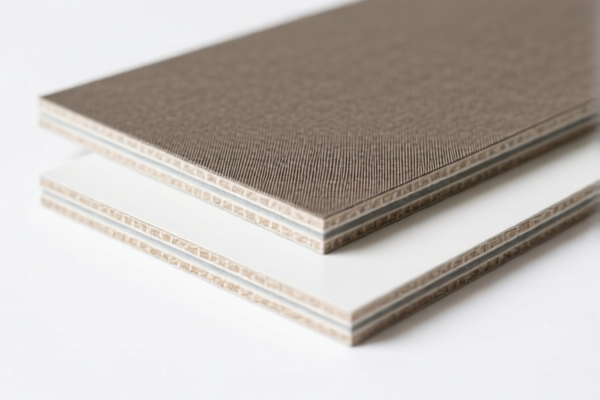
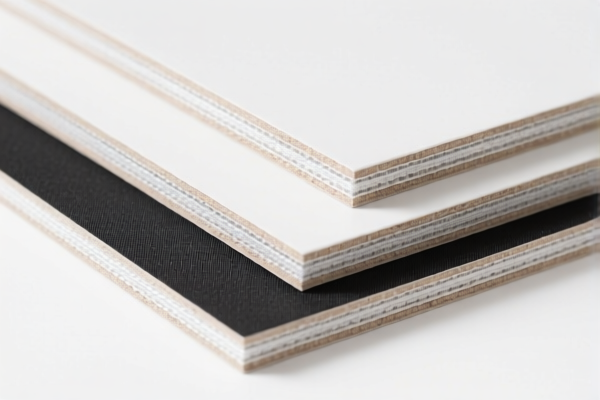
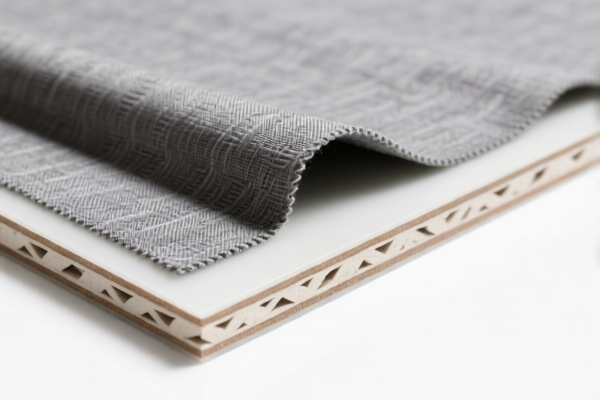

AI Analysis
🏗️ Polyurethane Textile Composite Conductive Board
🌐 HS Code Classification & Customs Clearance Guide | 2026 Tariff Breakdown | Strategic Entry Strategy
📌 One: Product Definition & Classification: Do You Truly Understand "Polyurethane Textile Composite Boards"?
Polyurethane Textile Composite Conductive Board is a specialized engineered material widely used in construction, industrial flooring, EMI/RFI shielding, and smart architecture. It combines the flexibility and durability of textile with the structural integrity of polyurethane (PU), often incorporating conductive agents (like carbon black, metal fibers) to achieve electrical conductivity.
In international trade, its classification hinges on three critical factors: 1. Primary Material: Is it primarily a textile, a plastic (polyurethane), or a concrete-like composite? 2. State/Form: Is it a board/sheet or a fabric? 3. Processing: Is it laminated/impregnated (textile focus) or a molded composite (plastic focus)?
⚠️ Key Classification Dilemma:
- If viewed as "Textile impregnated with Polyurethane" → Likely Chapter 59.
- If viewed as "Plastic Board with Textile backing" → Likely Chapter 39 or Chapter 68.
- Conductivity is a performance feature, not a primary classifier, but the matrix material (PU vs. Textile vs. Stone) dictates the HS Code.
📦 2. HS Code Classification Details (2026 Tariff Reference)
Based on the provided data analysis, here are the four potential classifications for the Polyurethane Textile Composite Conductive Board:
| HS Code | Product Description (Derived from Data) | Application/Logic | Primary Material Focus |
|---|---|---|---|
6810.99.00.80 |
Other articles of cement, concrete, or artificial stone (e.g., "Building Board") | Inferred: Matches "Building Board" usage; assumes PU composite falls under "Other" non-concrete stones. | Artificial Stone / Concrete (Inferred) |
5903.20.20.00 |
Textile fabrics, impregnated/coated/laminated with polyurethane (Other) | Success Match: "Polyurethane" material + "Textile Composite" form. Fits downstream building applications. | Polyurethane-coated Textile |
5903.20.25.00 |
Textile fabrics impregnated/coated/laminated with polyurethane (Other, Artificial Fiber) | Specific Match: Explicit "Polyurethane" + "Textile". Considers "Artificial Fiber" composition. | Polyurethane + Artificial Fiber |
3921.13.19.50 |
Other plates, sheets, film, strip of plastics (Polyurethane), other | Perfect Match: "Polyurethane" material + "Board" form. Fits "Other" plastic boards. | Polyurethane Plastic (Board) |
🔍 Critical Analysis:
-5903.20.xxand3921.13.19.50are the strongest contenders. The choice depends on whether Customs views the textile as the essential character (5903) or the polyurethane board as the essential character (3921).
-6810.99.00.80is a "risky" fallback classification based solely on the "Building Board" usage, potentially ignoring the textile/PU nature.
- Conductivity does not change the base HS code but must be declared in the product name to ensure accurate scrutiny (e.g., "Conductive" might trigger extra checks).
💰 3. 2026 Tariff Rate Breakdown (Detailed Analysis)
✅ Applicable Country: United States (US)
✅ Origin: China (CN)
✅ Validity: From November 10, 2025 (Includes Section 301 & IEEPA adjustments)
🎯 1. 6810.99.00.80 – Cement/Concrete/Artificial Stone Articles
(Inferred Classification based on "Building Board" usage)
| Item | Detail |
|---|---|
| Base Rate | 0.0% |
| Section 301 Add-on | +25.0% (Trade Act 301) |
| Section 122 Add-on | +10.0% (Bipartisan Infrastructure Law / Specific US Tariff) |
| Total Tax Rate | 35.0% |
| Calculation | CIF Value × 35% |
| De Minimis | ❌ Not Eligible (High risk of denial) |
| Legal Path | USITC:6810.99.00.80 → 301:Footnote → 122:Specific |
📌 Interpretation:
- This classification assumes the board is treated as a construction stone/cement product.
- High Risk: If the product is actually textile/plastic, this classification is incorrect and may lead to penalties for misdeclaration.
- Total Cost Impact: Significant increase in landed cost.
🎯 2. 5903.20.20.00 – Polyurethane Coated/Laminated Textile
(Successful Match: Textile + PU)
| Item | Detail |
|---|---|
| Base Rate | 0.0% |
| Section 301 Add-on | +25.0% |
| Section 122 Add-on | +10.0% |
| Total Tax Rate | 35.0% |
| Calculation | CIF Value × 35% |
| De Minimis | ❌ Not Eligible |
| Legal Path | 301:5903.20.20.00 → 122:Specific |
📌 Interpretation:
- Logic: The textile is the base, and PU is the coating/lamination.
- Conductivity: Does not reduce the tax; the rate is driven by the textile/plastic composite nature.
- Note: This is a common classification for "PU leather" or "coated fabrics" used in building.
🎯 3. 5903.20.25.00 – Polyurethane Coated Artificial Fiber Textile
(Specific Match: Artificial Fiber + PU)
| Item | Detail |
|---|---|
| Base Rate | 7.5% (Standard MFN) |
| Section 301 Add-on | +25.0% |
| Section 122 Add-on | +10.0% |
| Total Tax Rate | 42.5% |
| Calculation | CIF Value × 42.5% |
| De Minimis | ❌ Not Eligible |
| Legal Path | MFN:5903.20.25.00 → 301:7.5% → 122:Specific |
📌 Interpretation:
- Highest Tax: This is the most expensive option due to the 7.5% Base Rate.
- Condition: Applied if the textile is explicitly defined as "Artificial Fiber" (e.g., polyester, nylon) rather than generic textile.
- Strategy: Avoid this if possible; try to argue for5903.20.20.00or3921.13.19.50.
🎯 4. 3921.13.19.50 – Polyurethane Plastic Boards (Other)
(Best Match: Material + Form "Board")
| Item | Detail |
|---|---|
| Base Rate | 5.3% |
| Section 301 Add-on | 0.0% (No 301 surcharge on this specific subheading) |
| Section 122 Add-on | +10.0% |
| Total Tax Rate | 15.3% |
| Calculation | CIF Value × 15.3% |
| De Minimis | ❌ Not Eligible |
| Legal Path | MFN:3921.13.19.50 → 122:Specific |
📌 Interpretation:
- Lowest Tax: 15.3% is significantly better than 35% or 42.5%.
- Logic: The product is viewed as a Plastic Board (Chapter 39) with a textile component as part of the composite structure.
- Key Advantage: No 301 Section 301 (25%) surcharge applies to this specific code! Only the 122 Clause (10%) applies.
- Recommendation: This is the optimal classification if the board can be defined primarily as a "Polyurethane Plastic Plate/Sheet".
🛠️ 4. Customs Clearance Practical Advice (Step-by-Step)
✅ 1. Material Documentation Checklist (Non-Negotiable)
| Document | Requirement | Purpose |
|---|---|---|
| Material Safety Data Sheet (MSDS) | ✔️ Must | Confirms "Polyurethane" content and lack of hazardous chemicals. |
| Composition Analysis Report | ✔️ Must | Critical: Must prove if Textile or PU is the "Essential Character". |
| Product Photos (Cross-section) | ✔️ Must | Shows layers: Textile core + PU coating vs. PU board + textile backing. |
| Conductivity Test Report | ✔️ Required | Proves "Conductive" nature (for compliance, not HS Code). |
| Application Certificate | ✔️ Required | "Building Board" use case supports 6810, but "Plastic Sheet" supports 3921. |
| Bill of Materials (BOM) | ✔️ Required | Breakdown of % of Textile vs. % of PU. |
✅ 2. Strategic Declaration Tactics (Golden Rules)
🔥 "Define the Matrix, Not the Function!"
| Scenario | Recommended Action | HS Code Target | Tax Impact |
|---|---|---|---|
| If PU is the structural backbone | Declare as "Plastic Board" with textile reinforcement | 3921.13.19.50 |
15.3% (Best) |
| If Textile is the core, PU is just coating | Declare as "Coated Textile" | 5903.20.20.00 |
35.0% |
| If the board is rigid like concrete | Declare as "Artificial Stone" | 6810.99.00.80 |
35.0% (Risky) |
| If textile is clearly "Artificial Fiber" | Avoid if possible | 5903.20.25.00 |
42.5% (Avoid) |
💡 Pro Tip: To claim
3921.13.19.50(15.3% tax), emphasize the molded plastic nature and the structural integrity provided by the Polyurethane, downplaying the textile as merely a "surface finish" or "reinforcement layer."
✅ 3. Special Handling for "Conductive" Property
- Do not let "Conductive" drive the classification to Electronic (Chapter 85).
- Conductivity is a performance feature of the plastic/textile matrix.
- Declaration Note: Add "Conductive" in the description to ensure compliance, but keep the HS Code focused on Material (Polyurethane/Textile).
- Risk: If the board is too thick or complex, it might be reclassified as a finished building product, triggering different rules.
🌍 5. Global Market Comparison (2026 Outlook)
| Market | Recommended HS Code | Total Tax (China Origin) | Strategy |
|---|---|---|---|
| 🇺🇸 USA | 3921.13.19.50 |
15.3% | Priority: Argue for Plastic Board to avoid 25% 301 tax. |
| 🇪🇺 EU | 3921.11.00 / 5903.20 |
~5% - 7% | Less aggressive tariffs; focus on REACH compliance. |
| 🇨🇳 China | 3921.13.19.50 |
5.3% (MFN) | No Section 301/122. |
| 🇯🇵 Japan | 3921.13.19.50 |
0% (FTA) | Check JFTA if applicable. |
📌 Conclusion:
The US is the most critical market.
- Choosing3921.13.19.50saves 20% in tax compared to the textile classification (5903).
- Misclassification as "Stone" (6810) or "Artificial Fiber" (5903.25) adds 20-27% extra cost.
📌 6. Common Pitfalls & How to Avoid Them
❌ Pitfall 1: "Conductive" triggers Chapter 85
👉 Correction: Conductive plastics/textiles are usually still Chapter 39 or 59 unless they are finished electronic circuits. Keep it as a material.
❌ Pitfall 2: "Building Board" implies Chapter 68
👉 Correction: Just because it's used in a building doesn't mean it's concrete. Use 3921 for plastic boards used in construction.
❌ Pitfall 3: Ignoring the "Textile" component
👉 Correction: If the textile is >50% by weight or essential character, 3921 might be challenged. Prepare a weight analysis report.
❌ Pitfall 4: Claiming "De Minimis"
👉 Correction: No de minimis for China-origin goods under Section 301/122 for this category. Always pay tax.
🎯 7. Final Conclusion: Optimize Your Classification!
🏆 The Winning Strategy:
Aim for3921.13.19.50(15.3%) by framing the product as a Polyurethane Plastic Board where the textile is a secondary reinforcement.🚀 Action Plan: 1. Verify Composition: Calculate the exact weight % of PU vs. Textile. 2. Prepare Technical Specs: Highlight the molded plastic structure. 3. File for Pre-Ruling: Request a Binding Tariff Information (BTI) or Ruling from US Customs if possible. 4. Declare Carefully: "Polyurethane Composite Board with Textile Reinforcement, Conductive, for Construction."
✨ Smart Customs, Smart Savings!
💼 Your Profit Margin Depends on the HS Code You Choose!
Customer Reviews
About HS Code Classification
The Harmonized System (HS) is an internationally standardized nomenclature developed by the World Customs Organization (WCO) to classify traded products. Over 200 countries use the HS system as the basis for customs tariffs, trade statistics, and import/export regulations.
Each HS code follows a hierarchical structure:
- Chapter (2 digits) — Broad category of goods (e.g., Chapter 84: Machinery and Mechanical Appliances)
- Heading (4 digits) — More specific grouping within the chapter
- Subheading (6 digits) — Internationally standardized breakdown, used by all WCO member countries
- National subdivisions (8-10 digits) — Country-specific extensions for further classification, such as US HTSUS 10-digit codes
Correct HS code classification is essential for smooth customs clearance, accurate duty payment, and compliance with trade regulations. Misclassification can lead to customs delays, overpayment of duties, or penalties.
When importing from CN to US, the applicable tariff rates may include:
- Most-Favored-Nation (MFN) rate — The standard duty rate applied to WTO members
- General rate — Applied to countries without trade agreements
- Trade remedy duties — Additional tariffs such as Section 301 (anti-dumping), Section 232 (national security), or countervailing duties
The information provided on this page is for reference purposes only. For official classification, please consult with your local customs authority or a licensed customs broker.