Polyurethane Textile Composite Flooring Panel
CN → US| HS Code | Tariff Rate | Origin | Destination | Doc |
|---|---|---|---|---|
| 6810195000 | 38.9% | CN | US | Official Doc |
| 5903202000 | 35.0% | CN | US | Official Doc |
| 3921131950 | 40.3% | CN | US | Official Doc |
| 6810990080 | 35.0% | CN | US | Official Doc |
| 6810195000 | 38.9% | CN | US | Official Doc |
Product Images
AI Analysis
🏗️ Polyurethane Textile Composite Flooring Panel (聚氨酯纺织复合地板/建筑用板)
🌐 HS Code Reference & Customs Clearance Guide | 2026 Latest Tariff Analysis | Professional Clearance Strategy 📌 I. Product Definition & Classification: What Exactly Is This Product?
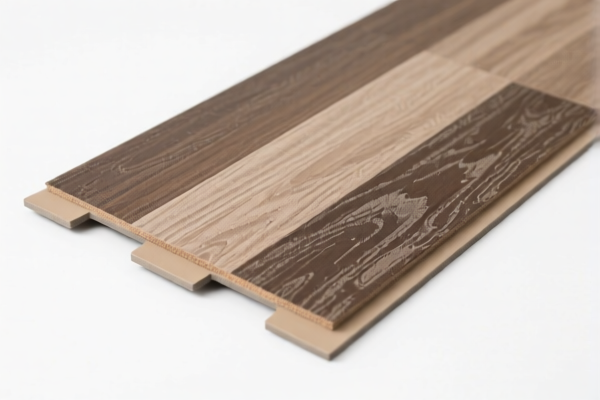
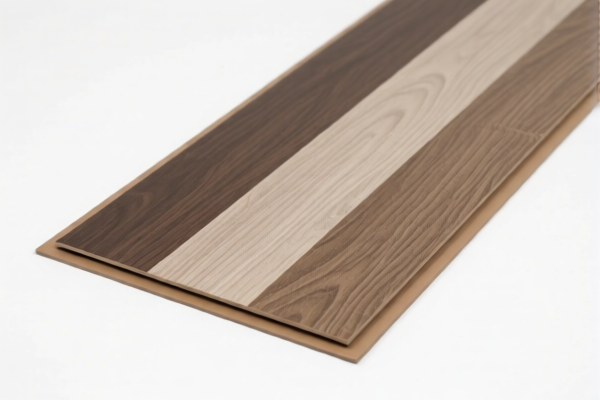
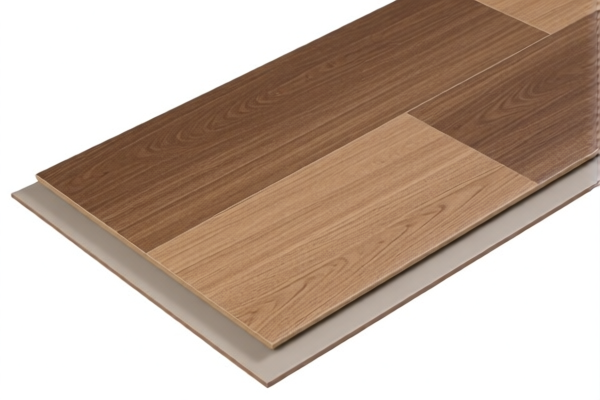
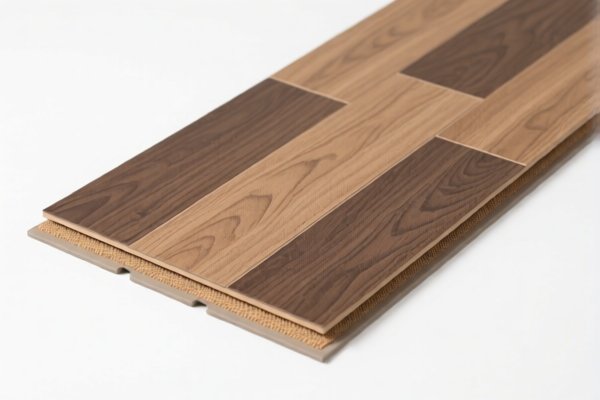
The "Polyurethane Textile Composite Flooring Panel" is a multi-layer construction material. In international trade, its classification is highly controversial and depends heavily on the primary material and essential character of the composite.
It is generally categorized into two main types in customs databases: 1. Building Materials (Stone/Cement-like): Where the structural integrity comes from inorganic components or it is treated as a rigid board for construction. 2. Textile/Plastic Composites: Where the polyurethane (PU) coating/lamination on textile is the defining feature.
⚠️ Key Distinction Point:
- If the product is primarily rigid, used for structural flooring/construction, and contains cement/concrete elements → It may fall under Chapter 68 (Articles of Stone, Plaster, Cement...).
- If the product is primarily a flexible or semi-rigid sheet/board made of PU-impregnated textile → It may fall under Chapter 59 (Impregnated, Coated, Covered or Laminated Textile Fabrics) or Chapter 39 (Plastics and Articles Thereof).
📦 II. HS Code Classification Details (2026 Latest Tariff Authority Comparison)
Based on the provided data, here are the four most likely HS Codes and their corresponding tax implications. Note that misclassification can lead to significant duty discrepancies.
| HS Code | Product Description (Summary) | Application Scenario | Main Material Characteristic |
|---|---|---|---|
6810.19.50.00 |
Other articles of cement, concrete or artificial stone | Used as rigid flooring/construction boards; PU is part of the composite structure but classified as "other" cementitious articles. | Inorganic base + PU |
5903.20.20.00 |
Textile fabrics impregnated, coated, covered or laminated with polyurethane | Flooring panels where the PU-laminated textile is the primary functional layer. | PU + Textile Composite |
3921.13.19.50 |
Other plates, sheets, film, foil and strip, of polymers of ethylene | Classified as a PU plastic board/sheet used for building purposes. | Pure Polymer (PU) Board |
6810.99.00.80 |
Other articles of cement, concrete or artificial stone | Non-specific quartz aggregate boards or other composite stone-like flooring. | Complex Mineral/Polymer Composite |
🔍 Important Reminder:
- If the product is flexible and rolls out like carpet/linoleum,5903.20.20.00is often preferred.
- If the product is rigid and nailed/screwed like plywood or tile,6810.19.50.00or3921.13.19.50might be argued.
- Customs Authorities often scrutinize "Composite" goods to prevent duty evasion by mislabeling high-tariff items as low-tariff ones.
💰 III. 2026 Latest Tariff Rate Breakdown (Including Additional Duties & Policies)
✅ Applicable Country: United States (US)
✅ Country of Origin: China (CN)
✅ Effective Date: 2025/2026 (Post-Trade War Tariffs)
🎯 1. 6810.19.50.00 —— Articles of Cement/Concrete (Other)
| Item | Content |
|---|---|
| Base Duty Rate | 3.9% (Ad Valorem) |
| Section 301 Additional Duty | +25.0% (USITC Footnote) |
| IEEPA Additional Duty | +10.0% (122 Clauses, China-origin) |
| Total Effective Rate | 38.9% |
| Tax Calculation | CIF Value × 38.9% |
| De Minimis Exemption? | ❌ Not Eligible (Section 321 de minimis typically does not apply to goods subject to Section 301/IEEPA duties above certain thresholds or for large shipments) |
| Legal Basis Path | USITC:6810.19.50.00 → SECTION301:FOOTNOTE → IEEPA:122CLAUSES |
📌 Explanation:
- This classification is often used for rigid composite boards.
- The base rate is low (3.9%), but the 35% additional duties (25% + 10%) dominate the cost.
- Risk: Customs may challenge this if the product is not predominantly cement/concrete.
🎯 2. 5903.20.20.00 —— Polyurethane-Impregnated Textile Fabrics
| Item | Content |
|---|---|
| Base Duty Rate | 0.0% (Ad Valorem) |
| Section 301 Additional Duty | +25.0% |
| IEEPA Additional Duty | +10.0% |
| Total Effective Rate | 35.0% |
| Tax Calculation | CIF Value × 35.0% |
| De Minimis Exemption? | ❌ Not Eligible |
| Legal Basis Path | USITC:5903.20.20.00 → SECTION301:FOOTNOTE → IEEPA:122CLAUSES |
📌 Note:
- This is often the most competitive rate among the options (35% vs 38.9%/40.3%).
- Suitable for products where the textile reinforcement is the essential character.
- Caution: If the product is too rigid to be considered "fabric," customs may reclassify it.
🎯 3. 3921.13.19.50 —— Other Plates/Sheets of Ethylene Polymers
| Item | Content |
|---|---|
| Base Duty Rate | 5.3% (Ad Valorem) |
| Section 301 Additional Duty | +25.0% |
| IEEPA Additional Duty | +10.0% |
| Total Effective Rate | 40.3% |
| Tax Calculation | CIF Value × 40.3% |
| De Minimis Exemption? | ❌ Not Eligible |
| Legal Basis Path | USITC:3921.13.19.50 → SECTION301:FOOTNOTE → IEEPA:122CLAUSES |
📌 Explanation:
- This is the highest tax bracket in the provided dataset (40.3%).
- Apply only if the product is clearly a solid PU plastic board with no textile component being the primary driver.
- Avoid if possible due to higher cost.
🎯 4. 6810.99.00.80 —— Other Articles of Cement/Concrete
| Item | Content |
|---|---|
| Base Duty Rate | 0.0% (Ad Valorem) |
| Section 301 Additional Duty | +25.0% |
| IEEPA Additional Duty | +10.0% |
| Total Effective Rate | 35.0% |
| Tax Calculation | CIF Value × 35.0% |
| De Minimis Exemption? | ❌ Not Eligible |
| Legal Basis Path | USITC:6810.99.00.80 → SECTION301:FOOTNOTE → IEEPA:122CLAUSES |
📌 Note:
- Similar to5903.20.20.00in total tax (35%).
- Used for "other" composite stone-like products.
- Risk: High risk of reclassification if the product is clearly textile/plastic-based.
🛠️ IV. Customs Clearance Practical Advice (Battle-Tested Pitfall Guide)
✅ 1. Required Documentation Checklist (Non-Negotiable)
| Document | Mandatory? | Description |
|---|---|---|
| ✅ Product Specification Sheet | ✔️ | Must detail layers: e.g., "Top: PU Layer (X mm), Middle: Textile Mesh, Bottom: Backing." |
| ✅ Material Composition % | ✔️ | Crucial for determining "Essential Character." e.g., "60% Textile, 40% PU." |
| ✅ Product Photos (Cross-section) | ✔️ | Show the composite structure clearly. |
| ✅ Declaration of Non-Hazardous | ✔️ | PU and textiles are generally safe, but proof helps. |
| ✅ Commercial Invoice | ✔️ | Must match HS Code description exactly. |
| ✅ Certificate of Origin (CO) | ✔️ | Required to prove China origin for Section 301/IEEPA applicability. |
✅ 2. Declaration Strategy (Key Mnemonic)
🔥 “Material Dictates Code, Rigidity vs. Flexibility is Key!”
| Scenario | Recommended HS Code | Risk Level |
|---|---|---|
| Flexible, Rollable, Fabric-like | 5903.20.20.00 |
🟢 Low (Best Rate: 35%) |
| Rigid Board, Cement-Base | 6810.19.50.00 |
🟡 Medium (Rate: 38.9%) |
| Rigid Board, Plastic-Base | 3921.13.19.50 |
🔴 High (Highest Rate: 40.3%) |
| Unclear/Complex Composite | 6810.99.00.80 |
🟡 Medium (Rate: 35%, but high audit risk) |
⚠️ Critical Warning:
- Do NOT describe the product as just "Polyurethane Board" if it contains significant textile. Customs may classify it under Chapter 39 (higher tax).
- Do NOT describe it as "Cement Board" if it is primarily PU/Textile. Customs may reject it or reclassify it, causing delays.
✅ 3. Special Cases Handling
| Situation | Handling Advice |
|---|---|
| Mixed Shipment | Separate textile-based rolls from rigid plastic boards in the invoice to avoid ambiguity. |
| OEM Custom Colors | Provide Pantone codes or samples to prove standard manufacturing, not unique "artistic" goods. |
| Samples vs. Bulk | For samples < $800, de minimis may apply unless specifically excluded by Section 301. Check current CBP rulings. |
| Anti-Dumping | Check if PU or Textile components are subject to separate Anti-Dumping (AD) counts. |
🌍 V. Global Market Comparison (2026 Update)
| Country/Region | Recommended HS Code | Estimated Duty (China Origin) | Certification | Notes |
|---|---|---|---|---|
| 🇺🇸 USA | 5903.20.20.00 |
35.0% | None specific | Lowest duty option if textile-based. |
| 🇪🇺 EU | 5903.20.20.00 |
~8-12% + Anti-Dump? | REACH + CE | Check for specific textile duties. |
| 🇨🇳 China (Import) | 5903.20.20.00 |
5-10% | CCC (if applicable) | Lower base rates, fewer political tariffs. |
| 🇬🇧 UK | 5903.20.20.00 |
~10-15% | UKCA | Post-Brexit rules may differ from EU. |
📌 Conclusion:
- USA is the most challenging market due to Section 301 (25%) and IEEPA (10%) tariffs, totaling 35-40%.
- Selecting5903.20.20.00is strategically optimal for cost savings (35% vs 40.3%) if the product qualifies as "impregnated textile."
📌 VI. Common Errors & Pitfalls (Lessons Learned)
❌ Error 1: Classifying a PU-coated fabric as a Plastic Sheet (3921)
👉 Consequence: Higher duty (40.3% instead of 35%).
👉 Fix: Emphasize the textile substrate in documentation.
❌ Error 2: Claiming De Minimis ($800) for Section 301 goods
👉 Consequence: Seizure or back-taxes. Section 301 goods from China are largely exempt from de minimis.
👉 Fix: Prepare full entry for all shipments from China.
❌ Error 3: Vague Description: "Composite Panel"
👉 Consequence: Customs Examination Delay. CBP will request detailed specs.
👉 Fix: Use precise terms: "Polyurethane-impregnated woven textile flooring roll."
✅ Correct Practice:
"Flooring Panel: Woven Polyester Textile Base, Coated with Polyurethane (PU) Resin. Flexible. For Indoor Flooring. HS: 5903.20.20.00."
🎯 VII. Conclusion: Precision Saves Money!
🎯 Key Takeaway:
🔹 For Polyurethane Textile Composites, Aim for
5903.20.20.00(35% Total Duty).
🔹 Avoid3921.13.19.50(40.3%) unless the textile component is negligible.
🔹 Always disclose China Origin to avoid penalties for circumvention.
📌 Pro Tip:
Apply for an Advance Ruling (Pre-Ruling) from U.S. Customs and Border Protection (CBP) if you are shipping large volumes. It provides legal certainty on the HS Code before goods arrive.
📣 Immediate Action:
📞 Contact your freight forwarder to confirm the "Essential Character" of your specific batch.
📄 Prepare detailed layer-by-layer material breakdowns.
🚀 Optimize your tariff strategy now to protect your margins!
✨ Professional Clearance Starts with Accurate Classification!
💼 Every 1% of duty saved is pure profit added!
Customer Reviews
About HS Code Classification
The Harmonized System (HS) is an internationally standardized nomenclature developed by the World Customs Organization (WCO) to classify traded products. Over 200 countries use the HS system as the basis for customs tariffs, trade statistics, and import/export regulations.
Each HS code follows a hierarchical structure:
- Chapter (2 digits) — Broad category of goods (e.g., Chapter 84: Machinery and Mechanical Appliances)
- Heading (4 digits) — More specific grouping within the chapter
- Subheading (6 digits) — Internationally standardized breakdown, used by all WCO member countries
- National subdivisions (8-10 digits) — Country-specific extensions for further classification, such as US HTSUS 10-digit codes
Correct HS code classification is essential for smooth customs clearance, accurate duty payment, and compliance with trade regulations. Misclassification can lead to customs delays, overpayment of duties, or penalties.
When importing from CN to US, the applicable tariff rates may include:
- Most-Favored-Nation (MFN) rate — The standard duty rate applied to WTO members
- General rate — Applied to countries without trade agreements
- Trade remedy duties — Additional tariffs such as Section 301 (anti-dumping), Section 232 (national security), or countervailing duties
The information provided on this page is for reference purposes only. For official classification, please consult with your local customs authority or a licensed customs broker.