Polyurethane Textile Composite Heavy Board
CN → US| HS Code | Tariff Rate | Origin | Destination | Doc |
|---|---|---|---|---|
| 6810990080 | 35.0% | CN | US | Official Doc |
| 5903202000 | 35.0% | CN | US | Official Doc |
| 5903202500 | 42.5% | CN | US | Official Doc |
| 3921131950 | 40.3% | CN | US | Official Doc |
Product Images
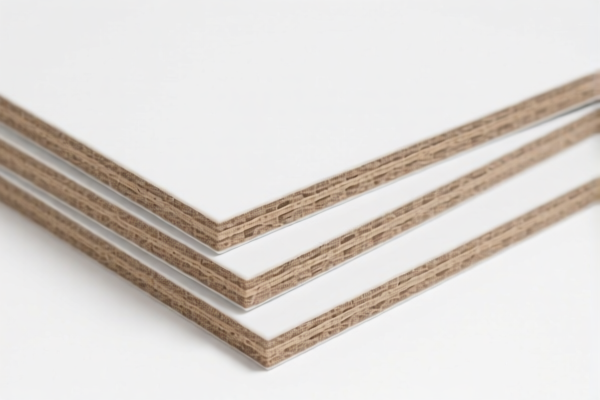
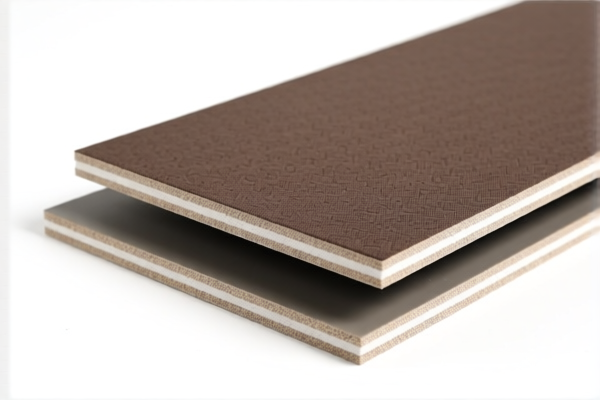
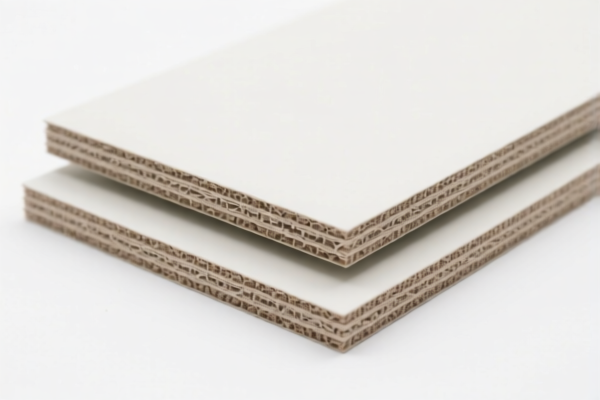
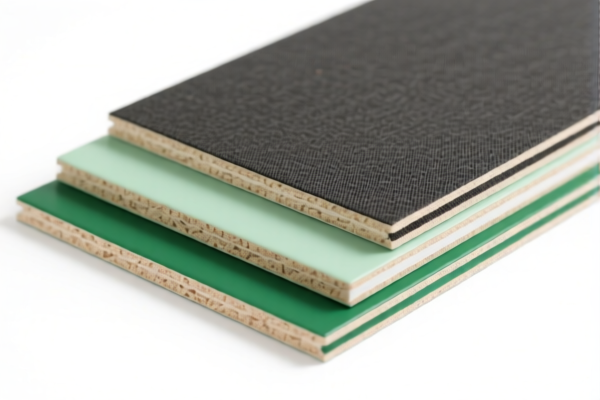
AI Analysis
🏗️ Polyurethane Textile Composite Heavy Board (PU Composite Panels)
🌐 HS Code Reference & Customs Clearance Guide | 2026 Latest Tariff Analysis | Professional Clearance Strategy
📌 I. Product Definition & Classification: What is this "Heavy Board"?
The Polyurethane (PU) Textile Composite Heavy Board is a specialized construction material. It consists of a textile base (fabric/net) impregnated, coated, or laminated with polyurethane, formed into a rigid or semi-rigid "board" or panel structure. It is primarily used in construction applications (e.g., wall cladding, roofing, insulation, or formwork).
⚠️ Key Classification Dilemma:
- Is it a Textile/Fabric product? → Chapter 59
- Is it a Plastic/Plate product? → Chapter 39
- Is it a Cement/Stone product? → Chapter 68
The correct classification depends on the dominant material and primary function as defined by the Harmonized System (HS) Explanatory Notes. Below are the four most likely HS Codes based on the provided data.
📦 II. HS Code Classification Details (2026 Latest Tariff Alignment)
| HS Code | Product Description | Matching Logic | Tax Rate |
|---|---|---|---|
| 6810.99.00.80 | Other articles of cement, concrete, or artificial stone | Logic: If the board contains cement/concrete core or is primarily a composite of cement and PU, it falls under "other articles." The PU acts as a binder/coating, but the base material (cement/concrete) dictates Chapter 68. | 35.0% |
| 5903.20.20.00 | Textile fabrics impregnated, coated, covered, or laminated with polyurethane | Logic: The "textile composite" nature is dominant. The PU is applied to a textile base. The "board" form is considered a downstream application of the fabric. This is the most common classification for PU-coated fabrics used in construction. | 35.0% |
| 5903.20.25.00 | Other textile fabrics impregnated, coated, covered, or laminated with polyurethane | Logic: Similar to above, but may apply if the textile type (e.g., artificial fiber vs. cotton) or specific construction method places it in a different sub-category under Chapter 59. Slightly higher base duty. | 42.5% |
| 3921.13.19.50 | Other plates, sheets, film, foil, and strip of plastics | Logic: If the PU layer is dominant and the textile is merely a reinforcement within the plastic matrix, it is classified as a "Plastic Plate." The "textile" aspect is secondary to the plastic composition. | 40.3% |
🔍 Critical Note:
- Chapter 59 (5903.20.xxxx) is the strongest candidate if the product is fundamentally a fabric with PU treatment.
- Chapter 39 (3921.13.19.50) applies if it is a solid plastic panel with textile reinforcement.
- Chapter 68 (6810.99.00.80) applies only if the product is primarily a cement/concrete composite.
💰 III. 2026 Latest Tariff Rate Breakdown (Including Surtaxes & Policy Surcharges)
✅ Applicable Country: United States (US)
✅ Origin: China (CN)
✅ Effective Date: From November 10, 2025 (for imports thereafter)
🎯 1. 6810.99.00.80 — Cement/Concrete/Artificial Stone Articles
| Item | Detail |
|---|---|
| Base Duty | 0.0% |
| USITC Surcharge (Section 301) | +25.0% |
| IEEPA Surcharge (China-specific) | +10.0% |
| Total Duty Rate | 35.0% |
| Calculation | CIF Value × 35% |
| De Minimis Exemption | ❌ Not Eligible (Deny De Minimis) |
| Legal Authority Path | IEEPA:9903.01.25 → USITC:6810.99.00.80 → FOOTNOTE:9903.88.01 |
📌 Explanation:
- Base duty for cement articles is often low or zero, but Section 301 tariffs (25%) and IEEPA tariffs (10%) apply heavily to Chinese-origin goods.
- Total 35% makes this a high-cost entry point.
🎯 2. 5903.20.20.00 — PU-Impregnated/Covered/Laminated Textile Fabrics
| Item | Detail |
|---|---|
| Base Duty | 0.0% |
| USITC Surcharge (Section 301) | +25.0% |
| IEEPA Surcharge (China-specific) | +10.0% |
| Total Duty Rate | 35.0% |
| Calculation | CIF Value × 35% |
| De Minimis Exemption | ❌ Not Eligible |
| Legal Authority Path | IEEPA:9903.01.25 → USITC:5903.20.20.00 → FOOTNOTE:9903.88.01 |
📌 Explanation:
- Textile products face significant protectionist tariffs.
- The 0% base is offset by the 35% surcharge.
- Key Risk: Customs may challenge if the product is deemed a "panel" (Chapter 39) rather than "fabric" (Chapter 59).
🎯 3. 5903.20.25.00 — Other PU-Impregnated Textile Fabrics
| Item | Detail |
|---|---|
| Base Duty | 7.5% |
| USITC Surcharge (Section 301) | +25.0% |
| IEEPA Surcharge (China-specific) | +10.0% |
| Total Duty Rate | 42.5% |
| Calculation | CIF Value × 42.5% |
| De Minimis Exemption | ❌ Not Eligible |
| Legal Authority Path | IEEPA:9903.01.25 → USITC:5903.20.25.00 → FOOTNOTE:9903.88.01 |
📌 Explanation:
- This sub-category has a higher base duty (7.5%), leading to the highest total tax among Chapter 59 options.
- Avoid this classification unless the textile composition strictly requires it (e.g., specific synthetic fiber types).
🎯 4. 3921.13.19.50 — Plates/Sheets of Plastics (PU)
| Item | Detail |
|---|---|
| Base Duty | 5.3% |
| USITC Surcharge (Section 301) | +25.0% |
| IEEPA Surcharge (China-specific) | +10.0% |
| Total Duty Rate | 40.3% |
| Calculation | CIF Value × 40.3% |
| De Minimis Exemption | ❌ Not Eligible |
| Legal Authority Path | IEEPA:9903.01.25 → USITC:3921.13.19.50 → FOOTNOTE:9903.88.01 |
📌 Explanation:
- Classified as a plastic product.
- Base duty is 5.3%, which is higher than Chapter 59 (0%) but results in a total of 40.3% due to surcharges.
- Risk: If customs determines the textile component is dominant, this classification will be rejected.
🛠️ IV. Customs Clearance Practical Advice (Pitfall Avoidance Guide)
✅ 1. Documentation Checklist (Mandatory)
| Document | Required | Purpose |
|---|---|---|
| Product Specification Sheet | ✔️ | Must clearly state: Material Composition (% PU, % Textile), Structure (Laminated/Coated), Application (Construction). |
| Material Safety Data Sheet (MSDS) | ✔️ | Proves PU content and chemical properties. |
| Product Photos (Cross-section) | ✔️ | Crucial to show the layered structure (Textile vs. PU dominance). |
| Commercial Invoice | ✔️ | Must accurately describe the product as "PU Composite Board" or "Textile Composite Panel." Avoid vague terms like "Plastic Board" if it contains textile. |
| Certificate of Origin (CO) | ✔️ | Required for verifying USITC/IEEPA applicability. |
| Test Report | ✔️ | Third-party lab report confirming material composition. |
✅ 2. Declaration Strategy (Key Tips)
🔥 “Structure Defines Classification, Composition Defines Duty!”
| Scenario | Recommended HS Code | Risk Level |
|---|---|---|
| Primary Material is Fabric (PU is coating/lamination) | 5903.20.20.00 (35%) | ✅ Low Risk (if textile is dominant) |
| Primary Material is Plastic (Textile is reinforcement) | 3921.13.19.50 (40.3%) | ⚠️ Medium Risk (Customs may argue for Chapter 59) |
| Primary Material is Cement/Concrete | 6810.99.00.80 (35%) | ✅ Low Risk (if cement content is >50%) |
| Ambiguous Composition | Pre-Ruling Request | 🛑 High Risk (Potential for reclassification + penalties) |
📌 Important:
- Do NOT declare as "Plastic Board" if it has a visible textile layer. Customs officers will request cross-section photos.
- Do NOT declare as "Textile Fabric" if it is a rigid board with no flexible characteristics.
✅ 3. Special Considerations
| Issue | Solution |
|---|---|
| Material Ambiguity | Submit a Binding Ruling Request to CBP before shipment. |
| High Duty Cost (35-42.5%) | Consider substantial transformation in a third country (e.g., Vietnam, Mexico) if feasible, to avoid China-specific surcharges. |
| De Minimis | Do not use 800 USD de minimis exemption. These goods are explicitly listed under IEEPA/301 exclusions for small shipments from China. |
🌍 V. Global Market Comparison (2026)
| Country/Region | Recommended HS Code | Total Duty (China Origin) | Certification | Notes |
|---|---|---|---|---|
| 🇺🇸 USA | 5903.20.20.00 or 3921.13.19.50 |
35.0% - 40.3% | FCC, ASTM, UL (if applicable) | High tariffs due to Section 301 & IEEPA. |
| 🇨🇳 China | 5903.20.20.00 |
~7.5% (Base) | CCC (if electrical) | No surcharges. |
| 🇪🇺 EU | 5903.20.20.00 |
~6.5% (Base) | CE, REACH | No Section 301 tariffs. |
| 🇬🇧 UK | 5903.20.20.00 |
~6.5% (Base) | UKCA | Post-Brexit tariffs apply. |
| 🇦🇺 Australia | 5903.20.20.00 |
~5.0% (Base) | RCM | Free Trade Agreement considerations. |
📌 Conclusion:
- The US market is significantly more expensive for these goods due to political tariffs (35-40.3%).
- For other markets, the duty is much lower (~5-7.5%), making the US the primary cost driver.
📌 VI. Common Mistakes & Pitfalls (Lessons Learned)
❌ Mistake 1: Declaring as "Plastic Plate" when the textile is dominant.
👉 Consequence: Customs reclassifies to 5903.20.20.00 (35%) or 5903.20.25.00 (42.5%). If previously declared at lower rate, back taxes + penalties apply.
❌ Mistake 2: Ignoring the "Textile" component.
👉 Consequence: If the product is 60% textile by weight, it must go to Chapter 59. Misclassification leads to audit flags.
❌ Mistake 3: Assuming De Minimis (Section 321) applies.
👉 Consequence: Shipment seizure. Chinese-origin goods under IEEPA/301 are excluded from de minimis exemptions.
✅ Correct Approach:
"PU-Composite Construction Board, Textile-Reinforced, 60% Textile, 40% Polyurethane, Rigid Panel, for Wall Cladding"
🎯 VII. Conclusion: Precise Classification Saves Money!
🎯 Remember the Rule:
🔹 "Textile Dominant = Chapter 59 (35-42.5%)"
🔹 "Plastic Dominant = Chapter 39 (40.3%)"
🔹 "Cement Dominant = Chapter 68 (35%)"
🔹 "No De Minimis for China Origin!"
📌 Pro Tip:
If your Landed Cost becomes uncompetitive due to 35%+ tariffs, consider:
1. Pre-Ruling: Secure a binding HS Code to avoid disputes.
2. Supply Chain Shift: Source from non-China countries (e.g., Vietnam) to mitigate Section 301/IEEPA risks.
3. Documentation: Ensure your Product Spec Sheet explicitly states the primary material and structure to support your chosen HS Code.
📣 Immediate Action:
📞 Consult a Licensed Customs Broker before shipping.
📄 Provide Cross-Section Photos & Material Composition Data to avoid misclassification.
🚀 Optimize Your Supply Chain to handle high US tariffs effectively!
✨ Professional Clearance Starts with Accurate Classification!
💼 Every Dollar of Duty Saved is Pure Profit!
Customer Reviews
About HS Code Classification
The Harmonized System (HS) is an internationally standardized nomenclature developed by the World Customs Organization (WCO) to classify traded products. Over 200 countries use the HS system as the basis for customs tariffs, trade statistics, and import/export regulations.
Each HS code follows a hierarchical structure:
- Chapter (2 digits) — Broad category of goods (e.g., Chapter 84: Machinery and Mechanical Appliances)
- Heading (4 digits) — More specific grouping within the chapter
- Subheading (6 digits) — Internationally standardized breakdown, used by all WCO member countries
- National subdivisions (8-10 digits) — Country-specific extensions for further classification, such as US HTSUS 10-digit codes
Correct HS code classification is essential for smooth customs clearance, accurate duty payment, and compliance with trade regulations. Misclassification can lead to customs delays, overpayment of duties, or penalties.
When importing from CN to US, the applicable tariff rates may include:
- Most-Favored-Nation (MFN) rate — The standard duty rate applied to WTO members
- General rate — Applied to countries without trade agreements
- Trade remedy duties — Additional tariffs such as Section 301 (anti-dumping), Section 232 (national security), or countervailing duties
The information provided on this page is for reference purposes only. For official classification, please consult with your local customs authority or a licensed customs broker.