Polyurethane Textile Composite Lightweight Partition Board
CN → US| HS Code | Tariff Rate | Origin | Destination | Doc |
|---|---|---|---|---|
| 3921131500 | 41.5% | CN | US | Official Doc |
| 6810195000 | 38.9% | CN | US | Official Doc |
| 3921131950 | 40.3% | CN | US | Official Doc |
| 5903202000 | 35.0% | CN | US | Official Doc |
| 5903202500 | 42.5% | CN | US | Official Doc |
Product Images

AI Analysis
🏗️ Polyurethane Textile Composite Lightweight Partition Board
🌐 HS Code Reference & Customs Clearance Guide | 2026 Latest Tariff Analysis | Professional通关 Strategy
📌 Part I: Product Definition & Classification – Do You Really Understand “Polyurethane Textile Composite Boards”?
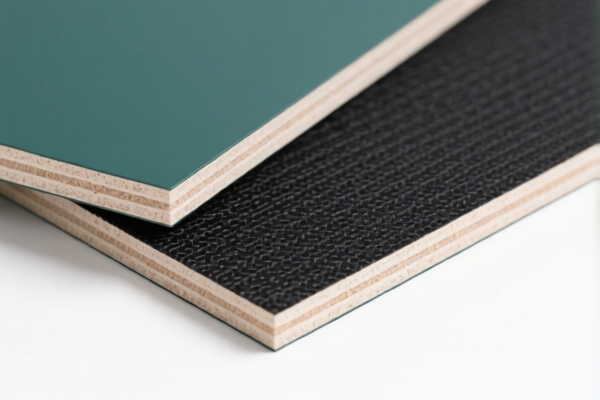
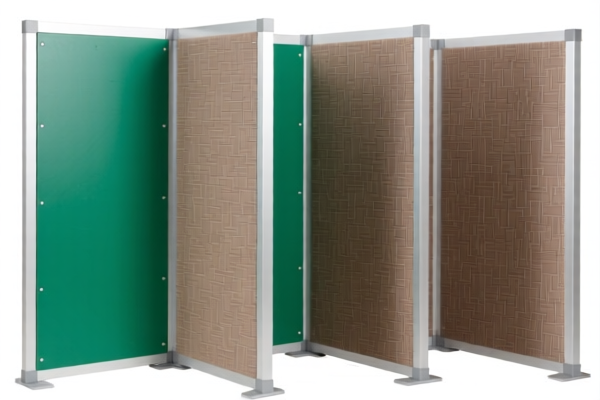
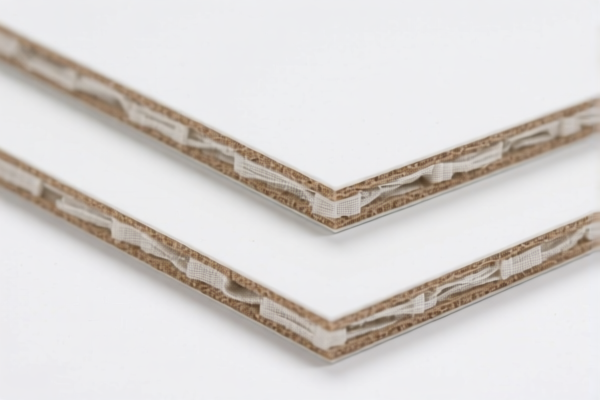
This product, commonly known as Polyurethane Textile Composite Lightweight Partition Board, is a construction material made by bonding polyurethane foam or resin with textile fabrics. It is widely used in interior decoration, soundproofing, thermal insulation, and lightweight partition walls.
In international trade, its classification depends on: - Material Composition: Primarily polyurethane (plastic) vs. textile fabric. - Processing Method: Impregnated, coated, laminated, or composite. - Form & Application: Board/plank shape, used for construction or building purposes.
⚠️ Key Distinction:
- If the product is primarily a textile fabric impregnated/coated with polyurethane → Likely classified under Chapter 59 (Impregnated, Coated, Covered or Layered Textile Fabrics).
- If the product is primarily a polyurethane board with textile reinforcement/lamination → Likely classified under Chapter 39 (Plastics and Articles Thereof).
- If the product is considered a building panel with synthetic material composition → May fall under Chapter 68 (Articles of Stone, Plaster, Cement, Asbestos, Mica or Similar Materials).
📦 Part II: HS Code Classification Details (2026 Latest Tariff Authority Comparison)
| HS Code | Product Description | Applicable Scenario | Key Classification Basis |
|---|---|---|---|
3921.13.15.00 |
Polyurethane textile composite building board, material: polyurethane, form: composite board, use: building | Architectural panels with PU-textile lamination | Chapter 39: Plastics; textile composite as secondary feature |
6810.19.50.00 |
Polyurethane textile composite building board, material: polyurethane (synthetic), form: building board, fits “other” category of cement/concrete/artificial stone articles | Building panels where PU is treated as synthetic stone-like material | Chapter 68: Cement/concrete/artificial stone; PU viewed as synthetic equivalent |
3921.13.19.50 |
Polyurethane textile composite building board, material: polyurethane, form: board, use: building, fits description of PU boards/sheets/films | General PU boards with textile backing/lamination | Chapter 39: Other plastics boards, sheets, films; textile as additive |
5903.20.20.00 |
Polyurethane textile composite building board, polyurethane corresponds to material, textile composite fits impregnated/coated/laminated feature, building board is downstream application | Textile fabric impregnated with PU, used in construction | Chapter 59: Impregnated/coated/laminated textile fabrics; PU as coating agent |
5903.20.25.00 |
Polyurethane textile composite building board, contains PU material and textile form, fits classification feature of PU-treated artificial fiber textile fabrics | PU-treated textile fabrics for building use | Chapter 59: PU-treated artificial fiber textile fabrics; specific subheading for treated textiles |
🔍 Important Reminder:
- The primary characteristic determines the chapter:
- If polyurethane is the dominant material → Chapter 39 (3921.13.15.00,3921.13.19.50)
- If textile fabric is the dominant material with PU as coating/impregnation → Chapter 59 (5903.20.20.00,5903.20.25.00)
- If classified as a synthetic building panel similar to cement/artificial stone → Chapter 68 (6810.19.50.00)
- Do not mix these categories; misclassification leads to severe penalties.
💰 Part III: 2026 Latest Tariff Rate Details (Including Surtaxes, Policy Surcharges)
✅ Applicable Country: United States (US)
✅ Origin: China (CN)
✅ Effective Date: November 10, 2025 onwards (including subsequent imports)
🎯 1. 3921.13.15.00 —— Polyurethane Textile Composite Building Board (PU-dominant)
| Item | Content |
|---|---|
| Base Tariff Rate | 6.5% (ad valorem) |
| Section 301 Surcharge | +25.0% |
| Section 122 Tariff | +10.0% |
| Total Tax Rate | 41.5% |
| Tax Calculation | CIF Value × 41.5% |
| De Minimis Exemption Eligible | ❌ No (deny_de_minimis) |
| Legal Basis Path | USITC:3921.13.15.00 → SECTION_301:25% → SECTION_122:10% |
📌 Explanation:
- “Section 301 Surcharge 25%” comes from U.S. Trade Act Section 301 additional tariffs;
- “Section 122 Tariff 10%” is an additional surcharge under Section 122 of the Trade Act;
- Total 41.5%, considered a high tariff rate, must be anticipated in advance!
🎯 2. 6810.19.50.00 —— Polyurethane Textile Composite Building Board (Synthetic Stone-like)
| Item | Content |
|---|---|
| Base Tariff Rate | 3.9% (ad valorem) |
| Section 301 Surcharge | +25.0% |
| Section 122 Tariff | +10.0% |
| Total Tax Rate | 38.9% |
| Tax Calculation | CIF Value × 38.9% |
| De Minimis Exemption Eligible | ❌ No (deny_de_minimis) |
| Legal Basis Path | USITC:6810.19.50.00 → SECTION_301:25% → SECTION_122:10% |
📌 Note:
- Base rate is lower (3.9%) but still subject to full surcharges;
- This classification is less common for PU-textile composites; ensure product matches “artificial stone” definition.
🎯 3. 3921.13.19.50 —— Polyurethane Textile Composite Building Board (Other PU Boards)
| Item | Content |
|---|---|
| Base Tariff Rate | 5.3% (ad valorem) |
| Section 301 Surcharge | +25.0% |
| Section 122 Tariff | +10.0% |
| Total Tax Rate | 40.3% |
| Tax Calculation | CIF Value × 40.3% |
| De Minimis Exemption Eligible | ❌ No (deny_de_minimis) |
| Legal Basis Path | USITC:3921.13.19.50 → SECTION_301:25% → SECTION_122:10% |
📌 Note:
- Slightly higher base rate than3921.13.15.00but same surcharges;
- Used for PU boards where textile is not the primary feature.
🎯 4. 5903.20.20.00 —— Polyurethane Textile Composite Building Board (Textile-dominant, Impregnated/Coated)
| Item | Content |
|---|---|
| Base Tariff Rate | 0.0% (ad valorem) |
| Section 301 Surcharge | +25.0% |
| Section 122 Tariff | +10.0% |
| Total Tax Rate | 35.0% |
| Tax Calculation | CIF Value × 35.0% |
| De Minimis Exemption Eligible | ❌ No (deny_de_minimis) |
| Legal Basis Path | USITC:5903.20.20.00 → SECTION_301:25% → SECTION_122:10% |
📌 Key Advantage:
- Lowest total rate (35.0%) among all options;
- Eligible only if the product is primarily a textile fabric with PU as coating/impregnation;
- Must provide evidence that textile is the dominant material.
🎯 5. 5903.20.25.00 —— Polyurethane Textile Composite Building Board (PU-treated Artificial Fiber Textile)
| Item | Content |
|---|---|
| Base Tariff Rate | 7.5% (ad valorem) |
| Section 301 Surcharge | +25.0% |
| Section 122 Tariff | +10.0% |
| Total Tax Rate | 42.5% |
| Tax Calculation | CIF Value × 42.5% |
| De Minimis Exemption Eligible | ❌ No (deny_de_minimis) |
| Legal Basis Path | USITC:5903.20.25.00 → SECTION_301:25% → SECTION_122:10% |
📌 Note:
- Highest total rate (42.5%);
- Used for PU-treated artificial fiber textiles specifically;
- Less favorable for cost optimization.
🛠️ Part IV: Customs Clearance Practical Suggestions (Battlefield Pit-Avoidance Guide)
✅ 1. Required Documents Checklist (None Can Be Omitted)
| Document | Must Provide | Explanation |
|---|---|---|
| ✅ Product Specification Sheet | ✔️ | Includes material composition (PU% vs. Textile%), dimensions, density, fire rating |
| ✅ Material Safety Data Sheet (MSDS) | ✔️ | Proves chemical composition and PU content |
| ✅ Product Photos (with Label) | ✔️ | Clear view of surface texture, edges, branding, model number |
| ✅ Third-Party Test Report | ✔️ | Fire resistance, tensile strength, thermal insulation (if applicable) |
| ✅ Commercial Invoice | ✔️ | Clearly state “Polyurethane Textile Composite Board for Building Use” |
| ✅ Packing List | ✔️ | Detail quantity, weight, dimensions, package type |
| ✅ Certificate of Origin (CO) | ✔️ | If non-China origin, may qualify for preferential rates (but not applicable for CN origin under current tariffs) |
| ✅ Declaration of Primary Material | ✔️ | Explicitly state whether PU or Textile is the dominant material |
✅ 2. Declaration Tips (Key Mantra)
🔥 “Primary Material Determines Chapter, Textile-Coated Gets Low Rate, PU-Board Gets High Rate, Misclassification Causes Delays!”
| Scenario | Correct Declaration | Wrong Practice |
|---|---|---|
| Textile fabric impregnated with PU | 5903.20.20.00 |
Misdeclare as PU board → 41.5% |
| PU board with textile backing | 3921.13.15.00 |
Misdeclare as textile → Risk of audit |
| Artificial stone-like PU panel | 6810.19.50.00 |
Rarely applicable; must match “stone-like” definition |
| PU-treated artificial fiber textile | 5903.20.25.00 |
Higher rate; only if specific artificial fiber |
✅ 3. Special Case Handling
| Case | Handling Advice |
|---|---|
| OEM Custom Boards | Provide customer order + design drawings to prove customization and avoid “non-standard” classification |
| Fire-Rated Boards | Provide fire test reports; may affect classification if flame retardants change material nature |
| Mixed Shipments (PU Board + Textile Roll) | Declare separately; do not combine in one HS Code |
| Samples vs. Commercial Goods | Samples may still be subject to tariffs; declare accurately |
🌍 Part V: Global Major Market Customs Comparison (2026 Latest)
| Country/Region | Recommended HS Code | Tariff Rate | Certification Requirements | Notes |
|---|---|---|---|---|
| 🇺🇸 United States | 5903.20.20.00 (if textile-dominant) |
35.0% (CN origin) | None specific | Lowest rate if textile-dominant; otherwise 41.5%+ |
| 🇨🇳 China | 5903.20.20.00 or 3921.13.15.00 |
5%–10% | None | Lower base rates; no surcharges |
| 🇪🇺 European Union | 5903.20.20.00 |
6.5% | REACH, CE (if electrical) | No surcharges; standard MFN rate |
| 🇦🇺 Australia | 5903.20.20.00 |
5% | None | Standard rate |
| 🇯🇵 Japan | 5903.20.20.00 |
6.0% | PSE (if electrical) | Standard rate |
📌 Conclusion:
- United States imposes the highest tariffs on Chinese-origin polyurethane/textile composites;
- Earliest opportunity for cost optimization is classifying as textile-dominant (5903.20.20.00) with 35.0% total rate;
- China, EU, Australia, Japan have significantly lower tariffs; consider supply chain diversification if targeting US market.
📌 Part VI: Common Errors & Pit-Avoidance Guide (Blood & Tears Lessons)
❌ Error 1: Declaring PU-dominant boards as textile products to get 35% rate
👉 Consequence: Customs audit reveals PU > 50% → Penalty + Back Taxes + Delay
❌ Error 2: Combining PU boards and textile rolls in one declaration
👉 Consequence: Mixed classification → Rejection + Re-declaration Fees
❌ Error 3: Failing to provide MSDS or material composition proof
👉 Consequence: Customs cannot verify primary material → Held in Bond + Inspection Delay
❌ Error 4: Using generic name “Building Panel” without specifying material
👉 Consequence: Customs assigns highest default rate → Unnecessary Cost
✅ Correct Practice:
“Polyurethane-Impregnated Textile Fabric, 1.2m Width, 0.5mm Thickness, Used for Interior Partition Walls, Model XYZ, Fire-Rated Class B”
🎯 Part VII: Conclusion – Professional Declaration, Save Time, Reduce Costs!
🎯 Remember the Mantra:
🔹 “Primary Material Defines Chapter, Textile-Coated Gets 35%, PU-Board Gets 41.5%, Misclassification Costs Big!”
🔹 “HS Code Decides Tariff, 6.5% Difference Saves Thousands, One Mistake Costs Tens of Thousands!”
📌 Pro Tip:
If your product is originated from Vietnam, Mexico, Thailand, or Malaysia, you may apply for IEEPA exemption, reducing tariff to 0%~5%;
Recommend applying for Advance Ruling to avoid customs disputes.
📣 Immediate Action:
📞 Contact professional customs broker + Provide product images + Apply for HS Code Advance Ruling
🚀 Ensure your Polyurethane Textile Composite Board passes customs smoothly, efficiently exports, and maximizes profit!
✨ Professional Customs Clearance Starts with Accurate Classification!
💼 Every Cent of Your Cost Deserves Precise Calculation!
Customer Reviews
About HS Code Classification
The Harmonized System (HS) is an internationally standardized nomenclature developed by the World Customs Organization (WCO) to classify traded products. Over 200 countries use the HS system as the basis for customs tariffs, trade statistics, and import/export regulations.
Each HS code follows a hierarchical structure:
- Chapter (2 digits) — Broad category of goods (e.g., Chapter 84: Machinery and Mechanical Appliances)
- Heading (4 digits) — More specific grouping within the chapter
- Subheading (6 digits) — Internationally standardized breakdown, used by all WCO member countries
- National subdivisions (8-10 digits) — Country-specific extensions for further classification, such as US HTSUS 10-digit codes
Correct HS code classification is essential for smooth customs clearance, accurate duty payment, and compliance with trade regulations. Misclassification can lead to customs delays, overpayment of duties, or penalties.
When importing from CN to US, the applicable tariff rates may include:
- Most-Favored-Nation (MFN) rate — The standard duty rate applied to WTO members
- General rate — Applied to countries without trade agreements
- Trade remedy duties — Additional tariffs such as Section 301 (anti-dumping), Section 232 (national security), or countervailing duties
The information provided on this page is for reference purposes only. For official classification, please consult with your local customs authority or a licensed customs broker.