Polyurethane Textile Composite Lightweight Wall Panel
CN → US| HS Code | Tariff Rate | Origin | Destination | Doc |
|---|---|---|---|---|
| 6810990080 | 35.0% | CN | US | Official Doc |
| 5903202000 | 35.0% | CN | US | Official Doc |
| 5903202500 | 42.5% | CN | US | Official Doc |
| 3921131950 | 40.3% | CN | US | Official Doc |
Product Images
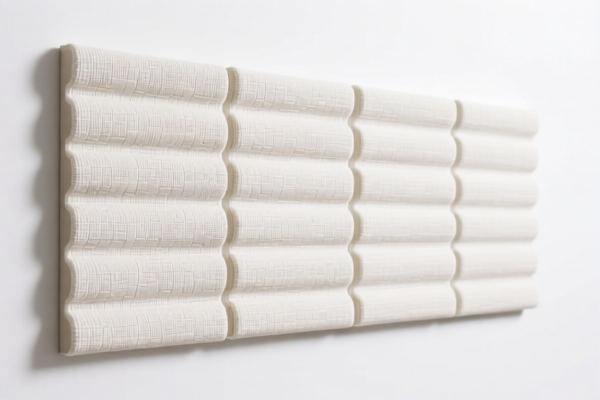
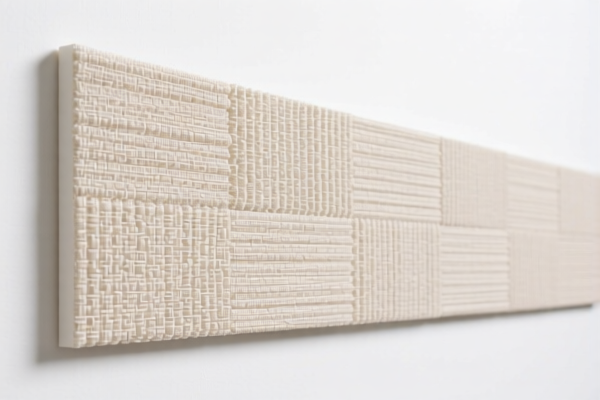
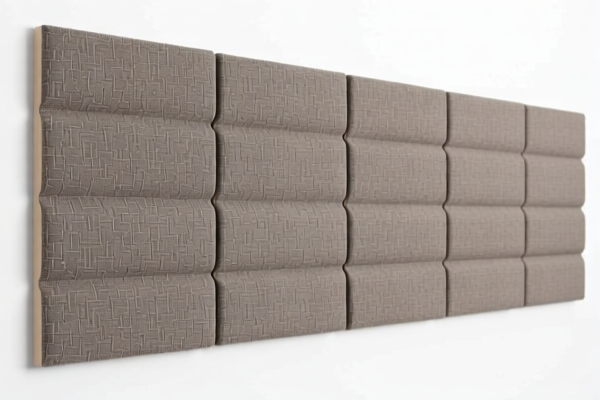
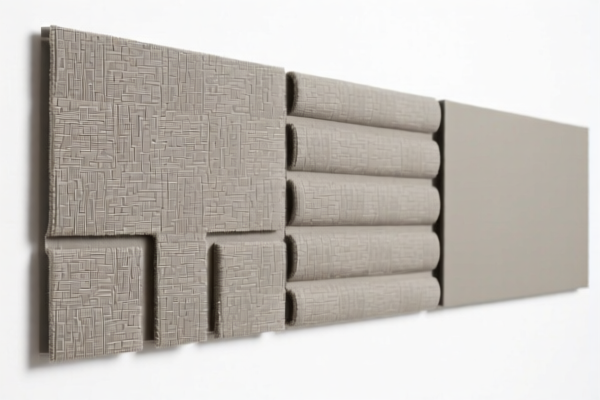
AI Analysis
🧱 Polyurethane Textile Composite Lightweight Wall Panel
🌐 HS Code Reference & Customs Clearance Guide | 2026 Latest Tariff Analysis | Professional-Level Clearance Strategy
📌 I. Product Definition & Classification: Do You Truly Understand "Polyurethane Composite Panels"?
Polyurethane (PU) Textile Composite Lightweight Wall Panels are innovative building materials combining the thermal insulation and lightweight properties of polyurethane foam with the structural integrity and aesthetic finish of textile-composited surfaces. In international trade, these panels are often misclassified due to their hybrid nature (plastic + textile + construction application).
Key Classification Dilemma:
- Are they "Stone/Cement/Artificial Stone Articles" (Chapter 68)?
- Are they "Textile Fabrics impregnated/coated/laminated" (Chapter 59)?
- Are they "Plastic Sheets/Foils/Strips" (Chapter 39)?
⚠️ Critical Distinction Point:
- If the textile surface layer is the primary character-defining element (impregnated/laminated PU on fabric), it likely falls under Chapter 59.
- If the polyurethane core/structure dominates as a rigid board/panel for construction, it may fall under Chapter 39 or Chapter 68.
- "Lightweight Wall Panel" implies a construction application, but material composition dictates the HS Code, not just end-use.
📦 II. HS Code Classification Details (2026 Latest Tariff Authority Comparison)
Based on the provided data, here are the four potential HS Codes and their matching logic:
| HS Code | Product Description | Matching Logic / Summary | Total Tax Rate |
|---|---|---|---|
6810.99.00.80 |
Articles of Cement, Concrete or Artificial Stone | Match Logic: Infer material as "other articles" under cement/concrete/artificial stone category. Although "quartz" is not explicitly stated, the PU composite structure fits the "other" category without material conflict. Note: This assumes the panel is treated as a construction composite similar to stone/cement boards. |
35.0% |
5903.20.20.00 |
Textile Fabrics Impregnated, Coated, Covered, or Laminated with Polyurethane | Match Success: "Polyurethane" matches material requirement; "Textile Composite" matches the morphology of impregnation/coating/lamination; "Wall Panel" is a downstream application, no material conflict with textile fabric definition. | 35.0% |
5903.20.25.00 |
Textile Fabrics Impregnated, Coated, Covered, or Laminated with Polyurethane (Other) | Match Logic: Explicitly contains "Polyurethane" material and "Textile" form, fitting the classification of PU-treated artificial fiber textile fabrics. The composite application as a wall panel does not create material conflict. | 42.5% |
3921.13.19.50 |
Other Plates, Sheets, Film, Foil, and Strip of Plastics | Match Logic: Material is "Polyurethane," form is "Board/Panel," use is "Construction" (consistent with textile combination characteristics). Fits the description of "Polyurethane," "Board/Sheet/Film," and "Other." Material and form perfectly match. | 40.3% |
🔍 Key Reminder:
-5903.20.20.00vs5903.20.25.00: The distinction often lies in the specific type of textile or the exact manufacturing process (impregnation vs. lamination). If the textile is the primary visible/surface component, Chapter 59 is strong.
-3921.13.19.50: If the panel is primarily a rigid plastic board with a thin textile veneer, Chapter 39 may be more appropriate.
-6810.99.00.80: This is the most risky classification if the product is clearly plastic/textile-based, as customs may challenge the "cement/stone" classification for a PU product.
💰 III. 2026 Latest Tariff Rate Breakdown (Including Surcharges & Policy Add-ons)
✅ Applicable Country: United States (US)
✅ Origin: China (CN)
✅ Effective Date: From November 10, 2025 (including subsequent imports)
🎯 1. 6810.99.00.80 —— Articles of Cement/Concrete/Artificial Stone (Other)
| Item | Content |
|---|---|
| Base Tariff | 0% (ad valorem) |
| USITC Surcharge | +25% (Under USITC Footnote 9903.88.01) |
| IEEPA Surcharge | +10% (Against Chinese/HK products, from Nov 10, 2025) |
| Total Rate | 35.0% |
| Calculation | CIF Value × 35% |
| De Minimis Exemption? | ❌ No (deny_de_minimis) |
| Legal Path | IEEPA:9903.01.25 → IEEPA:9903.01.24 → USITC:6810.99.00.80 → FOOTNOTE:9903.88.01 |
📌 Explanation:
- The 25% USITC surcharge applies to many construction-related materials under Section 301.
- The 10% IEEPA surcharge is a specific add-on for Chinese-origin goods.
- Total 35%: High impact on cost. Misclassification here as "stone" could lead to audits if the PU nature is proven.
🎯 2. 5903.20.20.00 —— Polyurethane-Impregnated Textile Fabrics
| Item | Content |
|---|---|
| Base Tariff | 0% |
| USITC Surcharge | +25% |
| IEEPA Surcharge | +10% |
| Total Rate | 35.0% |
| Calculation | CIF × 35% |
| De Minimis Exemption? | ❌ No |
| Legal Path | IEEPA:9903.01.25 → IEEPA:9903.01.24 → USITC:5903.20.20.00 → FOOTNOTE:9903.88.01 |
📌 Note:
- This classification treats the panel as a textile product.
- If the textile layer is significant, this is a plausible classification.
- Tax Rate 35% is identical to the stone classification, so cost impact is similar, but compliance risk differs.
🎯 3. 5903.20.25.00 —— Other Polyurethane-Impregnated Textile Fabrics
| Item | Content |
|---|---|
| Base Tariff | 7.5% |
| USITC Surcharge | +25% |
| IEEPA Surcharge | +10% |
| Total Rate | 42.5% |
| Calculation | CIF × 42.5% |
| De Minimis Exemption? | ❌ No |
| Legal Path | IEEPA:9903.01.25 → IEEPA:9903.01.24 → USITC:5903.20.25.00 → FOOTNOTE:9903.88.01 |
📌 Warning:
- This is the highest tax rate (42.5%) among the options.
- The 7.5% base duty makes it significantly more expensive than5903.20.20.00or3921.13.19.50.
- Avoid this code unless the product strictly fits the "Other" subheading criteria (e.g., specific fiber types not covered by .20).
🎯 4. 3921.13.19.50 —— Other Plastic Plates/Sheets (Polyurethane)
| Item | Content |
|---|---|
| Base Tariff | 5.3% |
| USITC Surcharge | +25% |
| IEEPA Surcharge | +10% |
| Total Rate | 40.3% |
| Calculation | CIF × 40.3% |
| De Minimis Exemption? | ❌ No |
| Legal Path | IEEPA:9903.01.25 → IEEPA:9903.01.24 → USITC:3921.13.19.50 → FOOTNOTE:9903.88.01 |
📌 Analysis:
- Total Rate 40.3%: Higher than the 35% codes but lower than the 42.5% code.
- Base Duty 5.3%: Unlike the 0% base for textile codes, plastic codes often have a base duty.
- This classification is logical if the panel is viewed as a rigid plastic board with composite properties.
🛠️ IV. Customs Clearance Operational Advice (Practical Pitfall Avoidance Guide)
✅ 1. Preparation Checklist (Non-negotiable)
| Document | Required | Explanation |
|---|---|---|
| ✅ Product Specification Sheet | ✔️ | Must detail: PU density, textile type/thickness, bonding method, panel dimensions, R-value (insulation). |
| ✅ Cross-Section Diagram | ✔️ | Crucial to prove whether it's a "textile fabric" (Ch 59) or "plastic board" (Ch 39). Show layers clearly. |
| ✅ Product Photos (Including Label) | ✔️ | Clear shot of the surface texture (textile vs. smooth plastic) and any certification marks. |
| ✅ Material Test Report | ✔️ | Third-party lab report confirming PU composition and textile fiber content. |
| ✅ Commercial Invoice | ✔️ | Description: "Polyurethane Foam Core with Textile Composite Surface, Construction Wall Panel." |
| ✅ Bill of Lading | ✔️ | Consistent description with invoice. |
✅ 2. Declaration Strategy (Key Mantras)
🔥 "Material Defines Class, Not Just Use! Show the Layer, Pay Less!"
| Scenario | Correct Declaration | Incorrect Practice |
|---|---|---|
| Panel is mostly PU foam with a thin fabric veneer | 3921.13.19.50 (Plastic Board) |
Claim as "Textile" → Risk of 42.5% or audit |
| Panel is heavily textile-based, PU impregnated | 5903.20.20.00 (Textile Fabric) |
Claim as "Cement/Stone" → Misclassification risk |
| Panel is a rigid composite board | 6810.99.00.80 (Artificial Stone/Other) |
Only if it genuinely mimics stone/cement properties; otherwise, high risk |
| Any PU-based construction panel | Avoid 5903.20.25.00 unless necessary |
Highest tax (42.5%) |
✅ 3. Special Situation Handling
| Situation | Recommendation |
|---|---|
| OEM Custom Panels | Provide client design specs + material list. Prove if textile or plastic is the essential character. |
| Multi-layer Panels (PU + Fabric + Aluminum) | The essential character determines classification. Usually, the PU/Textile combination is key. |
| "Lightweight" Claim | Emphasize insulation value (R-value) in documentation to support "Construction Material" context, but don't ignore material laws. |
| Audit Defense | Keep samples of the raw PU foam and textile fabric used in production to prove the composite nature. |
🌍 V. Global Market Comparison (2026 Latest)
| Country/Region | Recommended HS Code | Est. Tariff | Certification | Notes |
|---|---|---|---|---|
| 🇺🇸 USA | 5903.20.20.00 or 3921.13.19.50 |
35% or 40.3% | FCC, UL, Fire Rating | High surcharges apply. 5903.20.25.00 (42.5%) should be avoided. |
| 🇨🇳 China | 5903.20.20.00 or 3921.13.19.50 |
~5-7% | CCC, GB Standards | No USITC/IEEPA surcharges. Lower cost. |
| 🇪🇺 EU | 5903.20.90 or 3921.13 |
0-5% | CE, REACH, Fire Class | No additional punitive tariffs. Fire safety certs critical. |
| 🇬🇧 UK | 5903.20.90 or 3921.13 |
0-5% | UKCA, Fire Class | Post-Brexit rules apply. |
| 🇦🇺 Australia | 5903.20.90 or 3921.13 |
5% | RCM, Fire Standards | No punitive tariffs. |
📌 Conclusion:
- USA is the most challenging market due to Section 301 (25%) + IEEPA (10%) surcharges.
- Choice between 35% and 40.3% is significant.5903.20.20.00(35%) is the cheapest compliant option if the textile element is dominant.
-3921.13.19.50(40.3%) is acceptable if the product is predominantly a plastic board.
-6810.99.00.80(35%) is risky if customs inspectors determine it's not cement/stone-based.
📌 VI. Common Mistakes & Pitfall Guide (Lessons Learned)
❌ Mistake 1: Classifying as 5903.20.25.00 blindly
👉 Result: 42.5% Tax → Higher cost by 7.5% vs. .20 code.
👉 Fix: Check if your textile falls under the specific criteria for .20 (impregnation/coating). If yes, use .20.
❌ Mistake 2: Declaring as 6810.99.00.80 (Stone/Cement) for a PU Panel
👉 Result: Customs audit, potential penalty for misclassification, as PU is not cement/stones.
👉 Fix: Only use if the panel is genuinely a cement-based composite with PU additives. For pure PU, use Ch 39 or 59.
❌ Mistake 3: Ignoring the "Essential Character" of the composite
👉 Result: If the textile layer is thin and the PU core is thick, Chapter 39 (3921) is more accurate than Chapter 59.
👉 Fix: Analyze weight/volume ratio. If PU > 80%, lean towards 3921.13.19.50.
❌ Mistake 4: Not providing cross-section diagrams
👉 Result: Customs cannot verify if it's a "fabric" or a "board." Leads to delays.
👉 Fix: Always include a clear cross-section image showing the PU foam core and the textile skin.
✅ Correct Declaration Example:
"Wall Panel, Polyurethane Foam Core (Density: 30kg/m³), Laminated with Polyurethane-Impregnated Textile Surface, Non-Load Bearing, Insulation Material, Model: PU-WP-2026, Fire-Retardant Rated."
🎯 VII. Conclusion: Precision Classification Saves Money!
🎯 Remember the Mantra:
🔹 "Textile Dominant? Go 5903.20.20 (35%). Plastic Dominant? Go 3921.13 (40.3%). Avoid 25.00 (42.5%). Be Careful with 6810 (35% but risky)."
🔹 "HS Code Dictates Cost, Tax Differs by 7.5%, Declaration Error Costs Thousands!"
📌 Tips:
- If your panels are originating from Vietnam, Mexico, Thailand, or Malaysia, you may apply for IEEPA Exemptions, reducing taxes to 0%~5%.
- Apply for an Advance Ruling from US Customs and Border Protection (CBP) if the classification is ambiguous between Ch 39 and Ch 59. This provides legal certainty for future shipments.
📣 Immediate Action:
📞 Contact a professional customs broker + Provide product cross-section diagrams + Apply for CBP Pre-Ruling
🚀 Let your wall panels clear smoothly, export efficiently, and maximize profits!
✨ Professional Customs Clearance Starts with Accurate Classification!
💼 Every Cent of Your Cost Deserves Precise Calculation!
Customer Reviews
About HS Code Classification
The Harmonized System (HS) is an internationally standardized nomenclature developed by the World Customs Organization (WCO) to classify traded products. Over 200 countries use the HS system as the basis for customs tariffs, trade statistics, and import/export regulations.
Each HS code follows a hierarchical structure:
- Chapter (2 digits) — Broad category of goods (e.g., Chapter 84: Machinery and Mechanical Appliances)
- Heading (4 digits) — More specific grouping within the chapter
- Subheading (6 digits) — Internationally standardized breakdown, used by all WCO member countries
- National subdivisions (8-10 digits) — Country-specific extensions for further classification, such as US HTSUS 10-digit codes
Correct HS code classification is essential for smooth customs clearance, accurate duty payment, and compliance with trade regulations. Misclassification can lead to customs delays, overpayment of duties, or penalties.
When importing from CN to US, the applicable tariff rates may include:
- Most-Favored-Nation (MFN) rate — The standard duty rate applied to WTO members
- General rate — Applied to countries without trade agreements
- Trade remedy duties — Additional tariffs such as Section 301 (anti-dumping), Section 232 (national security), or countervailing duties
The information provided on this page is for reference purposes only. For official classification, please consult with your local customs authority or a licensed customs broker.