Polyurethane Textile Composite Molded Board
CN → US| HS Code | Tariff Rate | Origin | Destination | Doc |
|---|---|---|---|---|
| 3921131500 | 41.5% | CN | US | Official Doc |
| 3921131950 | 40.3% | CN | US | Official Doc |
| 5903202500 | 42.5% | CN | US | Official Doc |
| 5903202000 | 35.0% | CN | US | Official Doc |
| 6810990080 | 35.0% | CN | US | Official Doc |
Product Images
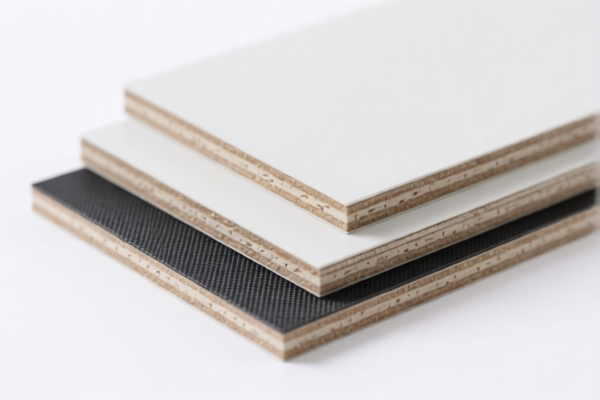
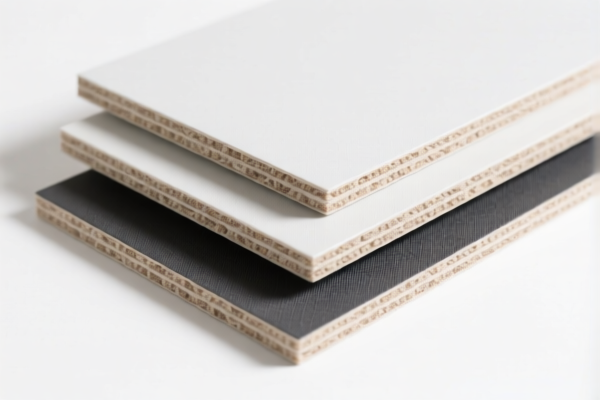
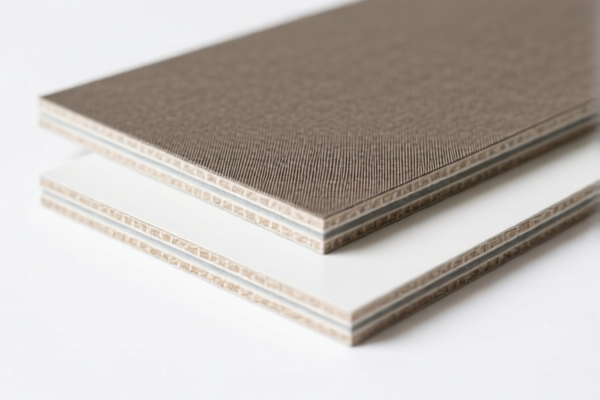
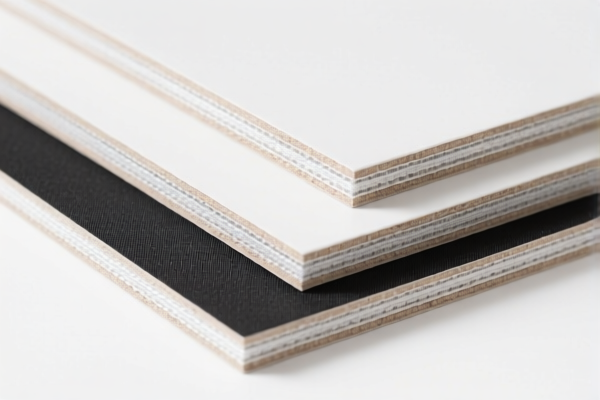
AI Analysis
🏗️ Polyurethane Textile Composite Molded Board: The Ultimate HS Code Classification Guide (2026 US Import)
🌐 HS Code Reference & Clearance Guide | 2026 Latest Tariff Analysis | Professional Clearance Strategy
📌 Part I: Product Definition & Classification – Do You Really Understand "Polyurethane Textile Composite Molded Board"?
Polyurethane Textile Composite Molded Boards are advanced building materials combining the structural integrity and flexibility of polyurethane (PU) with the strength and texture of textile fabrics. These boards are primarily used in construction, offering insulation, soundproofing, and decorative finishes.
In international trade, this product is often a "chameleon," potentially falling into different HS Code categories depending on how the PU and textile are combined (impregnated, coated, or laminated) and the primary material characteristic emphasized.
⚠️ Key Distinction Points:
- If the textile is merely a surface layer for aesthetics, it may fall under Chapter 39 (Plastics/PU).
- If the PU has impregnated/coated the textile to give it specific properties, it may fall under Chapter 59 (Impregnated Textiles).
- Misclassification can lead to massive duty differences (0% to 7.5% base rate) plus mandatory Section 301 (25%) and Section 122 (10%) surcharges.
📦 Part II: HS Code Classification Matrix (Based on Provided Data)
Below are the 5 valid HS Codes derived from the provided data, explaining why each applies and the corresponding tax structure.
| HS Code | Summary & Classification Logic | Total Tax Rate | Tax Detail Breakdown |
|---|---|---|---|
| 3921.13.15.00 | Logic: Classified as PU textile composite building board. Focuses on the composite nature of PU and textile material. Fits the description of "Plastics, articles thereof; other plates, sheets, film, foil and strip." | 41.5% | Base: 6.5% Sec. 301: 25.0% Sec. 122: 10% |
| 3921.13.19.50 | Logic: Classified under Polyurethane, plates, sheets, etc. Focuses on the shape (board/plate) and material (PU), with textile as a secondary feature. Fits "Other plates, sheets, film, foil and strip of plastics." | 40.3% | Base: 5.3% Sec. 301: 25.0% Sec. 122: 10% |
| 5903.20.25.00 | Logic: Classified as PU-treated artificial fiber textile fabric. Focuses on the PU treatment of the textile. Fits "Textile fabrics impregnated, coated, covered or laminated with plastics, other than those of heading 59.02." | 42.5% | Base: 7.5% Sec. 301: 25.0% Sec. 122: 10% |
| 5903.20.20.00 | Logic: Also PU-treated textile, but potentially a different sub-category for impregnation/coating/lamination processes. Fits the requirement for PU material + textile composite form. | 35.0% | Base: 0.0% Sec. 301: 25.0% Sec. 122: 10% |
| 6810.99.00.80 | Logic: Classified as Cement, concrete, or artificial stone articles. Note: This is a less common fit, inferred from the "building board" application assuming a stone-like composite or cement-based substrate with PU/textile finish. Fits "Other articles." | 35.0% | Base: 0.0% Sec. 301: 25.0% Sec. 122: 10% |
🔍 Critical Analysis:
- Lowest Duty Option: 5903.20.20.00 or 6810.99.00.80 (Both at 35.0% total).
- Highest Duty Option: 5903.20.25.00 (At 42.5% total).
- Why such a difference? The base tariff varies from 0% to 7.5% depending on whether the product is viewed primarily as a plastic board or a treated textile.
💰 Part III: 2026 Latest Tariff Rate Breakdown (Detailed)
✅ Applicable Country: USA (US)
✅ Origin: China (CN) (Assumed based on 301 & 122 clauses)
✅ Effective Date: 2025/2026 Tariff Schedule
🎯 1. 3921.13.15.00 – PU Composite Board (High Base Rate)
| Item | Content |
|---|---|
| Base Tariff | 6.5% |
| Section 301 Tariff | +25.0% |
| Section 122 Tariff | +10.0% |
| Total Rate | 41.5% |
| Calculation | CIF Value × 41.5% |
| De Minimis Eligibility | ❌ No |
📌 Explanation:
- This code treats the product as a plastic composite. The higher base rate (6.5%) reflects the duty on plastic boards.
- Risk: If customs determines the textile is the primary character, this code may be challenged.
🎯 2. 3921.13.19.50 – Other PU Boards (Medium Base Rate)
| Item | Content |
|---|---|
| Base Tariff | 5.3% |
| Section 301 Tariff | +25.0% |
| Section 122 Tariff | +10.0% |
| Total Rate | 40.3% |
| Calculation | CIF Value × 40.3% |
| De Minimis Eligibility | ❌ No |
📌 Explanation:
- A slight improvement over 3921.13.15.00. Used when the PU board is not specifically "composite" in the narrow sense but still a PU plate/sheet.
🎯 3. 5903.20.25.00 – PU-Treated Textile (Highest Total Rate)
| Item | Content |
|---|---|
| Base Tariff | 7.5% |
| Section 301 Tariff | +25.0% |
| Section 122 Tariff | +10.0% |
| Total Rate | 42.5% |
| Calculation | CIF Value × 42.5% |
| De Minimis Eligibility | ❌ No |
📌 Explanation:
- This code classifies the item primarily as textile fabric treated with plastics. The high base rate (7.5%) makes this the most expensive option.
- Avoid unless the product is clearly a flexible fabric sheet rather than a rigid board.
🎯 4. 5903.20.20.00 – PU-Treated Textile (Lowest Base Rate)
| Item | Content |
|---|---|
| Base Tariff | 0.0% |
| Section 301 Tariff | +25.0% |
| Section 122 Tariff | +10.0% |
| Total Rate | 35.0% |
| Calculation | CIF Value × 35.0% |
| De Minimis Eligibility | ❌ No |
📌 Explanation:
- Best Value Option. If the product can be classified as PU-impregnated/coated textile under this specific sub-heading, the base tariff is 0%.
- Requirement: Must prove the textile is the essential character and the PU is a treatment/coating, not a structural bulk material.
🎯 5. 6810.99.00.80 – Artificial Stone/Cement Article (Lowest Base Rate)
| Item | Content |
|---|---|
| Base Tariff | 0.0% |
| Section 301 Tariff | +25.0% |
| > Section 122 Tariff | +10.0% |
| Total Rate | 35.0% |
| Calculation | CIF Value × 35.0% |
| > De Minimis Eligibility | ❌ No |
📌 Explanation:
- Alternative Low-Cost Option. If the board is cement/concrete-based with a PU/textile finish, it falls under Chapter 68.
- Risk: Customs may reject this if the PU layer is thicker than the cement core, insisting on Chapter 39 or 59.
🛠️ Part IV: Customs Clearance Practical Advice (Avoid Pitfalls)
✅ 1. Essential Documentation Checklist
| Document | Required? | Purpose |
|---|---|---|
| Product Specification Sheet | ✅ Yes | Must detail: PU % vs. Textile %, lamination process, thickness, rigid vs. flexible nature. |
| Structure Diagram | ✅ Yes | To prove whether it is a composite board (Chapter 39) or treated fabric (Chapter 59). |
| Commercial Invoice | ✅ Yes | Clearly state: "Polyurethane Textile Composite Building Board" – DO NOT use vague terms like "Plastic Sheet." |
| Photos (Front/Back/Cross-Section) | ✅ Yes | Visual proof of layering (Textile surface, PU middle, etc.). |
| Bill of Lading | ✅ Yes | Consistent with invoice description. |
✅ 2. Classification Strategy (Key Mnemonic)
🔥 "Look at the Core: Rigid Board = Ch39; Treated Fabric = Ch59; Stone Base = Ch68. Choose the 0% Base!"
| Scenario | Recommended HS Code | Reason |
|---|---|---|
| Rigid, thick board, PU is the main mass | 3921.13.19.50 (40.3%) |
Best fit for plastic/composite boards. |
| Flexible or semi-rigid, PU is a coating on textile | 5903.20.20.00 (35.0%) |
BEST VALUE. 0% base tariff. |
| Cement-based with PU/textile finish | 6810.99.00.80 (35.0%) |
BEST VALUE. 0% base tariff. |
| High-textile content, clearly fabric-like | 5903.20.25.00 (42.5%) |
Avoid if possible due to high base rate. |
✅ 3. Special Handling Tips
| Situation | Advice |
|---|---|
| If the board is very rigid | Customs may prefer Chapter 39. Try to justify 5903.20.20.00 by emphasizing the textile substrate is the essential character, but be prepared for potential disputes. |
| If the board is thin and flexible | Definitely use 5903.20.20.00. It is clearly a textile product. |
| If it contains cement/concrete | Use 6810.99.00.80. Provide proof of cement content. |
| Avoid "Composite" Ambiguity | Do not simply label it "Composite Board." Specify: "Polyurethane-impregnated Textile Board" or "PU-Coated Textile Panel" to align with Chapter 59. |
🌍 Part V: Global Market Comparison (2026)
| Country/Region | Recommended HS Code | Base Tariff | Total Tariff (incl. 301/122) | Notes |
|---|---|---|---|---|
| 🇺🇸 USA | 5903.20.20.00 |
0.0% | 35.0% | Optimal Choice for PU-treated textiles. |
| 🇺🇸 USA | 3921.13.15.00 |
6.5% | 41.5% | High risk if textile is dominant. |
| 🇨🇳 China | 3921.13.15.00 |
6.5% | 6.5% | No 301/122. |
| 🇪🇺 EU | 3921.13.15.00 |
~6.5% | ~6.5% | No Section 301/122. |
📌 Conclusion for US Importers:
- The Section 301 (25%) and Section 122 (10%) tariffs are unavoidable for Chinese-origin goods.
- The only way to reduce cost is to minimize the base tariff.
- Target HS Code:5903.20.20.00(0% base) or6810.99.00.80(0% base).
- Total Duty Savings: Up to 7.5% compared to the highest code.
📌 Part VI: Common Mistakes & Pitfalls
❌ Mistake 1: Classifying as 3921.13.15.00 when the product is clearly a PU-coated textile.
👉 Consequence: Paying 6.5% base instead of 0%. Loss: 6.5% of CIF value.
❌ Mistake 2: Using vague descriptions like "Building Material" on the invoice.
👉 Consequence: Customs delays, potential reclassification to a higher duty code, or seizure.
❌ Mistake 3: Ignoring the Section 122 tariff.
👉 Consequence: Unexpected 10% charge on top of 301. Always include it in cost calculations.
✅ Correct Approach:
"Polyurethane-Coated Textile Composite Board for Building Insulation, Model XYZ, Origin: China, HS Code: 5903.20.20.00"
🎯 Part VII: Conclusion – Strategic Clearance for Cost Efficiency
🎯 Key Takeaway:
🔹 "0% Base is King!" Aim for
5903.20.20.00or6810.99.00.80.
🔹 "Total Duty = Base + 25% + 10%".
🔹 "Documentation is Key" – Prove the textile or cement nature to justify the 0% base.
📌 Pro Tip:
If your product can be classified under 5903.20.20.00, ensure the textile layer is visibly dominant in the product’s function and appearance. Provide cross-section photos to customs brokers to support this classification.
📣 Action Plan:
📞 Step 1: Contact a licensed customs broker.
📄 Step 2: Submit product specs and photos for Advance Ruling.
🚀 Step 3: Declare under5903.20.20.00(35.0% total) to maximize savings.
✨ Smart Classification, Lower Costs, Faster Clearance!
💼 Every percentage point in base tariff saves you real money.
Customer Reviews
About HS Code Classification
The Harmonized System (HS) is an internationally standardized nomenclature developed by the World Customs Organization (WCO) to classify traded products. Over 200 countries use the HS system as the basis for customs tariffs, trade statistics, and import/export regulations.
Each HS code follows a hierarchical structure:
- Chapter (2 digits) — Broad category of goods (e.g., Chapter 84: Machinery and Mechanical Appliances)
- Heading (4 digits) — More specific grouping within the chapter
- Subheading (6 digits) — Internationally standardized breakdown, used by all WCO member countries
- National subdivisions (8-10 digits) — Country-specific extensions for further classification, such as US HTSUS 10-digit codes
Correct HS code classification is essential for smooth customs clearance, accurate duty payment, and compliance with trade regulations. Misclassification can lead to customs delays, overpayment of duties, or penalties.
When importing from CN to US, the applicable tariff rates may include:
- Most-Favored-Nation (MFN) rate — The standard duty rate applied to WTO members
- General rate — Applied to countries without trade agreements
- Trade remedy duties — Additional tariffs such as Section 301 (anti-dumping), Section 232 (national security), or countervailing duties
The information provided on this page is for reference purposes only. For official classification, please consult with your local customs authority or a licensed customs broker.